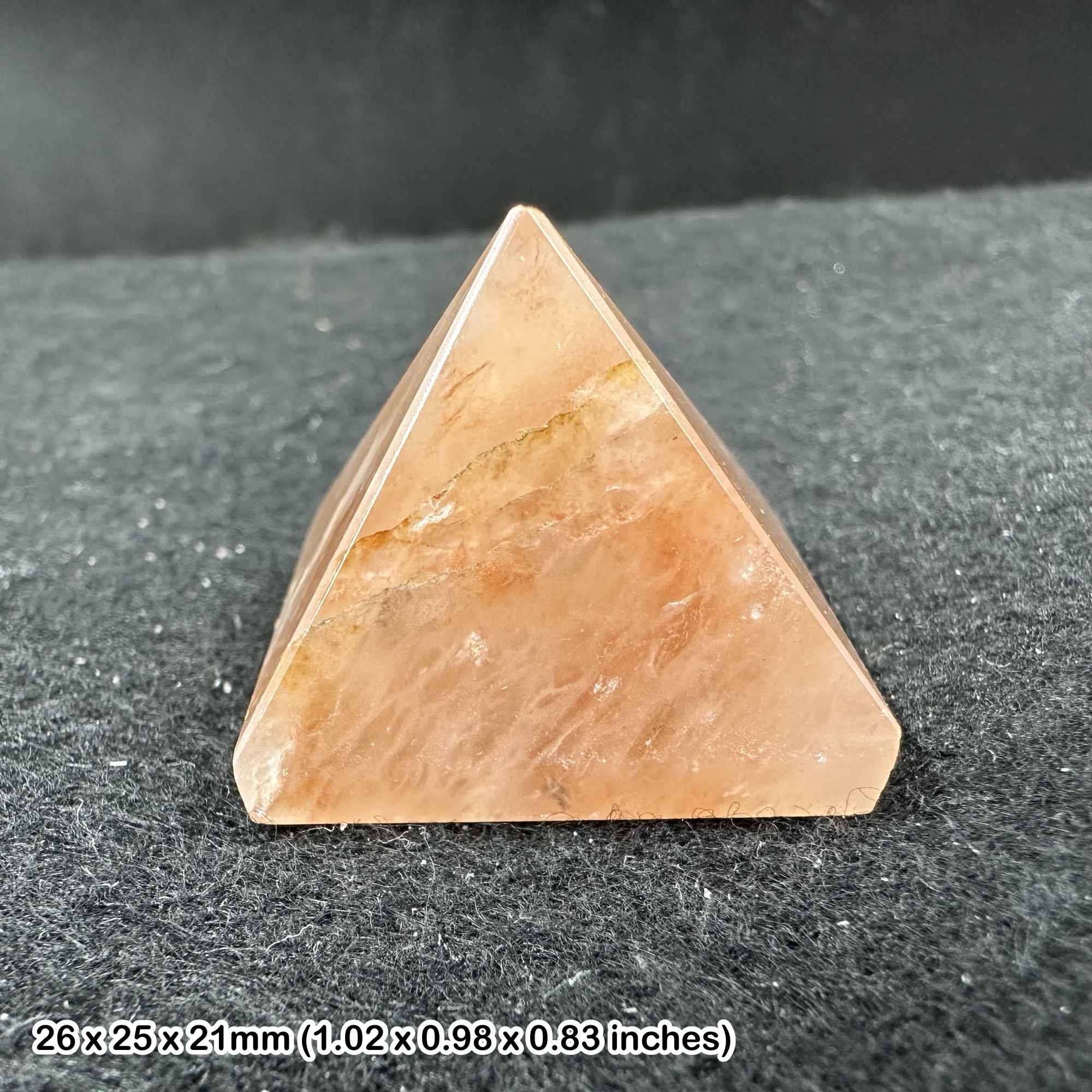
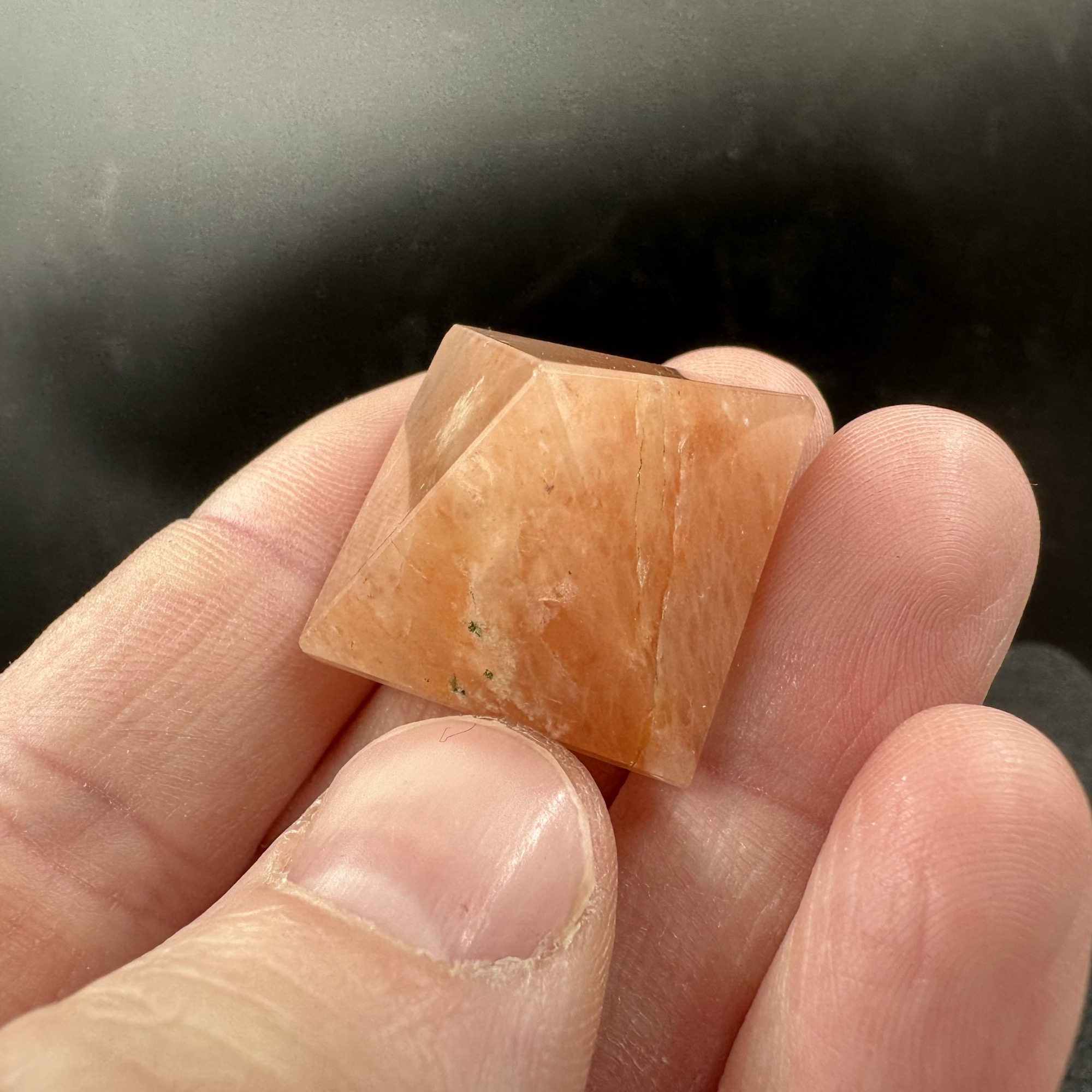
Pink Aventurine Pyramid Polished Quartz Crystal Mineral Specimen Decorative Gemstone Pyramid
£ 8.10
Polished Pink Aventurine Pyramid – Natural Quartz Mineral Display SpecimenThis polished Pink Aventurine Pyramid is a carefully shaped gemstone carving
made from natural aventurine quartz. Expertly cut and polished into a classic four-sided pyramid form, the stone displays soft pink tones with subtle natural mineral textures that highlight the character of this attractive quartz variety. The pyramid shape enhances the visual structure of the stone while showcasing the colour and internal mineral features typical of aventurine.The crystal shown in the photographs is the exact specimen you will receive. Each piece is individually selected for its natural appearance and display quality. This crystal includes a Certificate of Authenticity lifetime guarantee generic card confirming that the specimen is a genuine mineral.Please refer to the photographs for full sizing and scale.Mineral Identification and Crystal StructurePink Aventurine is a variety of quartz composed primarily of silicon dioxide (SiO₂). Quartz belongs to the trigonal crystal system and is one of the most abundant minerals found within the Earth’s crust. Aventurine varieties are recognised by the presence of tiny mineral inclusions that give the stone a distinctive internal texture and occasionally a subtle shimmering appearance.The pink colouration found in Pink Aventurine is commonly associated with mineral inclusions such as hematite or lepidolite within the quartz matrix. These inclusions can create delicate variations in tone ranging from pale rose and dusty pink to deeper salmon hues depending on the concentration and distribution of the mineral content.Quartz has a hardness of 7 on the Mohs scale, which allows it to be polished to a smooth, reflective surface while remaining durable enough for decorative carvings and display specimens.Geological FormationQuartz minerals form in a wide variety of geological environments, including igneous, metamorphic, and hydrothermal systems. Aventurine quartz typically develops when silica-rich fluids crystallise slowly within rock cavities or fractures, allowing trace minerals to become incorporated into the growing crystal structure.These mineral inclusions are responsible for the unique colours and textures that distinguish aventurine from clear quartz varieties. Over long geological periods, these processes create massive quartz deposits that can later be cut and polished into ornamental forms such as pyramids, spheres, towers, and palm stones.Aventurine deposits are found in several regions around the world, including India, Brazil, Russia, and parts of Africa, where quartz-bearing rock formations provide suitable geological conditions for the development of this material.Pyramid Shape and Lapidary CraftsmanshipThe pyramid shape has long been popular in mineral carving due to its symmetrical geometry and striking display presence. Skilled lapidary techniques are used to shape the stone into a four-sided pyramid with a square base and polished triangular faces that meet at a central apex.Polishing enhances the natural colour variations within the stone while revealing the internal mineral textures characteristic of aventurine. Light reflecting across the polished faces helps highlight the stone’s subtle tonal differences and natural inclusions.The pyramid form also provides a stable base, making it suitable for display on desks, shelves, cabinets, or mineral collections.Collecting and DisplayPink Aventurine pyramids are popular among mineral collectors and gemstone enthusiasts who appreciate decorative stone carvings and natural quartz varieties. The combination of the geometric pyramid shape and the soft natural colour of the stone makes this specimen an attractive addition to mineral displays, decorative arrangements, or gemstone collections.In various traditions, pyramid-shaped crystals are sometimes symbolically associated with focus and balance in spiritual practices. These interpretations are cultural and symbolic perspectives rather than scientifically established properties of the mineral.The natural pink tones of aventurine also make this piece suitable as a decorative stone for interior display, gift items, or collectors interested in polished mineral carvings.Authenticity and Presentation• Genuine Pink Aventurine quartz mineral specimen• Polished pyramid gemstone carving• Carefully selected natural crystal• The exact specimen shown in the photographs is the one you will receive• Includes a Certificate of Authenticity lifetime guarantee generic cardAs a natural stone, each specimen displays unique colour patterns, mineral inclusions, and internal textures typical of genuine aventurine quartz. Please review the photographs carefully to see the individual characteristics and full size of the crystal pyramid available.
made from natural aventurine quartz. Expertly cut and polished into a classic four-sided pyramid form, the stone displays soft pink tones with subtle natural mineral textures that highlight the character of this attractive quartz variety. The pyramid shape enhances the visual structure of the stone while showcasing the colour and internal mineral features typical of aventurine.The crystal shown in the photographs is the exact specimen you will receive. Each piece is individually selected for its natural appearance and display quality. This crystal includes a Certificate of Authenticity lifetime guarantee generic card confirming that the specimen is a genuine mineral.Please refer to the photographs for full sizing and scale.Mineral Identification and Crystal StructurePink Aventurine is a variety of quartz composed primarily of silicon dioxide (SiO₂). Quartz belongs to the trigonal crystal system and is one of the most abundant minerals found within the Earth’s crust. Aventurine varieties are recognised by the presence of tiny mineral inclusions that give the stone a distinctive internal texture and occasionally a subtle shimmering appearance.The pink colouration found in Pink Aventurine is commonly associated with mineral inclusions such as hematite or lepidolite within the quartz matrix. These inclusions can create delicate variations in tone ranging from pale rose and dusty pink to deeper salmon hues depending on the concentration and distribution of the mineral content.Quartz has a hardness of 7 on the Mohs scale, which allows it to be polished to a smooth, reflective surface while remaining durable enough for decorative carvings and display specimens.Geological FormationQuartz minerals form in a wide variety of geological environments, including igneous, metamorphic, and hydrothermal systems. Aventurine quartz typically develops when silica-rich fluids crystallise slowly within rock cavities or fractures, allowing trace minerals to become incorporated into the growing crystal structure.These mineral inclusions are responsible for the unique colours and textures that distinguish aventurine from clear quartz varieties. Over long geological periods, these processes create massive quartz deposits that can later be cut and polished into ornamental forms such as pyramids, spheres, towers, and palm stones.Aventurine deposits are found in several regions around the world, including India, Brazil, Russia, and parts of Africa, where quartz-bearing rock formations provide suitable geological conditions for the development of this material.Pyramid Shape and Lapidary CraftsmanshipThe pyramid shape has long been popular in mineral carving due to its symmetrical geometry and striking display presence. Skilled lapidary techniques are used to shape the stone into a four-sided pyramid with a square base and polished triangular faces that meet at a central apex.Polishing enhances the natural colour variations within the stone while revealing the internal mineral textures characteristic of aventurine. Light reflecting across the polished faces helps highlight the stone’s subtle tonal differences and natural inclusions.The pyramid form also provides a stable base, making it suitable for display on desks, shelves, cabinets, or mineral collections.Collecting and DisplayPink Aventurine pyramids are popular among mineral collectors and gemstone enthusiasts who appreciate decorative stone carvings and natural quartz varieties. The combination of the geometric pyramid shape and the soft natural colour of the stone makes this specimen an attractive addition to mineral displays, decorative arrangements, or gemstone collections.In various traditions, pyramid-shaped crystals are sometimes symbolically associated with focus and balance in spiritual practices. These interpretations are cultural and symbolic perspectives rather than scientifically established properties of the mineral.The natural pink tones of aventurine also make this piece suitable as a decorative stone for interior display, gift items, or collectors interested in polished mineral carvings.Authenticity and Presentation• Genuine Pink Aventurine quartz mineral specimen• Polished pyramid gemstone carving• Carefully selected natural crystal• The exact specimen shown in the photographs is the one you will receive• Includes a Certificate of Authenticity lifetime guarantee generic cardAs a natural stone, each specimen displays unique colour patterns, mineral inclusions, and internal textures typical of genuine aventurine quartz. Please review the photographs carefully to see the individual characteristics and full size of the crystal pyramid available.