Macrocephalites Ammonite Fossil Jurassic Kentland Quarry Wiltshire UK Genuine COA
£ 12.60
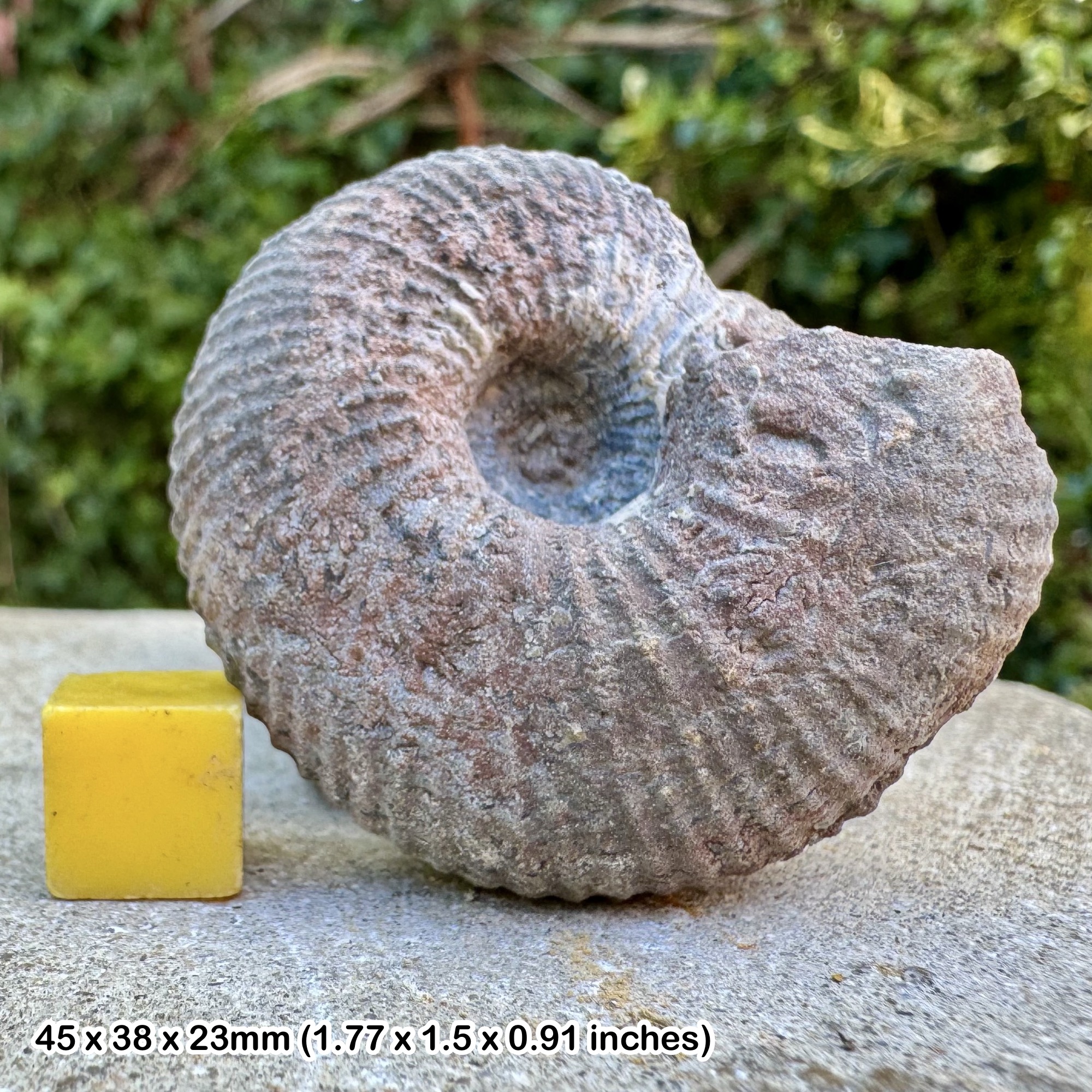
AUTHENTIC JURASSIC FOSSIL FROM WILTSHIRE, UKThis Macrocephalites ammonite fossil is a genuine specimen from the Lower
Callovian stage of the Middle Jurassic, discovered at Kentland Quarry, Wiltshire, United Kingdom. It has been carefully chosen for its quality, preservation, and distinctive morphology, making it both a scientifically valuable and visually impressive piece. The photographs show the exact specimen you will receive, with a 1 cm scale cube for accurate sizing. Every specimen comes with a Certificate of Authenticity, ensuring it is 100% genuine. GEOLOGICAL AGE AND PROVENANCEThis ammonite dates to the Lower Callovian stage of the Jurassic Period, approximately 166–163 million years ago. At that time, the Wiltshire region was part of a shallow, warm marine environment within the margins of the Tethys Ocean. The fine-grained sediments deposited in these shallow seas created the perfect conditions for fossil preservation, capturing ammonites, belemnites, bivalves, and other marine life in remarkable detail. Kentland Quarry is well-known among collectors and researchers for producing well-preserved Jurassic ammonites that contribute significantly to the study of Callovian paleontology. SPECIES IDENTIFICATION AND CLASSIFICATIONMacrocephalites belongs to the class Cephalopoda, order Ammonitida, superfamily Stephanoceratoidea, and family Macrocephalitidae. The genus is one of the defining ammonite groups of the Callovian, characterised by its large, compressed whorls and bold ribbing. Macrocephalites ammonites are widely regarded as key index fossils, making them crucial for correlating Callovian marine strata across Europe. Their wide distribution and short evolutionary ranges give them particular importance in the refinement of the Jurassic geological timescale. MORPHOLOGY AND DISTINCTIVE TRAITSThis specimen displays the characteristic features of the Macrocephalites genus. Its shell is tightly coiled with strongly compressed whorls, giving it a distinctive planispiral form. Prominent ribs sweep across the flanks, often bifurcating near the ventral area, creating an elegant and bold pattern of ornamentation. These ribs added structural strength and improved hydrodynamic stability, reflecting the ammonite’s adaptation to the shallow Jurassic seas. Its combination of compressed form and striking ribbing makes it one of the most easily recognisable ammonites from the Callovian stage. SCIENTIFIC AND STRATIGRAPHIC IMPORTANCEAmmonites such as Macrocephalites are among the most important index fossils in the Jurassic record. Their distinct morphology and short-lived evolutionary intervals make them essential for dividing the Lower Callovian into biozones and correlating strata across wide geographic regions. For geologists, fossils like this are invaluable tools in reconstructing Earth’s history. For collectors, this specimen offers not just aesthetic appeal but also a direct connection to the science of stratigraphy and paleontology. CONDITION AND PRESENTATIONThis ammonite fossil has been professionally prepared to highlight its natural details. Its ribbing, shell curvature, and compressed form are all clearly visible, ensuring that the fossil represents the genus in exemplary fashion. The specimen shown in the photographs is the exact one you will receive, guaranteeing full transparency and confidence in your purchase. Its preservation and visual appeal make it suitable for display, teaching, or scientific reference. GUARANTEE OF AUTHENTICITYAll of our fossils are 100% genuine, responsibly sourced, and scientifically identified. Each comes with a Certificate of Authenticity. This Macrocephalites ammonite fossil from Kentland Quarry, Wiltshire, is a scientifically significant and visually striking example of Callovian ammonites, making it an exceptional addition for fossil collectors, natural history enthusiasts, and academic collections.
Callovian stage of the Middle Jurassic, discovered at Kentland Quarry, Wiltshire, United Kingdom. It has been carefully chosen for its quality, preservation, and distinctive morphology, making it both a scientifically valuable and visually impressive piece. The photographs show the exact specimen you will receive, with a 1 cm scale cube for accurate sizing. Every specimen comes with a Certificate of Authenticity, ensuring it is 100% genuine. GEOLOGICAL AGE AND PROVENANCEThis ammonite dates to the Lower Callovian stage of the Jurassic Period, approximately 166–163 million years ago. At that time, the Wiltshire region was part of a shallow, warm marine environment within the margins of the Tethys Ocean. The fine-grained sediments deposited in these shallow seas created the perfect conditions for fossil preservation, capturing ammonites, belemnites, bivalves, and other marine life in remarkable detail. Kentland Quarry is well-known among collectors and researchers for producing well-preserved Jurassic ammonites that contribute significantly to the study of Callovian paleontology. SPECIES IDENTIFICATION AND CLASSIFICATIONMacrocephalites belongs to the class Cephalopoda, order Ammonitida, superfamily Stephanoceratoidea, and family Macrocephalitidae. The genus is one of the defining ammonite groups of the Callovian, characterised by its large, compressed whorls and bold ribbing. Macrocephalites ammonites are widely regarded as key index fossils, making them crucial for correlating Callovian marine strata across Europe. Their wide distribution and short evolutionary ranges give them particular importance in the refinement of the Jurassic geological timescale. MORPHOLOGY AND DISTINCTIVE TRAITSThis specimen displays the characteristic features of the Macrocephalites genus. Its shell is tightly coiled with strongly compressed whorls, giving it a distinctive planispiral form. Prominent ribs sweep across the flanks, often bifurcating near the ventral area, creating an elegant and bold pattern of ornamentation. These ribs added structural strength and improved hydrodynamic stability, reflecting the ammonite’s adaptation to the shallow Jurassic seas. Its combination of compressed form and striking ribbing makes it one of the most easily recognisable ammonites from the Callovian stage. SCIENTIFIC AND STRATIGRAPHIC IMPORTANCEAmmonites such as Macrocephalites are among the most important index fossils in the Jurassic record. Their distinct morphology and short-lived evolutionary intervals make them essential for dividing the Lower Callovian into biozones and correlating strata across wide geographic regions. For geologists, fossils like this are invaluable tools in reconstructing Earth’s history. For collectors, this specimen offers not just aesthetic appeal but also a direct connection to the science of stratigraphy and paleontology. CONDITION AND PRESENTATIONThis ammonite fossil has been professionally prepared to highlight its natural details. Its ribbing, shell curvature, and compressed form are all clearly visible, ensuring that the fossil represents the genus in exemplary fashion. The specimen shown in the photographs is the exact one you will receive, guaranteeing full transparency and confidence in your purchase. Its preservation and visual appeal make it suitable for display, teaching, or scientific reference. GUARANTEE OF AUTHENTICITYAll of our fossils are 100% genuine, responsibly sourced, and scientifically identified. Each comes with a Certificate of Authenticity. This Macrocephalites ammonite fossil from Kentland Quarry, Wiltshire, is a scientifically significant and visually striking example of Callovian ammonites, making it an exceptional addition for fossil collectors, natural history enthusiasts, and academic collections.
Other Products