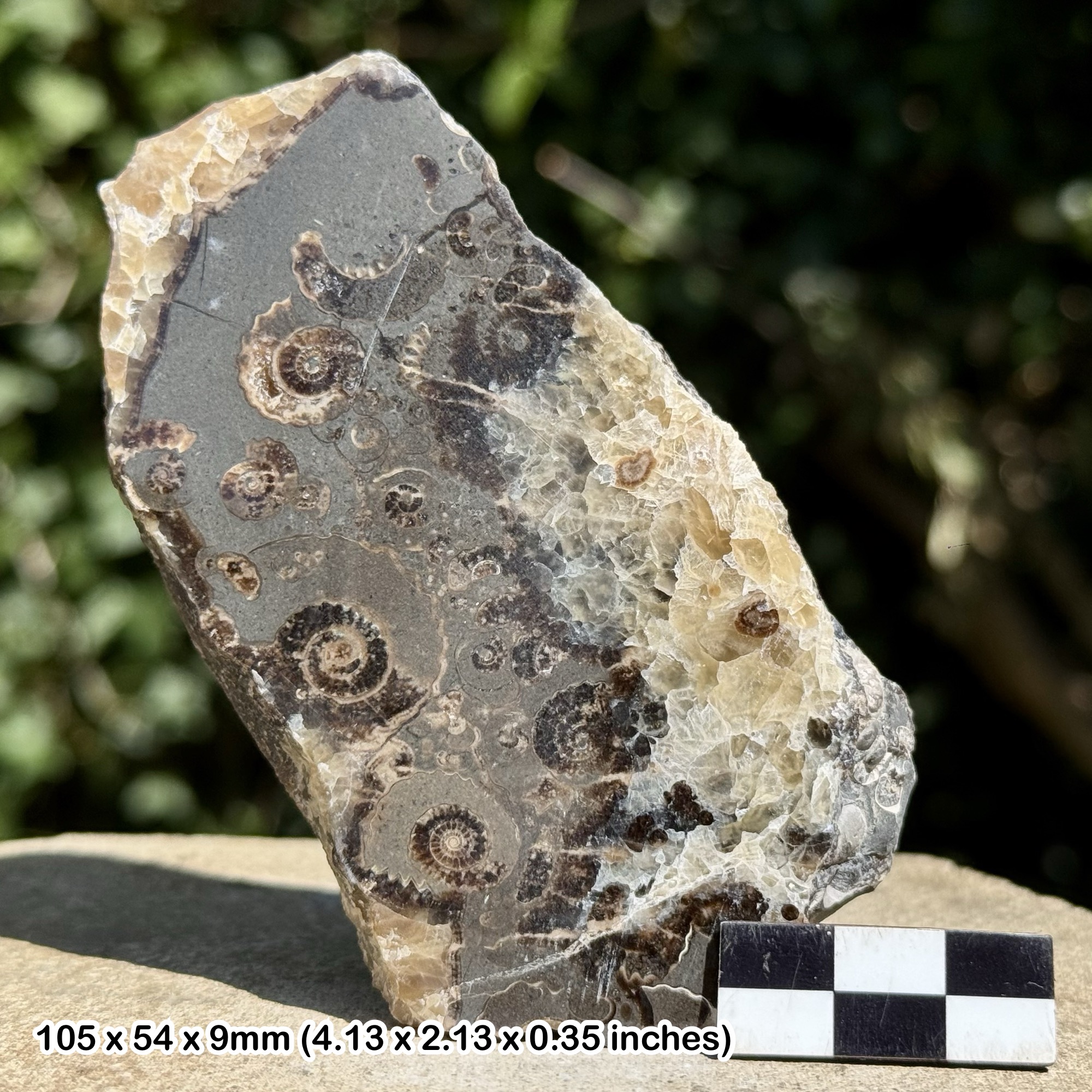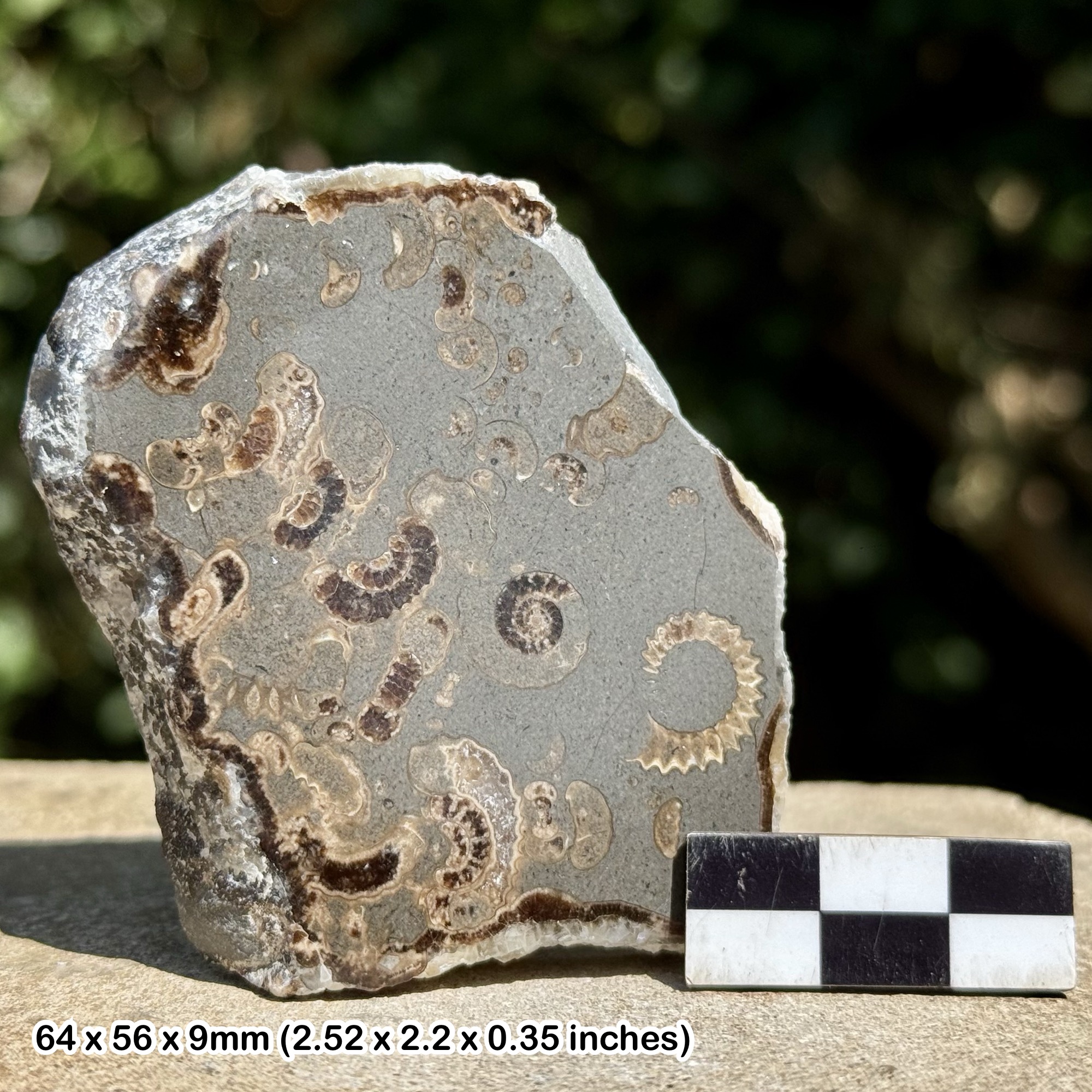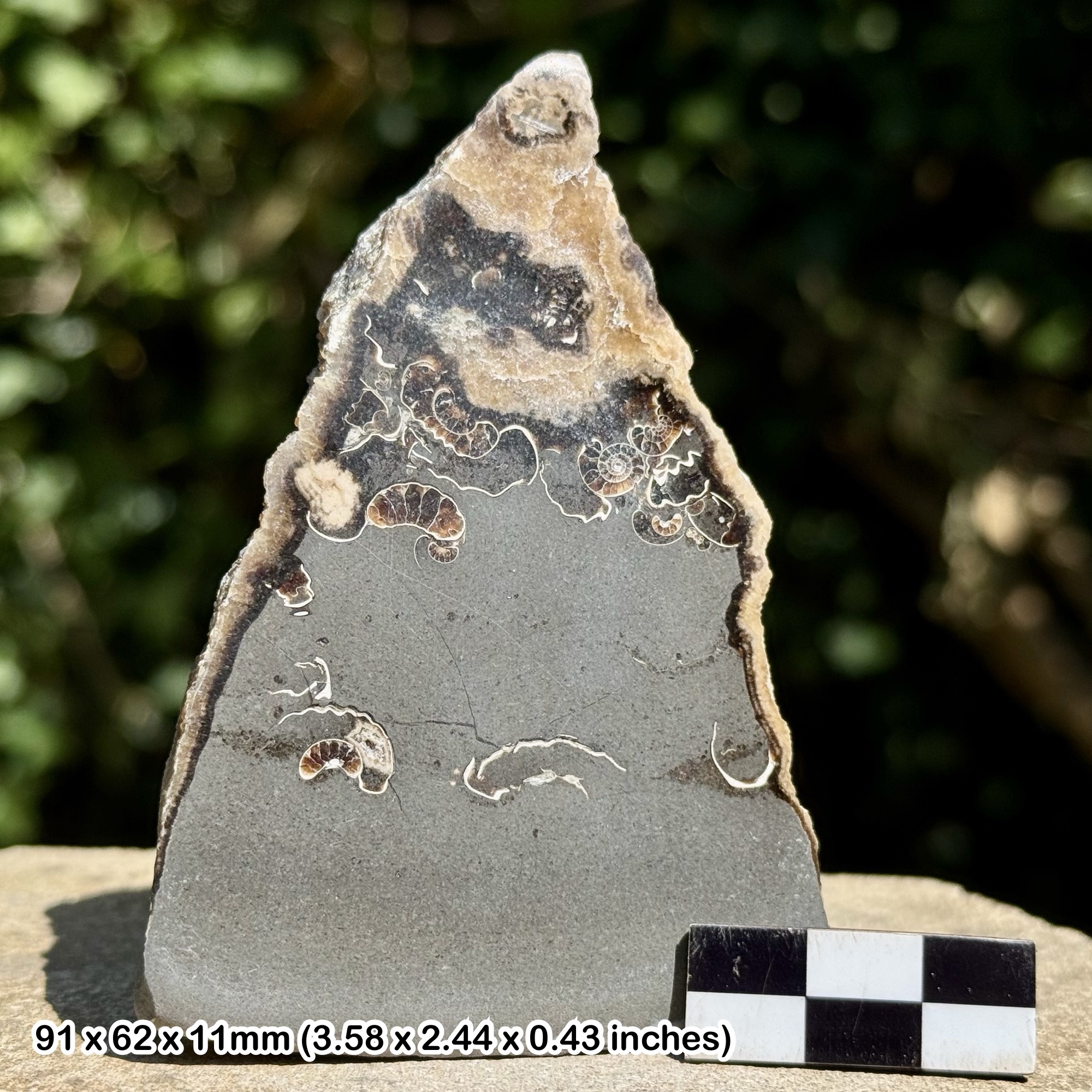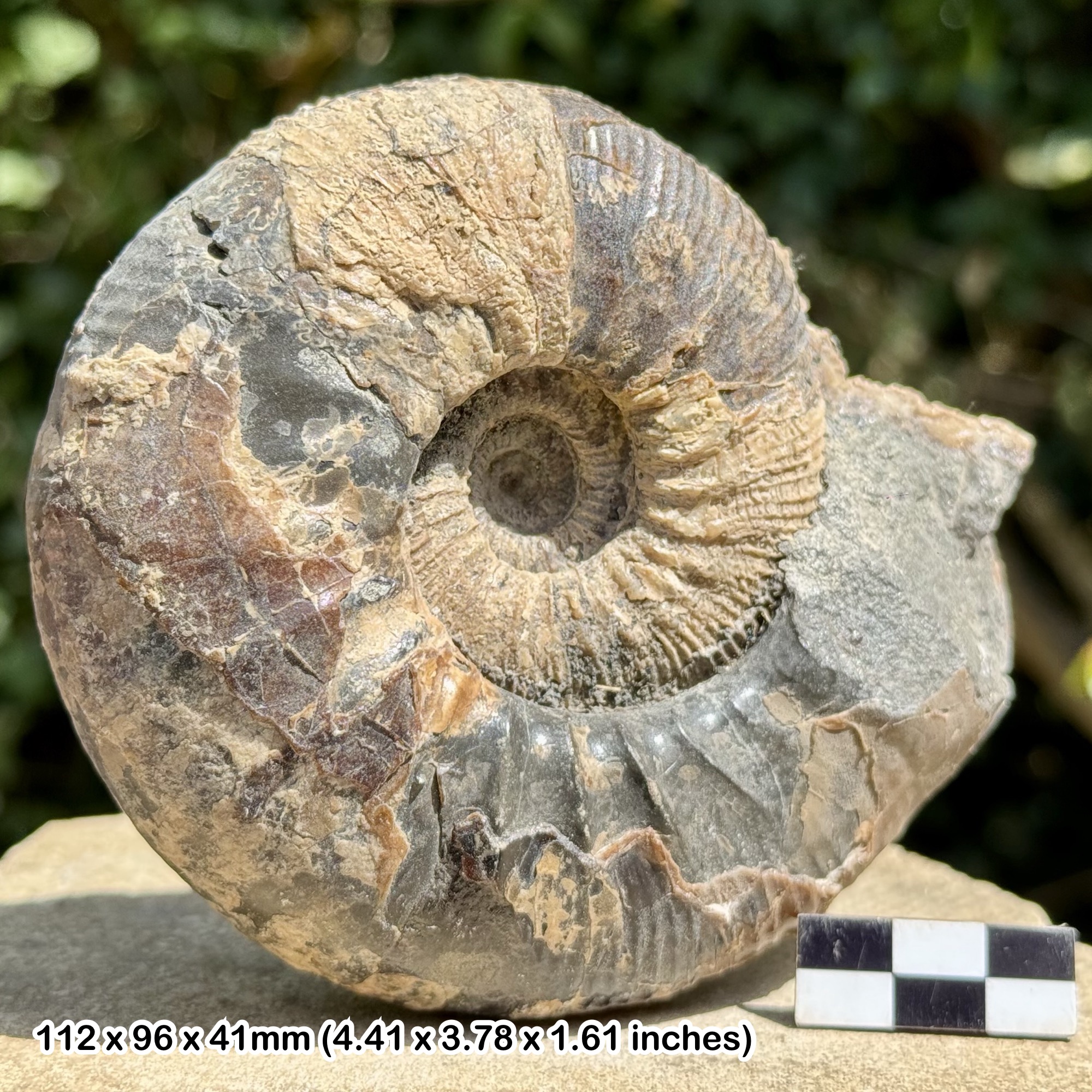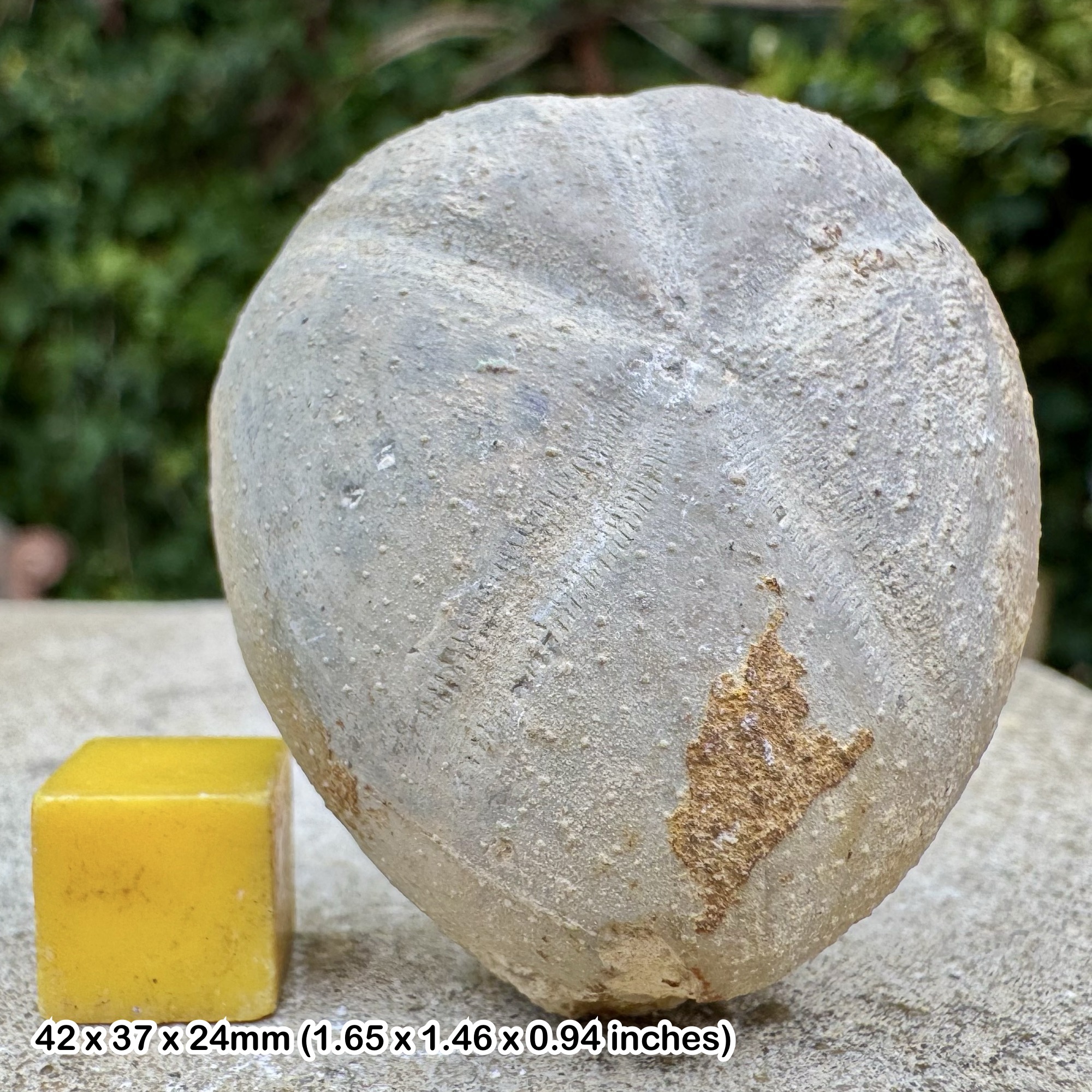
Micraster nodopyge Fossil Echinoid Cretaceous Duck Creek Formation Texas USA Genuine
£ 24.00
AUTHENTIC MICRASTER NODOPYGE FOSSIL ECHINOID FROM TEXASThis is a genuine Micraster nodopyge fossil echinoid from the Duck Creek
Formation, Cretaceous period, found in Grayson County, Texas, USA. The specimen is presented exactly as shown in the photographs, with a 1 cm scale cube for accurate size reference. As with all of our fossils, it is carefully selected for quality and comes with a Certificate of Authenticity, ensuring confidence in its provenance and scientific value. GEOLOGICAL CONTEXT – DUCK CREEK FORMATIONThe Duck Creek Formation is part of the Lower to Middle Cretaceous geological record, dating back approximately 100 to 94 million years ago. It is a well-known marine limestone unit within the Washita Group, renowned for preserving an abundance of invertebrate fossils, particularly echinoids, ammonites, bivalves, and gastropods. The marine environment represented by these strata reflects a warm, shallow epicontinental sea that covered large areas of what is now Texas during the Cretaceous. SCIENTIFIC CLASSIFICATION
• Kingdom: Animalia
• Phylum: Echinodermata
• Class: Echinoidea
• Order: Spatangoida
• Family: Micrasteridae
• Genus: Micraster
• Species: Micraster nodopyge MORPHOLOGICAL FEATURESMicraster nodopyge is a spatangoid echinoid, commonly referred to as a “heart urchin” due to its distinctive shape. Important characteristics include:
• Heart-shaped test (shell) with a well-defined anterior groove, aiding in feeding and sediment displacement.
• Petaloid ambulacra, with pore pairs that supported respiratory tube feet.
• Flattened underside with a centrally placed peristome (mouth) designed for deposit feeding.
• Offset periproct (anus) located toward the posterior margin, typical of burrowing echinoids.The morphology of this species is perfectly adapted for a life spent burrowing just beneath the seafloor, where it would process sediment and extract organic matter. PALEOECOLOGY AND DEPOSITIONAL ENVIRONMENTDuring the Cretaceous, Micraster nodopyge thrived in soft calcareous seafloor sediments, inhabiting warm, shallow seas that were teeming with marine life. Their burrowing behaviour aerated sediments and played an important role in the seafloor ecosystem. Echinoids such as this provide important evidence for paleoenvironmental reconstruction, as their presence and abundance help geologists interpret ancient depositional settings. COLLECTABILITY AND SIGNIFICANCESpecimens of Micraster nodopyge from the Duck Creek Formation in Grayson County are prized by collectors for their preservation, historical importance, and geological context. The distinctive features of this echinoid make it a standout display fossil while also holding considerable scientific interest for those studying Cretaceous echinoid evolution and paleoecology. GUARANTEED AUTHENTICITYThis Micraster nodopyge echinoid fossil from the Duck Creek Formation of Texas is 100% authentic and comes with a Certificate of Authenticity. The fossil pictured is the exact specimen you will receive, ensuring transparency and trust. It represents not just a fascinating display piece, but also a tangible connection to the rich marine ecosystems of the Cretaceous seas of North America.
Formation, Cretaceous period, found in Grayson County, Texas, USA. The specimen is presented exactly as shown in the photographs, with a 1 cm scale cube for accurate size reference. As with all of our fossils, it is carefully selected for quality and comes with a Certificate of Authenticity, ensuring confidence in its provenance and scientific value. GEOLOGICAL CONTEXT – DUCK CREEK FORMATIONThe Duck Creek Formation is part of the Lower to Middle Cretaceous geological record, dating back approximately 100 to 94 million years ago. It is a well-known marine limestone unit within the Washita Group, renowned for preserving an abundance of invertebrate fossils, particularly echinoids, ammonites, bivalves, and gastropods. The marine environment represented by these strata reflects a warm, shallow epicontinental sea that covered large areas of what is now Texas during the Cretaceous. SCIENTIFIC CLASSIFICATION
• Kingdom: Animalia
• Phylum: Echinodermata
• Class: Echinoidea
• Order: Spatangoida
• Family: Micrasteridae
• Genus: Micraster
• Species: Micraster nodopyge MORPHOLOGICAL FEATURESMicraster nodopyge is a spatangoid echinoid, commonly referred to as a “heart urchin” due to its distinctive shape. Important characteristics include:
• Heart-shaped test (shell) with a well-defined anterior groove, aiding in feeding and sediment displacement.
• Petaloid ambulacra, with pore pairs that supported respiratory tube feet.
• Flattened underside with a centrally placed peristome (mouth) designed for deposit feeding.
• Offset periproct (anus) located toward the posterior margin, typical of burrowing echinoids.The morphology of this species is perfectly adapted for a life spent burrowing just beneath the seafloor, where it would process sediment and extract organic matter. PALEOECOLOGY AND DEPOSITIONAL ENVIRONMENTDuring the Cretaceous, Micraster nodopyge thrived in soft calcareous seafloor sediments, inhabiting warm, shallow seas that were teeming with marine life. Their burrowing behaviour aerated sediments and played an important role in the seafloor ecosystem. Echinoids such as this provide important evidence for paleoenvironmental reconstruction, as their presence and abundance help geologists interpret ancient depositional settings. COLLECTABILITY AND SIGNIFICANCESpecimens of Micraster nodopyge from the Duck Creek Formation in Grayson County are prized by collectors for their preservation, historical importance, and geological context. The distinctive features of this echinoid make it a standout display fossil while also holding considerable scientific interest for those studying Cretaceous echinoid evolution and paleoecology. GUARANTEED AUTHENTICITYThis Micraster nodopyge echinoid fossil from the Duck Creek Formation of Texas is 100% authentic and comes with a Certificate of Authenticity. The fossil pictured is the exact specimen you will receive, ensuring transparency and trust. It represents not just a fascinating display piece, but also a tangible connection to the rich marine ecosystems of the Cretaceous seas of North America.