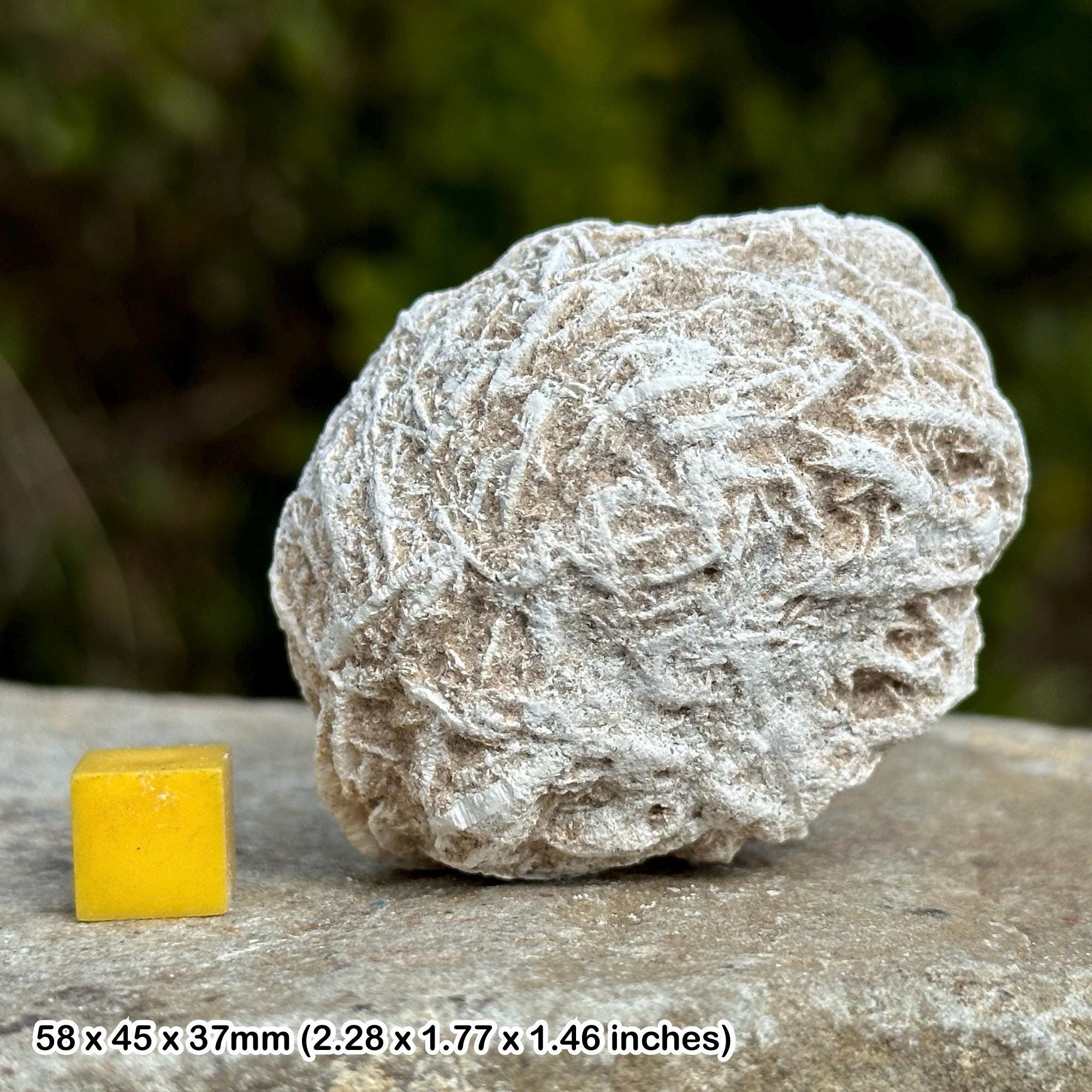
Desert Rose Gypsum Crystal Mineral Specimen Mexico Natural Sand Gypsum Rose Formation Collector Display
£ 3.60
DESERT ROSE GYPSUM CRYSTAL – NATURAL MINERAL FORMATION FROM MEXICOThis genuine Desert Rose Gypsum mineral specimen from Mexico displays the
distinctive rosette crystal formation that gives this mineral its well-known “desert rose” appearance. Desert rose formations develop when gypsum crystals grow in arid, sandy environments, trapping sand grains within the crystal structure and forming layered, petal-like shapes that resemble a blooming rose.The specimen has been carefully selected for its natural structure and visual appeal. The listing photographs show the exact specimen you will receive, allowing collectors and buyers to examine the rosette formation, colour tones, and mineral structure prior to purchase. For accurate dimensions and scale, please refer to the sizing provided in the photographs.Each piece includes a Certificate of Authenticity lifetime guarantee generic card, confirming the specimen is a genuine mineral. MINERAL SPECIES AND CRYSTAL STRUCTUREDesert rose formations are composed primarily of gypsum, a sulfate mineral with the chemical formula CaSO₄·2H₂O. Gypsum belongs to the sulfate mineral group and is one of the most widely occurring evaporite minerals found in sedimentary environments.Gypsum crystallises in the monoclinic crystal system, but in desert rose specimens the crystals grow in clusters of flat, blade-like formations. These crystals radiate outward from a central point, forming the layered rosette pattern characteristic of desert rose minerals.As the crystals develop, fine sand particles become incorporated between the crystal layers, creating the textured surfaces and earthy tones that distinguish desert rose specimens from other gypsum crystals. APPEARANCE, COLOUR AND PHYSICAL CHARACTERISTICSDesert rose gypsum crystals typically display soft tan, beige, sandy brown, or pale cream colours depending on the type and concentration of sand and mineral impurities incorporated during growth.The crystal structure consists of thin, flat gypsum blades arranged in rose-like clusters or rosettes, giving the specimen its unique floral appearance.Typical physical characteristics include:• Mineral Species: Gypsum• Chemical Formula: CaSO₄·2H₂O• Mineral Group: Sulfate• Crystal System: Monoclinic• Colour: Beige, tan, sandy brown, cream• Transparency: Translucent to opaque• Lustre: Pearly to dull due to sand inclusions• Mohs Hardness: Approximately 2The relatively soft hardness of gypsum means the mineral can be scratched by harder materials, which is typical for sulfate minerals. GEOLOGICAL FORMATION OF DESERT ROSE GYPSUMDesert rose formations develop in arid desert environments where mineral-rich groundwater evaporates within sandy sediment layers.As water containing dissolved calcium sulfate evaporates, gypsum begins to crystallise within the sand. During crystal growth, sand grains become trapped within the developing gypsum crystals.Over time, the gypsum crystals grow outward in radiating clusters, forming rosette-shaped mineral aggregates that resemble the petals of a rose.These formations are most commonly found in evaporite deposits, where mineral-rich groundwater repeatedly evaporates under hot, dry conditions.Desert rose gypsum specimens are frequently associated with other evaporite minerals such as selenite, anhydrite, calcite, and halite, depending on the geological environment.Mexico hosts several desert regions where the combination of arid climate, sandy sediments, and mineral-rich groundwater provides suitable conditions for desert rose formation. COLLECTING AND DISPLAY APPEALDesert rose gypsum specimens are popular among mineral collectors, geology enthusiasts, and natural history collectors due to their distinctive natural rosette formations.The layered petal-like structure creates visually striking mineral specimens that clearly illustrate crystal growth patterns within sedimentary environments.Because each desert rose forms under slightly different environmental conditions, no two specimens develop identical shapes or arrangements of crystal blades. This natural variation makes every specimen unique.Desert rose minerals are commonly displayed in mineral collections, geology displays, educational exhibits, and natural history cabinets due to their recognisable shape and geological significance.In some cultural traditions, desert rose crystals have been traditionally associated with symbolic meanings relating to harmony or natural balance, though these interpretations are cultural perspectives rather than scientifically established properties. AUTHENTICITY AND SPECIMEN INFORMATION• Mineral Species: Gypsum• Formation Type: Desert Rose• Chemical Formula: CaSO₄·2H₂O• Mineral Group: Sulfate• Crystal System: Monoclinic• Locality: Mexico• Colour: Beige to sandy brown tones• Transparency: Translucent to opaque• Lustre: Pearly to dull• Hardness: 2 on the Mohs scale• Formation Environment: Evaporite desert sediment deposits• Associated Minerals: Selenite, anhydrite, calcite, halite• Authenticity: Genuine natural mineral specimen• Included: Certificate of Authenticity lifetime guarantee generic card• Exact Item: The desert rose specimen shown in the photographs is the piece you will receiveThis Desert Rose Gypsum specimen from Mexico is a striking natural mineral formation illustrating the interaction of crystal growth and desert sediment environments, making it an excellent addition to mineral collections, geological displays, or natural history exhibits.
distinctive rosette crystal formation that gives this mineral its well-known “desert rose” appearance. Desert rose formations develop when gypsum crystals grow in arid, sandy environments, trapping sand grains within the crystal structure and forming layered, petal-like shapes that resemble a blooming rose.The specimen has been carefully selected for its natural structure and visual appeal. The listing photographs show the exact specimen you will receive, allowing collectors and buyers to examine the rosette formation, colour tones, and mineral structure prior to purchase. For accurate dimensions and scale, please refer to the sizing provided in the photographs.Each piece includes a Certificate of Authenticity lifetime guarantee generic card, confirming the specimen is a genuine mineral. MINERAL SPECIES AND CRYSTAL STRUCTUREDesert rose formations are composed primarily of gypsum, a sulfate mineral with the chemical formula CaSO₄·2H₂O. Gypsum belongs to the sulfate mineral group and is one of the most widely occurring evaporite minerals found in sedimentary environments.Gypsum crystallises in the monoclinic crystal system, but in desert rose specimens the crystals grow in clusters of flat, blade-like formations. These crystals radiate outward from a central point, forming the layered rosette pattern characteristic of desert rose minerals.As the crystals develop, fine sand particles become incorporated between the crystal layers, creating the textured surfaces and earthy tones that distinguish desert rose specimens from other gypsum crystals. APPEARANCE, COLOUR AND PHYSICAL CHARACTERISTICSDesert rose gypsum crystals typically display soft tan, beige, sandy brown, or pale cream colours depending on the type and concentration of sand and mineral impurities incorporated during growth.The crystal structure consists of thin, flat gypsum blades arranged in rose-like clusters or rosettes, giving the specimen its unique floral appearance.Typical physical characteristics include:• Mineral Species: Gypsum• Chemical Formula: CaSO₄·2H₂O• Mineral Group: Sulfate• Crystal System: Monoclinic• Colour: Beige, tan, sandy brown, cream• Transparency: Translucent to opaque• Lustre: Pearly to dull due to sand inclusions• Mohs Hardness: Approximately 2The relatively soft hardness of gypsum means the mineral can be scratched by harder materials, which is typical for sulfate minerals. GEOLOGICAL FORMATION OF DESERT ROSE GYPSUMDesert rose formations develop in arid desert environments where mineral-rich groundwater evaporates within sandy sediment layers.As water containing dissolved calcium sulfate evaporates, gypsum begins to crystallise within the sand. During crystal growth, sand grains become trapped within the developing gypsum crystals.Over time, the gypsum crystals grow outward in radiating clusters, forming rosette-shaped mineral aggregates that resemble the petals of a rose.These formations are most commonly found in evaporite deposits, where mineral-rich groundwater repeatedly evaporates under hot, dry conditions.Desert rose gypsum specimens are frequently associated with other evaporite minerals such as selenite, anhydrite, calcite, and halite, depending on the geological environment.Mexico hosts several desert regions where the combination of arid climate, sandy sediments, and mineral-rich groundwater provides suitable conditions for desert rose formation. COLLECTING AND DISPLAY APPEALDesert rose gypsum specimens are popular among mineral collectors, geology enthusiasts, and natural history collectors due to their distinctive natural rosette formations.The layered petal-like structure creates visually striking mineral specimens that clearly illustrate crystal growth patterns within sedimentary environments.Because each desert rose forms under slightly different environmental conditions, no two specimens develop identical shapes or arrangements of crystal blades. This natural variation makes every specimen unique.Desert rose minerals are commonly displayed in mineral collections, geology displays, educational exhibits, and natural history cabinets due to their recognisable shape and geological significance.In some cultural traditions, desert rose crystals have been traditionally associated with symbolic meanings relating to harmony or natural balance, though these interpretations are cultural perspectives rather than scientifically established properties. AUTHENTICITY AND SPECIMEN INFORMATION• Mineral Species: Gypsum• Formation Type: Desert Rose• Chemical Formula: CaSO₄·2H₂O• Mineral Group: Sulfate• Crystal System: Monoclinic• Locality: Mexico• Colour: Beige to sandy brown tones• Transparency: Translucent to opaque• Lustre: Pearly to dull• Hardness: 2 on the Mohs scale• Formation Environment: Evaporite desert sediment deposits• Associated Minerals: Selenite, anhydrite, calcite, halite• Authenticity: Genuine natural mineral specimen• Included: Certificate of Authenticity lifetime guarantee generic card• Exact Item: The desert rose specimen shown in the photographs is the piece you will receiveThis Desert Rose Gypsum specimen from Mexico is a striking natural mineral formation illustrating the interaction of crystal growth and desert sediment environments, making it an excellent addition to mineral collections, geological displays, or natural history exhibits.
Other Products