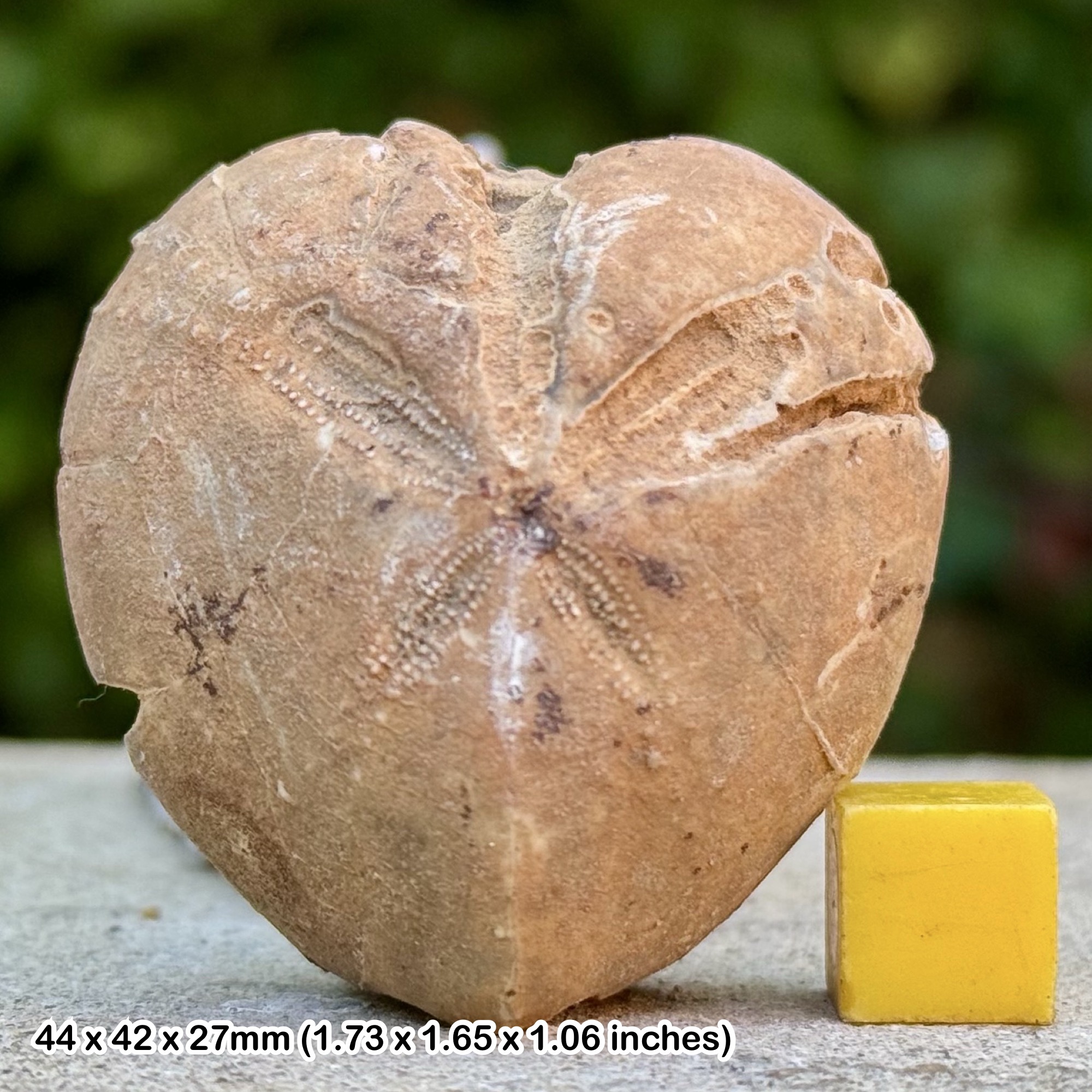
Micraster Flint Fossil Echinoid Chalk Cretaceous Eastbourne UK Authentic Collector Specimen with Certificate of Authenticity
£ 24.00
This listing offers a genuine Micraster flint fossil echinoid, collected from
the Upper Cretaceous Chalk of Eastbourne, East Sussex, UK. Dating to approximately 90–70 million years ago, this specimen represents an extinct heart urchin that thrived in the warm, shallow seas of the Late Cretaceous.The fossil shown in the photographs is the exact specimen you will receive. A scale cube = 1 cm is included to provide accurate size reference. As with all our natural history specimens, this echinoid is 100% genuine and comes with a Certificate of Authenticity, making it an excellent choice for collectors, educators, and display. GEOLOGICAL CONTEXT: CHALK OF THE UPPER CRETACEOUSThe Eastbourne Chalk forms part of the famous White Chalk cliffs of southern England, deposited during the Late Cretaceous when much of Europe was submerged beneath epicontinental seas. These chalk deposits are composed primarily of microscopic calcareous remains of planktonic algae known as coccolithophores, which accumulated to form thick limestone successions over millions of years.Within these chalk deposits, nodules of flint frequently occur, preserving fossils in remarkable detail. The preservation of echinoids such as Micraster in flint provides durability and allows delicate features of the shell (test) to remain intact for millions of years.The chalk of Eastbourne is one of the richest fossil-bearing units in Britain, yielding ammonites, brachiopods, bivalves, sponges, corals, and echinoids. Its significance for biostratigraphy makes it an internationally important geological site. THE SPECIES: MICRASTERMicraster is one of the most iconic genera of fossil echinoids and is especially common in the British Chalk. Belonging to the order Spatangoida (heart urchins), Micraster is notable for its bilateral symmetry and its adaptations to a burrowing lifestyle.Key features of Micraster include:
• A distinct heart-shaped outline of the test.
• Well-developed petaloid ambulacra radiating across the surface.
• A flattened underside adapted for shallow burrowing into chalky sediments.
• Surface pore pairs for tube feet, associated with movement and respiration.
• Evidence of evolutionary variation across stratigraphic layers, making it a key index fossil for the Late Cretaceous.These features reflect its infaunal lifestyle, where it lived buried just beneath the seabed, feeding as a deposit feeder on organic-rich sediments. MORPHOLOGICAL AND SCIENTIFIC FEATURES
• Phylum: Echinodermata
• Class: Echinoidea
• Order: Spatangoida
• Genus: Micraster
• Geological Age: Upper Cretaceous (c. 90–70 Ma)
• Locality: Eastbourne, East Sussex, UK
• Formation: Chalk Group
• Preservation: Flint replacement of original calcareous test
• Lifestyle: Burrowing deposit feeder in chalk marine sediments
• Scientific Value: Classic biostratigraphic marker fossil of the British Chalk COLLECTOR AND DISPLAY VALUEFossils of Micraster are among the most recognisable and widely collected from the British Cretaceous. Their distinctive form and frequent preservation in flint make them striking display pieces as well as scientifically valuable specimens.This specimen from Eastbourne, a world-famous chalk locality, enhances its appeal for collectors. Whether for academic study, fossil collecting, or natural history display, this Micraster fossil echinoid represents an authentic piece of Britain’s geological heritage. Supplied with a Certificate of Authenticity, it is both a trustworthy specimen and a fascinating connection to the marine ecosystems of the Late Cretaceous.
the Upper Cretaceous Chalk of Eastbourne, East Sussex, UK. Dating to approximately 90–70 million years ago, this specimen represents an extinct heart urchin that thrived in the warm, shallow seas of the Late Cretaceous.The fossil shown in the photographs is the exact specimen you will receive. A scale cube = 1 cm is included to provide accurate size reference. As with all our natural history specimens, this echinoid is 100% genuine and comes with a Certificate of Authenticity, making it an excellent choice for collectors, educators, and display. GEOLOGICAL CONTEXT: CHALK OF THE UPPER CRETACEOUSThe Eastbourne Chalk forms part of the famous White Chalk cliffs of southern England, deposited during the Late Cretaceous when much of Europe was submerged beneath epicontinental seas. These chalk deposits are composed primarily of microscopic calcareous remains of planktonic algae known as coccolithophores, which accumulated to form thick limestone successions over millions of years.Within these chalk deposits, nodules of flint frequently occur, preserving fossils in remarkable detail. The preservation of echinoids such as Micraster in flint provides durability and allows delicate features of the shell (test) to remain intact for millions of years.The chalk of Eastbourne is one of the richest fossil-bearing units in Britain, yielding ammonites, brachiopods, bivalves, sponges, corals, and echinoids. Its significance for biostratigraphy makes it an internationally important geological site. THE SPECIES: MICRASTERMicraster is one of the most iconic genera of fossil echinoids and is especially common in the British Chalk. Belonging to the order Spatangoida (heart urchins), Micraster is notable for its bilateral symmetry and its adaptations to a burrowing lifestyle.Key features of Micraster include:
• A distinct heart-shaped outline of the test.
• Well-developed petaloid ambulacra radiating across the surface.
• A flattened underside adapted for shallow burrowing into chalky sediments.
• Surface pore pairs for tube feet, associated with movement and respiration.
• Evidence of evolutionary variation across stratigraphic layers, making it a key index fossil for the Late Cretaceous.These features reflect its infaunal lifestyle, where it lived buried just beneath the seabed, feeding as a deposit feeder on organic-rich sediments. MORPHOLOGICAL AND SCIENTIFIC FEATURES
• Phylum: Echinodermata
• Class: Echinoidea
• Order: Spatangoida
• Genus: Micraster
• Geological Age: Upper Cretaceous (c. 90–70 Ma)
• Locality: Eastbourne, East Sussex, UK
• Formation: Chalk Group
• Preservation: Flint replacement of original calcareous test
• Lifestyle: Burrowing deposit feeder in chalk marine sediments
• Scientific Value: Classic biostratigraphic marker fossil of the British Chalk COLLECTOR AND DISPLAY VALUEFossils of Micraster are among the most recognisable and widely collected from the British Cretaceous. Their distinctive form and frequent preservation in flint make them striking display pieces as well as scientifically valuable specimens.This specimen from Eastbourne, a world-famous chalk locality, enhances its appeal for collectors. Whether for academic study, fossil collecting, or natural history display, this Micraster fossil echinoid represents an authentic piece of Britain’s geological heritage. Supplied with a Certificate of Authenticity, it is both a trustworthy specimen and a fascinating connection to the marine ecosystems of the Late Cretaceous.