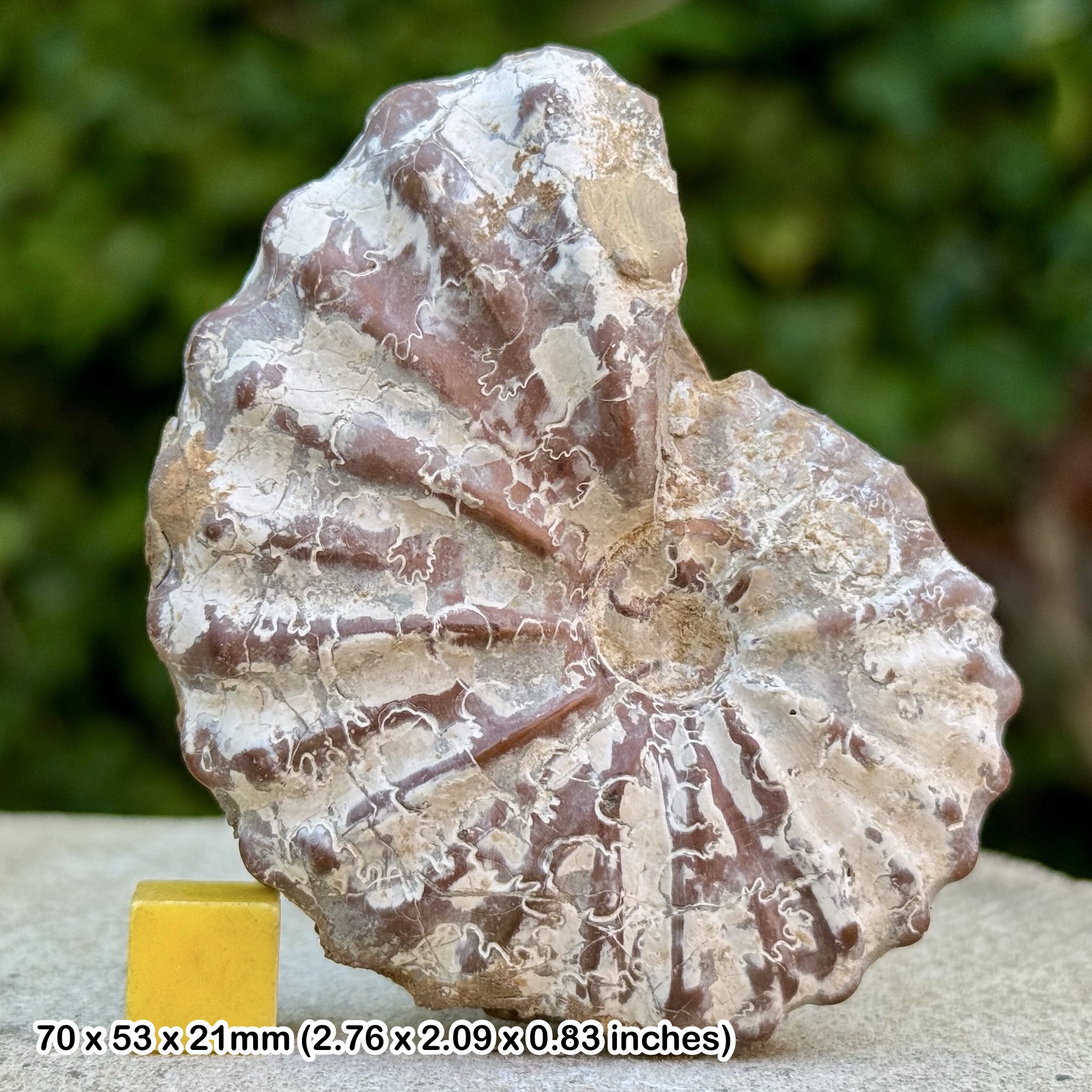
RARE Protexanites bourgeoisianus Ammonite Fossil Cenomanian Cretaceous Eagle Ford Texas with Certificate
£ 24.00
This is a rare and scientifically important Protexanites (Protexanites)
bourgeoisianus ammonite fossil, discovered in the Eagle Ford Formation of Texas, USA, and dating to the Cenomanian stage of the Late Cretaceous (approximately 100–94 million years ago). Ammonites such as Protexanites are highly valued for their distinct morphology and their role as biostratigraphic index fossils for Cenomanian marine deposits.The specimen offered here has been carefully selected for both its quality and authenticity. The photos provided show the exact fossil you will receive, with a 1 cm scale cube included to indicate size. Like all of our specimens, this ammonite comes with a Certificate of Authenticity for complete peace of mind. GEOLOGICAL CONTEXTThe Eagle Ford Formation is a world-renowned geological unit of Cenomanian age. Formed in a shallow epicontinental sea that covered much of North America during the Late Cretaceous, it is composed primarily of calcareous shales and marls, rich in organic material. These sediments created ideal conditions for the preservation of marine fossils, including ammonites, bivalves, gastropods, fish, and marine reptiles.The Cenomanian marks the beginning of the Late Cretaceous and was a time of rising sea levels and global warmth, resulting in expansive shallow seas. Fossils from this interval capture an important evolutionary moment, as marine life flourished and diversified. SCIENTIFIC CLASSIFICATION
• Phylum: Mollusca
• Class: Cephalopoda
• Order: Ammonitida
• Superfamily: Acanthoceratoidea
• Family: Acanthoceratidae
• Genus: Protexanites
• Species: Protexanites bourgeoisianusAmmonites of this genus are characterised by strong ornamentation and distinctive coiling, making them identifiable and useful in stratigraphic studies. MORPHOLOGY AND FEATURESThe Protexanites bourgeoisianus is notable for its:
• Robust, moderately evolute shell, with whorls clearly visible.
• Prominent ribbing that often extends across the shell, giving it a striking appearance.
• Tuberculation along the ribs, a diagnostic feature of many acanthoceratid ammonites.
• Complex suture patterns, which add to the beauty and scientific value of the specimen.These features suggest an ammonite well-adapted for buoyancy and active predation in the shallow, nutrient-rich seas of the Cretaceous. PALEOENVIRONMENTDuring the Cenomanian, Texas was submerged beneath the Western Interior Seaway, a vast inland sea stretching from the Gulf of Mexico to the Arctic Ocean. This warm, shallow environment was teeming with life, making it one of the most important fossil-rich regions of the Late Cretaceous.Ammonites such as Protexanites occupied a crucial role as mid-level predators, feeding on small crustaceans, molluscs, and planktonic organisms. Their shells, once shed upon death, settled into the fine marine sediments, where they became preserved as fossils. COLLECTOR AND DISPLAY VALUEThis specimen represents not only a rare ammonite species but also a tangible piece of the dynamic story of the Western Interior Seaway. Its distinct ribbing and strong ornamentation make it a display fossil of real impact, while its scientific importance lies in its use as a biostratigraphic marker for Cenomanian deposits.
• Locality: Eagle Ford Formation, Texas, USA
• Age: Cenomanian, Cretaceous (~100–94 million years ago)
• Fossil Type: Ammonite (Protexanites bourgeoisianus)A must-have for serious collectors, educators, or enthusiasts, this Protexanites ammonite fossil combines rarity, visual appeal, and geological significance, and it comes with the assurance of authenticity.
bourgeoisianus ammonite fossil, discovered in the Eagle Ford Formation of Texas, USA, and dating to the Cenomanian stage of the Late Cretaceous (approximately 100–94 million years ago). Ammonites such as Protexanites are highly valued for their distinct morphology and their role as biostratigraphic index fossils for Cenomanian marine deposits.The specimen offered here has been carefully selected for both its quality and authenticity. The photos provided show the exact fossil you will receive, with a 1 cm scale cube included to indicate size. Like all of our specimens, this ammonite comes with a Certificate of Authenticity for complete peace of mind. GEOLOGICAL CONTEXTThe Eagle Ford Formation is a world-renowned geological unit of Cenomanian age. Formed in a shallow epicontinental sea that covered much of North America during the Late Cretaceous, it is composed primarily of calcareous shales and marls, rich in organic material. These sediments created ideal conditions for the preservation of marine fossils, including ammonites, bivalves, gastropods, fish, and marine reptiles.The Cenomanian marks the beginning of the Late Cretaceous and was a time of rising sea levels and global warmth, resulting in expansive shallow seas. Fossils from this interval capture an important evolutionary moment, as marine life flourished and diversified. SCIENTIFIC CLASSIFICATION
• Phylum: Mollusca
• Class: Cephalopoda
• Order: Ammonitida
• Superfamily: Acanthoceratoidea
• Family: Acanthoceratidae
• Genus: Protexanites
• Species: Protexanites bourgeoisianusAmmonites of this genus are characterised by strong ornamentation and distinctive coiling, making them identifiable and useful in stratigraphic studies. MORPHOLOGY AND FEATURESThe Protexanites bourgeoisianus is notable for its:
• Robust, moderately evolute shell, with whorls clearly visible.
• Prominent ribbing that often extends across the shell, giving it a striking appearance.
• Tuberculation along the ribs, a diagnostic feature of many acanthoceratid ammonites.
• Complex suture patterns, which add to the beauty and scientific value of the specimen.These features suggest an ammonite well-adapted for buoyancy and active predation in the shallow, nutrient-rich seas of the Cretaceous. PALEOENVIRONMENTDuring the Cenomanian, Texas was submerged beneath the Western Interior Seaway, a vast inland sea stretching from the Gulf of Mexico to the Arctic Ocean. This warm, shallow environment was teeming with life, making it one of the most important fossil-rich regions of the Late Cretaceous.Ammonites such as Protexanites occupied a crucial role as mid-level predators, feeding on small crustaceans, molluscs, and planktonic organisms. Their shells, once shed upon death, settled into the fine marine sediments, where they became preserved as fossils. COLLECTOR AND DISPLAY VALUEThis specimen represents not only a rare ammonite species but also a tangible piece of the dynamic story of the Western Interior Seaway. Its distinct ribbing and strong ornamentation make it a display fossil of real impact, while its scientific importance lies in its use as a biostratigraphic marker for Cenomanian deposits.
• Locality: Eagle Ford Formation, Texas, USA
• Age: Cenomanian, Cretaceous (~100–94 million years ago)
• Fossil Type: Ammonite (Protexanites bourgeoisianus)A must-have for serious collectors, educators, or enthusiasts, this Protexanites ammonite fossil combines rarity, visual appeal, and geological significance, and it comes with the assurance of authenticity.
Other Products