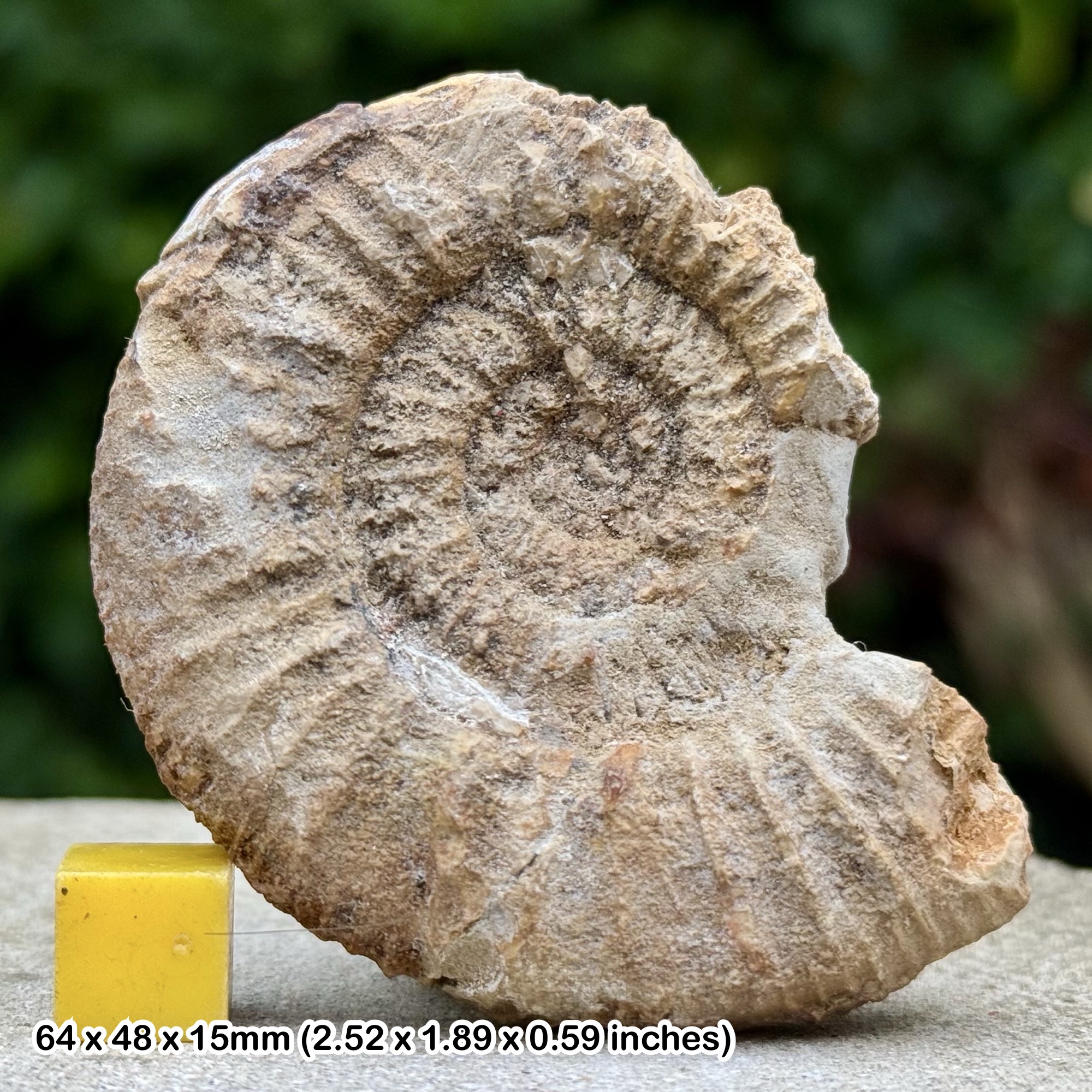
Olcostephanus astierianus ‘depressus’ Ammonite Fossil from Upper Valanginian Cretaceous Thorne 06 France Authentic
£ 12.60
GEOLOGICAL CONTEXT AND PROVENANCEThis specimen is a genuine Olcostephanus astierianus “depressus” ammonite fossil
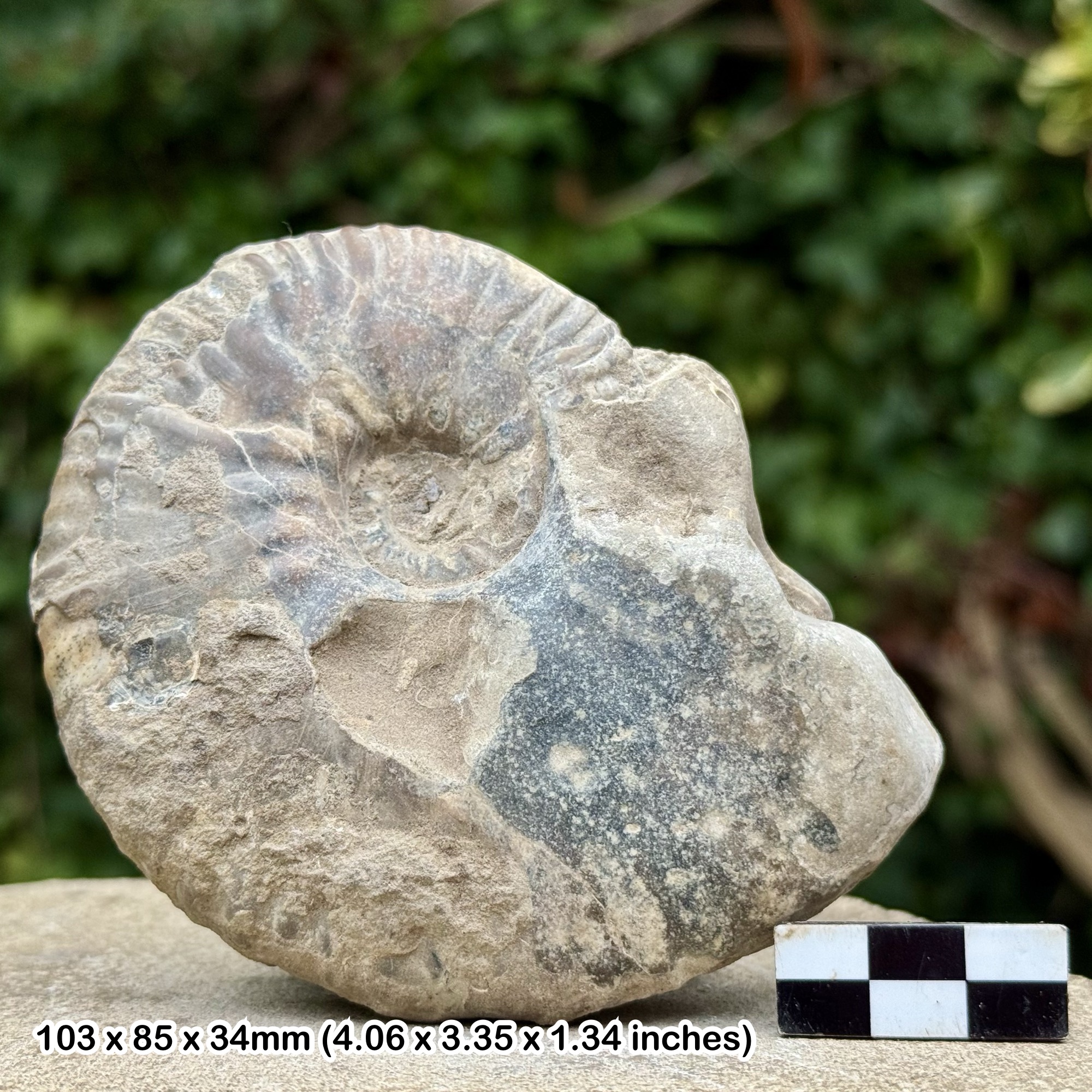
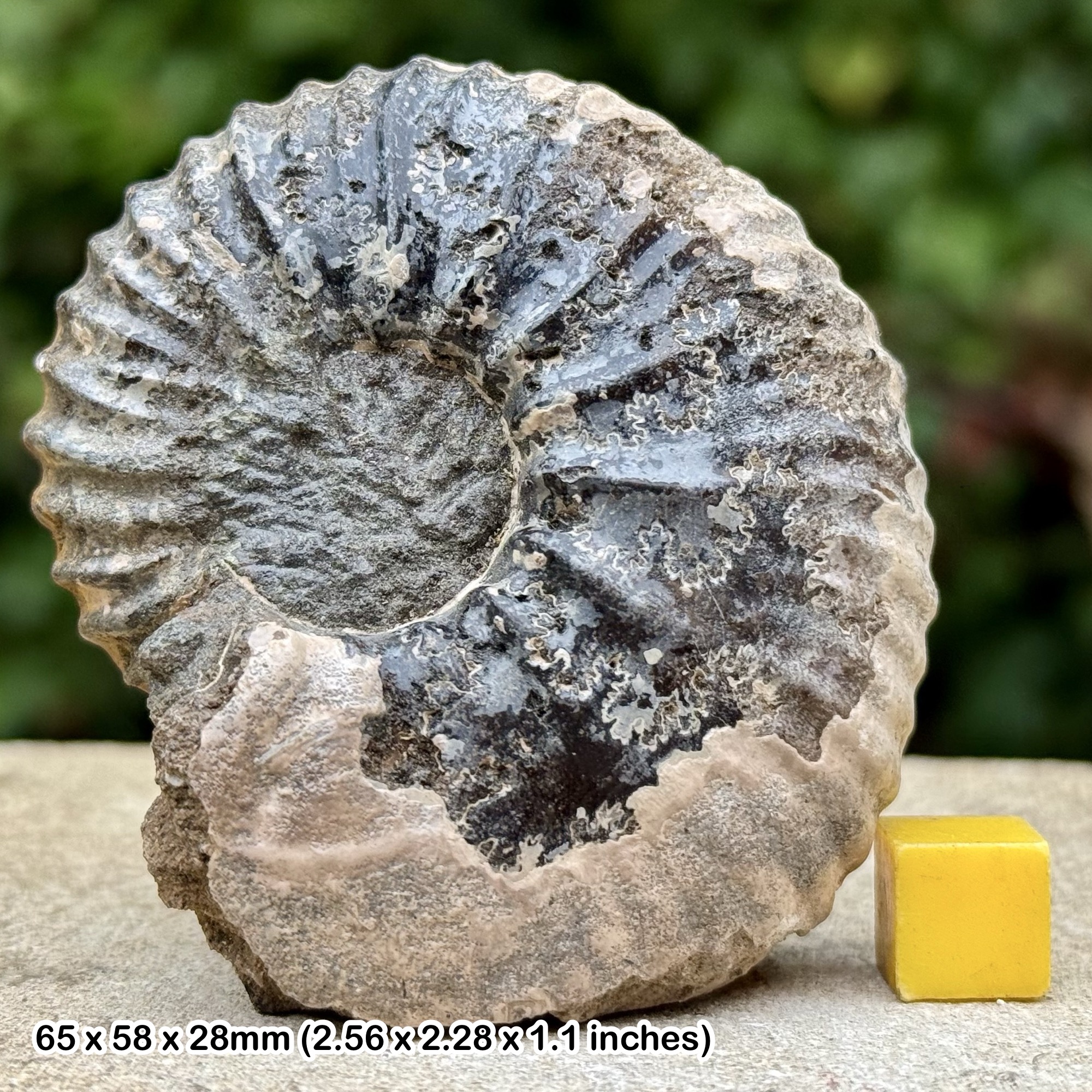
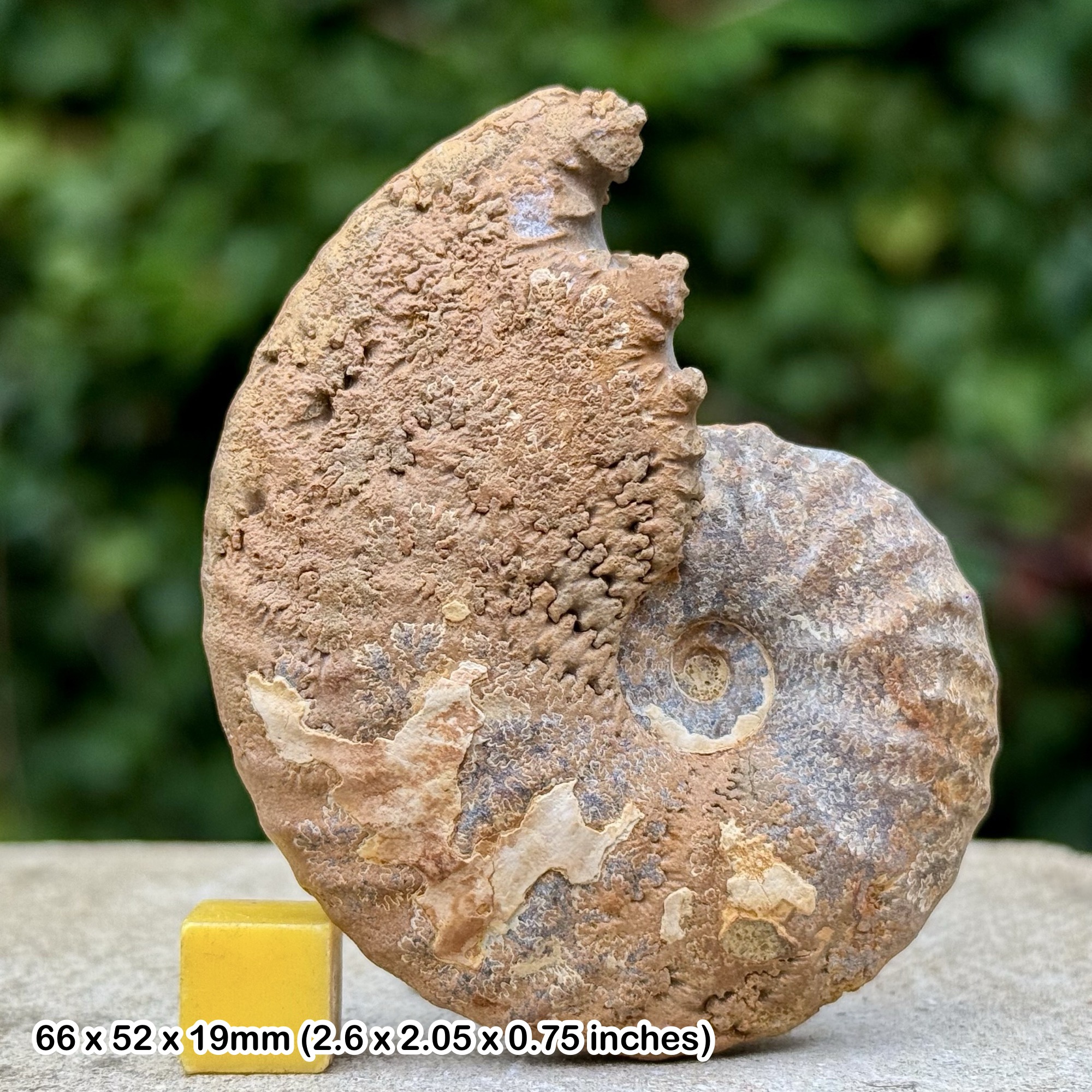
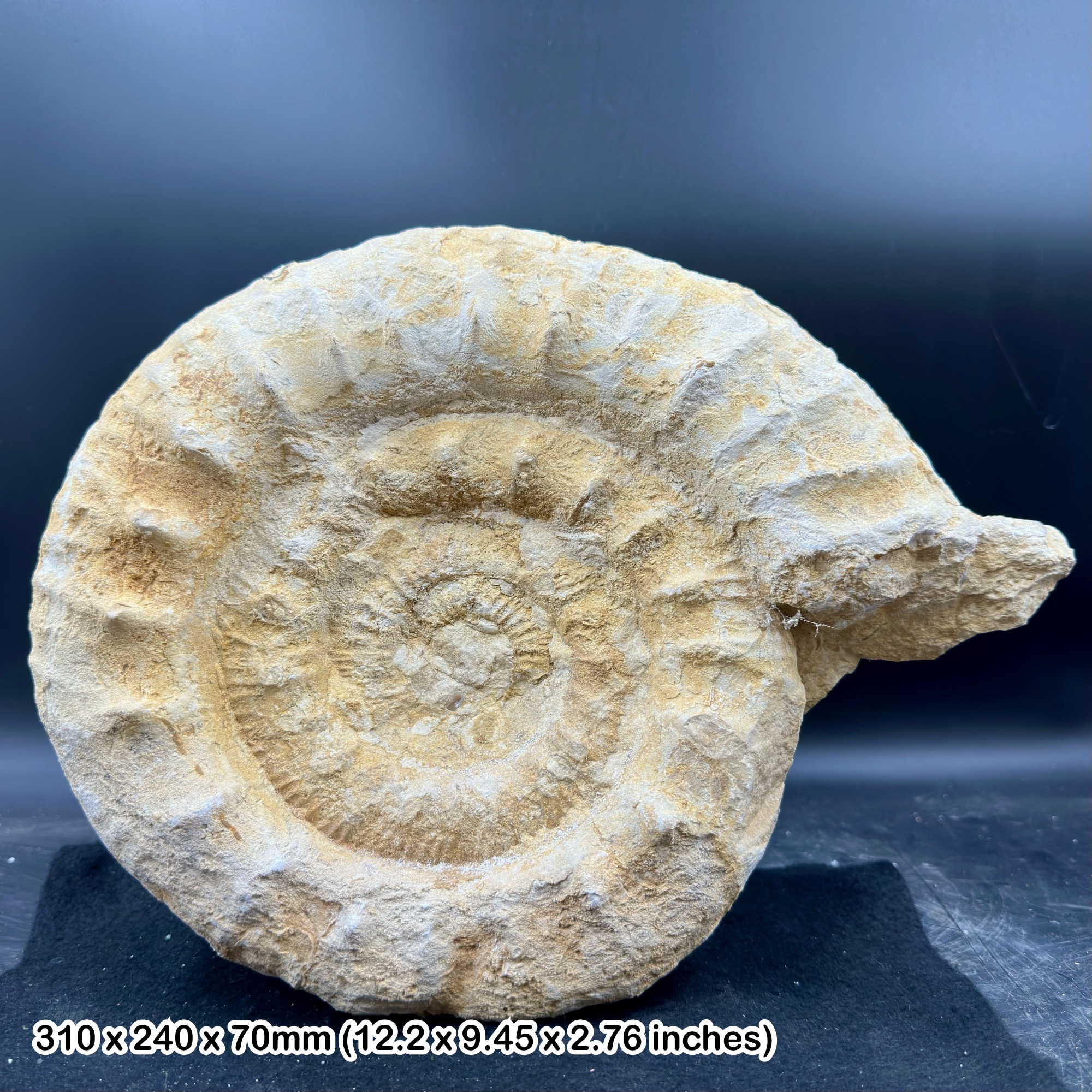
from the Upper Valanginian Stage of the Early Cretaceous Period, dating to approximately 137 – 133 million years ago. It was discovered in Thorne, Alpes-Maritimes, France, a location well known for its fossiliferous Cretaceous deposits. These beds were laid down in shallow marine environments influenced by the ancient Tethys Ocean, providing superb preservation of ammonites and other marine organisms.The Valanginian is an important interval for stratigraphic studies as it directly follows the Berriasian, the earliest stage of the Cretaceous. Ammonites from this time, including Olcostephanus, are essential index fossils that allow geologists to subdivide and correlate rock layers across wide regions. FOSSIL TYPE AND SPECIES INFORMATIONOlcostephanus astierianus “depressus” belongs to the Order Ammonitida, Superfamily Perisphinctoidea, and Family Olcostephanidae. The genus Olcostephanus is well documented in Cretaceous marine deposits and is especially noted for its stratigraphic importance in Valanginian and Hauterivian zones.The species astierianus exhibits multiple subspecies and varieties, with “depressus” referring to a specific morphological variant. These ammonites are characterised by their flattened whorls and strong ribbing, features that distinguish them from other closely related forms. Their distinct shell morphology has made them crucial reference points in palaeontological classification and biozonation. MORPHOLOGICAL FEATURES AND IDENTIFICATIONThis specimen displays the hallmark traits of Olcostephanus astierianus “depressus.” The shell is evolute, exposing the earlier whorls, and exhibits a slightly depressed whorl section, from which the name derives. Its ribs are bold and regular, extending across the flanks and continuing over the venter. These ribs may occasionally bifurcate, giving the ammonite an intricate yet symmetrical appearance.The robustness of the ribbing is both diagnostic and functional, reinforcing the shell against external pressures. Like other ammonites, the chambered structure of the shell provided buoyancy regulation, enabling it to rise or sink in the water column. This adaptation, combined with a streamlined shape, allowed Olcostephanus to be an efficient swimmer and active predator in Early Cretaceous seas. DEPOSITIONAL ENVIRONMENTDuring the Upper Valanginian, the Thorne area formed part of a subtropical shallow marine platform. These warm waters, influenced by the Tethys Ocean, supported a vibrant ecosystem of ammonites, belemnites, gastropods, bivalves, echinoids, and marine reptiles. Sedimentation consisted largely of limestones and marls, laid down under stable marine conditions.These sediments provided ideal conditions for fossil preservation, with ammonites such as Olcostephanus astierianus “depressus” often fossilised with fine detail intact. Fossils from this region are essential for reconstructing Early Cretaceous palaeoenvironments and evolutionary histories. COLLECTOR APPEAL AND AUTHENTICITYThis Olcostephanus astierianus “depressus” ammonite fossil is a rare and scientifically important specimen. Its distinctive depressed shell form, well-preserved ribbing, and provenance from the Valanginian strata of Thorne, France, make it highly desirable for collectors, researchers, and educators.
• 100% Genuine Specimen – Supplied with a Certificate of Authenticity.
• Exact Fossil Shown – The photographs show the actual fossil you will receive.
• Scale Reference – Scale rule squares / cube = 1 cm. Please consult images for accurate sizing.This carefully selected Olcostephanus astierianus “depressus” fossil ammonite embodies both scientific and aesthetic value, making it a perfect addition to any fossil collection or natural history display.
from the Upper Valanginian Stage of the Early Cretaceous Period, dating to approximately 137 – 133 million years ago. It was discovered in Thorne, Alpes-Maritimes, France, a location well known for its fossiliferous Cretaceous deposits. These beds were laid down in shallow marine environments influenced by the ancient Tethys Ocean, providing superb preservation of ammonites and other marine organisms.The Valanginian is an important interval for stratigraphic studies as it directly follows the Berriasian, the earliest stage of the Cretaceous. Ammonites from this time, including Olcostephanus, are essential index fossils that allow geologists to subdivide and correlate rock layers across wide regions. FOSSIL TYPE AND SPECIES INFORMATIONOlcostephanus astierianus “depressus” belongs to the Order Ammonitida, Superfamily Perisphinctoidea, and Family Olcostephanidae. The genus Olcostephanus is well documented in Cretaceous marine deposits and is especially noted for its stratigraphic importance in Valanginian and Hauterivian zones.The species astierianus exhibits multiple subspecies and varieties, with “depressus” referring to a specific morphological variant. These ammonites are characterised by their flattened whorls and strong ribbing, features that distinguish them from other closely related forms. Their distinct shell morphology has made them crucial reference points in palaeontological classification and biozonation. MORPHOLOGICAL FEATURES AND IDENTIFICATIONThis specimen displays the hallmark traits of Olcostephanus astierianus “depressus.” The shell is evolute, exposing the earlier whorls, and exhibits a slightly depressed whorl section, from which the name derives. Its ribs are bold and regular, extending across the flanks and continuing over the venter. These ribs may occasionally bifurcate, giving the ammonite an intricate yet symmetrical appearance.The robustness of the ribbing is both diagnostic and functional, reinforcing the shell against external pressures. Like other ammonites, the chambered structure of the shell provided buoyancy regulation, enabling it to rise or sink in the water column. This adaptation, combined with a streamlined shape, allowed Olcostephanus to be an efficient swimmer and active predator in Early Cretaceous seas. DEPOSITIONAL ENVIRONMENTDuring the Upper Valanginian, the Thorne area formed part of a subtropical shallow marine platform. These warm waters, influenced by the Tethys Ocean, supported a vibrant ecosystem of ammonites, belemnites, gastropods, bivalves, echinoids, and marine reptiles. Sedimentation consisted largely of limestones and marls, laid down under stable marine conditions.These sediments provided ideal conditions for fossil preservation, with ammonites such as Olcostephanus astierianus “depressus” often fossilised with fine detail intact. Fossils from this region are essential for reconstructing Early Cretaceous palaeoenvironments and evolutionary histories. COLLECTOR APPEAL AND AUTHENTICITYThis Olcostephanus astierianus “depressus” ammonite fossil is a rare and scientifically important specimen. Its distinctive depressed shell form, well-preserved ribbing, and provenance from the Valanginian strata of Thorne, France, make it highly desirable for collectors, researchers, and educators.
• 100% Genuine Specimen – Supplied with a Certificate of Authenticity.
• Exact Fossil Shown – The photographs show the actual fossil you will receive.
• Scale Reference – Scale rule squares / cube = 1 cm. Please consult images for accurate sizing.This carefully selected Olcostephanus astierianus “depressus” fossil ammonite embodies both scientific and aesthetic value, making it a perfect addition to any fossil collection or natural history display.
Other Products