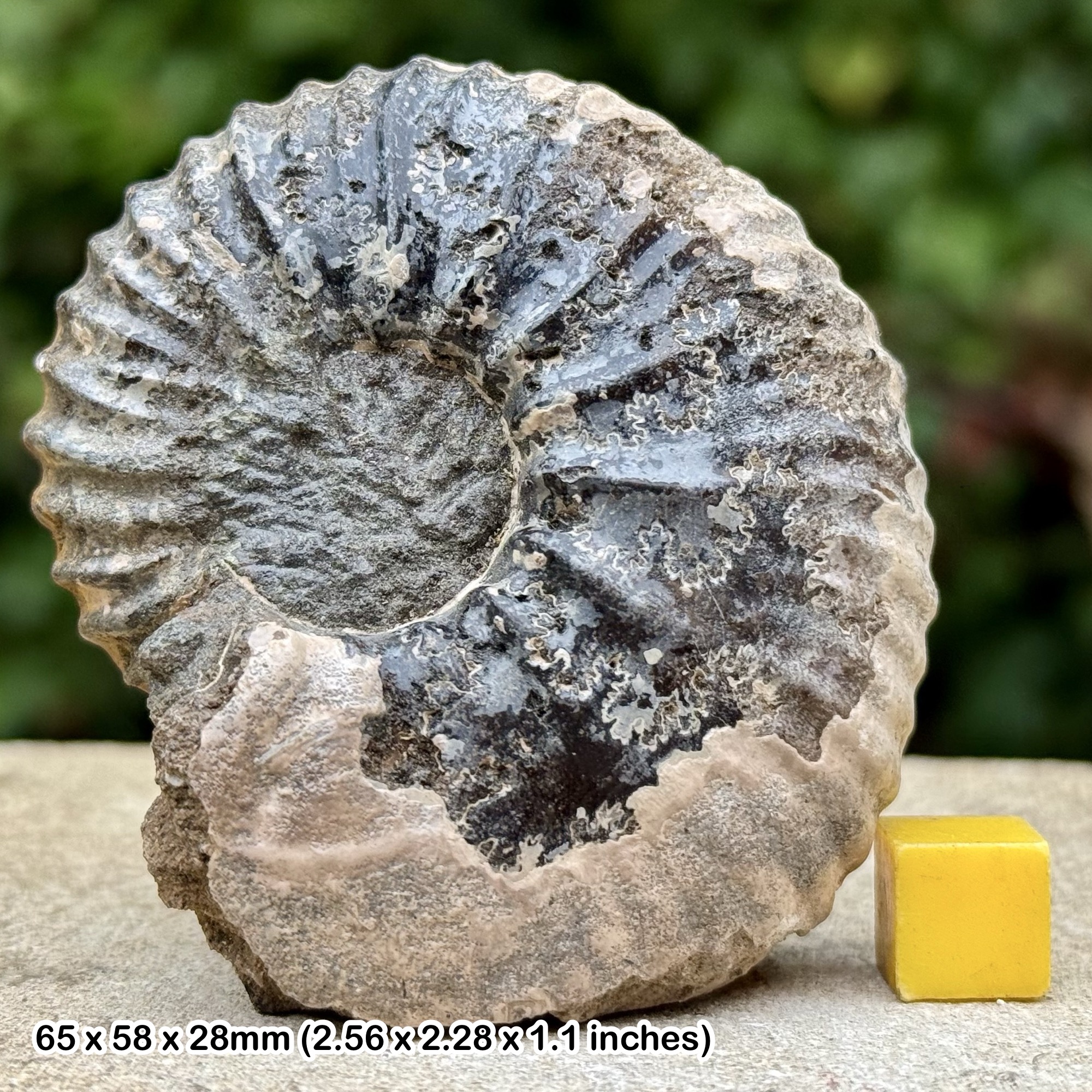
Rare Deshayesites mirabilis Ammonite Fossil from Lower Aptian Cretaceous Baulking Oxford United Kingdom Authentic Specimen
£ 36.00
GEOLOGICAL CONTEXT AND PROVENANCEThis rare specimen is a genuine Deshayesites mirabilis fossil ammonite from the
Lower Aptian Stage of the Early Cretaceous Period, approximately 125 – 122 million years ago. It originates from Baulking, Oxfordshire, United Kingdom, a locality known for its important Lower Greensand deposits that yield significant Aptian marine fossils. These strata formed as part of shallow marine environments connected to the northern margins of the ancient Tethys Ocean, where ammonites flourished in great abundance and diversity.The Aptian Stage is a critical interval in Earth’s geological record, associated with widespread evolutionary diversification among ammonites. Fossils such as Deshayesites mirabilis provide essential information for correlating Aptian-aged strata across Europe and play an important role in refining biostratigraphic frameworks. FOSSIL TYPE AND SPECIES INFORMATIONDeshayesites mirabilis belongs to the Order Ammonitida, Superfamily Deshayesitoidea, and Family Deshayesitidae. The genus Deshayesites is particularly significant because it serves as a key index fossil for the Aptian Stage. Its species are used by geologists to establish and refine biozones, making them critical for dating Early Cretaceous rock sequences.The species mirabilis is characterised by its distinctively ornamented shell, with strong ribbing and elegant whorl formation. Its stratigraphic range within the Lower Aptian, combined with its diagnostic features, makes it one of the most recognisable and scientifically important ammonites from this time. MORPHOLOGICAL FEATURES AND IDENTIFICATIONThis specimen displays the classic morphology of Deshayesites mirabilis. The shell is moderately involute, with tightly coiled whorls and robust ribbing that extends across the flanks and continues onto the venter. The ribs may bifurcate or branch in places, giving the ammonite a bold and decorative appearance.The ribbing not only enhanced the structural strength of the shell but also provided hydrodynamic benefits, stabilising the animal as it swam in open waters. Like other ammonites, Deshayesites possessed a chambered shell that allowed for buoyancy control, enabling it to move actively through the marine water column as a predator of smaller invertebrates. DEPOSITIONAL ENVIRONMENTDuring the Lower Aptian, the Baulking region of Oxfordshire was submerged beneath shallow seas influenced by the Tethys Ocean. Sediments of sand, silt, and clay deposited in this environment preserved a wide array of marine fossils, including ammonites, belemnites, bivalves, gastropods, and occasional marine reptile remains.The ecosystem was dynamic and rich, with ammonites such as Deshayesites mirabilis occupying a vital role within the food chain. As nektonic predators, they fed on plankton and small crustaceans, while themselves serving as prey for larger marine reptiles and fish. Their abundance and diversity make them central to the reconstruction of Aptian marine life. COLLECTOR APPEAL AND AUTHENTICITYThis Deshayesites mirabilis ammonite fossil is a rare and scientifically valuable specimen from one of the United Kingdom’s classic Aptian localities. Its strong ribbing, elegant coiling, and provenance from Baulking, Oxfordshire, make it an outstanding addition to any collection of natural history or palaeontology.
• 100% Genuine Specimen – Every fossil we supply is authentic and provided with a Certificate of Authenticity.
• Exact Fossil Shown – The photographs depict the actual specimen you will receive.
• Scale Reference – Scale rule squares / cube = 1 cm. Please check images for accurate sizing.This carefully selected Deshayesites mirabilis ammonite offers a direct connection to the Lower Aptian seas of Early Cretaceous Britain. Its rarity, scientific significance, and aesthetic appeal ensure that it will be a prized specimen in any fossil collection or natural history display.
Lower Aptian Stage of the Early Cretaceous Period, approximately 125 – 122 million years ago. It originates from Baulking, Oxfordshire, United Kingdom, a locality known for its important Lower Greensand deposits that yield significant Aptian marine fossils. These strata formed as part of shallow marine environments connected to the northern margins of the ancient Tethys Ocean, where ammonites flourished in great abundance and diversity.The Aptian Stage is a critical interval in Earth’s geological record, associated with widespread evolutionary diversification among ammonites. Fossils such as Deshayesites mirabilis provide essential information for correlating Aptian-aged strata across Europe and play an important role in refining biostratigraphic frameworks. FOSSIL TYPE AND SPECIES INFORMATIONDeshayesites mirabilis belongs to the Order Ammonitida, Superfamily Deshayesitoidea, and Family Deshayesitidae. The genus Deshayesites is particularly significant because it serves as a key index fossil for the Aptian Stage. Its species are used by geologists to establish and refine biozones, making them critical for dating Early Cretaceous rock sequences.The species mirabilis is characterised by its distinctively ornamented shell, with strong ribbing and elegant whorl formation. Its stratigraphic range within the Lower Aptian, combined with its diagnostic features, makes it one of the most recognisable and scientifically important ammonites from this time. MORPHOLOGICAL FEATURES AND IDENTIFICATIONThis specimen displays the classic morphology of Deshayesites mirabilis. The shell is moderately involute, with tightly coiled whorls and robust ribbing that extends across the flanks and continues onto the venter. The ribs may bifurcate or branch in places, giving the ammonite a bold and decorative appearance.The ribbing not only enhanced the structural strength of the shell but also provided hydrodynamic benefits, stabilising the animal as it swam in open waters. Like other ammonites, Deshayesites possessed a chambered shell that allowed for buoyancy control, enabling it to move actively through the marine water column as a predator of smaller invertebrates. DEPOSITIONAL ENVIRONMENTDuring the Lower Aptian, the Baulking region of Oxfordshire was submerged beneath shallow seas influenced by the Tethys Ocean. Sediments of sand, silt, and clay deposited in this environment preserved a wide array of marine fossils, including ammonites, belemnites, bivalves, gastropods, and occasional marine reptile remains.The ecosystem was dynamic and rich, with ammonites such as Deshayesites mirabilis occupying a vital role within the food chain. As nektonic predators, they fed on plankton and small crustaceans, while themselves serving as prey for larger marine reptiles and fish. Their abundance and diversity make them central to the reconstruction of Aptian marine life. COLLECTOR APPEAL AND AUTHENTICITYThis Deshayesites mirabilis ammonite fossil is a rare and scientifically valuable specimen from one of the United Kingdom’s classic Aptian localities. Its strong ribbing, elegant coiling, and provenance from Baulking, Oxfordshire, make it an outstanding addition to any collection of natural history or palaeontology.
• 100% Genuine Specimen – Every fossil we supply is authentic and provided with a Certificate of Authenticity.
• Exact Fossil Shown – The photographs depict the actual specimen you will receive.
• Scale Reference – Scale rule squares / cube = 1 cm. Please check images for accurate sizing.This carefully selected Deshayesites mirabilis ammonite offers a direct connection to the Lower Aptian seas of Early Cretaceous Britain. Its rarity, scientific significance, and aesthetic appeal ensure that it will be a prized specimen in any fossil collection or natural history display.