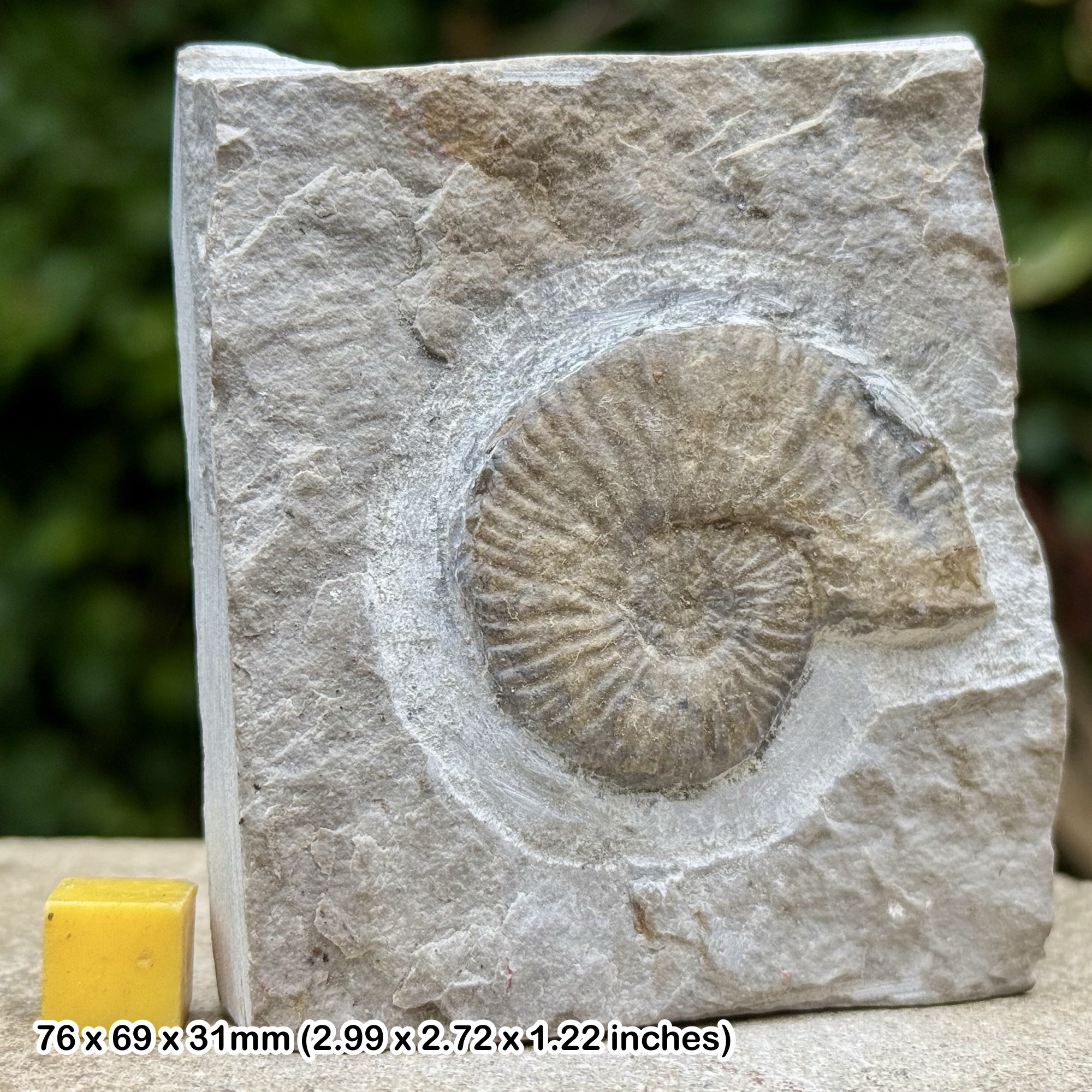
Rare Pseudohaploceras liptoviense Ammonite Fossil from Barremian Cretaceous Gap France Authentic Specimen
£ 36.00
GEOLOGICAL CONTEXT AND PROVENANCEThis rare specimen is a genuine Pseudohaploceras liptoviense ammonite fossil
from the Barremian Stage of the Early Cretaceous Period, approximately 129 – 125 million years ago. It originates from Gap, southeastern France, a region renowned for its richly fossiliferous Lower Cretaceous deposits. These beds formed along the margins of the ancient Tethys Ocean, where shallow seas supported a thriving marine ecosystem and produced some of the most scientifically important ammonite faunas in Europe.The Barremian Stage itself is a crucial part of the Early Cretaceous timescale, known for significant diversification within ammonites. Fossils from Gap have long been studied for their role in refining biostratigraphic frameworks, and Pseudohaploceras liptoviense stands out as a key index fossil for this interval. FOSSIL TYPE AND SPECIES INFORMATIONPseudohaploceras liptoviense belongs to the Order Ammonitida, Superfamily Desmoceratoidea, and Family Desmoceratidae. The genus Pseudohaploceras is characterised by its distinctive shell ornamentation, moderate coiling, and role in defining Barremian biostratigraphy.The species liptoviense is of particular interest to palaeontologists because of its restricted stratigraphic range and diagnostic shell morphology. Its occurrence in Barremian deposits makes it invaluable for identifying and correlating sedimentary layers across Europe. MORPHOLOGICAL FEATURES AND IDENTIFICATIONThis specimen displays the classic features of Pseudohaploceras liptoviense. The shell is moderately involute, with elegant ribbing that crosses the flanks and continues onto the venter. The ribs are straight to gently curved, adding to the ammonite’s distinctive sculptural quality. The whorls are compact and tightly coiled, forming a robust and balanced shell structure.These features served practical purposes in life. The ribbing strengthened the shell, protecting it against environmental pressures and predators, while the chambered interior allowed for buoyancy regulation. As an active nektonic predator, Pseudohaploceras would have moved through the water column feeding on small crustaceans, molluscs, and plankton. DEPOSITIONAL ENVIRONMENTDuring the Barremian, the Gap region of southeastern France was submerged beneath shallow tropical seas associated with the Tethys Ocean. The fine-grained limestones and marls deposited here created perfect conditions for the fossilisation of ammonites and other marine organisms.The marine ecosystem was diverse and vibrant, home to ammonites, belemnites, bivalves, gastropods, echinoids, and large marine reptiles. Ammonites such as Pseudohaploceras liptoviense were central to this ecosystem, serving both as predators and as prey for larger marine animals. Their abundance and diversity during the Barremian highlight their evolutionary success and importance in reconstructing Early Cretaceous life. COLLECTOR APPEAL AND AUTHENTICITYThis Pseudohaploceras liptoviense ammonite fossil is both scientifically significant and visually striking. Its ribbing, compact coiling, and provenance from the Gap region of France make it a highly desirable specimen for collectors, educators, and natural history enthusiasts.
• 100% Genuine Specimen – All fossils we supply are authentic and include a Certificate of Authenticity.
• Exact Fossil Shown – The photographs depict the actual specimen you will receive.
• Scale Reference – Scale rule squares / cube = 1 cm. Please refer to photos for precise sizing.This carefully chosen Pseudohaploceras liptoviense ammonite fossil provides a direct link to the Barremian seas of the Early Cretaceous. With its rarity, detailed preservation, and scientific importance, it represents a superb addition to any fossil collection or natural history display.
from the Barremian Stage of the Early Cretaceous Period, approximately 129 – 125 million years ago. It originates from Gap, southeastern France, a region renowned for its richly fossiliferous Lower Cretaceous deposits. These beds formed along the margins of the ancient Tethys Ocean, where shallow seas supported a thriving marine ecosystem and produced some of the most scientifically important ammonite faunas in Europe.The Barremian Stage itself is a crucial part of the Early Cretaceous timescale, known for significant diversification within ammonites. Fossils from Gap have long been studied for their role in refining biostratigraphic frameworks, and Pseudohaploceras liptoviense stands out as a key index fossil for this interval. FOSSIL TYPE AND SPECIES INFORMATIONPseudohaploceras liptoviense belongs to the Order Ammonitida, Superfamily Desmoceratoidea, and Family Desmoceratidae. The genus Pseudohaploceras is characterised by its distinctive shell ornamentation, moderate coiling, and role in defining Barremian biostratigraphy.The species liptoviense is of particular interest to palaeontologists because of its restricted stratigraphic range and diagnostic shell morphology. Its occurrence in Barremian deposits makes it invaluable for identifying and correlating sedimentary layers across Europe. MORPHOLOGICAL FEATURES AND IDENTIFICATIONThis specimen displays the classic features of Pseudohaploceras liptoviense. The shell is moderately involute, with elegant ribbing that crosses the flanks and continues onto the venter. The ribs are straight to gently curved, adding to the ammonite’s distinctive sculptural quality. The whorls are compact and tightly coiled, forming a robust and balanced shell structure.These features served practical purposes in life. The ribbing strengthened the shell, protecting it against environmental pressures and predators, while the chambered interior allowed for buoyancy regulation. As an active nektonic predator, Pseudohaploceras would have moved through the water column feeding on small crustaceans, molluscs, and plankton. DEPOSITIONAL ENVIRONMENTDuring the Barremian, the Gap region of southeastern France was submerged beneath shallow tropical seas associated with the Tethys Ocean. The fine-grained limestones and marls deposited here created perfect conditions for the fossilisation of ammonites and other marine organisms.The marine ecosystem was diverse and vibrant, home to ammonites, belemnites, bivalves, gastropods, echinoids, and large marine reptiles. Ammonites such as Pseudohaploceras liptoviense were central to this ecosystem, serving both as predators and as prey for larger marine animals. Their abundance and diversity during the Barremian highlight their evolutionary success and importance in reconstructing Early Cretaceous life. COLLECTOR APPEAL AND AUTHENTICITYThis Pseudohaploceras liptoviense ammonite fossil is both scientifically significant and visually striking. Its ribbing, compact coiling, and provenance from the Gap region of France make it a highly desirable specimen for collectors, educators, and natural history enthusiasts.
• 100% Genuine Specimen – All fossils we supply are authentic and include a Certificate of Authenticity.
• Exact Fossil Shown – The photographs depict the actual specimen you will receive.
• Scale Reference – Scale rule squares / cube = 1 cm. Please refer to photos for precise sizing.This carefully chosen Pseudohaploceras liptoviense ammonite fossil provides a direct link to the Barremian seas of the Early Cretaceous. With its rarity, detailed preservation, and scientific importance, it represents a superb addition to any fossil collection or natural history display.