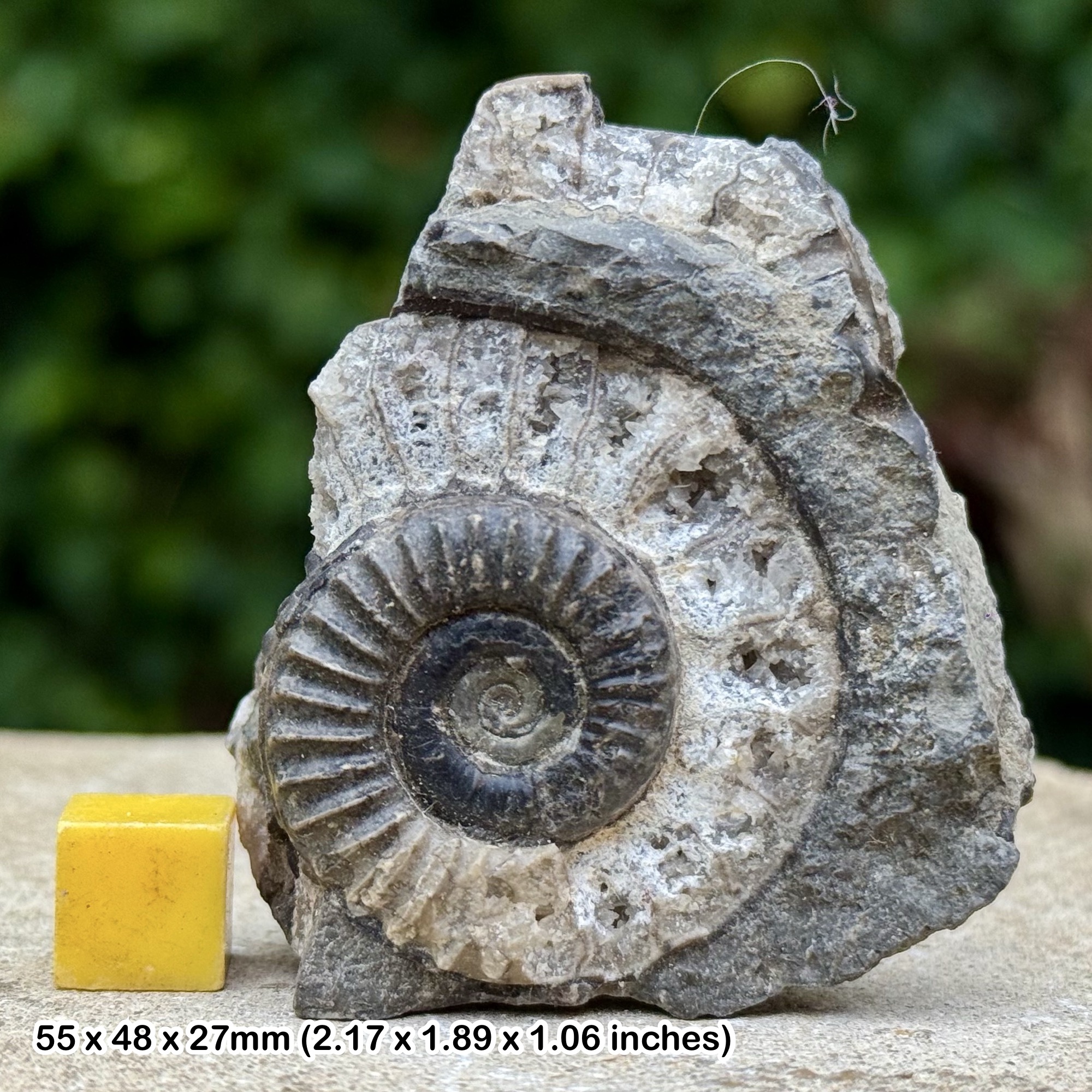
Fossil Ammonite Crucilobiceras crucilobatum Upper Sinemurian Jurassic Whitby UK Authentic
£ 14.40
FOSSIL AMMONITE – CRUCILOBICERAS CRUCILOBATUMThis listing offers a genuine specimen of the ammonite Crucilobiceras
crucilobatum, collected from Whitby, North Yorkshire, United Kingdom. Dating to the Upper Sinemurian stage of the Early Jurassic period (approximately 196–190 million years ago), this fossil represents an important species in the study of ammonite evolution and Jurassic stratigraphy. The specimen shown in the photographs is the exact fossil you will receive, displayed with a 1 cm scale cube for precise size reference. GEOLOGICAL BACKGROUNDThe Sinemurian stage forms part of the Lower Jurassic, a time when much of the UK, including the Whitby region, was covered by warm, shallow seas. These conditions supported abundant marine life, and the resulting deposits of limestone and shale became rich repositories of ammonites and other marine fossils. The Whitby area is particularly famous for yielding world-class ammonites, which are often exceptionally well preserved due to the fine-grained sediment and anoxic conditions that limited decay and disturbance. SCIENTIFIC CLASSIFICATION
• Kingdom: Animalia
• Phylum: Mollusca
• Class: Cephalopoda
• Order: Ammonitida
• Superfamily: Eoderoceratoidea
• Family: Crucilobiceratidae
• Genus: Crucilobiceras
• Species: Crucilobiceras crucilobatumThis classification places the species within a distinctive group of ammonites known for their strong ribbing and diagnostic shell forms. MORPHOLOGICAL FEATURESCrucilobiceras crucilobatum is notable for its evolute coiling, where all whorls of the shell are clearly visible. The ribs are sharp, well-pronounced, and often bifurcate as they cross the whorl, giving the shell a strikingly ornamented appearance. These ribs not only provide taxonomic distinction but also highlight the ammonite’s adaptation to its marine environment, offering structural strength against the pressures of predation and movement in shallow seas. The compressed yet broad whorls create a distinctive profile, making this ammonite both scientifically identifiable and visually impressive. PALEOENVIRONMENT AND SIGNIFICANCEDuring the Upper Sinemurian, Whitby was part of a shallow marine basin influenced by regular sedimentation. Ammonites such as Crucilobiceras crucilobatum thrived as nektonic predators, preying upon smaller marine organisms. Their abundance, rapid evolutionary turnover, and distinct morphology make them excellent index fossils, vital for dating and correlating Jurassic rock layers across Europe. This species, in particular, is significant for refining the Sinemurian biostratigraphic framework, helping geologists reconstruct ancient ecosystems and paleogeographic conditions. PROVENANCE AND AUTHENTICITYThis fossil originates from the renowned fossil-rich deposits of Whitby, North Yorkshire, a location celebrated worldwide for its Jurassic ammonites. The specimen has been carefully chosen for its quality, completeness, and natural preservation. It comes with a Certificate of Authenticity, guaranteeing it is a genuine fossil specimen, not a replica or cast. A UNIQUE COLLECTOR’S PIECEOwning this Crucilobiceras crucilobatum ammonite allows you to hold a tangible piece of Early Jurassic history in your hands. Its striking ribbed detail, combined with its scientific importance, makes it a standout piece for collectors, educators, or anyone with a fascination for paleontology. Whether displayed as a centrepiece in a fossil collection or used in educational settings, this ammonite from Whitby is a remarkable reminder of the thriving marine ecosystems that once covered Britain nearly 200 million years ago.
crucilobatum, collected from Whitby, North Yorkshire, United Kingdom. Dating to the Upper Sinemurian stage of the Early Jurassic period (approximately 196–190 million years ago), this fossil represents an important species in the study of ammonite evolution and Jurassic stratigraphy. The specimen shown in the photographs is the exact fossil you will receive, displayed with a 1 cm scale cube for precise size reference. GEOLOGICAL BACKGROUNDThe Sinemurian stage forms part of the Lower Jurassic, a time when much of the UK, including the Whitby region, was covered by warm, shallow seas. These conditions supported abundant marine life, and the resulting deposits of limestone and shale became rich repositories of ammonites and other marine fossils. The Whitby area is particularly famous for yielding world-class ammonites, which are often exceptionally well preserved due to the fine-grained sediment and anoxic conditions that limited decay and disturbance. SCIENTIFIC CLASSIFICATION
• Kingdom: Animalia
• Phylum: Mollusca
• Class: Cephalopoda
• Order: Ammonitida
• Superfamily: Eoderoceratoidea
• Family: Crucilobiceratidae
• Genus: Crucilobiceras
• Species: Crucilobiceras crucilobatumThis classification places the species within a distinctive group of ammonites known for their strong ribbing and diagnostic shell forms. MORPHOLOGICAL FEATURESCrucilobiceras crucilobatum is notable for its evolute coiling, where all whorls of the shell are clearly visible. The ribs are sharp, well-pronounced, and often bifurcate as they cross the whorl, giving the shell a strikingly ornamented appearance. These ribs not only provide taxonomic distinction but also highlight the ammonite’s adaptation to its marine environment, offering structural strength against the pressures of predation and movement in shallow seas. The compressed yet broad whorls create a distinctive profile, making this ammonite both scientifically identifiable and visually impressive. PALEOENVIRONMENT AND SIGNIFICANCEDuring the Upper Sinemurian, Whitby was part of a shallow marine basin influenced by regular sedimentation. Ammonites such as Crucilobiceras crucilobatum thrived as nektonic predators, preying upon smaller marine organisms. Their abundance, rapid evolutionary turnover, and distinct morphology make them excellent index fossils, vital for dating and correlating Jurassic rock layers across Europe. This species, in particular, is significant for refining the Sinemurian biostratigraphic framework, helping geologists reconstruct ancient ecosystems and paleogeographic conditions. PROVENANCE AND AUTHENTICITYThis fossil originates from the renowned fossil-rich deposits of Whitby, North Yorkshire, a location celebrated worldwide for its Jurassic ammonites. The specimen has been carefully chosen for its quality, completeness, and natural preservation. It comes with a Certificate of Authenticity, guaranteeing it is a genuine fossil specimen, not a replica or cast. A UNIQUE COLLECTOR’S PIECEOwning this Crucilobiceras crucilobatum ammonite allows you to hold a tangible piece of Early Jurassic history in your hands. Its striking ribbed detail, combined with its scientific importance, makes it a standout piece for collectors, educators, or anyone with a fascination for paleontology. Whether displayed as a centrepiece in a fossil collection or used in educational settings, this ammonite from Whitby is a remarkable reminder of the thriving marine ecosystems that once covered Britain nearly 200 million years ago.
Other Products