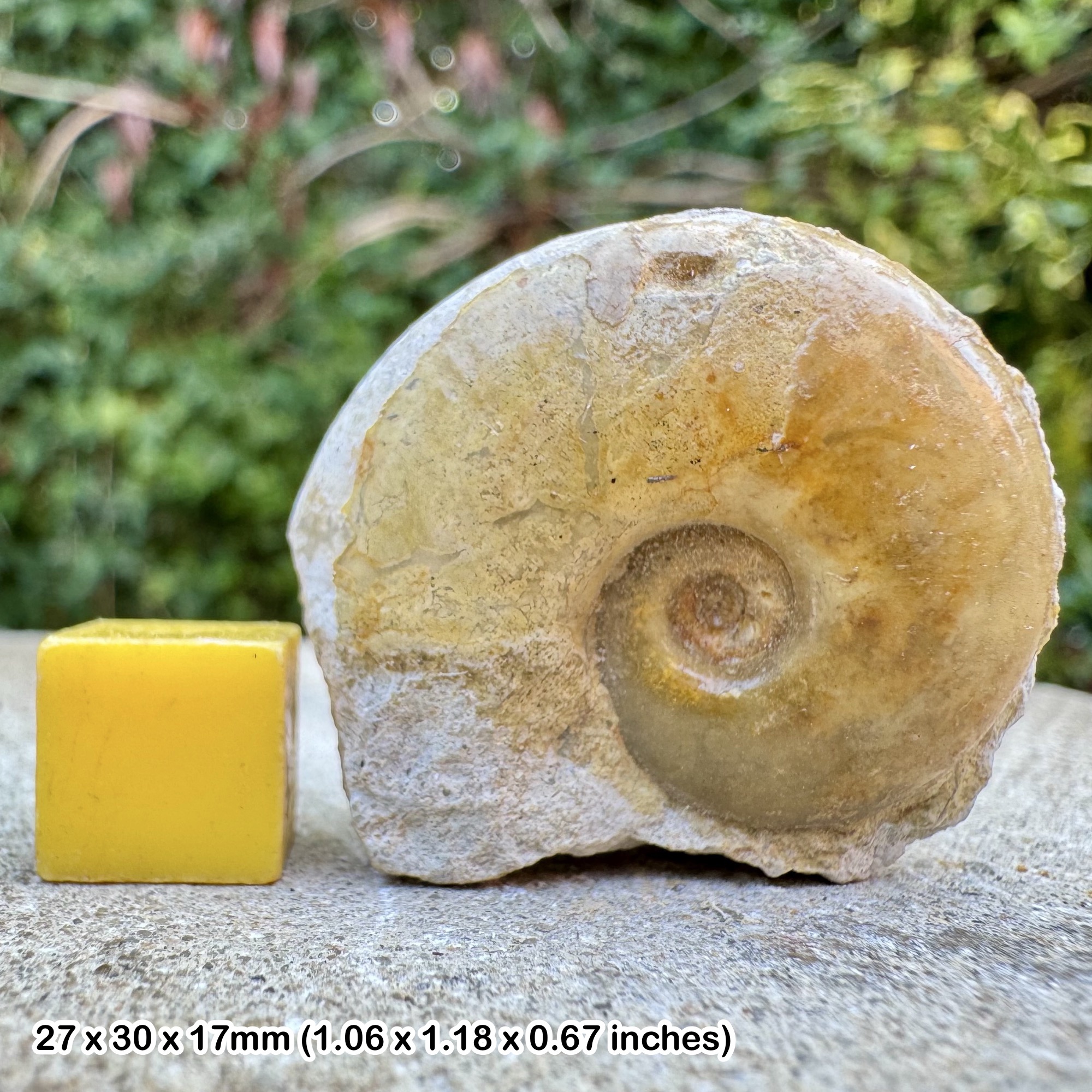
Rare Metalytoceras Metretum Ammonite Fossil Valanginian Cretaceous Poland Authentic COA
£ 60.00
RARE METALYTOCERAS (METRETUM) AMMONITE FOSSILThis listing features a rare Metalytoceras (Metretum) Ammonite Fossil from the
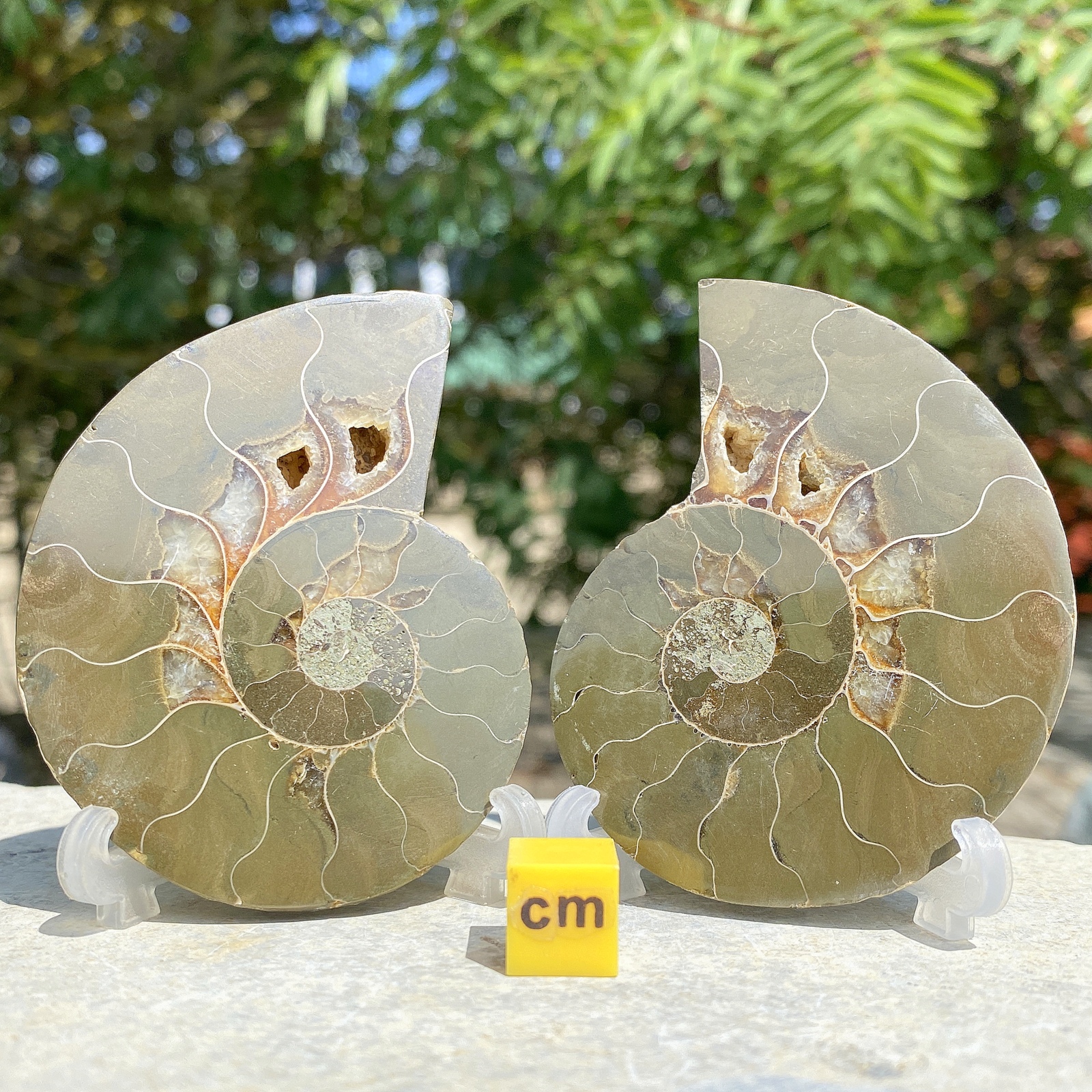
Valanginian stage of the Early Cretaceous, discovered in Silesia, Poland. Dating back around 135 million years, this specimen represents a fascinating and scientifically significant ammonite from the beginning of the Cretaceous period. Each fossil we sell is fully genuine, carefully selected, and comes with a Certificate of Authenticity. The specimen shown in the photograph is the actual piece you will receive, with a 1 cm scale cube included to provide accurate size reference. GEOLOGICAL CONTEXT – SILESIA, POLANDThe fossil originates from the Valanginian-aged deposits of Silesia, a region well-known for its Mesozoic marine strata. During the Early Cretaceous, Silesia formed part of a shallow marine basin linked to the Tethys Ocean. These environments accumulated limestones, marls, and calcareous sediments that preserved a rich record of ammonite faunas. The Valanginian stage is one of the earliest subdivisions of the Cretaceous period, providing key insights into the evolutionary transition from Jurassic ammonite lineages to those that dominated later in the Cretaceous. Fossils from this region are important for refining global biostratigraphy and for understanding marine biodiversity at the dawn of the Cretaceous. SPECIES OVERVIEW – METALYTOCERAS (METRETUM)This specimen has been identified as Metalytoceras (Metretum), an extinct genus belonging to the order Ammonitida, superfamily Perisphinctoidea, and family Neocomitidae. Members of this group are characterised by their moderately involute shells with compressed whorls and distinct ribbing that sweeps across the flanks. In Metretum, the ribs may bifurcate or remain simple, often forming a pattern that provides both structural reinforcement and visual elegance.The shell morphology indicates that these ammonites were active swimmers, inhabiting the open waters of the Valanginian seas. Their ribbing patterns, suture complexity, and coiling provide paleontologists with critical features for distinguishing them from related genera and for refining ammonite-based biostratigraphic frameworks. PALEONTOLOGICAL IMPORTANCEAmmonites such as Metalytoceras (Metretum) are highly valued as index fossils. Their relatively rapid evolutionary turnover and wide geographic distribution allow scientists to define specific biozones within the Valanginian stage. This enables geologists to date and correlate rock layers with remarkable precision across Europe and beyond.In addition, fossils like this one highlight the evolutionary experimentation of ammonites during the Early Cretaceous. As survivors of the Late Jurassic faunal turnovers, genera such as Metalytoceras illustrate how ammonites diversified and adapted to shifting oceanic conditions. Their presence in Silesian deposits underscores the significance of Central European fossil localities in reconstructing the paleogeography of the Early Cretaceous Tethys. COLLECTOR’S AND EDUCATIONAL VALUEThis Metalytoceras (Metretum) ammonite fossil is a rare and desirable specimen for serious fossil collectors. Its fine preservation captures the diagnostic ribbing and coiling, making it both scientifically valuable and visually appealing. The fossil is also an excellent teaching specimen, providing a tangible link to ammonite evolution at the dawn of the Cretaceous. Whether destined for a research collection, a display cabinet, or an educational setting, this piece offers a unique connection to Earth’s deep geological past. GUARANTEE OF AUTHENTICITY
• 100% genuine Metalytoceras (Metretum) ammonite fossil
• Certificate of Authenticity included
• Exact specimen photographed is the one you will receiveThis is a rare opportunity to own a scientifically important and beautifully preserved Metalytoceras (Metretum) Ammonite Fossil from the Valanginian of Silesia, Poland – an outstanding specimen from the Early Cretaceous seas.
Valanginian stage of the Early Cretaceous, discovered in Silesia, Poland. Dating back around 135 million years, this specimen represents a fascinating and scientifically significant ammonite from the beginning of the Cretaceous period. Each fossil we sell is fully genuine, carefully selected, and comes with a Certificate of Authenticity. The specimen shown in the photograph is the actual piece you will receive, with a 1 cm scale cube included to provide accurate size reference. GEOLOGICAL CONTEXT – SILESIA, POLANDThe fossil originates from the Valanginian-aged deposits of Silesia, a region well-known for its Mesozoic marine strata. During the Early Cretaceous, Silesia formed part of a shallow marine basin linked to the Tethys Ocean. These environments accumulated limestones, marls, and calcareous sediments that preserved a rich record of ammonite faunas. The Valanginian stage is one of the earliest subdivisions of the Cretaceous period, providing key insights into the evolutionary transition from Jurassic ammonite lineages to those that dominated later in the Cretaceous. Fossils from this region are important for refining global biostratigraphy and for understanding marine biodiversity at the dawn of the Cretaceous. SPECIES OVERVIEW – METALYTOCERAS (METRETUM)This specimen has been identified as Metalytoceras (Metretum), an extinct genus belonging to the order Ammonitida, superfamily Perisphinctoidea, and family Neocomitidae. Members of this group are characterised by their moderately involute shells with compressed whorls and distinct ribbing that sweeps across the flanks. In Metretum, the ribs may bifurcate or remain simple, often forming a pattern that provides both structural reinforcement and visual elegance.The shell morphology indicates that these ammonites were active swimmers, inhabiting the open waters of the Valanginian seas. Their ribbing patterns, suture complexity, and coiling provide paleontologists with critical features for distinguishing them from related genera and for refining ammonite-based biostratigraphic frameworks. PALEONTOLOGICAL IMPORTANCEAmmonites such as Metalytoceras (Metretum) are highly valued as index fossils. Their relatively rapid evolutionary turnover and wide geographic distribution allow scientists to define specific biozones within the Valanginian stage. This enables geologists to date and correlate rock layers with remarkable precision across Europe and beyond.In addition, fossils like this one highlight the evolutionary experimentation of ammonites during the Early Cretaceous. As survivors of the Late Jurassic faunal turnovers, genera such as Metalytoceras illustrate how ammonites diversified and adapted to shifting oceanic conditions. Their presence in Silesian deposits underscores the significance of Central European fossil localities in reconstructing the paleogeography of the Early Cretaceous Tethys. COLLECTOR’S AND EDUCATIONAL VALUEThis Metalytoceras (Metretum) ammonite fossil is a rare and desirable specimen for serious fossil collectors. Its fine preservation captures the diagnostic ribbing and coiling, making it both scientifically valuable and visually appealing. The fossil is also an excellent teaching specimen, providing a tangible link to ammonite evolution at the dawn of the Cretaceous. Whether destined for a research collection, a display cabinet, or an educational setting, this piece offers a unique connection to Earth’s deep geological past. GUARANTEE OF AUTHENTICITY
• 100% genuine Metalytoceras (Metretum) ammonite fossil
• Certificate of Authenticity included
• Exact specimen photographed is the one you will receiveThis is a rare opportunity to own a scientifically important and beautifully preserved Metalytoceras (Metretum) Ammonite Fossil from the Valanginian of Silesia, Poland – an outstanding specimen from the Early Cretaceous seas.