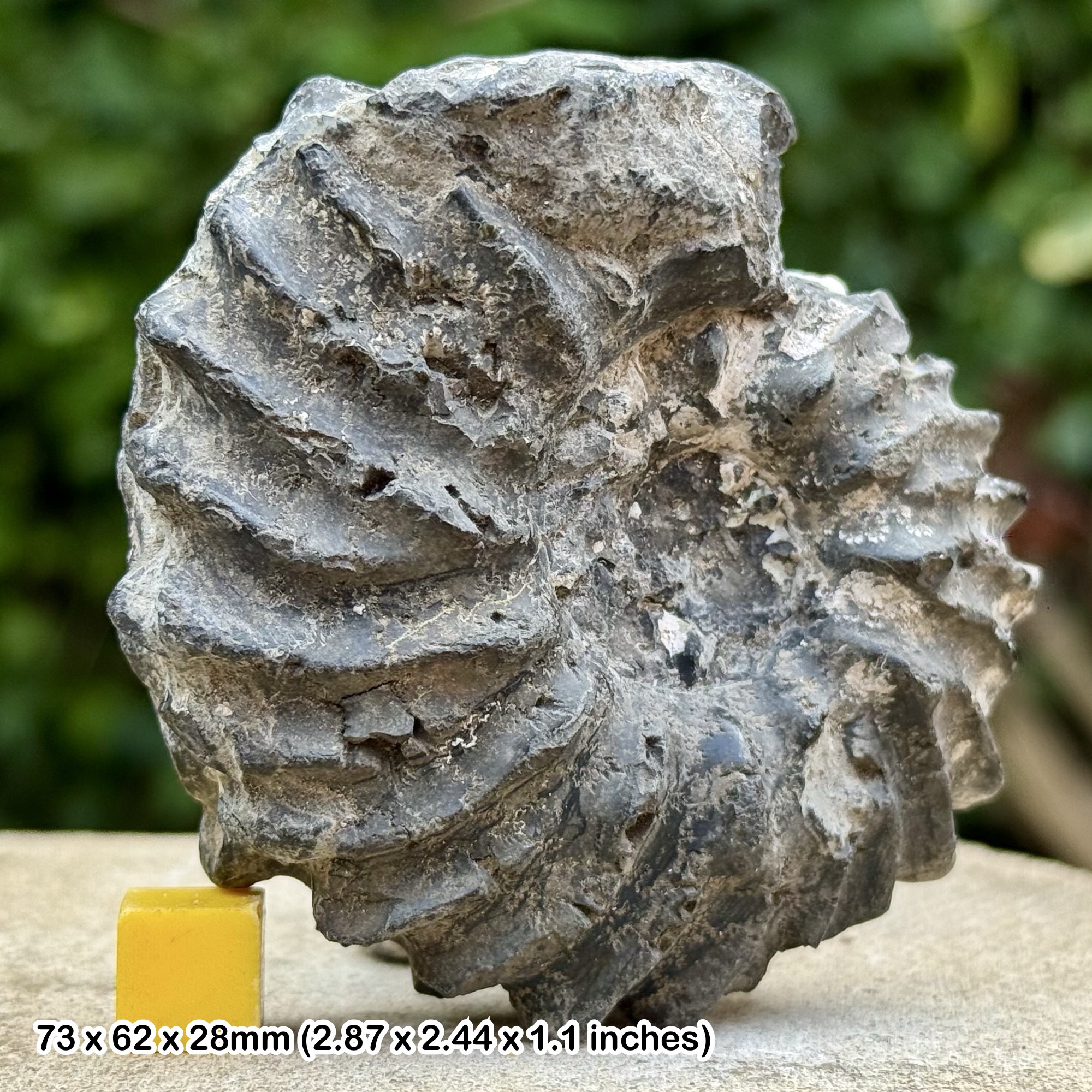
Rare Hoplites dentatus Fossil Ammonite Gault Clay Aptian Cretaceous Folkestone Kent UK with COA
£ 24.00
RARE HOPLITES DENTATUS FOSSIL AMMONITE FROM FOLKESTONEThis is a rare Hoplites dentatus fossil ammonite, discovered in the world-famous
Gault Clay Formation at Folkestone, Kent, United Kingdom. The specimen originates from the Aptian Stage of the Lower Cretaceous Period, dating to around 120–113 million years ago. Fossils of this type are both scientifically significant and highly collectible due to their rarity and stratigraphic importance.Every specimen we offer is a 100% genuine fossil and is accompanied by a Certificate of Authenticity. The photographs show the actual fossil you will receive, with a 1cm scale cube and rule squares included for precise size reference. GEOLOGICAL AGE AND LOCALITYThe Gault Clay Formation at Folkestone is a globally recognised site for Early Cretaceous fossils. Formed in a shallow marine environment, the fine clays preserve delicate details of ammonites and other marine life with exceptional clarity.The Aptian Stage marks a crucial interval in the Cretaceous Period, characterised by widespread marine transgressions and evolutionary diversification. The Folkestone exposures provide one of the clearest fossil records for this stage, and ammonites like Hoplites dentatus serve as key index fossils for dating and correlating rock sequences across Europe. FOSSIL TYPE AND SCIENTIFIC CLASSIFICATION
• Genus: Hoplites
• Species: Hoplites dentatus
• Order: Ammonitida
• Superfamily: Hoplitoidea
• Family: HoplitidaeHoplites dentatus is an ammonite of considerable stratigraphic importance, used to define the Dentatus Zone within the Lower Aptian. Its diagnostic features make it a benchmark species for Early Cretaceous ammonite zonation, essential for geological and palaeontological research. MORPHOLOGICAL FEATURESThe shell of Hoplites dentatus is notable for its distinctive ornamentation and strong ribbing:
• Evolute Coiling: All whorls are clearly visible, creating a broad shell profile.
• Ribbing Pattern: Prominent ribs extend across the flanks and typically bifurcate or branch, giving the shell a strongly ornamented appearance.
• Tuberculation: Small tubercles or nodes often appear along the rib intersections and keel, adding further diagnostic character.
• Keel Development: A narrow keel runs along the venter, enhancing hydrodynamic efficiency in the water column.These morphological traits make Hoplites dentatus a highly recognisable and scientifically valuable ammonite. SCIENTIFIC AND COLLECTOR IMPORTANCEAs the defining species of the Dentatus Zone, Hoplites dentatus is crucial for high-resolution stratigraphic correlation of Aptian-aged rocks. Its use as a biostratigraphic marker makes it an essential ammonite for scientific study.For collectors, the rarity of Hoplites dentatus fossils from Folkestone makes them highly desirable. The Gault Clay yields only a limited number of such well-preserved specimens, and with increasing restrictions and erosion, their availability continues to decline. DISPLAY AND EDUCATIONAL VALUEThis ammonite fossil has been carefully chosen for its preservation and diagnostic features, making it ideal for display, research, or teaching purposes. Its ribbing, tubercles, and overall shell form capture the essence of Early Cretaceous ammonites.Measuring accurately with reference to the 1cm scale in the photographs, the specimen presents beautifully in a collection cabinet or as part of a curated geological display. It is equally valued by palaeontologists, educators, and private collectors.Owning a rare Hoplites dentatus ammonite from Folkestone’s Gault Clay offers a direct connection to the ancient Cretaceous seas and one of Britain’s most iconic fossil localities, making it a unique and scientifically important addition to any collection.
Gault Clay Formation at Folkestone, Kent, United Kingdom. The specimen originates from the Aptian Stage of the Lower Cretaceous Period, dating to around 120–113 million years ago. Fossils of this type are both scientifically significant and highly collectible due to their rarity and stratigraphic importance.Every specimen we offer is a 100% genuine fossil and is accompanied by a Certificate of Authenticity. The photographs show the actual fossil you will receive, with a 1cm scale cube and rule squares included for precise size reference. GEOLOGICAL AGE AND LOCALITYThe Gault Clay Formation at Folkestone is a globally recognised site for Early Cretaceous fossils. Formed in a shallow marine environment, the fine clays preserve delicate details of ammonites and other marine life with exceptional clarity.The Aptian Stage marks a crucial interval in the Cretaceous Period, characterised by widespread marine transgressions and evolutionary diversification. The Folkestone exposures provide one of the clearest fossil records for this stage, and ammonites like Hoplites dentatus serve as key index fossils for dating and correlating rock sequences across Europe. FOSSIL TYPE AND SCIENTIFIC CLASSIFICATION
• Genus: Hoplites
• Species: Hoplites dentatus
• Order: Ammonitida
• Superfamily: Hoplitoidea
• Family: HoplitidaeHoplites dentatus is an ammonite of considerable stratigraphic importance, used to define the Dentatus Zone within the Lower Aptian. Its diagnostic features make it a benchmark species for Early Cretaceous ammonite zonation, essential for geological and palaeontological research. MORPHOLOGICAL FEATURESThe shell of Hoplites dentatus is notable for its distinctive ornamentation and strong ribbing:
• Evolute Coiling: All whorls are clearly visible, creating a broad shell profile.
• Ribbing Pattern: Prominent ribs extend across the flanks and typically bifurcate or branch, giving the shell a strongly ornamented appearance.
• Tuberculation: Small tubercles or nodes often appear along the rib intersections and keel, adding further diagnostic character.
• Keel Development: A narrow keel runs along the venter, enhancing hydrodynamic efficiency in the water column.These morphological traits make Hoplites dentatus a highly recognisable and scientifically valuable ammonite. SCIENTIFIC AND COLLECTOR IMPORTANCEAs the defining species of the Dentatus Zone, Hoplites dentatus is crucial for high-resolution stratigraphic correlation of Aptian-aged rocks. Its use as a biostratigraphic marker makes it an essential ammonite for scientific study.For collectors, the rarity of Hoplites dentatus fossils from Folkestone makes them highly desirable. The Gault Clay yields only a limited number of such well-preserved specimens, and with increasing restrictions and erosion, their availability continues to decline. DISPLAY AND EDUCATIONAL VALUEThis ammonite fossil has been carefully chosen for its preservation and diagnostic features, making it ideal for display, research, or teaching purposes. Its ribbing, tubercles, and overall shell form capture the essence of Early Cretaceous ammonites.Measuring accurately with reference to the 1cm scale in the photographs, the specimen presents beautifully in a collection cabinet or as part of a curated geological display. It is equally valued by palaeontologists, educators, and private collectors.Owning a rare Hoplites dentatus ammonite from Folkestone’s Gault Clay offers a direct connection to the ancient Cretaceous seas and one of Britain’s most iconic fossil localities, making it a unique and scientifically important addition to any collection.
Other Products