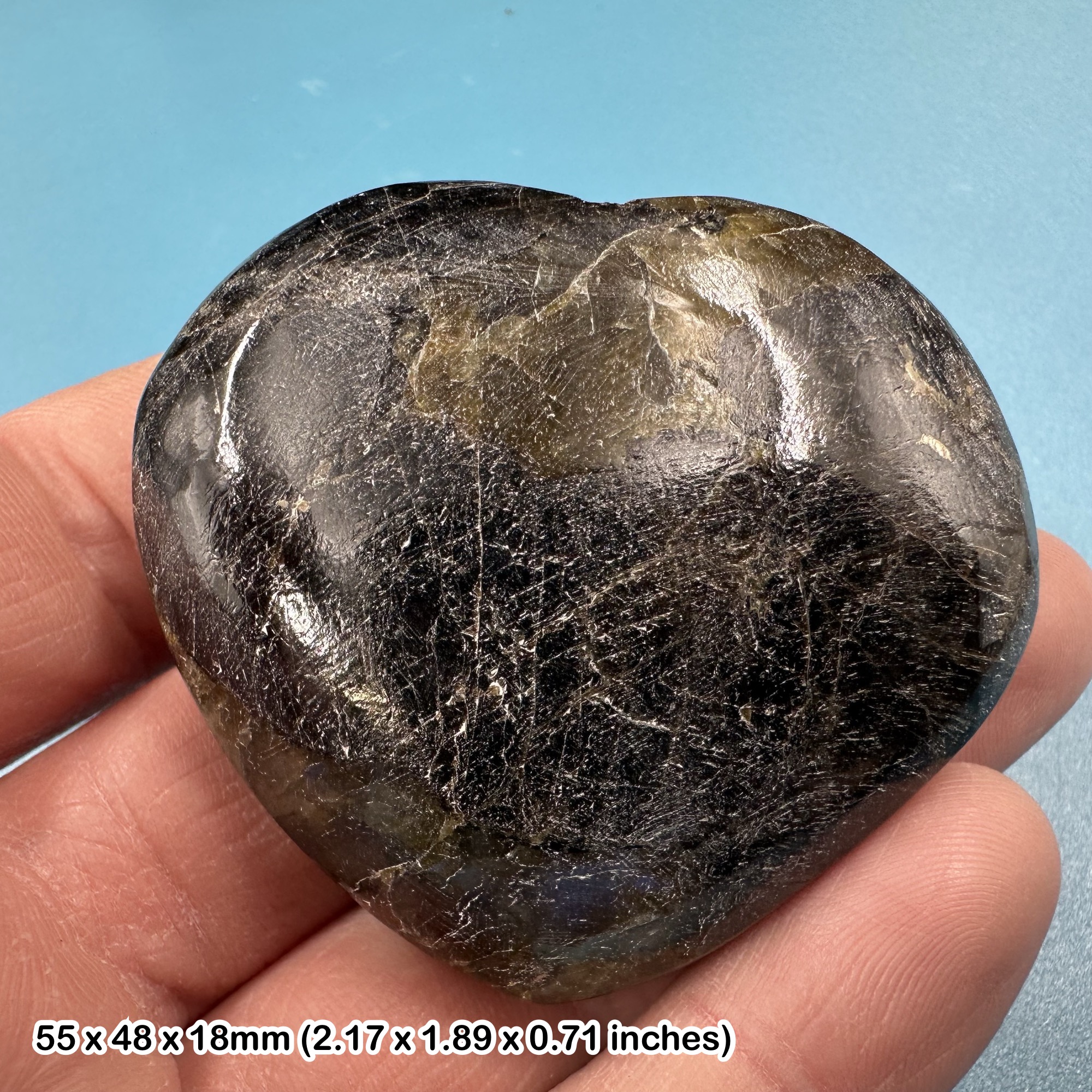
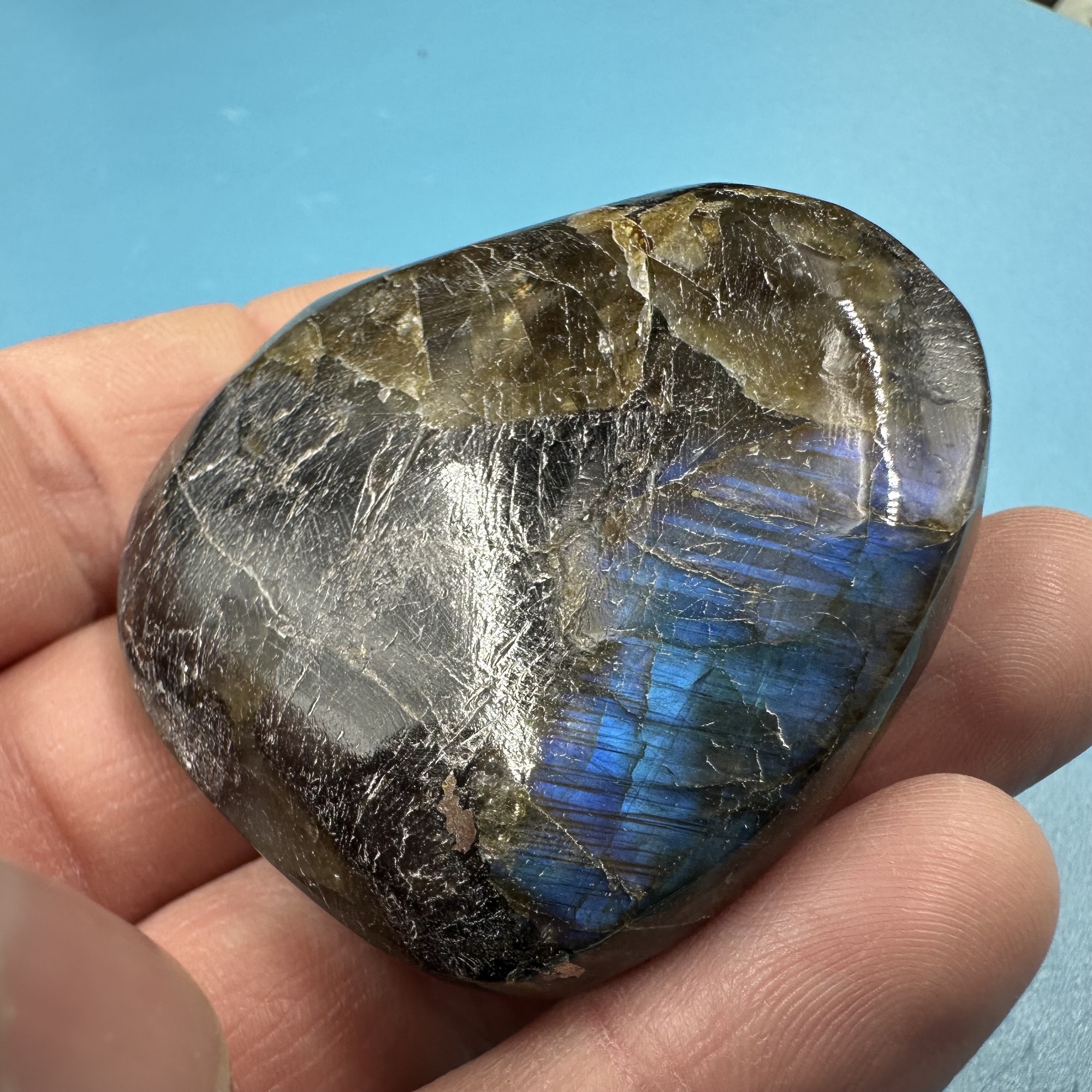
Labradorite Heart Crystal Polished Feldspar Mineral Flash Display Stone
£ 18.00
LABRADORITE HEART CARVING – POLISHED FELDSPAR MINERAL SPECIMENThis genuine Labradorite Heart carving is a polished mineral specimen shaped
into a smooth heart form, highlighting the natural colour play that makes labradorite one of the most visually striking members of the feldspar mineral group. Carefully selected for its visual appeal and mineral character, this specimen displays the reflective flashes of colour that are characteristic of high-quality labradorite.The photographs in this listing show the exact specimen you will receive, allowing collectors and buyers to view the natural patterns, colour reflections, and polished surface prior to purchase. Labradorite is known for its distinctive optical effect that becomes visible when light strikes the stone at certain angles. For precise measurements and scale, please refer to the sizing shown in the photographs.Each piece includes a Certificate of Authenticity lifetime guarantee generic card, confirming that the crystal is a genuine natural mineral specimen. MINERAL SPECIES AND GEOLOGICAL CLASSIFICATIONLabradorite is a feldspar mineral belonging to the plagioclase feldspar series, which forms a continuous solid solution between albite and anorthite. The mineral has a chemical composition typically described as (Ca,Na)(Al,Si)₄O₈, reflecting varying proportions of calcium and sodium within the crystal structure.This mineral crystallises in the triclinic crystal system and commonly occurs in massive or granular forms rather than well-developed individual crystals. Labradorite is a major rock-forming mineral found in a wide range of igneous and metamorphic rocks.Within geological formations, labradorite often occurs in basalt, gabbro, anorthosite, and other mafic to intermediate igneous rocks. OPTICAL EFFECT AND COLOUR CHARACTERISTICSOne of the most distinctive features of labradorite is its well-known optical phenomenon called labradorescence. This effect occurs when light interacts with microscopic layered structures within the mineral, causing iridescent flashes of colour to appear across the stone’s surface.These flashes may display blue, green, gold, orange, or occasionally violet tones, depending on the orientation of the internal lamellar structures and the angle at which light strikes the mineral.The base colour of labradorite is typically grey to dark grey, sometimes appearing almost black when the optical effect is not visible. When polished, the mineral develops a smooth vitreous surface that enhances the reflective colour play.The polished heart shape allows the labradorescent flashes to be easily visible as the stone is rotated under light. GEOLOGICAL FORMATION AND OCCURRENCELabradorite forms during the cooling and crystallisation of magma in igneous rock environments. As molten rock cools, feldspar minerals crystallise from the magma, forming large crystalline structures within the rock.Some of the most significant labradorite deposits occur in large anorthosite formations, where the mineral can make up a major portion of the rock mass. These formations are found in various parts of the world, including Canada, Madagascar, Finland, and other regions known for feldspar-rich geological environments.The internal layering responsible for labradorescence develops during crystal growth as slight variations in chemical composition create microscopic structural layers that interact with light. HEART CARVING AND POLISHED FINISHThis specimen has been cut and polished into a heart shape, a popular decorative form that highlights the natural patterns and reflective colour effects of the stone. The smooth contours of the heart carving allow light to move across the polished surface, revealing flashes of colour from different angles.The polishing process enhances the natural optical features of the mineral while maintaining the integrity of the stone. Labradorite takes an excellent polish due to its feldspar structure, resulting in a glossy surface that showcases the colour reflections.Because the stone is natural, each labradorite piece displays unique colour flashes and internal structures, making every carving visually distinct. COLLECTING AND DISPLAY APPEALLabradorite carvings are popular among mineral collectors, decorative stone enthusiasts, and crystal display collectors because of their remarkable optical effects and polished appearance. The heart shape adds a visually appealing design element that works well as a decorative piece or gift item.In some cultural traditions and spiritual practices, labradorite has been traditionally associated with symbolism related to transformation, intuition, or reflection, though these interpretations are cultural perspectives rather than scientifically established properties.The combination of natural mineral formation and careful polishing makes this specimen an attractive addition to mineral collections or display arrangements. AUTHENTICITY AND SPECIMEN DETAILS• Mineral Species: Labradorite• Mineral Group: Plagioclase Feldspar• Chemical Composition: (Ca,Na)(Al,Si)₄O₈• Crystal System: Triclinic• Colour: Grey base colour with blue, green, gold, or multicolour flashes• Optical Effect: Labradorescence• Surface Finish: Polished heart carving• Lustre: Vitreous• Formation Environment: Igneous rocks such as basalt, gabbro, and anorthosite• Authenticity: Genuine natural mineral specimen• Included: Certificate of Authenticity lifetime guarantee generic card• Exact Item: The photographed crystal is the specimen you will receiveThis Labradorite heart carving beautifully demonstrates the unique optical phenomenon of labradorescence within a polished feldspar mineral, making it a striking addition to mineral collections, decorative displays, or crystal showcases.
into a smooth heart form, highlighting the natural colour play that makes labradorite one of the most visually striking members of the feldspar mineral group. Carefully selected for its visual appeal and mineral character, this specimen displays the reflective flashes of colour that are characteristic of high-quality labradorite.The photographs in this listing show the exact specimen you will receive, allowing collectors and buyers to view the natural patterns, colour reflections, and polished surface prior to purchase. Labradorite is known for its distinctive optical effect that becomes visible when light strikes the stone at certain angles. For precise measurements and scale, please refer to the sizing shown in the photographs.Each piece includes a Certificate of Authenticity lifetime guarantee generic card, confirming that the crystal is a genuine natural mineral specimen. MINERAL SPECIES AND GEOLOGICAL CLASSIFICATIONLabradorite is a feldspar mineral belonging to the plagioclase feldspar series, which forms a continuous solid solution between albite and anorthite. The mineral has a chemical composition typically described as (Ca,Na)(Al,Si)₄O₈, reflecting varying proportions of calcium and sodium within the crystal structure.This mineral crystallises in the triclinic crystal system and commonly occurs in massive or granular forms rather than well-developed individual crystals. Labradorite is a major rock-forming mineral found in a wide range of igneous and metamorphic rocks.Within geological formations, labradorite often occurs in basalt, gabbro, anorthosite, and other mafic to intermediate igneous rocks. OPTICAL EFFECT AND COLOUR CHARACTERISTICSOne of the most distinctive features of labradorite is its well-known optical phenomenon called labradorescence. This effect occurs when light interacts with microscopic layered structures within the mineral, causing iridescent flashes of colour to appear across the stone’s surface.These flashes may display blue, green, gold, orange, or occasionally violet tones, depending on the orientation of the internal lamellar structures and the angle at which light strikes the mineral.The base colour of labradorite is typically grey to dark grey, sometimes appearing almost black when the optical effect is not visible. When polished, the mineral develops a smooth vitreous surface that enhances the reflective colour play.The polished heart shape allows the labradorescent flashes to be easily visible as the stone is rotated under light. GEOLOGICAL FORMATION AND OCCURRENCELabradorite forms during the cooling and crystallisation of magma in igneous rock environments. As molten rock cools, feldspar minerals crystallise from the magma, forming large crystalline structures within the rock.Some of the most significant labradorite deposits occur in large anorthosite formations, where the mineral can make up a major portion of the rock mass. These formations are found in various parts of the world, including Canada, Madagascar, Finland, and other regions known for feldspar-rich geological environments.The internal layering responsible for labradorescence develops during crystal growth as slight variations in chemical composition create microscopic structural layers that interact with light. HEART CARVING AND POLISHED FINISHThis specimen has been cut and polished into a heart shape, a popular decorative form that highlights the natural patterns and reflective colour effects of the stone. The smooth contours of the heart carving allow light to move across the polished surface, revealing flashes of colour from different angles.The polishing process enhances the natural optical features of the mineral while maintaining the integrity of the stone. Labradorite takes an excellent polish due to its feldspar structure, resulting in a glossy surface that showcases the colour reflections.Because the stone is natural, each labradorite piece displays unique colour flashes and internal structures, making every carving visually distinct. COLLECTING AND DISPLAY APPEALLabradorite carvings are popular among mineral collectors, decorative stone enthusiasts, and crystal display collectors because of their remarkable optical effects and polished appearance. The heart shape adds a visually appealing design element that works well as a decorative piece or gift item.In some cultural traditions and spiritual practices, labradorite has been traditionally associated with symbolism related to transformation, intuition, or reflection, though these interpretations are cultural perspectives rather than scientifically established properties.The combination of natural mineral formation and careful polishing makes this specimen an attractive addition to mineral collections or display arrangements. AUTHENTICITY AND SPECIMEN DETAILS• Mineral Species: Labradorite• Mineral Group: Plagioclase Feldspar• Chemical Composition: (Ca,Na)(Al,Si)₄O₈• Crystal System: Triclinic• Colour: Grey base colour with blue, green, gold, or multicolour flashes• Optical Effect: Labradorescence• Surface Finish: Polished heart carving• Lustre: Vitreous• Formation Environment: Igneous rocks such as basalt, gabbro, and anorthosite• Authenticity: Genuine natural mineral specimen• Included: Certificate of Authenticity lifetime guarantee generic card• Exact Item: The photographed crystal is the specimen you will receiveThis Labradorite heart carving beautifully demonstrates the unique optical phenomenon of labradorescence within a polished feldspar mineral, making it a striking addition to mineral collections, decorative displays, or crystal showcases.
Other Products