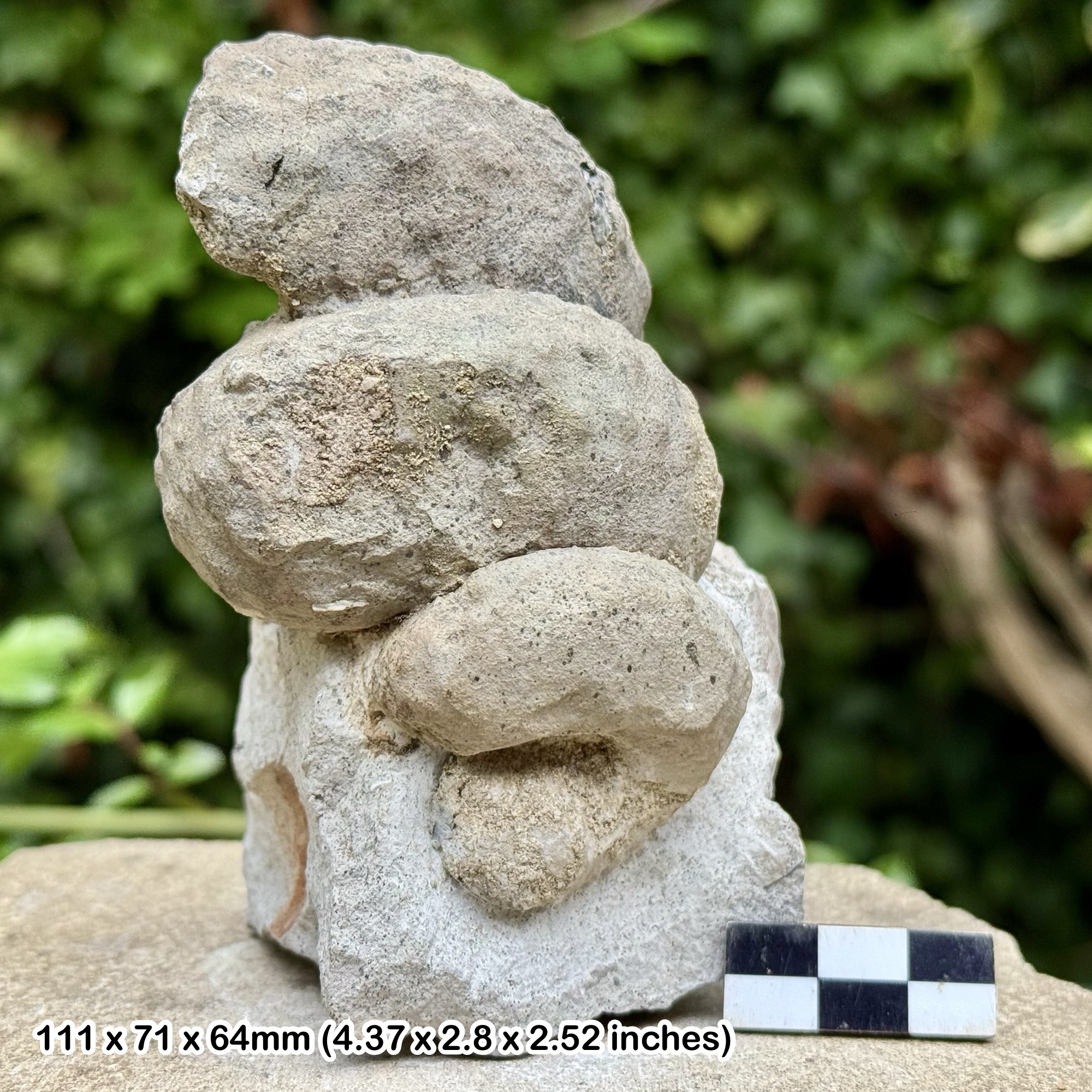
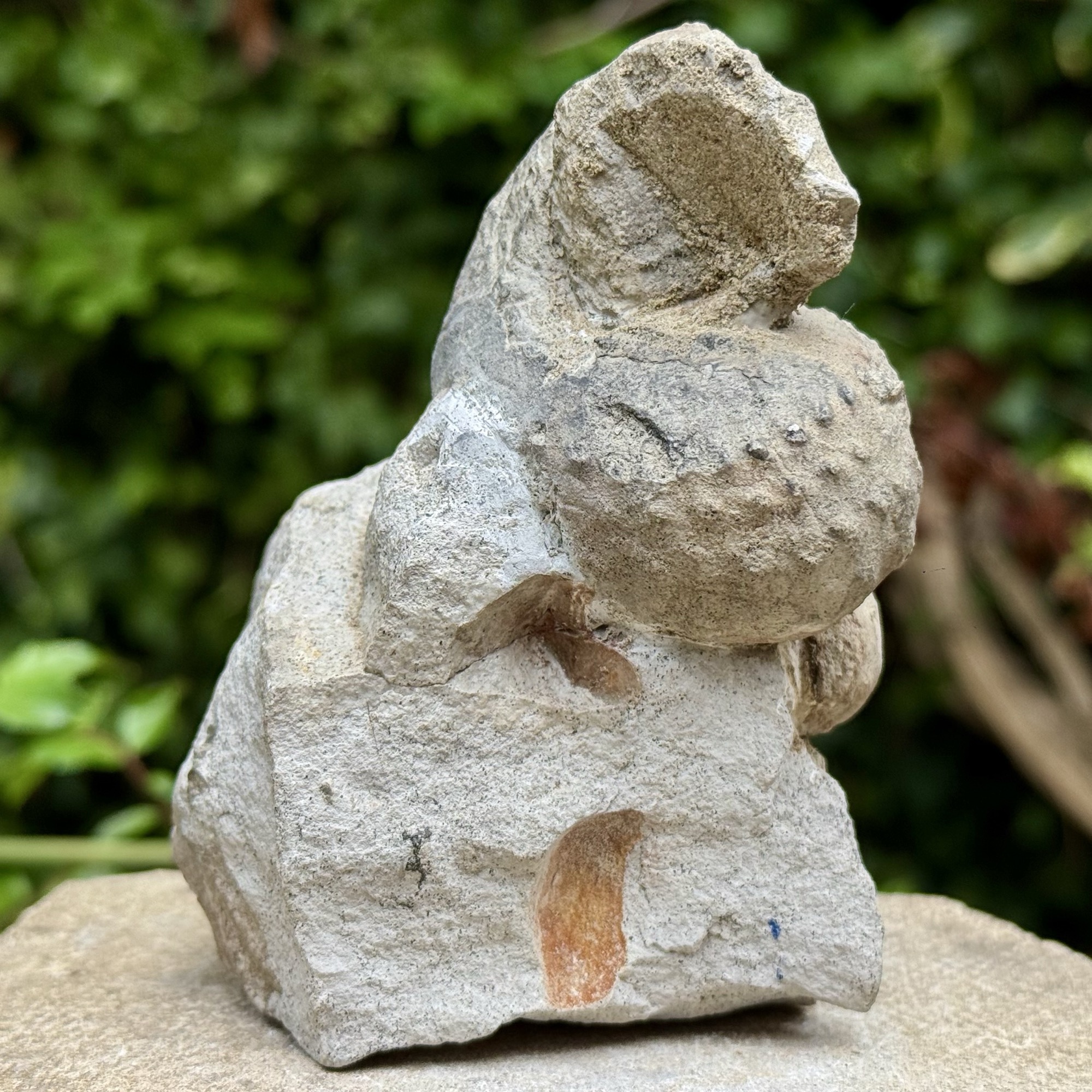
RARE Hypoturrilites tuberculatum Heteromorph Ammonite Fossil | Lower Cenomanian Cretaceous | Isle of Wight UK | Certified
£ 480.00
A stunning and rare heteromorph ammonite fossil: Hypoturrilites tuberculatum
from the Lower Cenomanian, Cretaceous Period, discovered at St. Catherine’s Point, Isle of Wight, United Kingdom.This unusual ammonite exhibits the uncoiled shell morphology characteristic of heteromorphs and is a sought-after collector’s specimen due to its scarcity, scientific interest, and dramatic form. You will receive the exact fossil shown in the photos. A scale cube (1cm) is included for accurate sizing. Please refer to all images for full detail.Geological & Scientific Details:
• Fossil Type: Heteromorph Ammonite
• Species: Hypoturrilites tuberculatum
• Geological Period: Cretaceous
• Stage: Lower Cenomanian (~100.5 – 98 million years ago)
• Locality: St. Catherine’s Point, Isle of Wight, UK
• Biozone (if applicable): Mantelliceras mantelli Zone (approximate placement)
• Depositional Environment: Marine sedimentary basin — chalk marl and greensand formations typical of the southern UK
• Order: Ammonitida
• Superfamily: Turrilitoidea
• Family: Turrilitidae
• Formally Described By: Spath, 1924Morphological Features:
• Dramatic heteromorph shell form — high-spired, uncoiled whorls arranged helically
• Distinctive tuberculate ornamentation with nodes or spines along the ribbing
• Irregular coiling adds uniqueness to each specimen
• Represents evolutionary experimentation in ammonoid morphology
• Displays suture patterns consistent with advanced ammonitesScientific & Collector Relevance:
• Hypoturrilites tuberculatum is a notable heteromorph ammonite, part of a group that deviated from the typical spiral form, potentially due to ecological niche adaptation
• Rarely found in complete or semi-complete condition
• Important in studies of mid-Cretaceous cephalopod evolution and paleobiogeography
• Highly desirable among collectors of Isle of Wight fossils and Cretaceous heteromorphsWhy This Fossil is Special:
• Rare species from a classic UK locality
• Uncommon morphology makes this a standout display piece
• Ethically sourced and expertly prepared
• Guaranteed 100% genuine, backed with a Certificate of Authenticity
• A striking piece of natural history — ideal for collectors, educators, or museum-style displays
from the Lower Cenomanian, Cretaceous Period, discovered at St. Catherine’s Point, Isle of Wight, United Kingdom.This unusual ammonite exhibits the uncoiled shell morphology characteristic of heteromorphs and is a sought-after collector’s specimen due to its scarcity, scientific interest, and dramatic form. You will receive the exact fossil shown in the photos. A scale cube (1cm) is included for accurate sizing. Please refer to all images for full detail.Geological & Scientific Details:
• Fossil Type: Heteromorph Ammonite
• Species: Hypoturrilites tuberculatum
• Geological Period: Cretaceous
• Stage: Lower Cenomanian (~100.5 – 98 million years ago)
• Locality: St. Catherine’s Point, Isle of Wight, UK
• Biozone (if applicable): Mantelliceras mantelli Zone (approximate placement)
• Depositional Environment: Marine sedimentary basin — chalk marl and greensand formations typical of the southern UK
• Order: Ammonitida
• Superfamily: Turrilitoidea
• Family: Turrilitidae
• Formally Described By: Spath, 1924Morphological Features:
• Dramatic heteromorph shell form — high-spired, uncoiled whorls arranged helically
• Distinctive tuberculate ornamentation with nodes or spines along the ribbing
• Irregular coiling adds uniqueness to each specimen
• Represents evolutionary experimentation in ammonoid morphology
• Displays suture patterns consistent with advanced ammonitesScientific & Collector Relevance:
• Hypoturrilites tuberculatum is a notable heteromorph ammonite, part of a group that deviated from the typical spiral form, potentially due to ecological niche adaptation
• Rarely found in complete or semi-complete condition
• Important in studies of mid-Cretaceous cephalopod evolution and paleobiogeography
• Highly desirable among collectors of Isle of Wight fossils and Cretaceous heteromorphsWhy This Fossil is Special:
• Rare species from a classic UK locality
• Uncommon morphology makes this a standout display piece
• Ethically sourced and expertly prepared
• Guaranteed 100% genuine, backed with a Certificate of Authenticity
• A striking piece of natural history — ideal for collectors, educators, or museum-style displays
Other Products