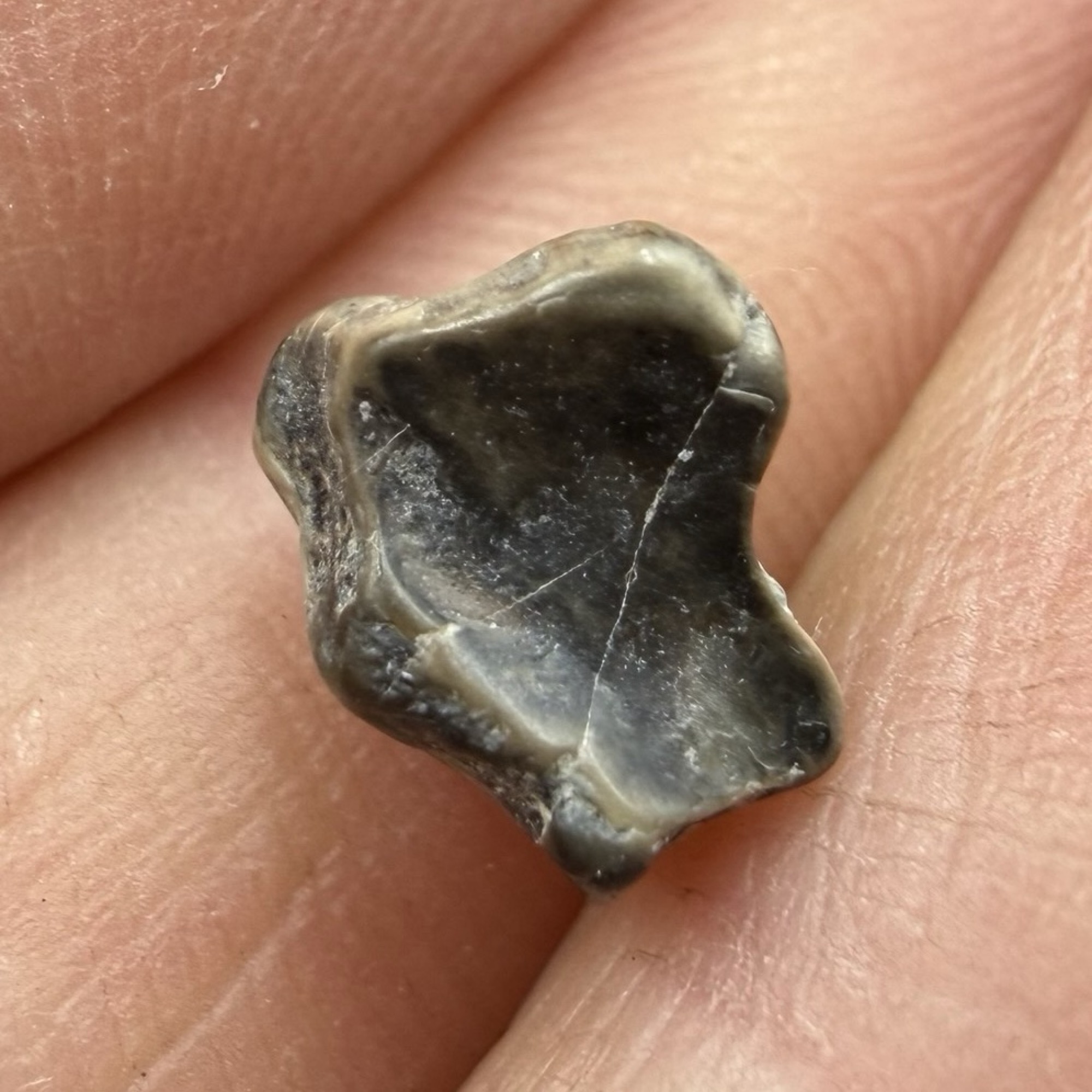
Iguanodontid Dinosaur Tooth Fossil Cretaceous Ashdown Formation Hastings UK Specimen
£ 60.00
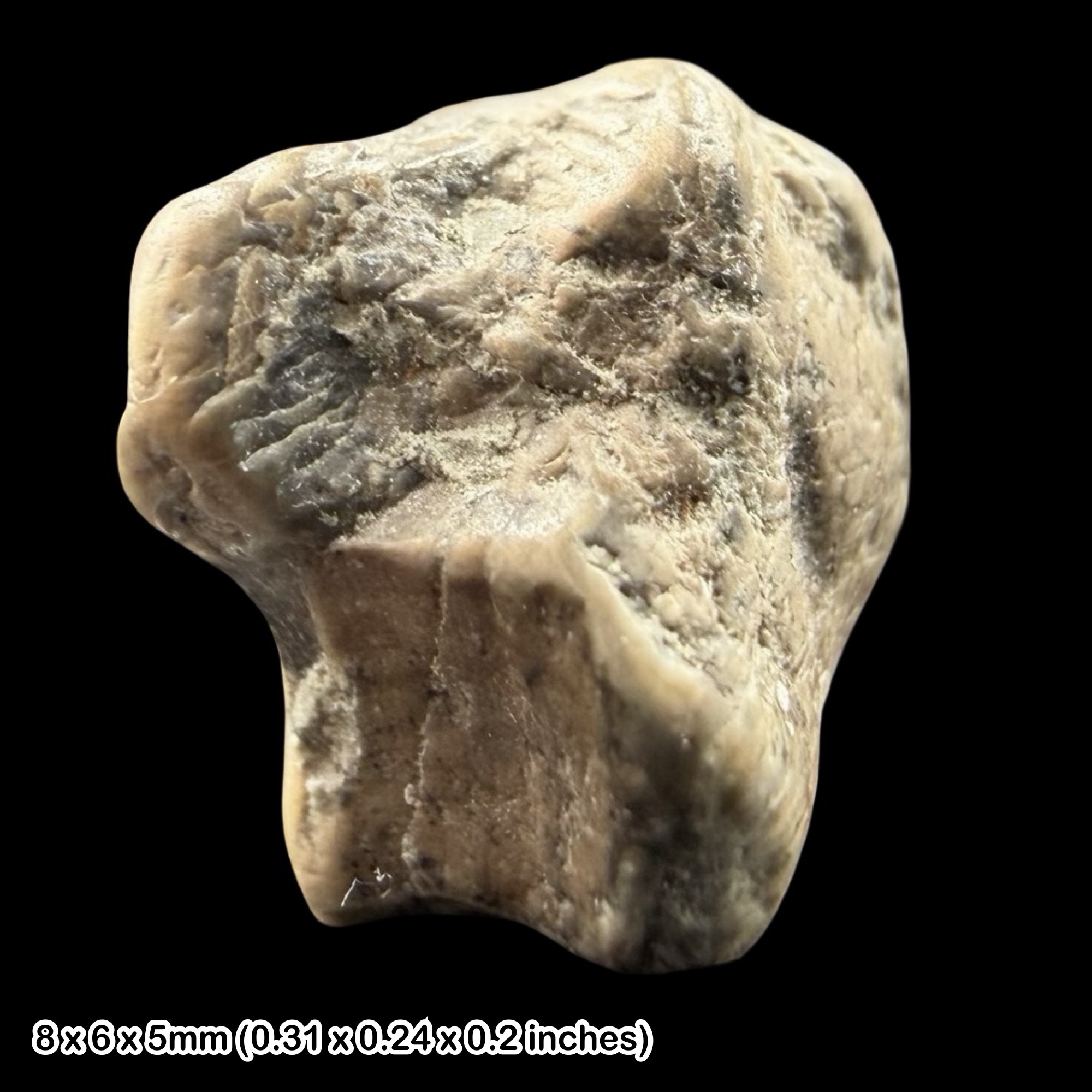
GENUINE IGUANODONTID ORNITHOPOD DINOSAUR TOOTH FROM THE CRETACEOUS OF ENGLANDThis authentic ornithopod dinosaur tooth fossil belonging to the Iguanodontid
group was discovered within the Ashdown Formation of the Wealden Group at Pett Level near Hastings, East Sussex, England. The fossil dates to the Lower Cretaceous Period, approximately 140 to 125 million years ago, when this region was dominated by river floodplains, coastal lagoons, and forested environments inhabited by dinosaurs.Iguanodontid dinosaurs were large herbivorous ornithopods that played a major role in Early Cretaceous ecosystems. Their teeth were specially adapted for processing tough plant material and were arranged in sophisticated dental batteries capable of efficient grinding. Teeth from this group are distinctive fossils within the Wealden deposits of southern England and provide valuable insights into the diet and biology of early ornithopod dinosaurs.The fossil has been carefully selected for preservation and display quality, making it a desirable specimen for collectors, educators, and natural history enthusiasts. The photographs in the listing show the exact fossil specimen you will receive, and full sizing can be viewed in the listing images.This fossil is a genuine specimen and includes a Certificate of Authenticity lifetime guarantee generic card, confirming its authenticity and geological provenance. SCIENTIFIC CLASSIFICATION AND IDENTIFICATIONIguanodontid dinosaurs belong to a group of herbivorous ornithopods that thrived during the Early Cretaceous and were among the dominant plant-eating dinosaurs of their time.Scientific classification includes:
• Kingdom: Animalia
• Phylum: Chordata
• Class: Reptilia
• Clade: Dinosauria
• Order: Ornithischia
• Suborder: Ornithopoda
• Superfamily: Iguanodontoidea
• Family: IguanodontidaeMembers of the Iguanodontidae include well-known genera such as Iguanodon, which was first scientifically described in 1825 by the British palaeontologist Gideon Mantell, based on fossil discoveries from the Wealden deposits of southern England. MORPHOLOGICAL CHARACTERISTICS OF IGUANODONTID TEETHTeeth from Iguanodontid dinosaurs are adapted for herbivory and exhibit distinctive anatomical features that make them identifiable in the fossil record.Typical characteristics include:
• Leaf-shaped crown structure
• Prominent central ridge running along the tooth surface
• Fine serrations along the cutting edges
• Thick enamel coating on the outer surface
• Slight curvature of the crownThese features allowed the teeth to efficiently slice and process plant material. In life, the teeth formed complex dental batteries, where worn teeth were continually replaced by new ones growing beneath them.This adaptation allowed ornithopods to maintain an effective grinding surface throughout their lives. GEOLOGICAL FORMATION AND AGEThe fossil originates from the Ashdown Formation, part of the Wealden Group, a well-known sequence of Lower Cretaceous sedimentary rocks found across southern England.Key geological details include:
• Formation: Ashdown Formation
• Group: Wealden Group
• Geological Period: Cretaceous
• Series: Lower Cretaceous
• Approximate Age: 140–125 million yearsThe Ashdown Formation consists mainly of:
• Sandstone and siltstone deposits
• Clay-rich sediment layers
• River channel and floodplain deposits
• Occasional lagoonal sedimentsThese sediments were laid down within a large river-dominated basin known as the Wealden Basin, which covered parts of southeastern England during the Early Cretaceous. EARLY CRETACEOUS ENVIRONMENT OF THE WEALDEN BASINDuring the time when this dinosaur lived, southeastern England was a lush landscape consisting of river systems, floodplains, wetlands, and coastal lagoons.The climate was warm and humid, supporting dense vegetation including:
• Conifer forests
• Cycads and bennettitaleans
• Ferns and horsetails
• Early flowering plantsThis environment supported a rich ecosystem of animals including:
• Ornithopod dinosaurs such as Iguanodon
• Armoured dinosaurs
• Early crocodilians
• Freshwater turtles
• Fish and amphibiansPlant-eating dinosaurs like the Iguanodontids played a key ecological role within these ecosystems. FOSSIL PRESERVATION IN THE ASHDOWN FORMATIONFossils within the Ashdown Formation are typically preserved in river and floodplain sediments. When animals died near river systems, their remains could be transported and buried within sand and silt deposits.Over millions of years, the organic material was gradually replaced by minerals through fossilisation processes, preserving bones and teeth within the rock.Dinosaur teeth are among the most commonly preserved remains because their hard enamel surfaces resist erosion and decay. FOSSIL DISCOVERIES AT PETT LEVEL AND HASTINGSThe coastline between Hastings and Pett Level exposes important sections of the Wealden Group, where erosion reveals fossil-bearing layers of the Ashdown Formation. These coastal exposures have produced numerous dinosaur fossils, including teeth, bones, and trackways.The discovery of dinosaur fossils in the Wealden deposits played an important role in early palaeontology and helped establish southern England as one of the most important regions for studying Early Cretaceous dinosaurs. AUTHENTIC FOSSIL SPECIMENThis specimen represents a genuine Iguanodontid ornithopod dinosaur tooth fossil from the Ashdown Formation at Pett Level near Hastings, East Sussex, England.Key details include:
• Authentic Iguanodontid dinosaur tooth fossil
• Herbivorous ornithopod dinosaur tooth
• Geological Formation: Ashdown Formation
• Geological Group: Wealden Group
• Geological Age: Lower Cretaceous
• Approximate Age: 140–125 million years
• Locality: Pett Level, Hastings, East Sussex, England
• Distinct leaf-shaped herbivore tooth morphology
• Exact specimen shown in listing photographs
• Full sizing visible in listing images
• Includes Certificate of Authenticity lifetime guarantee generic cardThis fossil tooth represents a preserved feeding structure of a plant-eating dinosaur that lived in the river valleys and forests of Early Cretaceous England, making it an exceptional addition to fossil collections, educational displays, and natural history collections.
group was discovered within the Ashdown Formation of the Wealden Group at Pett Level near Hastings, East Sussex, England. The fossil dates to the Lower Cretaceous Period, approximately 140 to 125 million years ago, when this region was dominated by river floodplains, coastal lagoons, and forested environments inhabited by dinosaurs.Iguanodontid dinosaurs were large herbivorous ornithopods that played a major role in Early Cretaceous ecosystems. Their teeth were specially adapted for processing tough plant material and were arranged in sophisticated dental batteries capable of efficient grinding. Teeth from this group are distinctive fossils within the Wealden deposits of southern England and provide valuable insights into the diet and biology of early ornithopod dinosaurs.The fossil has been carefully selected for preservation and display quality, making it a desirable specimen for collectors, educators, and natural history enthusiasts. The photographs in the listing show the exact fossil specimen you will receive, and full sizing can be viewed in the listing images.This fossil is a genuine specimen and includes a Certificate of Authenticity lifetime guarantee generic card, confirming its authenticity and geological provenance. SCIENTIFIC CLASSIFICATION AND IDENTIFICATIONIguanodontid dinosaurs belong to a group of herbivorous ornithopods that thrived during the Early Cretaceous and were among the dominant plant-eating dinosaurs of their time.Scientific classification includes:
• Kingdom: Animalia
• Phylum: Chordata
• Class: Reptilia
• Clade: Dinosauria
• Order: Ornithischia
• Suborder: Ornithopoda
• Superfamily: Iguanodontoidea
• Family: IguanodontidaeMembers of the Iguanodontidae include well-known genera such as Iguanodon, which was first scientifically described in 1825 by the British palaeontologist Gideon Mantell, based on fossil discoveries from the Wealden deposits of southern England. MORPHOLOGICAL CHARACTERISTICS OF IGUANODONTID TEETHTeeth from Iguanodontid dinosaurs are adapted for herbivory and exhibit distinctive anatomical features that make them identifiable in the fossil record.Typical characteristics include:
• Leaf-shaped crown structure
• Prominent central ridge running along the tooth surface
• Fine serrations along the cutting edges
• Thick enamel coating on the outer surface
• Slight curvature of the crownThese features allowed the teeth to efficiently slice and process plant material. In life, the teeth formed complex dental batteries, where worn teeth were continually replaced by new ones growing beneath them.This adaptation allowed ornithopods to maintain an effective grinding surface throughout their lives. GEOLOGICAL FORMATION AND AGEThe fossil originates from the Ashdown Formation, part of the Wealden Group, a well-known sequence of Lower Cretaceous sedimentary rocks found across southern England.Key geological details include:
• Formation: Ashdown Formation
• Group: Wealden Group
• Geological Period: Cretaceous
• Series: Lower Cretaceous
• Approximate Age: 140–125 million yearsThe Ashdown Formation consists mainly of:
• Sandstone and siltstone deposits
• Clay-rich sediment layers
• River channel and floodplain deposits
• Occasional lagoonal sedimentsThese sediments were laid down within a large river-dominated basin known as the Wealden Basin, which covered parts of southeastern England during the Early Cretaceous. EARLY CRETACEOUS ENVIRONMENT OF THE WEALDEN BASINDuring the time when this dinosaur lived, southeastern England was a lush landscape consisting of river systems, floodplains, wetlands, and coastal lagoons.The climate was warm and humid, supporting dense vegetation including:
• Conifer forests
• Cycads and bennettitaleans
• Ferns and horsetails
• Early flowering plantsThis environment supported a rich ecosystem of animals including:
• Ornithopod dinosaurs such as Iguanodon
• Armoured dinosaurs
• Early crocodilians
• Freshwater turtles
• Fish and amphibiansPlant-eating dinosaurs like the Iguanodontids played a key ecological role within these ecosystems. FOSSIL PRESERVATION IN THE ASHDOWN FORMATIONFossils within the Ashdown Formation are typically preserved in river and floodplain sediments. When animals died near river systems, their remains could be transported and buried within sand and silt deposits.Over millions of years, the organic material was gradually replaced by minerals through fossilisation processes, preserving bones and teeth within the rock.Dinosaur teeth are among the most commonly preserved remains because their hard enamel surfaces resist erosion and decay. FOSSIL DISCOVERIES AT PETT LEVEL AND HASTINGSThe coastline between Hastings and Pett Level exposes important sections of the Wealden Group, where erosion reveals fossil-bearing layers of the Ashdown Formation. These coastal exposures have produced numerous dinosaur fossils, including teeth, bones, and trackways.The discovery of dinosaur fossils in the Wealden deposits played an important role in early palaeontology and helped establish southern England as one of the most important regions for studying Early Cretaceous dinosaurs. AUTHENTIC FOSSIL SPECIMENThis specimen represents a genuine Iguanodontid ornithopod dinosaur tooth fossil from the Ashdown Formation at Pett Level near Hastings, East Sussex, England.Key details include:
• Authentic Iguanodontid dinosaur tooth fossil
• Herbivorous ornithopod dinosaur tooth
• Geological Formation: Ashdown Formation
• Geological Group: Wealden Group
• Geological Age: Lower Cretaceous
• Approximate Age: 140–125 million years
• Locality: Pett Level, Hastings, East Sussex, England
• Distinct leaf-shaped herbivore tooth morphology
• Exact specimen shown in listing photographs
• Full sizing visible in listing images
• Includes Certificate of Authenticity lifetime guarantee generic cardThis fossil tooth represents a preserved feeding structure of a plant-eating dinosaur that lived in the river valleys and forests of Early Cretaceous England, making it an exceptional addition to fossil collections, educational displays, and natural history collections.
Other Products