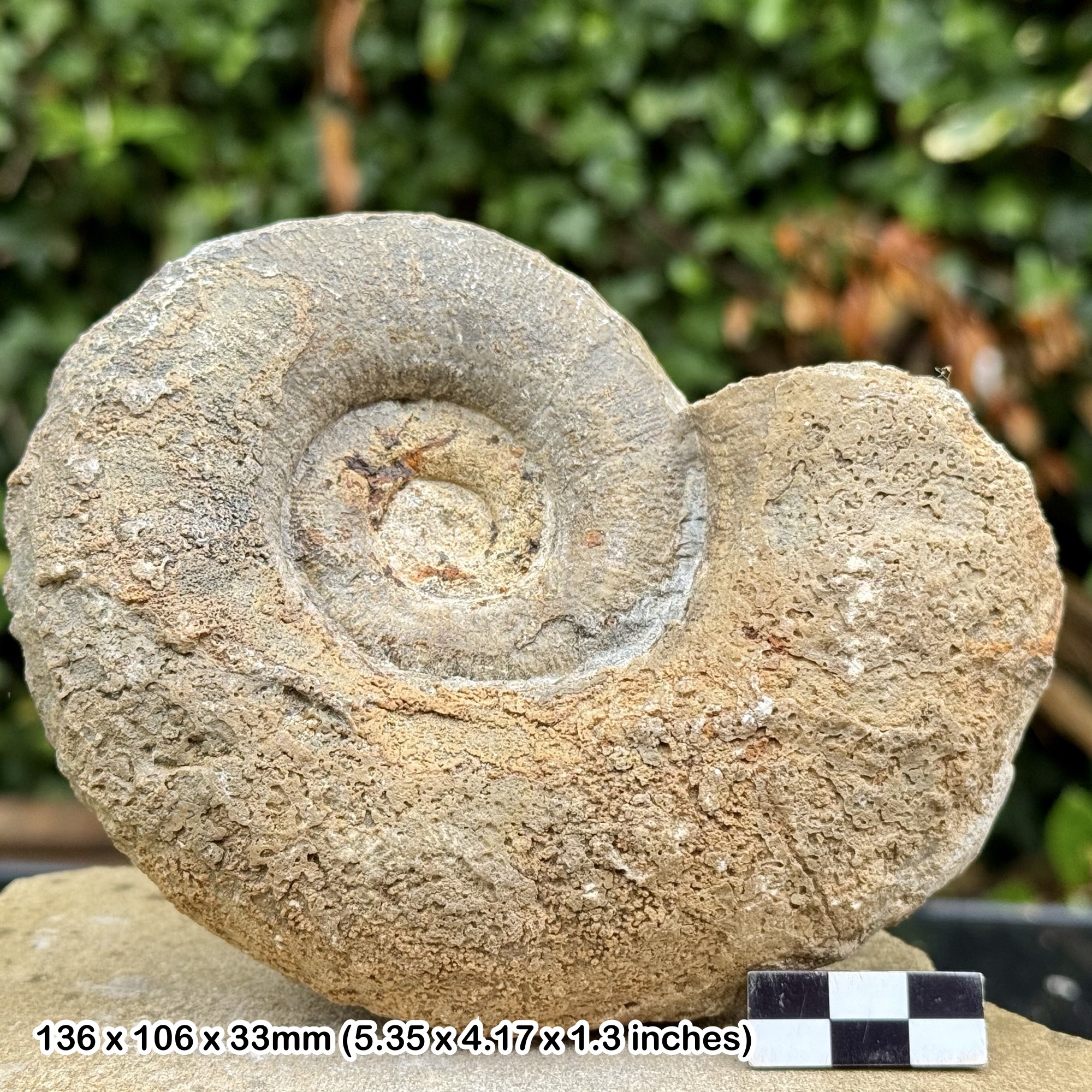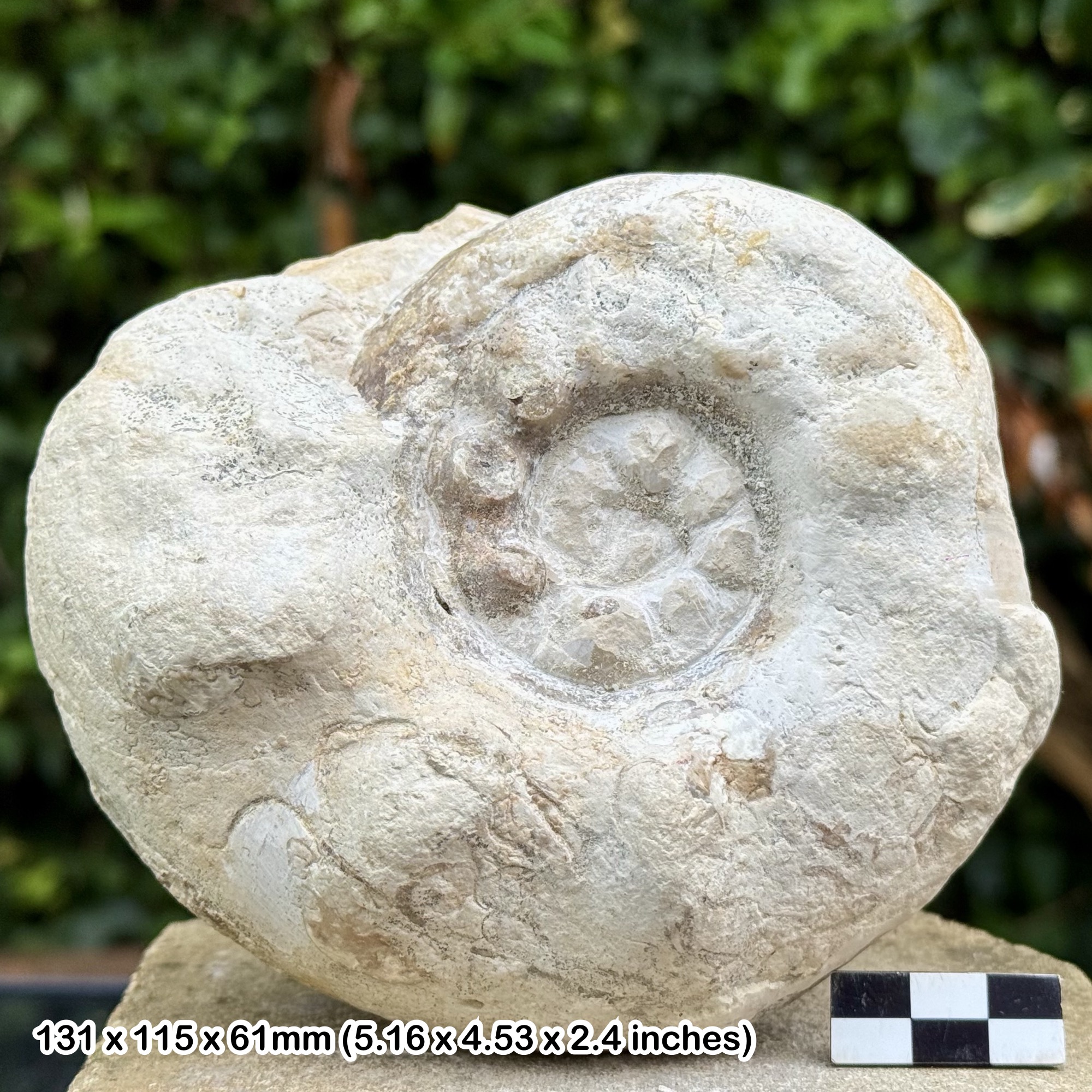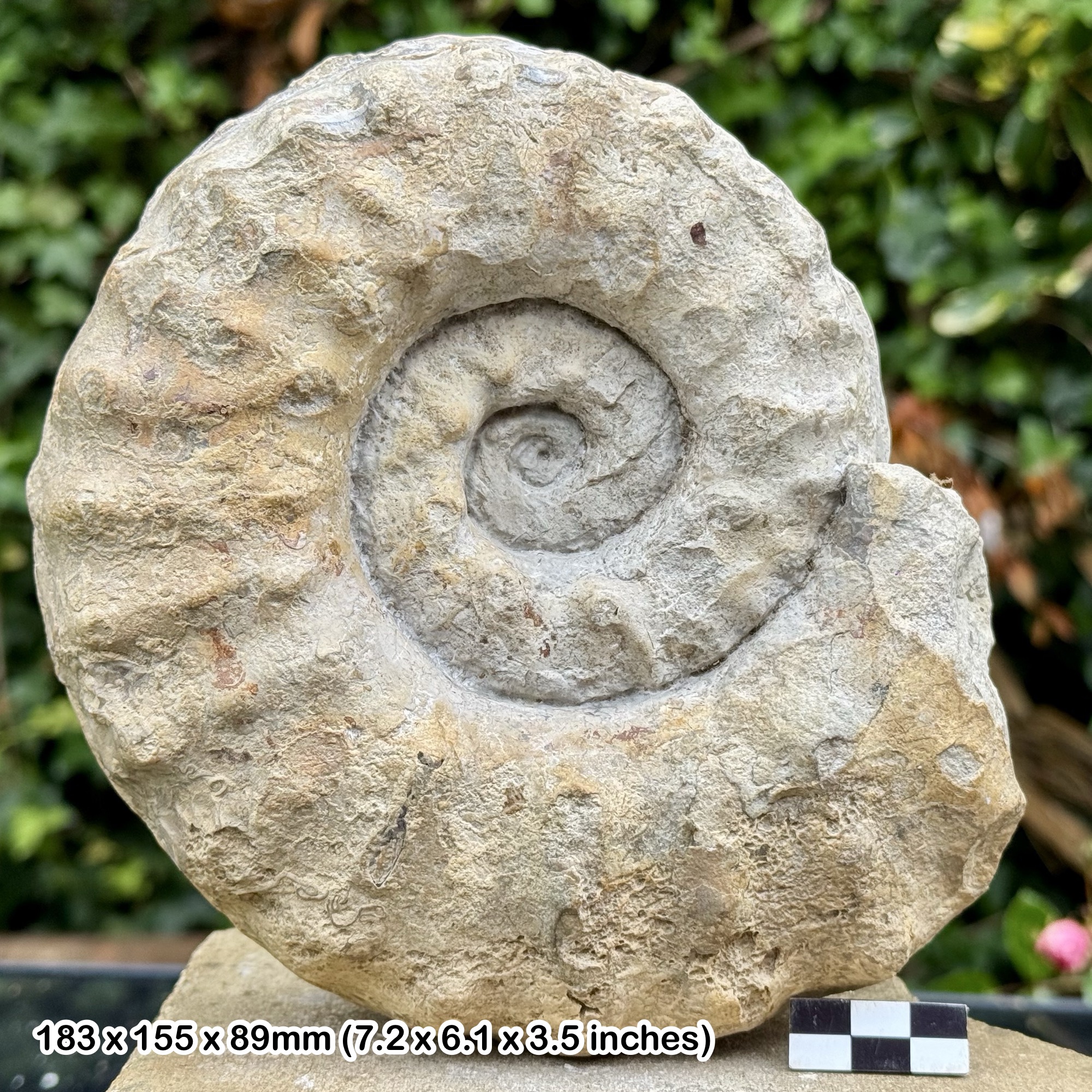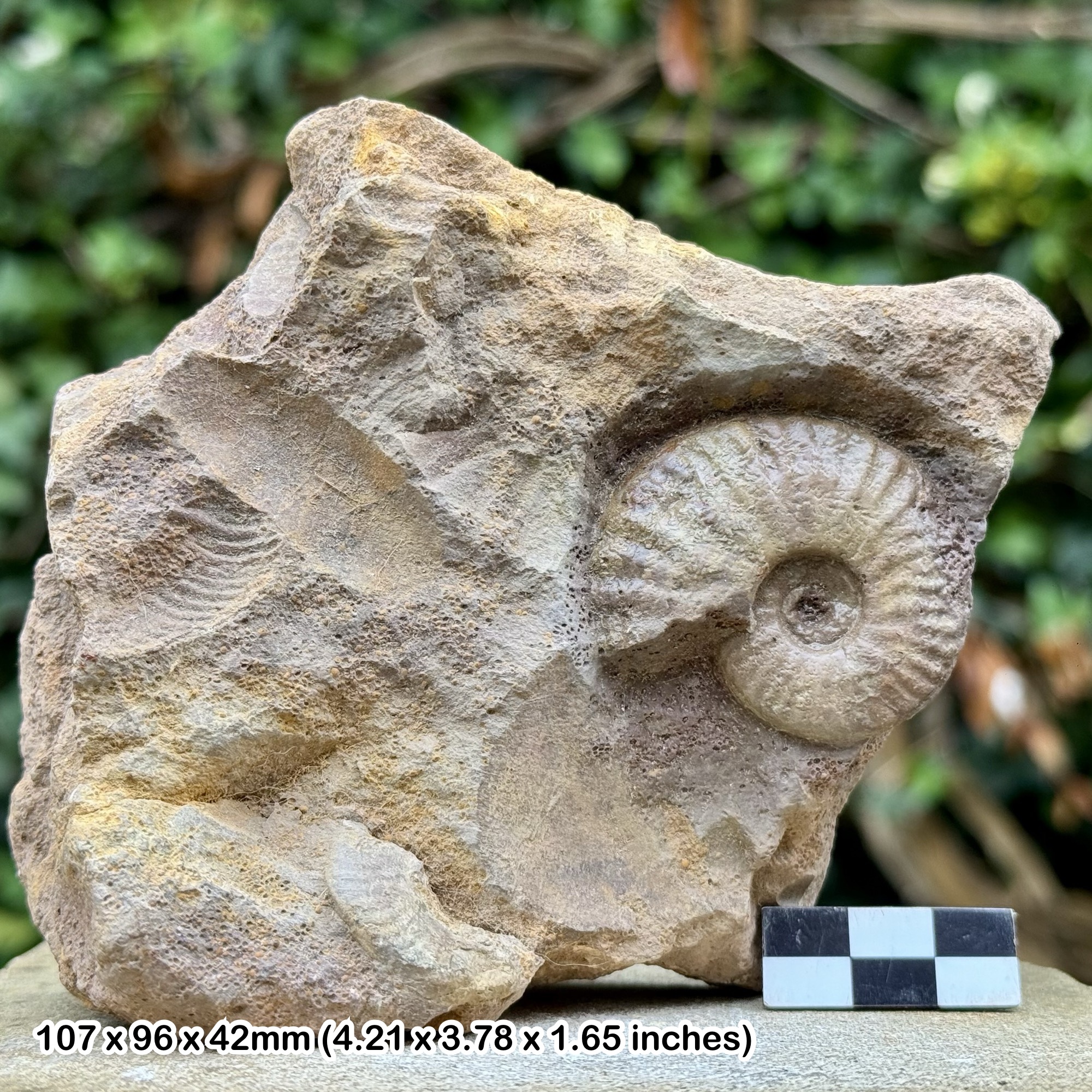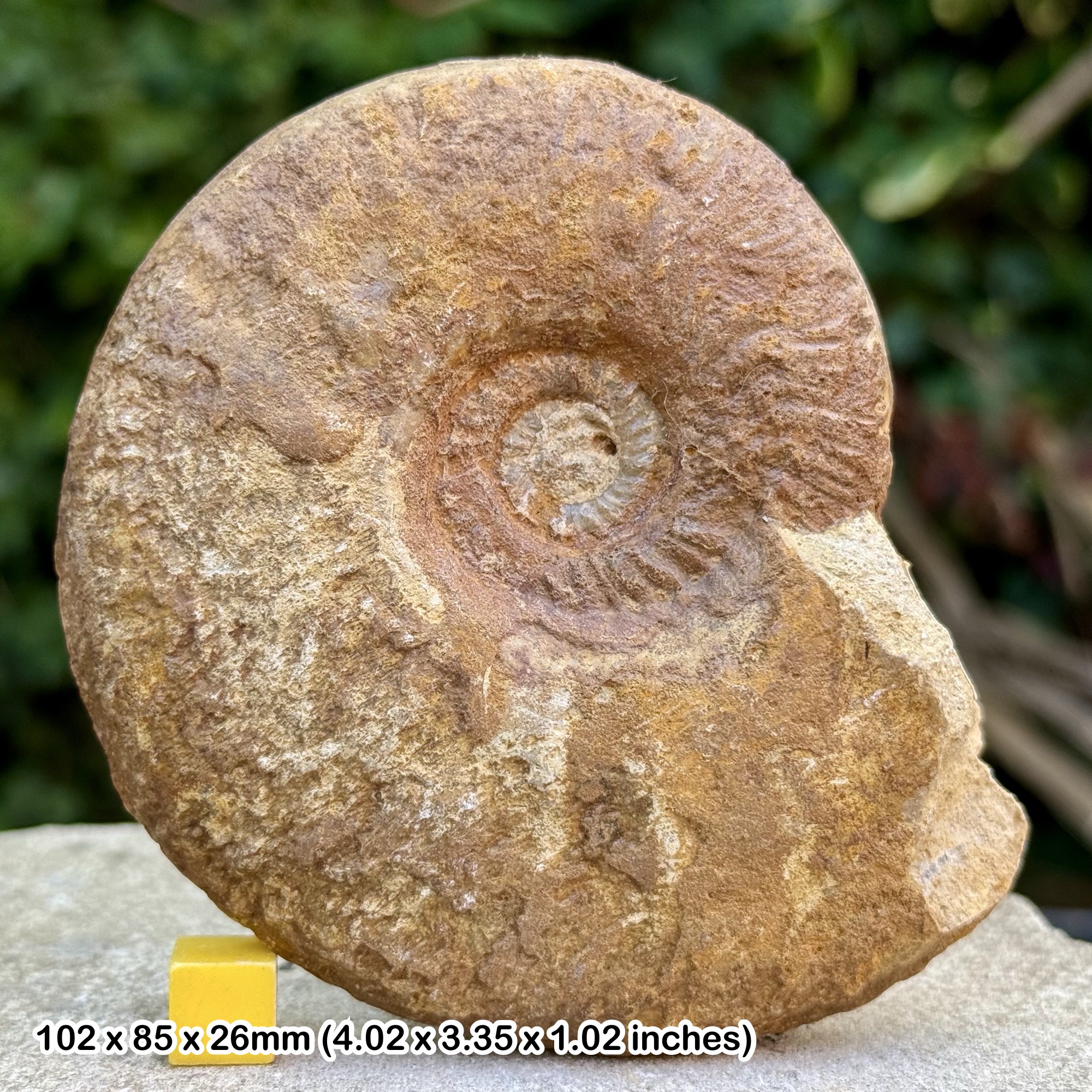
Haugia jugosa Ammonite Fossil Inferior Oolite Jurassic Coast Dorset UK Authentic Specimen COA
£ 48.00
HAUGIA JUGOSA AMMONITE FOSSILThis listing features a beautifully preserved Haugia jugosa Ammonite Fossil from
the Inferior Oolite Formation of the Jurassic Coast, collected at Burton Bradstock, Dorset, United Kingdom. Dating to the Lower Jurassic (approximately 175–170 million years ago), this ammonite is an outstanding specimen from one of the UK’s most famous fossil-bearing formations. Every fossil we offer is 100% genuine and supplied with a Certificate of Authenticity. The specimen in the photograph is the exact ammonite you will receive, with a 1 cm scale cube included for accurate sizing. GEOLOGICAL CONTEXT – INFERIOR OOLITE OF THE JURASSIC COASTThe fossil originates from the Inferior Oolite Group, deposited during the Aalenian to Bajocian stages of the Middle Jurassic. Burton Bradstock, on the Dorset coast, is part of the internationally recognised Jurassic Coast UNESCO World Heritage Site, renowned for its rich geological exposures and diversity of fossils. At the time of deposition, this area was part of a shallow, warm sea on the margin of the Tethys Ocean.The Inferior Oolite is composed primarily of oolitic limestones and calcareous sediments that provided ideal conditions for the preservation of marine invertebrates, especially ammonites. These rocks are of particular importance because the ammonites within them are used extensively for biostratigraphy, allowing geologists to date and correlate Jurassic deposits across Europe. SPECIES OVERVIEW – HAUGIA JUGOSAThe ammonite is identified as Haugia jugosa, belonging to the order Ammonitida, superfamily Hildoceratoidea, and family Hammatoceratidae. Members of the genus Haugia are known for their strongly ribbed shells, often evolute with prominent primary ribs that may bifurcate as they cross the flanks.Haugia jugosa is particularly noted for its bold ornamentation and striking ribbing, features that make it a highly recognisable and desirable ammonite among Jurassic collectors. Its morphology suggests that it was a nektonic predator, actively swimming in the shallow seas of the Inferior Oolite, feeding on smaller invertebrates and playing a significant role in Jurassic marine ecosystems. PALEONTOLOGICAL IMPORTANCEHaugia jugosa is an important index fossil within the Inferior Oolite sequence. Its distinct features and limited stratigraphic range make it highly valuable for establishing ammonite biozones, which are used globally to refine the Jurassic timescale. The presence of Haugia jugosa within the Inferior Oolite of Dorset provides precise stratigraphic markers that contribute to one of the most detailed Jurassic chronologies available.This ammonite also reflects the evolutionary diversity of the Hammatoceratidae during the Middle Jurassic. The development of strong ribbing and robust shell structures illustrates adaptations to ecological pressures, providing insight into how ammonites thrived in changing marine conditions. COLLECTOR’S AND EDUCATIONAL VALUEThis Haugia jugosa ammonite fossil is an exceptional specimen for collectors of British Jurassic fossils. Its provenance from Burton Bradstock on the Jurassic Coast adds considerable historical and scientific value, as fossils from this location are celebrated worldwide. With its detailed ribbing and elegant whorl structure, it is also an excellent display piece. For educators and students, it provides a tangible example of ammonite evolution and stratigraphy during the Middle Jurassic. GUARANTEE OF AUTHENTICITY
• 100% genuine Haugia jugosa ammonite fossil
• Supplied with a Certificate of Authenticity
• Exact specimen shown in the photographs will be sentThis is a rare opportunity to acquire a scientifically important and beautifully preserved Haugia jugosa Ammonite Fossil from the Inferior Oolite of Burton Bradstock, Dorset, UK, a superb specimen from the iconic Jurassic Coast.
the Inferior Oolite Formation of the Jurassic Coast, collected at Burton Bradstock, Dorset, United Kingdom. Dating to the Lower Jurassic (approximately 175–170 million years ago), this ammonite is an outstanding specimen from one of the UK’s most famous fossil-bearing formations. Every fossil we offer is 100% genuine and supplied with a Certificate of Authenticity. The specimen in the photograph is the exact ammonite you will receive, with a 1 cm scale cube included for accurate sizing. GEOLOGICAL CONTEXT – INFERIOR OOLITE OF THE JURASSIC COASTThe fossil originates from the Inferior Oolite Group, deposited during the Aalenian to Bajocian stages of the Middle Jurassic. Burton Bradstock, on the Dorset coast, is part of the internationally recognised Jurassic Coast UNESCO World Heritage Site, renowned for its rich geological exposures and diversity of fossils. At the time of deposition, this area was part of a shallow, warm sea on the margin of the Tethys Ocean.The Inferior Oolite is composed primarily of oolitic limestones and calcareous sediments that provided ideal conditions for the preservation of marine invertebrates, especially ammonites. These rocks are of particular importance because the ammonites within them are used extensively for biostratigraphy, allowing geologists to date and correlate Jurassic deposits across Europe. SPECIES OVERVIEW – HAUGIA JUGOSAThe ammonite is identified as Haugia jugosa, belonging to the order Ammonitida, superfamily Hildoceratoidea, and family Hammatoceratidae. Members of the genus Haugia are known for their strongly ribbed shells, often evolute with prominent primary ribs that may bifurcate as they cross the flanks.Haugia jugosa is particularly noted for its bold ornamentation and striking ribbing, features that make it a highly recognisable and desirable ammonite among Jurassic collectors. Its morphology suggests that it was a nektonic predator, actively swimming in the shallow seas of the Inferior Oolite, feeding on smaller invertebrates and playing a significant role in Jurassic marine ecosystems. PALEONTOLOGICAL IMPORTANCEHaugia jugosa is an important index fossil within the Inferior Oolite sequence. Its distinct features and limited stratigraphic range make it highly valuable for establishing ammonite biozones, which are used globally to refine the Jurassic timescale. The presence of Haugia jugosa within the Inferior Oolite of Dorset provides precise stratigraphic markers that contribute to one of the most detailed Jurassic chronologies available.This ammonite also reflects the evolutionary diversity of the Hammatoceratidae during the Middle Jurassic. The development of strong ribbing and robust shell structures illustrates adaptations to ecological pressures, providing insight into how ammonites thrived in changing marine conditions. COLLECTOR’S AND EDUCATIONAL VALUEThis Haugia jugosa ammonite fossil is an exceptional specimen for collectors of British Jurassic fossils. Its provenance from Burton Bradstock on the Jurassic Coast adds considerable historical and scientific value, as fossils from this location are celebrated worldwide. With its detailed ribbing and elegant whorl structure, it is also an excellent display piece. For educators and students, it provides a tangible example of ammonite evolution and stratigraphy during the Middle Jurassic. GUARANTEE OF AUTHENTICITY
• 100% genuine Haugia jugosa ammonite fossil
• Supplied with a Certificate of Authenticity
• Exact specimen shown in the photographs will be sentThis is a rare opportunity to acquire a scientifically important and beautifully preserved Haugia jugosa Ammonite Fossil from the Inferior Oolite of Burton Bradstock, Dorset, UK, a superb specimen from the iconic Jurassic Coast.
Other Products