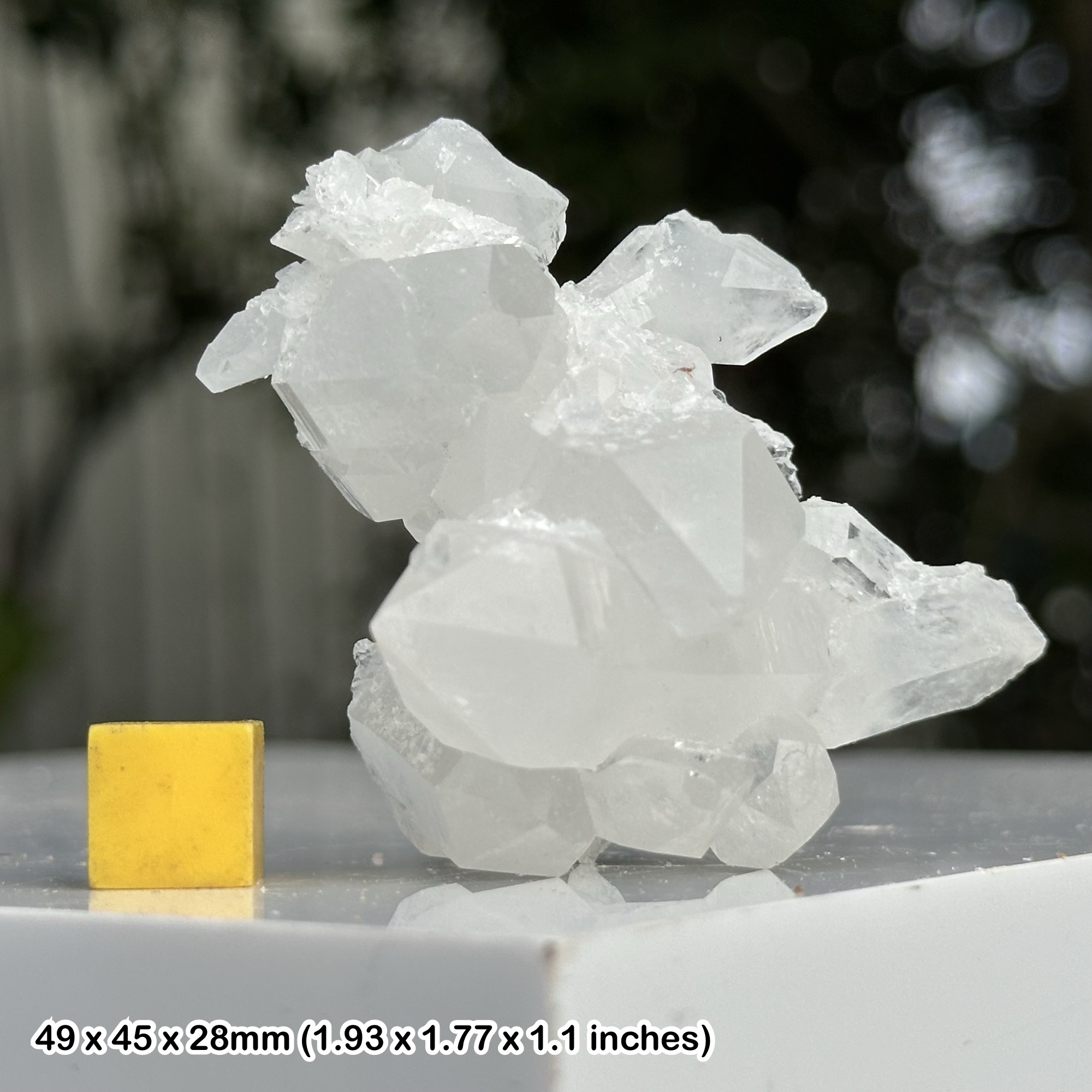
Quartz Crystal Cluster Mineral Specimen Balochistan Pakistan Natural Quartz Group
£ 14.40
NATURAL QUARTZ CRYSTAL GROUP – MINERAL SPECIMEN FROM BALOCHISTAN, PAKISTANThis Quartz Crystal Group is a natural mineral specimen originating from
Balochistan, Pakistan, a region internationally recognised for producing high-quality quartz crystals and mineral specimens. The piece consists of multiple quartz crystals that have grown together naturally, forming a cluster or crystal group structure typical of quartz deposits found in hydrothermal environments.Quartz crystal groups form when individual crystals grow simultaneously within cavities or fractures in host rock, often producing striking multi-crystal formations. These natural clusters are valued by mineral collectors because they demonstrate how quartz crystals develop in nature while displaying the geometric structure of the mineral.The listing photographs show the exact specimen you will receive, allowing collectors and buyers to examine the crystal form, surface texture, and natural characteristics prior to purchase.This crystal is a genuine specimen and includes a Certificate of Authenticity lifetime guarantee generic card, confirming the authenticity of the mineral.Please refer to the listing photographs for full sizing and scale. MINERAL IDENTIFICATION – QUARTZ (SILICON DIOXIDE)Quartz is one of the most common minerals in the Earth’s crust and is composed of silicon dioxide (SiO₂). It forms in a wide variety of geological environments and develops some of the most recognisable crystal shapes in mineralogy.Key mineralogical details include:
• Mineral Name: Quartz
• Chemical Composition: Silicon Dioxide (SiO₂)
• Crystal System: Trigonal
• Mineral Class: Silicate
• Mohs Hardness: 7
• Transparency: Transparent to translucent
• Lustre: Vitreous (glass-like)Quartz crystals typically grow in hexagonal prismatic forms with pointed terminations. When several crystals grow together on a common base, they form what is known as a crystal group or cluster. GEOLOGICAL FORMATION OF QUARTZ CRYSTAL GROUPSQuartz crystals develop in a range of geological environments but most commonly form in hydrothermal vein systems. These systems occur when silica-rich fluids circulate through fractures in rock formations.As the fluids cool and pressure conditions change, silica precipitates from solution and gradually crystallises into quartz. Over time, individual crystals grow outward from the host rock surface into open cavities, producing well-formed crystal points.In environments where many nucleation points occur simultaneously, numerous crystals grow together to form a quartz crystal group. These clusters can display a variety of crystal sizes and orientations depending on the growth conditions.Quartz deposits frequently occur alongside minerals such as:
• Feldspar
• Calcite
• Tourmaline
• Mica
• FluoriteThese mineral associations reflect the geochemical conditions present during the formation of quartz-bearing hydrothermal systems. QUARTZ DEPOSITS IN BALOCHISTAN, PAKISTANThe province of Balochistan in Pakistan is known among mineral collectors for its diverse geological formations and mineral-rich mountainous regions. Quartz crystals from this region are often recovered from hydrothermal veins within metamorphic and igneous rock systems.Local mining areas in Balochistan have produced numerous collectible minerals, including well-formed quartz crystals and clusters that display natural crystal growth patterns.Specimens from identifiable mineral localities are often valued by collectors who appreciate minerals with documented geographic origin. NATURAL APPEARANCE AND CRYSTAL STRUCTUREQuartz crystal groups can display a variety of natural visual characteristics depending on their growth environment. Typical features may include:
• Multiple quartz points growing from a shared base
• Transparent to translucent crystal bodies
• Glassy surfaces with natural crystal faces
• Variations in crystal size across the cluster
• Natural mineral inclusions or internal veilsBecause quartz grows slowly within mineral-rich fluids, each crystal cluster develops unique growth patterns and structural variations. MINERAL COLLECTING AND DISPLAYQuartz crystal clusters are among the most recognisable mineral specimens and are widely appreciated by collectors and geology enthusiasts. Their geometric crystal shapes make them excellent examples for educational collections and mineral displays.This quartz crystal group may be suitable for:
• Mineral and crystal collections
• Geological teaching displays
• Quartz species collections
• Decorative natural mineral displays
• Unique natural gift itemsIn some cultural traditions, quartz crystals are traditionally associated with symbolic or spiritual interpretations, though such interpretations are belief-based rather than scientific uses.Because the listing photographs show the actual specimen, buyers can purchase confidently knowing the exact crystal group they will receive. AUTHENTIC NATURAL MINERAL SPECIMENThis Quartz Crystal Group from Balochistan, Pakistan is a genuine natural mineral specimen carefully selected for its crystal structure and geological origin.The specimen includes a Certificate of Authenticity lifetime guarantee generic card, confirming the authenticity of the mineral.Please review the listing photographs for full sizing and scale, as they form part of the description and clearly show the exact crystal specimen you will receive.
Balochistan, Pakistan, a region internationally recognised for producing high-quality quartz crystals and mineral specimens. The piece consists of multiple quartz crystals that have grown together naturally, forming a cluster or crystal group structure typical of quartz deposits found in hydrothermal environments.Quartz crystal groups form when individual crystals grow simultaneously within cavities or fractures in host rock, often producing striking multi-crystal formations. These natural clusters are valued by mineral collectors because they demonstrate how quartz crystals develop in nature while displaying the geometric structure of the mineral.The listing photographs show the exact specimen you will receive, allowing collectors and buyers to examine the crystal form, surface texture, and natural characteristics prior to purchase.This crystal is a genuine specimen and includes a Certificate of Authenticity lifetime guarantee generic card, confirming the authenticity of the mineral.Please refer to the listing photographs for full sizing and scale. MINERAL IDENTIFICATION – QUARTZ (SILICON DIOXIDE)Quartz is one of the most common minerals in the Earth’s crust and is composed of silicon dioxide (SiO₂). It forms in a wide variety of geological environments and develops some of the most recognisable crystal shapes in mineralogy.Key mineralogical details include:
• Mineral Name: Quartz
• Chemical Composition: Silicon Dioxide (SiO₂)
• Crystal System: Trigonal
• Mineral Class: Silicate
• Mohs Hardness: 7
• Transparency: Transparent to translucent
• Lustre: Vitreous (glass-like)Quartz crystals typically grow in hexagonal prismatic forms with pointed terminations. When several crystals grow together on a common base, they form what is known as a crystal group or cluster. GEOLOGICAL FORMATION OF QUARTZ CRYSTAL GROUPSQuartz crystals develop in a range of geological environments but most commonly form in hydrothermal vein systems. These systems occur when silica-rich fluids circulate through fractures in rock formations.As the fluids cool and pressure conditions change, silica precipitates from solution and gradually crystallises into quartz. Over time, individual crystals grow outward from the host rock surface into open cavities, producing well-formed crystal points.In environments where many nucleation points occur simultaneously, numerous crystals grow together to form a quartz crystal group. These clusters can display a variety of crystal sizes and orientations depending on the growth conditions.Quartz deposits frequently occur alongside minerals such as:
• Feldspar
• Calcite
• Tourmaline
• Mica
• FluoriteThese mineral associations reflect the geochemical conditions present during the formation of quartz-bearing hydrothermal systems. QUARTZ DEPOSITS IN BALOCHISTAN, PAKISTANThe province of Balochistan in Pakistan is known among mineral collectors for its diverse geological formations and mineral-rich mountainous regions. Quartz crystals from this region are often recovered from hydrothermal veins within metamorphic and igneous rock systems.Local mining areas in Balochistan have produced numerous collectible minerals, including well-formed quartz crystals and clusters that display natural crystal growth patterns.Specimens from identifiable mineral localities are often valued by collectors who appreciate minerals with documented geographic origin. NATURAL APPEARANCE AND CRYSTAL STRUCTUREQuartz crystal groups can display a variety of natural visual characteristics depending on their growth environment. Typical features may include:
• Multiple quartz points growing from a shared base
• Transparent to translucent crystal bodies
• Glassy surfaces with natural crystal faces
• Variations in crystal size across the cluster
• Natural mineral inclusions or internal veilsBecause quartz grows slowly within mineral-rich fluids, each crystal cluster develops unique growth patterns and structural variations. MINERAL COLLECTING AND DISPLAYQuartz crystal clusters are among the most recognisable mineral specimens and are widely appreciated by collectors and geology enthusiasts. Their geometric crystal shapes make them excellent examples for educational collections and mineral displays.This quartz crystal group may be suitable for:
• Mineral and crystal collections
• Geological teaching displays
• Quartz species collections
• Decorative natural mineral displays
• Unique natural gift itemsIn some cultural traditions, quartz crystals are traditionally associated with symbolic or spiritual interpretations, though such interpretations are belief-based rather than scientific uses.Because the listing photographs show the actual specimen, buyers can purchase confidently knowing the exact crystal group they will receive. AUTHENTIC NATURAL MINERAL SPECIMENThis Quartz Crystal Group from Balochistan, Pakistan is a genuine natural mineral specimen carefully selected for its crystal structure and geological origin.The specimen includes a Certificate of Authenticity lifetime guarantee generic card, confirming the authenticity of the mineral.Please review the listing photographs for full sizing and scale, as they form part of the description and clearly show the exact crystal specimen you will receive.
Other Products