Calycoceras (Newboldiceras) Fossil Chalk Ammonite, Cenomanian, Cretaceous: Glynde, United Kingdom – 100% Genuine with COA
£ 18.00
This Calycoceras (Newboldiceras) fossil ammonite is a magnificent specimen from
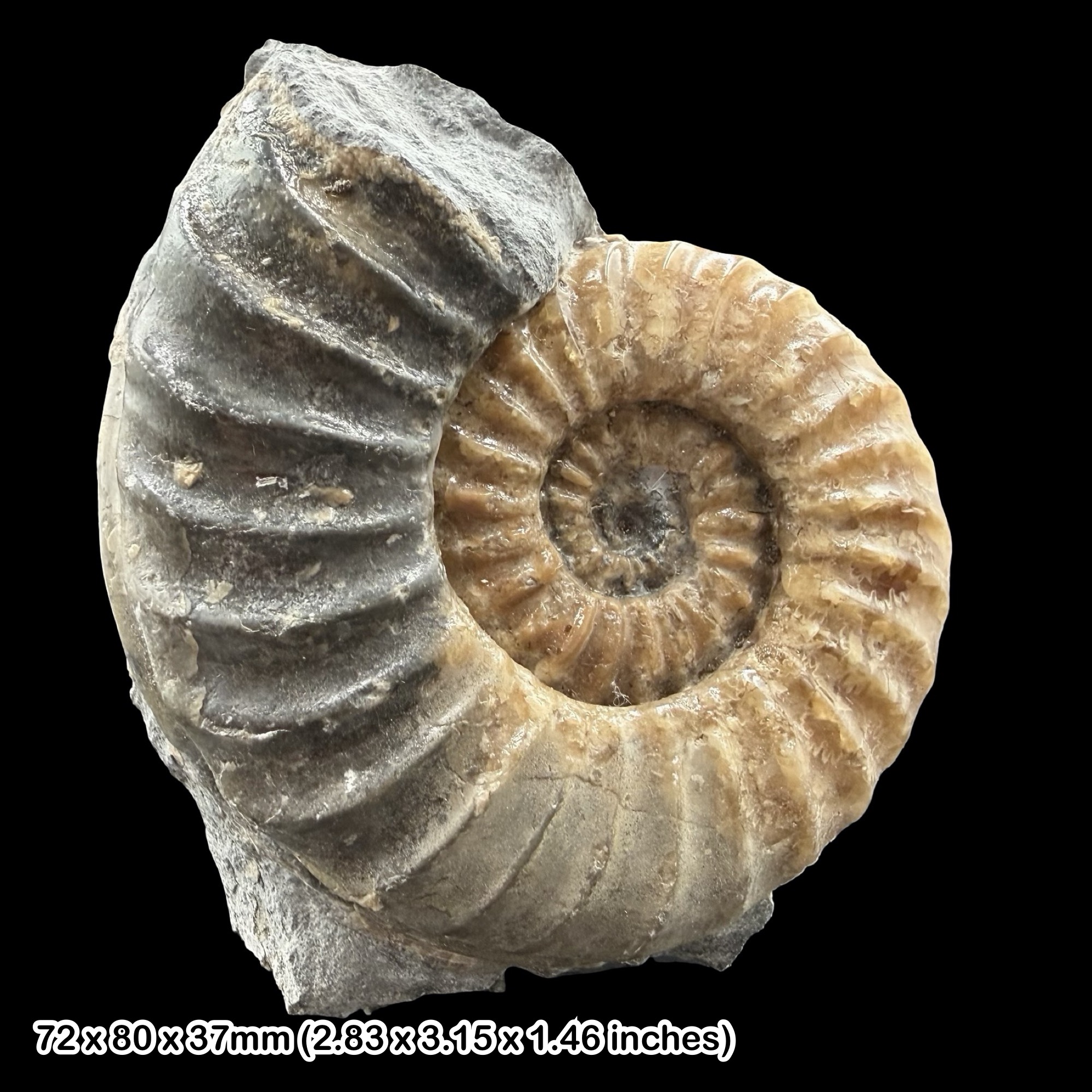
the Cenomanian Stage of the Cretaceous Period, discovered in Glynde, United Kingdom. Calycoceras (Newboldiceras) is an ammonite species known for its distinctively ribbed shell and evolute form, making it a valuable specimen for fossil collectors and enthusiasts of Cretaceous marine life. This fossil ammonite was preserved in chalk, a sedimentary rock formed from the accumulation of marine organisms, which helps to ensure the fossil's superb preservation. GEOLOGICAL INFORMATION:
• Geological Stage: Cenomanian, Cretaceous (Approximately 100.5 to 93.9 million years ago)
• Depositional Environment: During the Cenomanian period, shallow marine seas covered much of what is now the United Kingdom, including Glynde. These seas provided an ideal environment for the thriving ammonite populations, including Calycoceras (Newboldiceras). The Glynde region is particularly well-known for its chalk deposits, which formed from the accumulation of marine plankton and other microscopic organisms. Fossils such as Calycoceras were preserved in these deposits, providing a glimpse into the marine life of the Cretaceous period.
• Biozone: This fossil comes from the Cenomanian biozone, a period of significant marine biodiversity. The Cenomanian biozone is characterized by the abundance of ammonites and other marine life, making it a significant phase for understanding the evolution of marine ecosystems during the Cretaceous. FOSSIL FEATURES:
• Family: Ammonitidae
• Super Family: Ammonoidea
• Order: Ammonitida
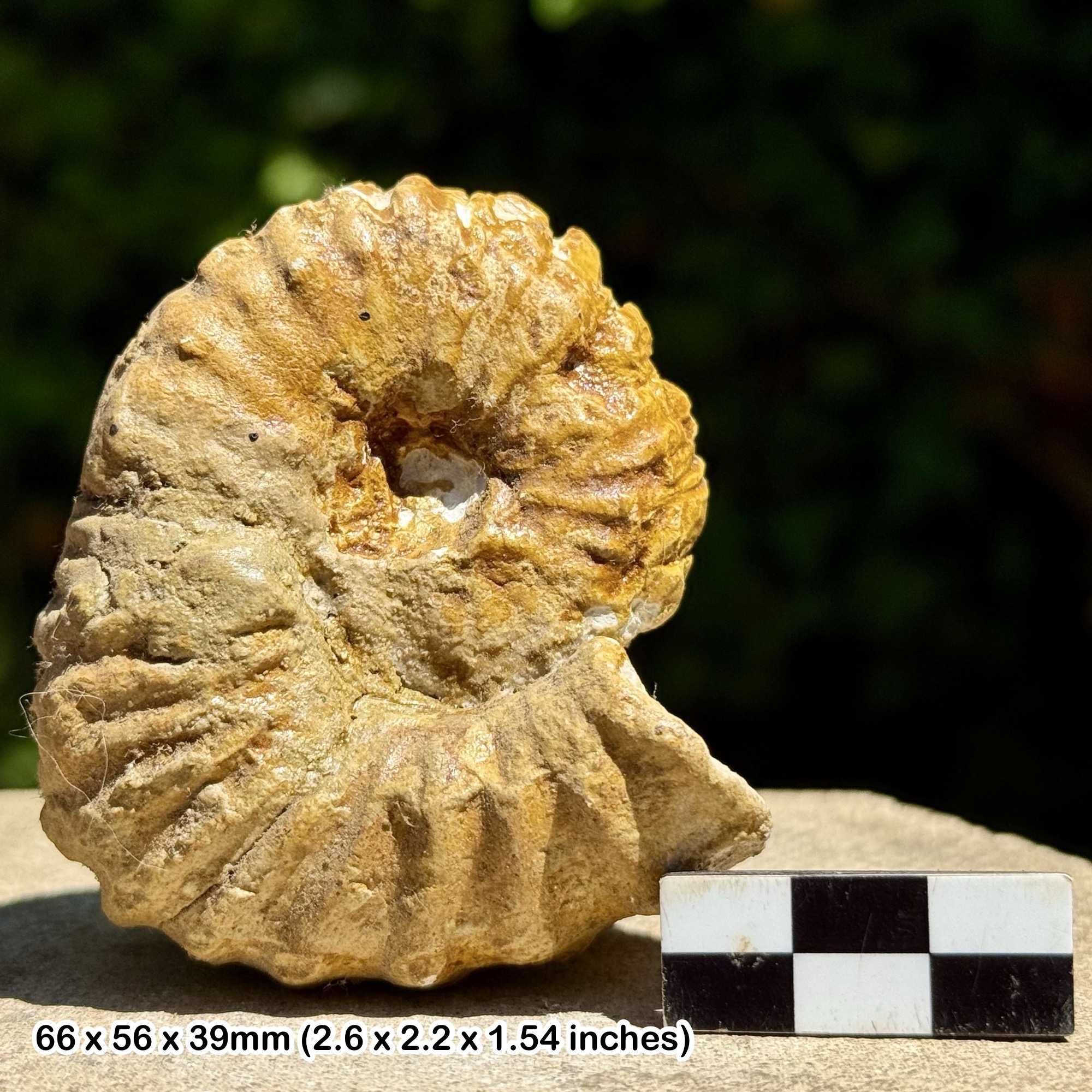
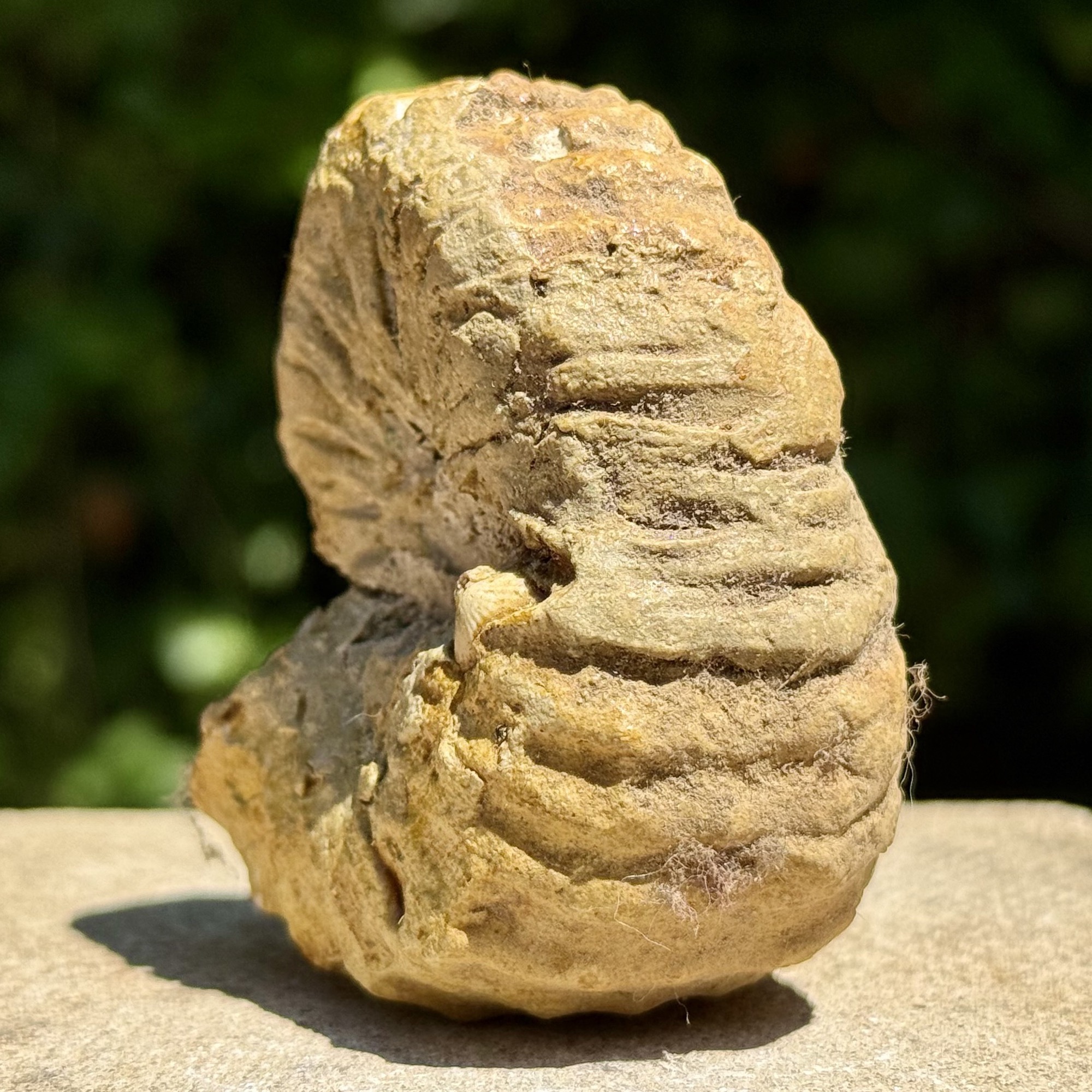
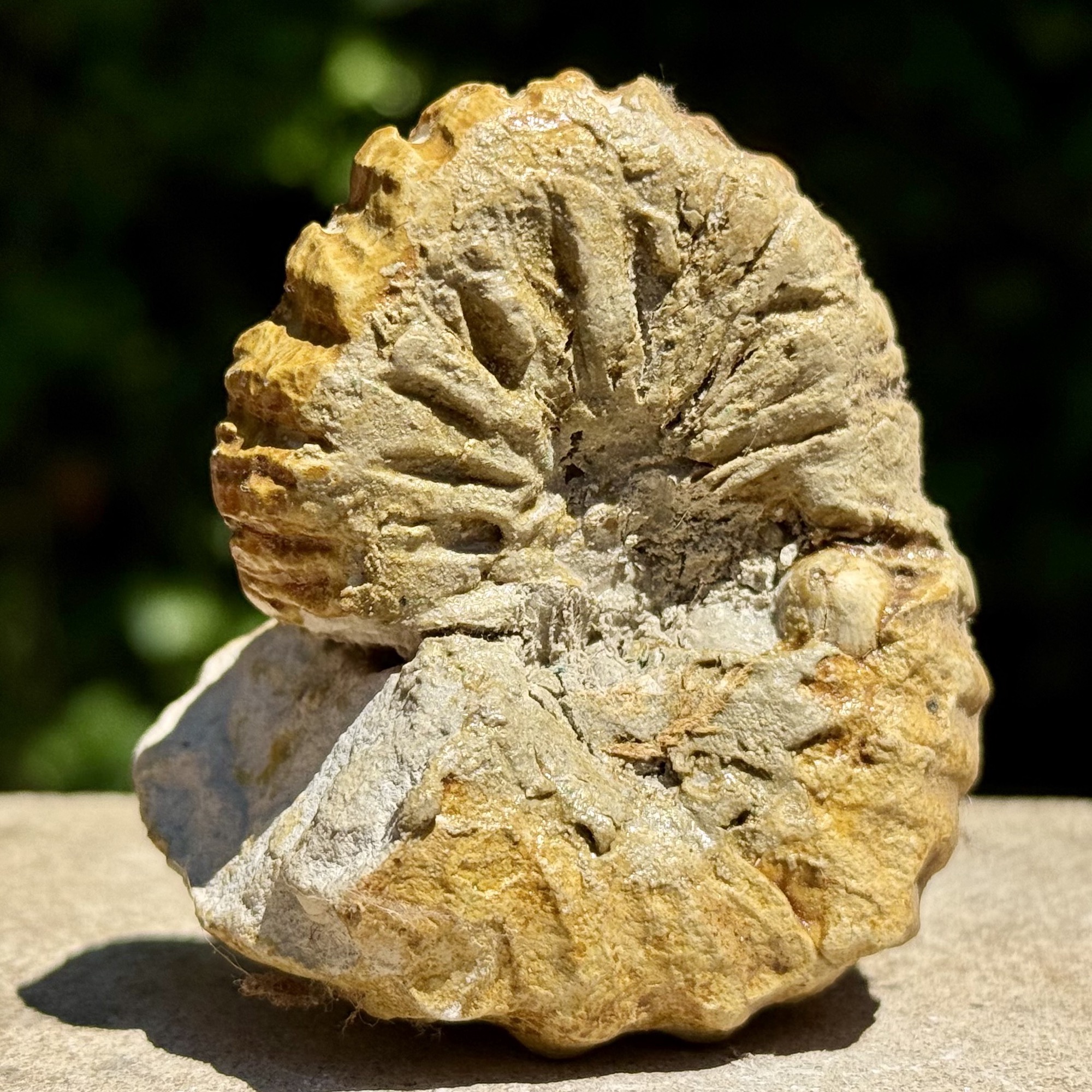
• Morphology: The Calycoceras (Newboldiceras) ammonite features a distinctive, ribbed, evolute shell. The shell is tightly coiled, showing clear and distinct whorls. The ribs on the shell are prominent and run along the length of the whorls, creating a textured appearance. The ammonite’s suture lines are clearly visible, adding to the fossil’s complexity and helping to define its species. This ammonite is a perfect example of Cretaceous ammonites, showing the typical features of evolute forms in this family. NOTABLE DETAILS:
• This fossil is 100% GENUINE and comes with a Certificate of Authenticity, ensuring its authenticity and historical value.
• The specimen has been carefully selected for its high-quality preservation. The photograph provided shows the actual specimen you will receive, ensuring transparency in your purchase.
• Scale Rule: The scale rule squares/cube shown in the photo represents 1cm, allowing you to accurately gauge the size of the fossil. Full sizing details are available in the photograph.Condition:This Calycoceras (Newboldiceras) Fossil Ammonite is in excellent condition, showcasing its distinctive ribbing, evolute shell, and well-preserved suture lines. The fossil has been cleaned and treated for display, making it an ideal addition to any Cretaceous ammonite collection or for those interested in the marine life of the Cenomanian period.
the Cenomanian Stage of the Cretaceous Period, discovered in Glynde, United Kingdom. Calycoceras (Newboldiceras) is an ammonite species known for its distinctively ribbed shell and evolute form, making it a valuable specimen for fossil collectors and enthusiasts of Cretaceous marine life. This fossil ammonite was preserved in chalk, a sedimentary rock formed from the accumulation of marine organisms, which helps to ensure the fossil's superb preservation. GEOLOGICAL INFORMATION:
• Geological Stage: Cenomanian, Cretaceous (Approximately 100.5 to 93.9 million years ago)
• Depositional Environment: During the Cenomanian period, shallow marine seas covered much of what is now the United Kingdom, including Glynde. These seas provided an ideal environment for the thriving ammonite populations, including Calycoceras (Newboldiceras). The Glynde region is particularly well-known for its chalk deposits, which formed from the accumulation of marine plankton and other microscopic organisms. Fossils such as Calycoceras were preserved in these deposits, providing a glimpse into the marine life of the Cretaceous period.
• Biozone: This fossil comes from the Cenomanian biozone, a period of significant marine biodiversity. The Cenomanian biozone is characterized by the abundance of ammonites and other marine life, making it a significant phase for understanding the evolution of marine ecosystems during the Cretaceous. FOSSIL FEATURES:
• Family: Ammonitidae
• Super Family: Ammonoidea
• Order: Ammonitida
• Morphology: The Calycoceras (Newboldiceras) ammonite features a distinctive, ribbed, evolute shell. The shell is tightly coiled, showing clear and distinct whorls. The ribs on the shell are prominent and run along the length of the whorls, creating a textured appearance. The ammonite’s suture lines are clearly visible, adding to the fossil’s complexity and helping to define its species. This ammonite is a perfect example of Cretaceous ammonites, showing the typical features of evolute forms in this family. NOTABLE DETAILS:
• This fossil is 100% GENUINE and comes with a Certificate of Authenticity, ensuring its authenticity and historical value.
• The specimen has been carefully selected for its high-quality preservation. The photograph provided shows the actual specimen you will receive, ensuring transparency in your purchase.
• Scale Rule: The scale rule squares/cube shown in the photo represents 1cm, allowing you to accurately gauge the size of the fossil. Full sizing details are available in the photograph.Condition:This Calycoceras (Newboldiceras) Fossil Ammonite is in excellent condition, showcasing its distinctive ribbing, evolute shell, and well-preserved suture lines. The fossil has been cleaned and treated for display, making it an ideal addition to any Cretaceous ammonite collection or for those interested in the marine life of the Cenomanian period.
Other Products