Rare Romaniceras ornatissimum Ammonite Fossil from Turonian Cretaceous Malling Lewes Kent United Kingdom
£ 12.60
GEOLOGICAL CONTEXT AND PROVENANCEThis specimen is a genuine Romaniceras ornatissimum ammonite fossil from the
Turonian Stage of the Late Cretaceous Period, dating to approximately 93.9 – 89.8 million years ago. It was collected from Malling, near Lewes in Kent, United Kingdom, a locality renowned for its derived Cretaceous ammonites and other marine fossils. The area is geologically significant, preserving remnants of ancient chalk seas that once stretched across much of Europe during the mid–Cretaceous.These deposits reflect an environment dominated by warm, shallow marine waters teeming with life. The chalk facies and associated derived deposits at Malling and Lewes have provided some of the most characteristic ammonites of the Turonian, including beautifully ornamented Romaniceras species. FOSSIL TYPE AND SPECIES INFORMATIONRomaniceras ornatissimum is a striking ammonite belonging to the Order Ammonitida, Superfamily Acanthoceratoidea, and Family Acanthoceratidae. Ammonites in this family are noted for their ornate ribbing and tuberculation, features that gave rise to their scientific name. The genus Romaniceras is particularly valued among palaeontologists and collectors for its distinctive and highly decorative shell sculpture.As with all ammonites, Romaniceras were nektonic predators related to modern squids, cuttlefish, and octopuses. Their shells provided buoyancy control and protection, while their tentacles captured prey in the open marine ecosystems of the Late Cretaceous seas. MORPHOLOGICAL FEATURES AND IDENTIFICATIONThis ammonite species is easily recognised by its dense, ornate ribbing, prominent nodes, and tuberculate ornamentation along the whorls. The ribs typically cross the shell surface strongly, giving the fossil a highly textured appearance that distinguishes R. ornatissimum from other Turonian ammonites.The form and sculpture of this specimen are not only visually impressive but also of biostratigraphic importance, as Romaniceras species are valuable zone fossils for correlating Turonian deposits across different regions. Their well-defined morphology makes them essential for identifying specific biozones within the Turonian stage. DEPOSITIONAL ENVIRONMENTDuring the Turonian, the British Isles lay beneath warm epicontinental seas. In Kent, chalk sedimentation dominated, with calcareous plankton forming the foundation of the chalk deposits that are still seen today. Ammonites such as Romaniceras ornatissimum would have thrived in these nutrient-rich environments, feeding actively in the open water column. Their eventual burial within the chalk and subsequent geological reworking allowed for the preservation of their shells, now discovered as striking fossils. COLLECTOR APPEAL AND AUTHENTICITYThis specimen represents a rare opportunity to own a genuine British ammonite fossil from the Turonian chalk seas, showcasing the ornate beauty of Romaniceras ornatissimum. Its ribbed and tuberculated shell is a classic example of the evolutionary artistry of ammonites, making it a standout piece for both scientific study and private display.
• 100% Genuine Specimen – All of our fossils are carefully chosen and come with a Certificate of Authenticity.
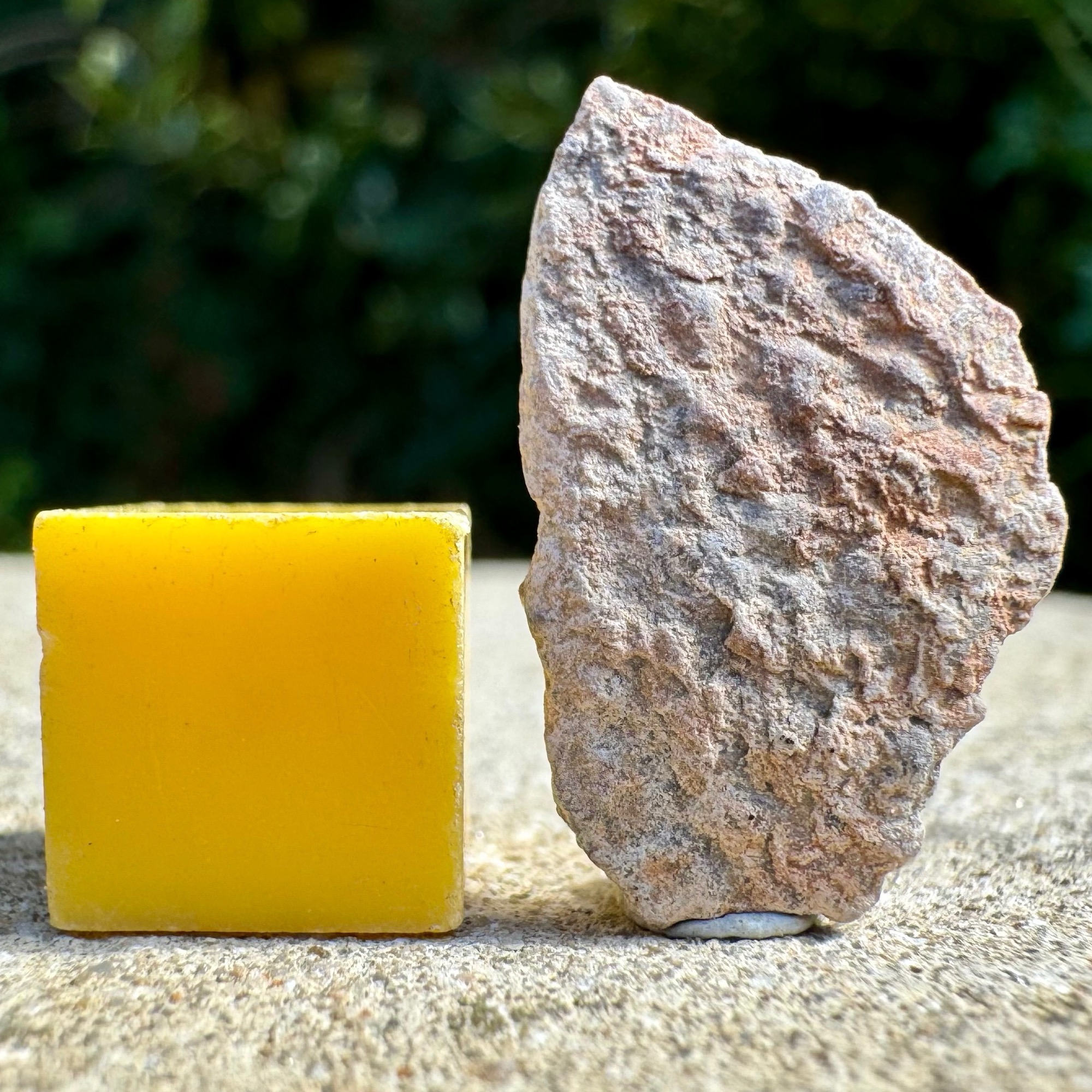
• Exact Fossil Shown – The photographs display the actual ammonite you will receive.
• Scale Reference – Scale rule squares / cube = 1 cm. Please see images for precise measurements and proportions.Owning this ammonite connects you directly to the Late Cretaceous seas of Kent, a time when giant marine reptiles, schools of fish, and diverse molluscs flourished in Britain’s prehistoric oceans. This carefully selected Romaniceras ornatissimum is both a scientifically significant and visually striking fossil, ideal for collectors, educators, and enthusiasts of natural history.
Turonian Stage of the Late Cretaceous Period, dating to approximately 93.9 – 89.8 million years ago. It was collected from Malling, near Lewes in Kent, United Kingdom, a locality renowned for its derived Cretaceous ammonites and other marine fossils. The area is geologically significant, preserving remnants of ancient chalk seas that once stretched across much of Europe during the mid–Cretaceous.These deposits reflect an environment dominated by warm, shallow marine waters teeming with life. The chalk facies and associated derived deposits at Malling and Lewes have provided some of the most characteristic ammonites of the Turonian, including beautifully ornamented Romaniceras species. FOSSIL TYPE AND SPECIES INFORMATIONRomaniceras ornatissimum is a striking ammonite belonging to the Order Ammonitida, Superfamily Acanthoceratoidea, and Family Acanthoceratidae. Ammonites in this family are noted for their ornate ribbing and tuberculation, features that gave rise to their scientific name. The genus Romaniceras is particularly valued among palaeontologists and collectors for its distinctive and highly decorative shell sculpture.As with all ammonites, Romaniceras were nektonic predators related to modern squids, cuttlefish, and octopuses. Their shells provided buoyancy control and protection, while their tentacles captured prey in the open marine ecosystems of the Late Cretaceous seas. MORPHOLOGICAL FEATURES AND IDENTIFICATIONThis ammonite species is easily recognised by its dense, ornate ribbing, prominent nodes, and tuberculate ornamentation along the whorls. The ribs typically cross the shell surface strongly, giving the fossil a highly textured appearance that distinguishes R. ornatissimum from other Turonian ammonites.The form and sculpture of this specimen are not only visually impressive but also of biostratigraphic importance, as Romaniceras species are valuable zone fossils for correlating Turonian deposits across different regions. Their well-defined morphology makes them essential for identifying specific biozones within the Turonian stage. DEPOSITIONAL ENVIRONMENTDuring the Turonian, the British Isles lay beneath warm epicontinental seas. In Kent, chalk sedimentation dominated, with calcareous plankton forming the foundation of the chalk deposits that are still seen today. Ammonites such as Romaniceras ornatissimum would have thrived in these nutrient-rich environments, feeding actively in the open water column. Their eventual burial within the chalk and subsequent geological reworking allowed for the preservation of their shells, now discovered as striking fossils. COLLECTOR APPEAL AND AUTHENTICITYThis specimen represents a rare opportunity to own a genuine British ammonite fossil from the Turonian chalk seas, showcasing the ornate beauty of Romaniceras ornatissimum. Its ribbed and tuberculated shell is a classic example of the evolutionary artistry of ammonites, making it a standout piece for both scientific study and private display.
• 100% Genuine Specimen – All of our fossils are carefully chosen and come with a Certificate of Authenticity.
• Exact Fossil Shown – The photographs display the actual ammonite you will receive.
• Scale Reference – Scale rule squares / cube = 1 cm. Please see images for precise measurements and proportions.Owning this ammonite connects you directly to the Late Cretaceous seas of Kent, a time when giant marine reptiles, schools of fish, and diverse molluscs flourished in Britain’s prehistoric oceans. This carefully selected Romaniceras ornatissimum is both a scientifically significant and visually striking fossil, ideal for collectors, educators, and enthusiasts of natural history.
Other Products