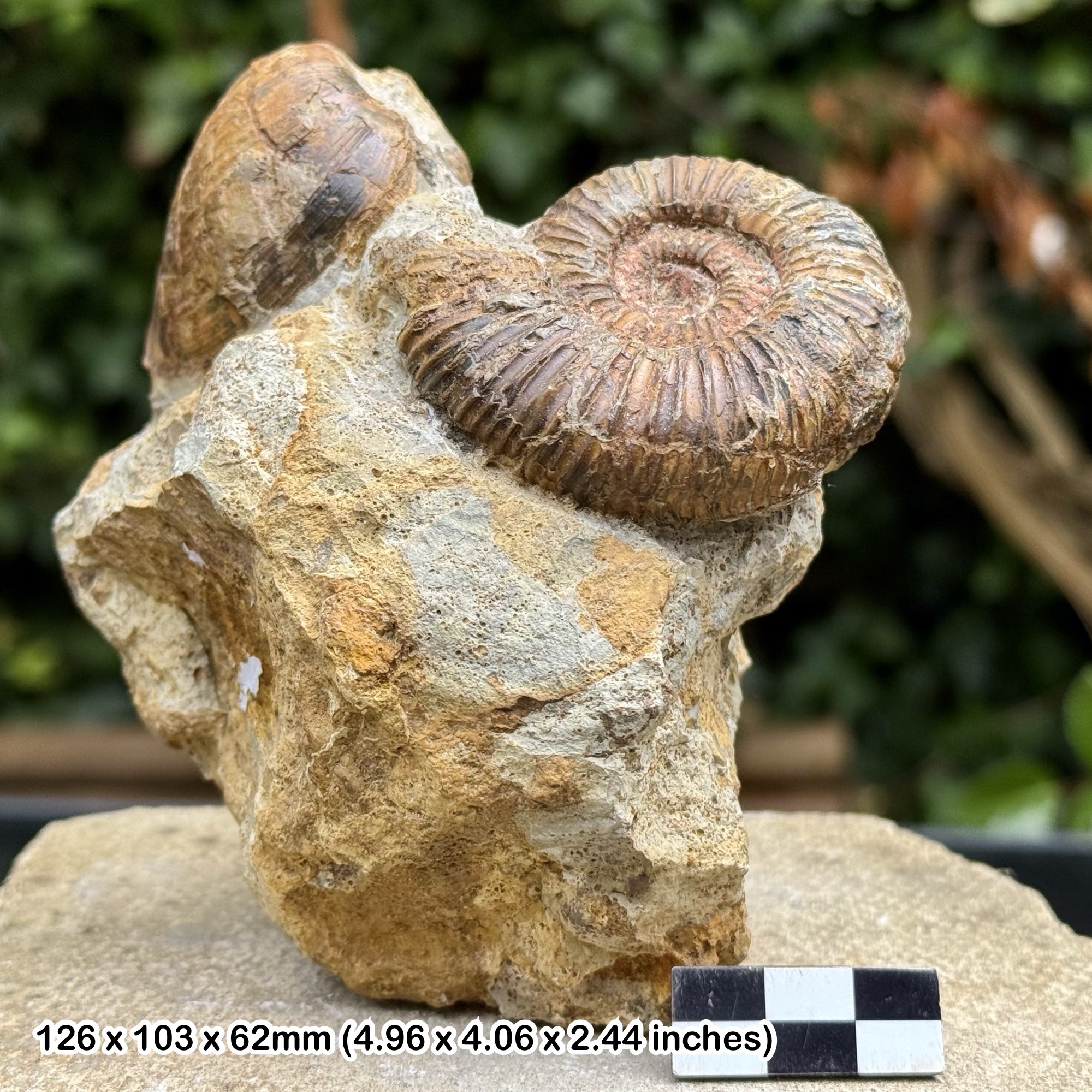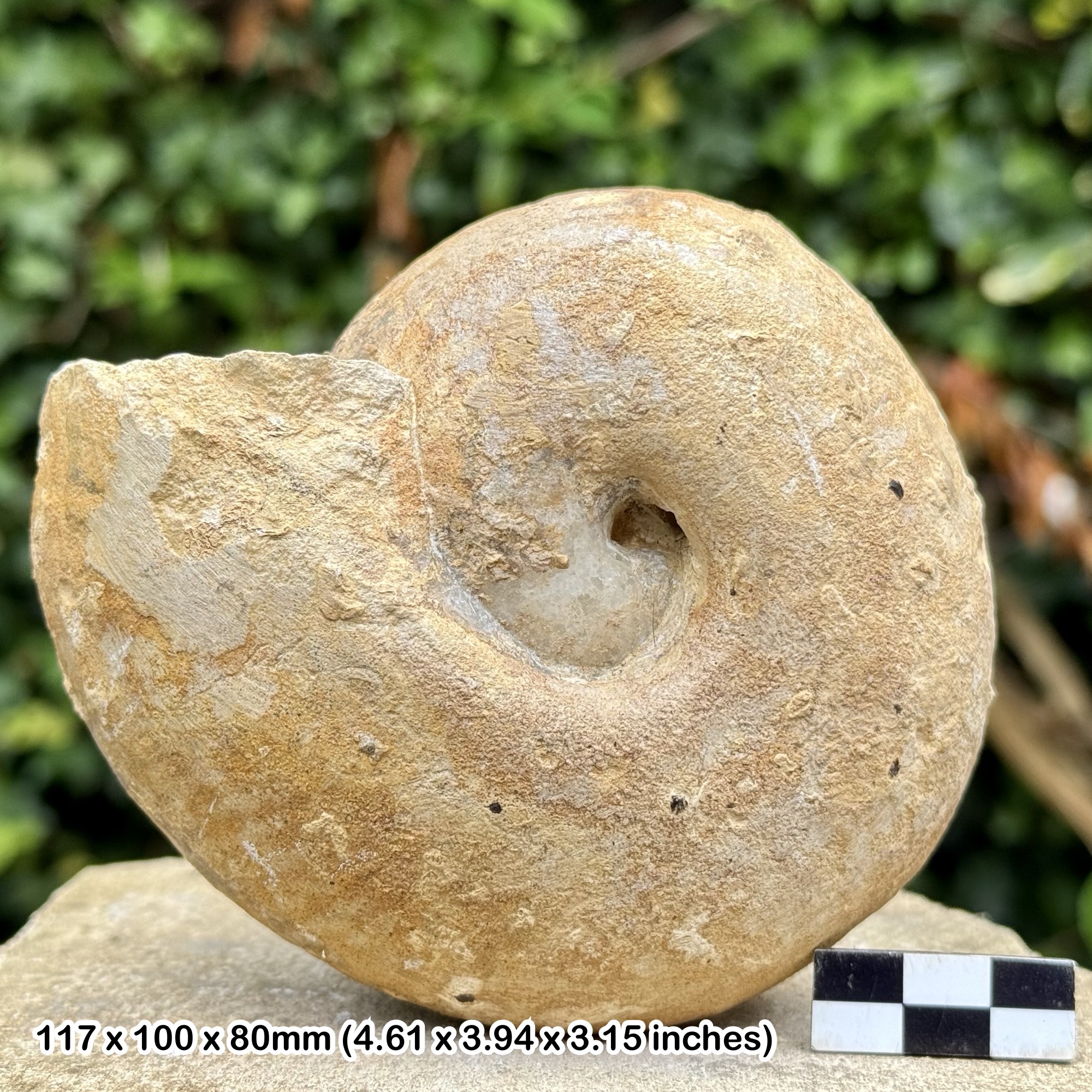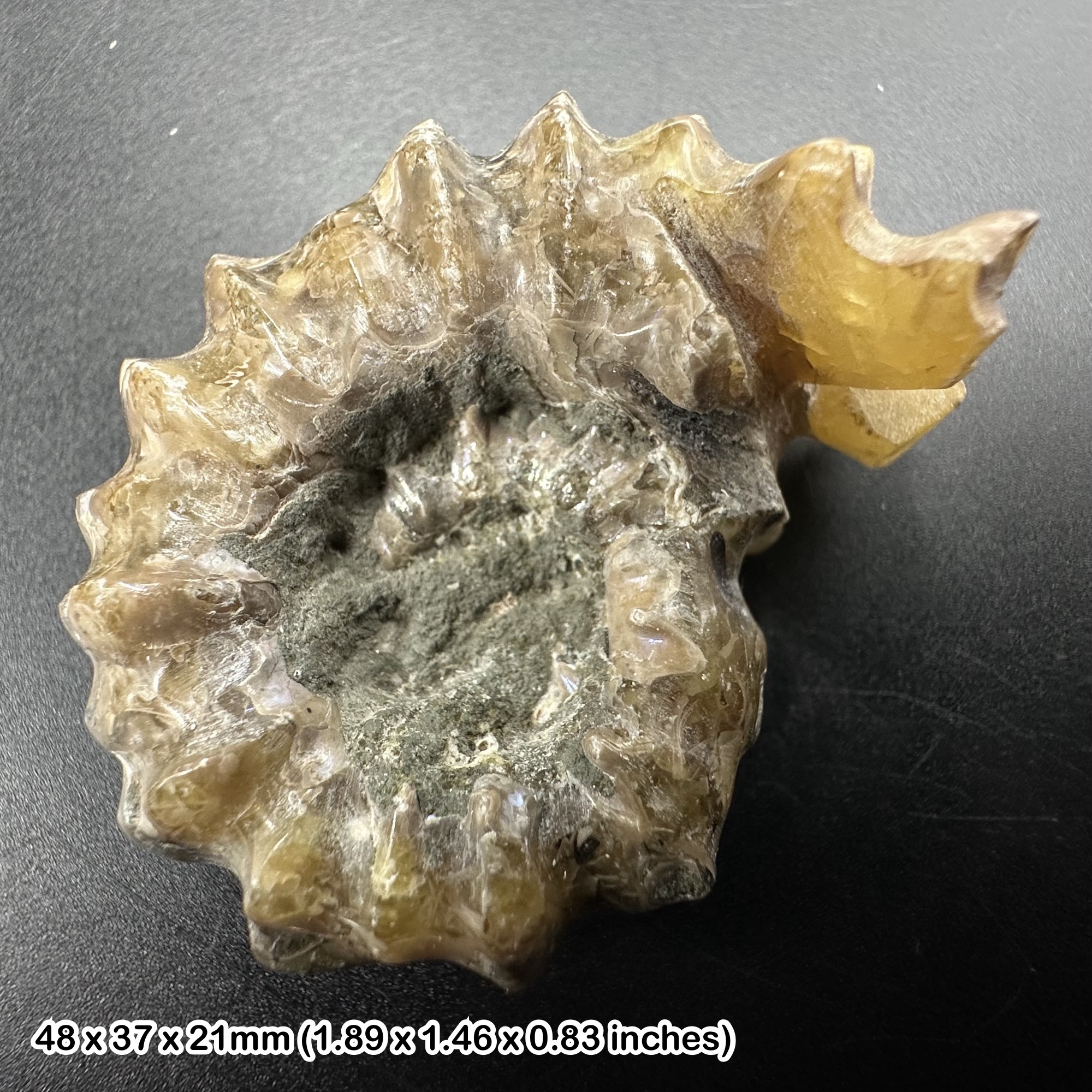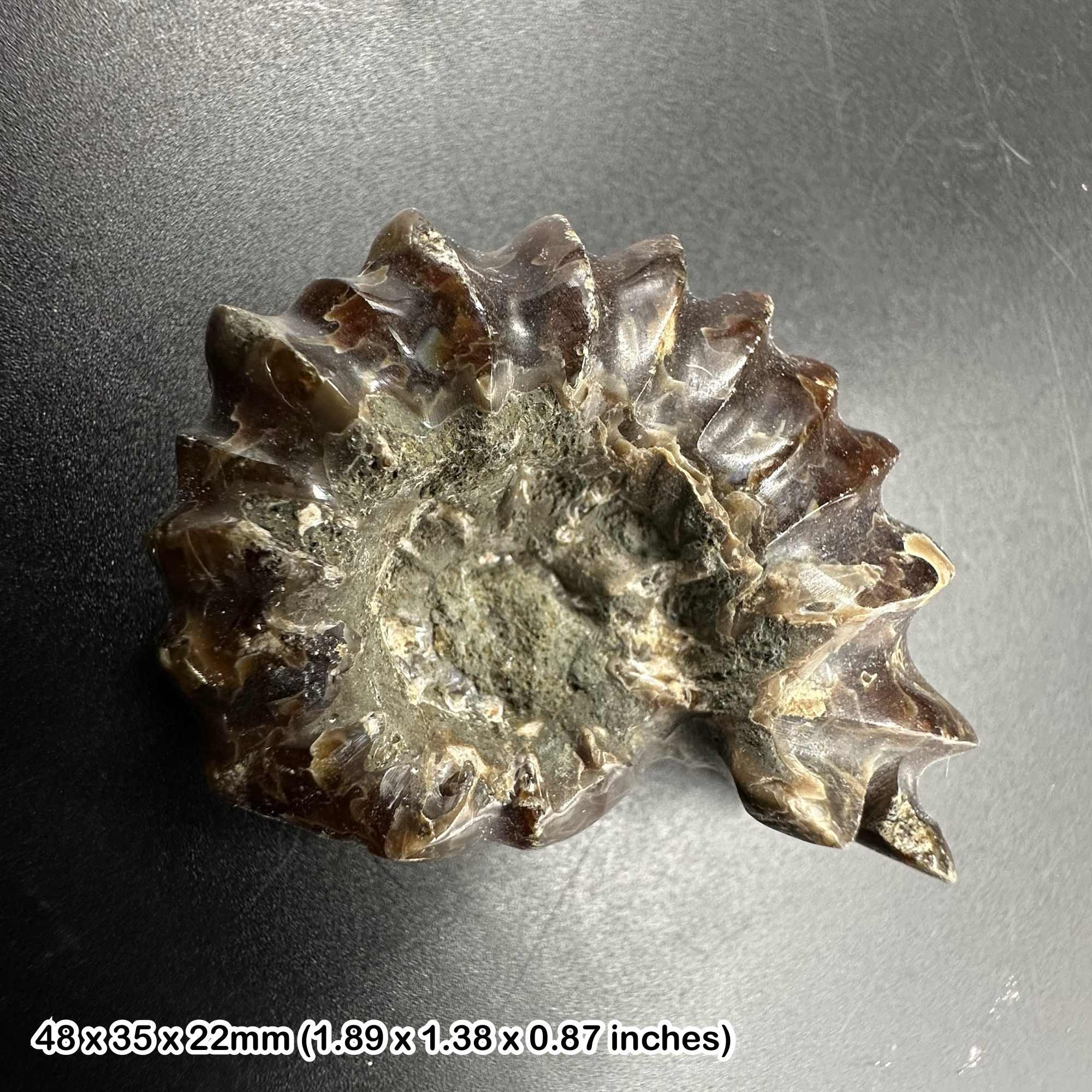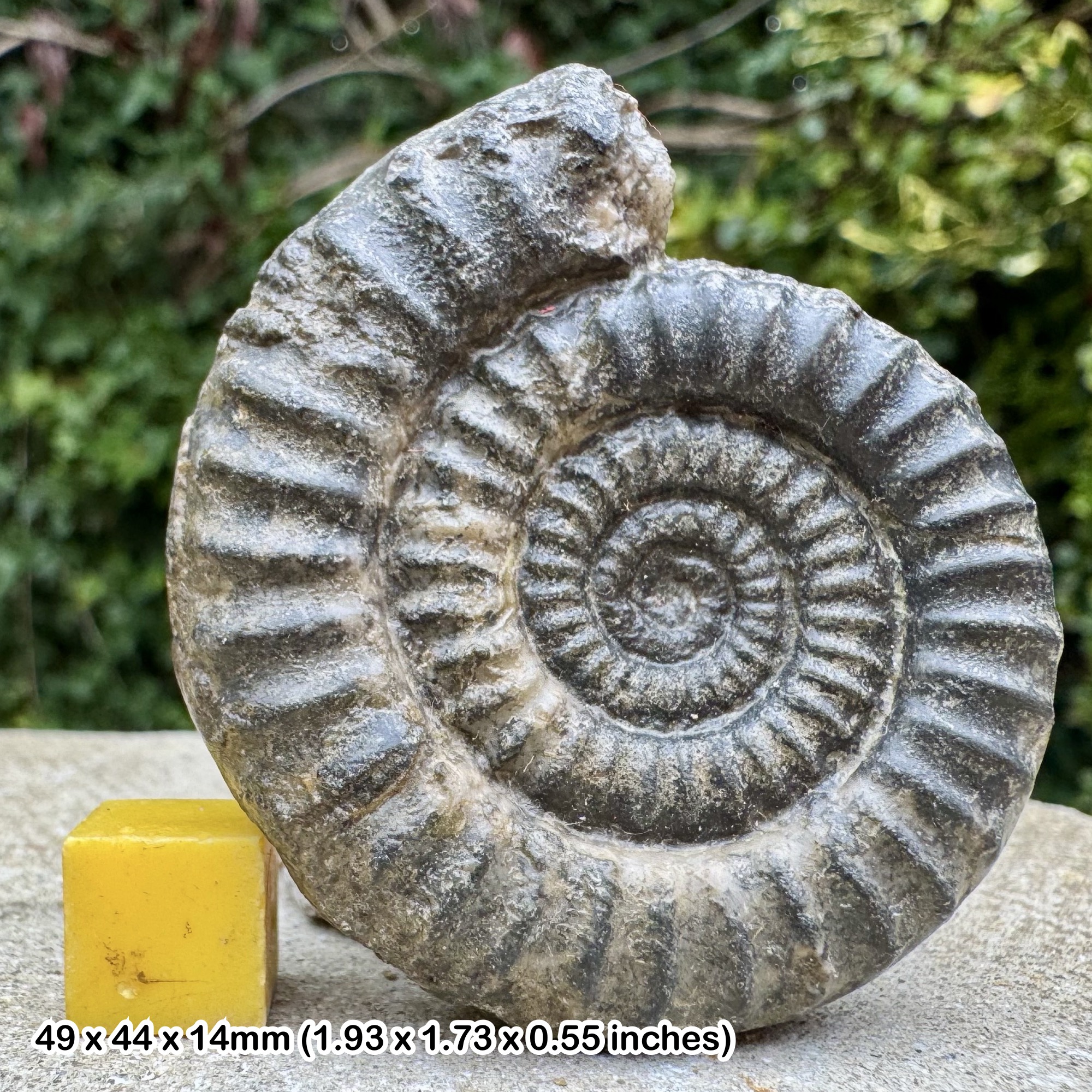
RARE Fossil Ammonite Vermiceras latisulcata Upper Sinemurian Jurassic Baden Germany
£ 36.00
RARE FOSSIL AMMONITE – VERMICERAS LATISULCATAThis listing presents a rare and scientifically important specimen of the
ammonite Vermiceras latisulcata, from the Upper Sinemurian stage of the Early Jurassic period (approximately 196–190 million years ago). It was discovered in Baden, Germany, a region long celebrated for its fossil-bearing strata and excellent preservation of ammonites. The specimen you see photographed is the exact fossil you will receive, with a 1 cm scale cube included to provide accurate sizing. Each piece is carefully selected to ensure both aesthetic quality and scientific significance. GEOLOGICAL SETTINGThe Upper Sinemurian stage represents a vital period in Early Jurassic marine evolution. Deposits from this time in southern Germany are part of the Swabian Jura, a geologically rich area where marine sediments accumulated in shallow epicontinental seas. These limestones and marls have preserved a wide range of ammonites, bivalves, gastropods, and marine reptiles. The occurrence of Vermiceras latisulcata within these deposits helps paleontologists refine their understanding of biozones—layers of rock defined by the presence of key index fossils that are used to date and correlate strata across Europe. CLASSIFICATION AND TAXONOMY
• Kingdom: Animalia
• Phylum: Mollusca
• Class: Cephalopoda
• Order: Ammonitida
• Superfamily: Psiloceratoidea
• Family: Arietitidae
• Genus: Vermiceras
• Species: Vermiceras latisulcataThis classification places the ammonite within a family of early Jurassic cephalopods known for their distinct ribbing and coiling patterns, which provide valuable data for evolutionary and ecological studies. MORPHOLOGICAL FEATURESVermiceras latisulcata is recognised by its evolute shell form, in which all whorls remain visible from a lateral view. Its ribbing is distinctive, often fine and evenly spaced, creating a visually striking pattern across the shell’s surface. The whorls are typically compressed with relatively narrow umbilici, reflecting adaptations for streamlined movement in the marine environment. These features not only make it identifiable for paleontologists but also enhance its appeal for collectors due to the intricate natural design. SCIENTIFIC AND COLLECTOR SIGNIFICANCEAmmonites like Vermiceras latisulcata are important index fossils, allowing geologists to establish precise chronological frameworks for Jurassic sediments. This makes them significant beyond their natural beauty, contributing directly to our understanding of ancient Earth systems and evolutionary patterns. For collectors, a specimen from Baden, Germany carries prestige due to the site’s well-known contributions to paleontology and its association with carefully studied Sinemurian sequences. PROVENANCE AND AUTHENTICITYCollected from Baden, Germany, this ammonite represents both a scientifically valuable and aesthetically pleasing example of an early Jurassic cephalopod. As with all our specimens, it is supplied with a Certificate of Authenticity, guaranteeing its status as a 100% genuine fossil. Unlike replicas or mass-market pieces, each fossil is unique, and this specimen has been chosen for its detail, preservation, and rarity. A UNIQUE PIECE OF NATURAL HISTORYOwning this ammonite offers the chance to connect with life that swam the oceans nearly 200 million years ago. With its rarity, geological significance, and striking morphology, Vermiceras latisulcata is an exceptional addition to any collection, whether for display, educational purposes, or as a scientific reference. This fossil embodies the beauty and intrigue of the Early Jurassic seas, making it a treasured specimen for collectors of fine natural history pieces.
ammonite Vermiceras latisulcata, from the Upper Sinemurian stage of the Early Jurassic period (approximately 196–190 million years ago). It was discovered in Baden, Germany, a region long celebrated for its fossil-bearing strata and excellent preservation of ammonites. The specimen you see photographed is the exact fossil you will receive, with a 1 cm scale cube included to provide accurate sizing. Each piece is carefully selected to ensure both aesthetic quality and scientific significance. GEOLOGICAL SETTINGThe Upper Sinemurian stage represents a vital period in Early Jurassic marine evolution. Deposits from this time in southern Germany are part of the Swabian Jura, a geologically rich area where marine sediments accumulated in shallow epicontinental seas. These limestones and marls have preserved a wide range of ammonites, bivalves, gastropods, and marine reptiles. The occurrence of Vermiceras latisulcata within these deposits helps paleontologists refine their understanding of biozones—layers of rock defined by the presence of key index fossils that are used to date and correlate strata across Europe. CLASSIFICATION AND TAXONOMY
• Kingdom: Animalia
• Phylum: Mollusca
• Class: Cephalopoda
• Order: Ammonitida
• Superfamily: Psiloceratoidea
• Family: Arietitidae
• Genus: Vermiceras
• Species: Vermiceras latisulcataThis classification places the ammonite within a family of early Jurassic cephalopods known for their distinct ribbing and coiling patterns, which provide valuable data for evolutionary and ecological studies. MORPHOLOGICAL FEATURESVermiceras latisulcata is recognised by its evolute shell form, in which all whorls remain visible from a lateral view. Its ribbing is distinctive, often fine and evenly spaced, creating a visually striking pattern across the shell’s surface. The whorls are typically compressed with relatively narrow umbilici, reflecting adaptations for streamlined movement in the marine environment. These features not only make it identifiable for paleontologists but also enhance its appeal for collectors due to the intricate natural design. SCIENTIFIC AND COLLECTOR SIGNIFICANCEAmmonites like Vermiceras latisulcata are important index fossils, allowing geologists to establish precise chronological frameworks for Jurassic sediments. This makes them significant beyond their natural beauty, contributing directly to our understanding of ancient Earth systems and evolutionary patterns. For collectors, a specimen from Baden, Germany carries prestige due to the site’s well-known contributions to paleontology and its association with carefully studied Sinemurian sequences. PROVENANCE AND AUTHENTICITYCollected from Baden, Germany, this ammonite represents both a scientifically valuable and aesthetically pleasing example of an early Jurassic cephalopod. As with all our specimens, it is supplied with a Certificate of Authenticity, guaranteeing its status as a 100% genuine fossil. Unlike replicas or mass-market pieces, each fossil is unique, and this specimen has been chosen for its detail, preservation, and rarity. A UNIQUE PIECE OF NATURAL HISTORYOwning this ammonite offers the chance to connect with life that swam the oceans nearly 200 million years ago. With its rarity, geological significance, and striking morphology, Vermiceras latisulcata is an exceptional addition to any collection, whether for display, educational purposes, or as a scientific reference. This fossil embodies the beauty and intrigue of the Early Jurassic seas, making it a treasured specimen for collectors of fine natural history pieces.
Other Products