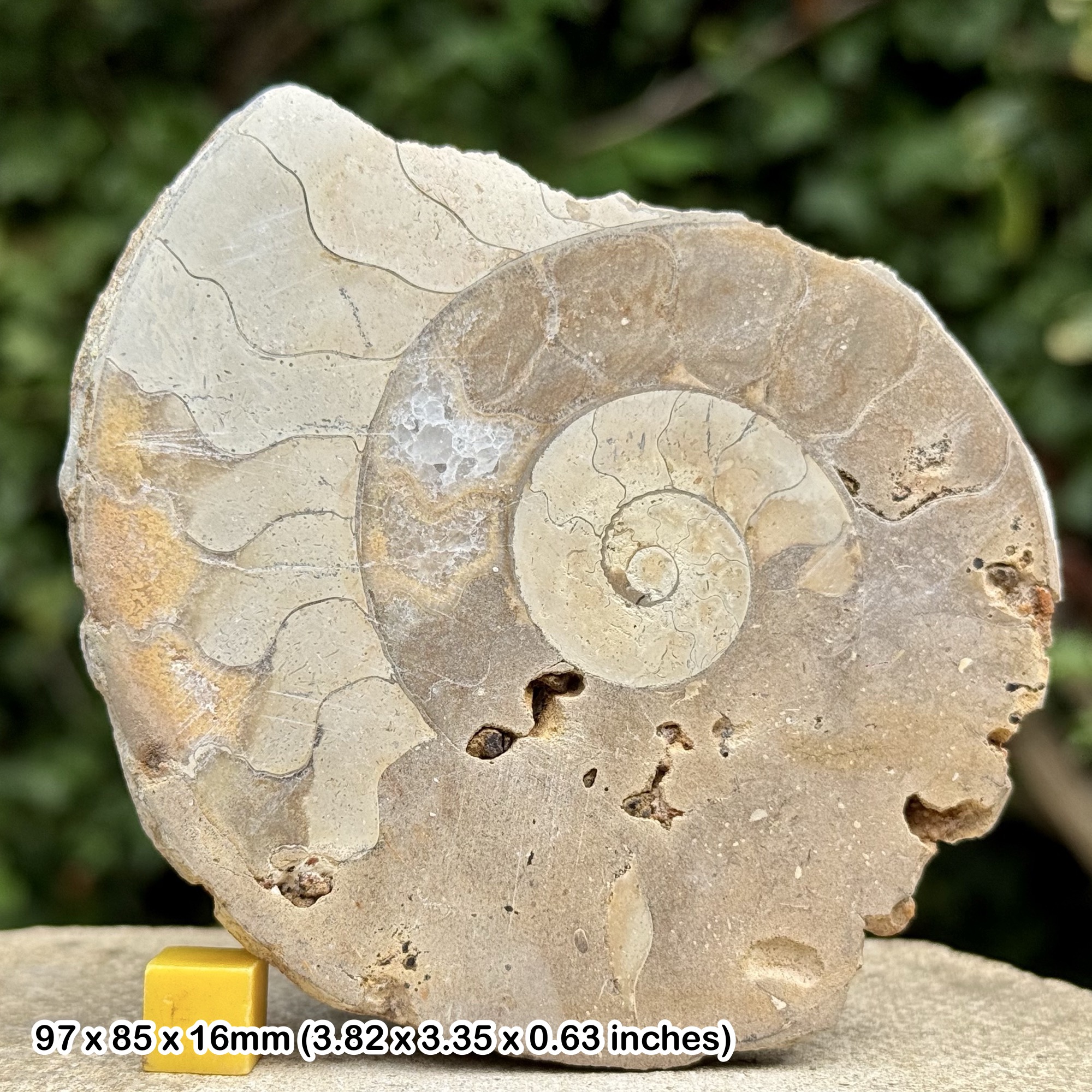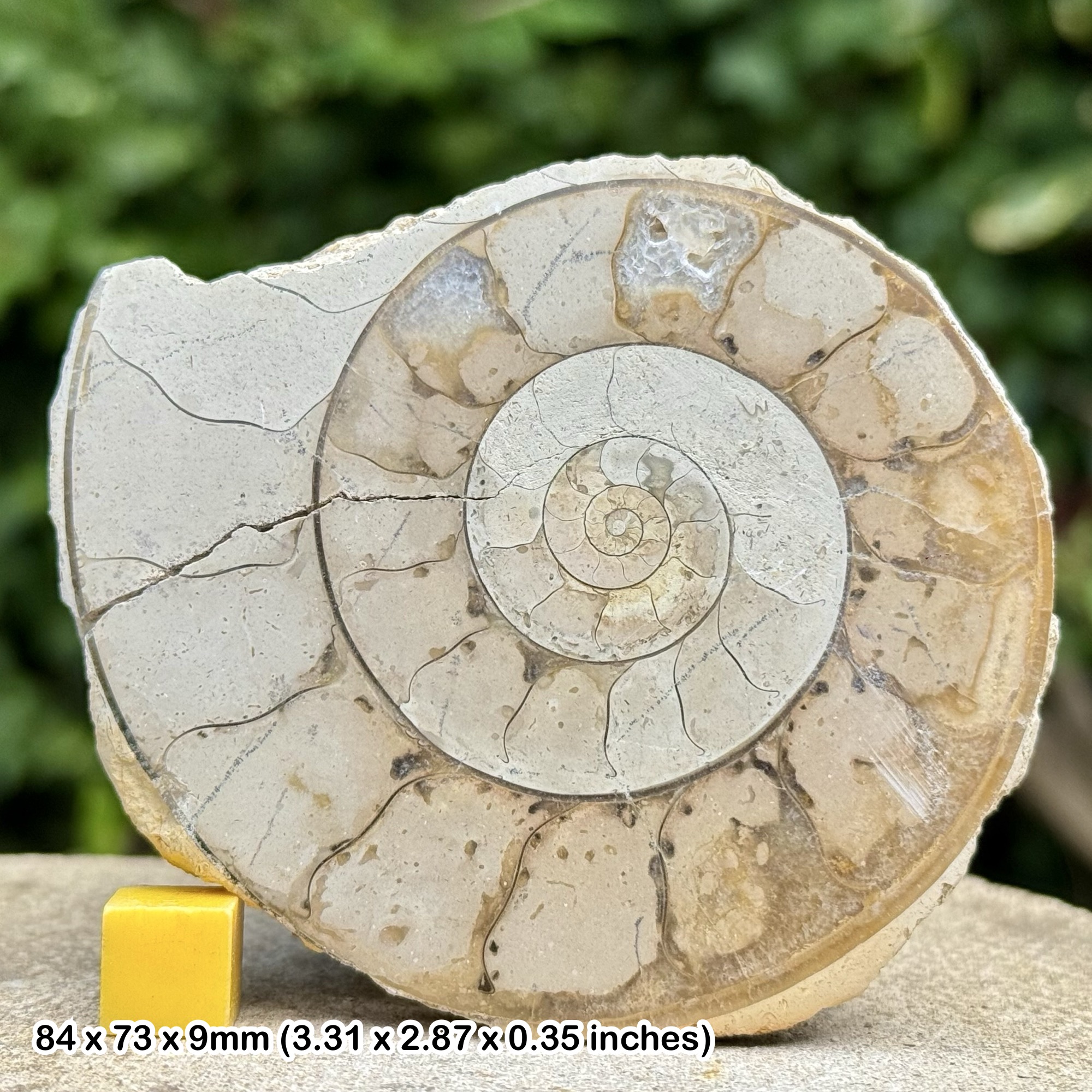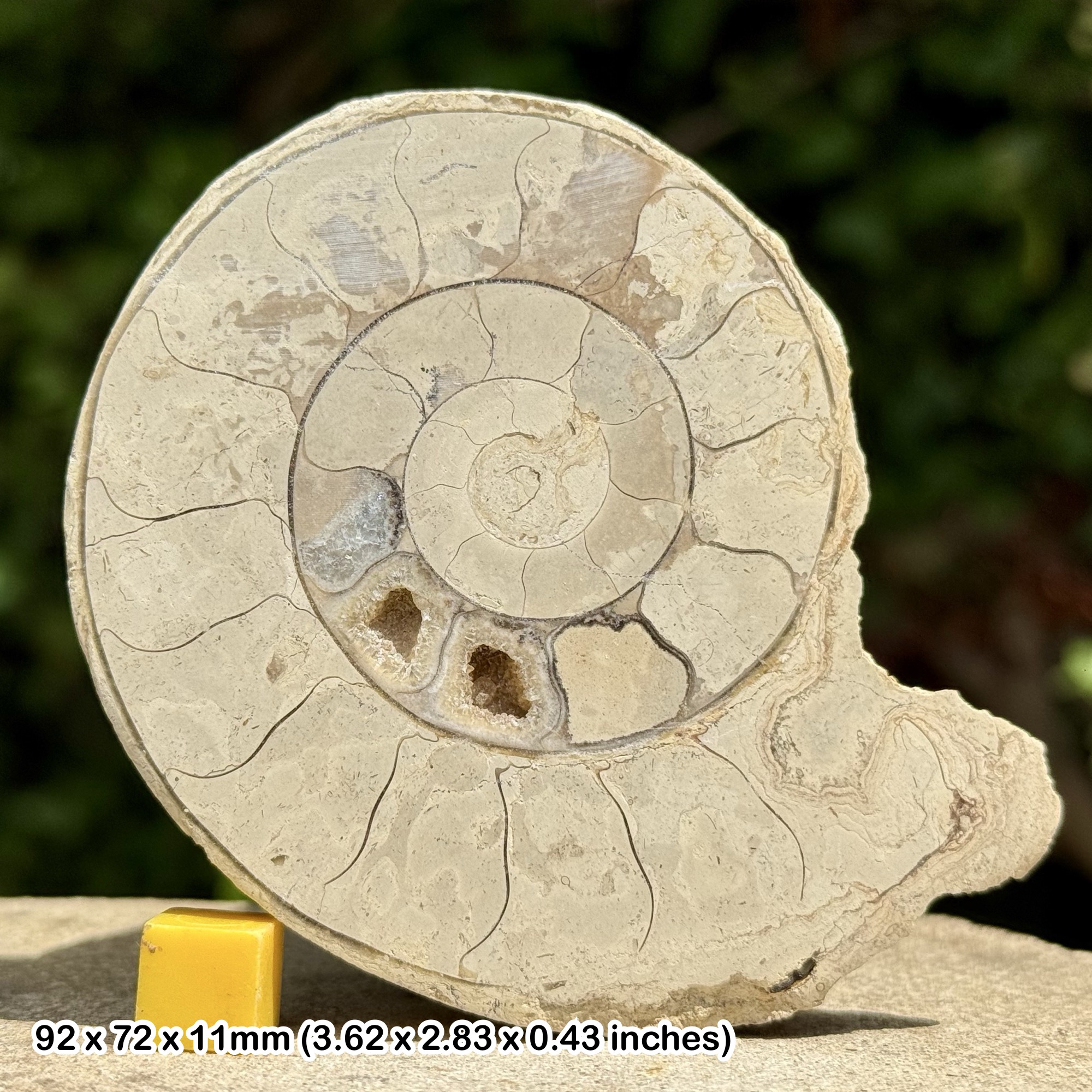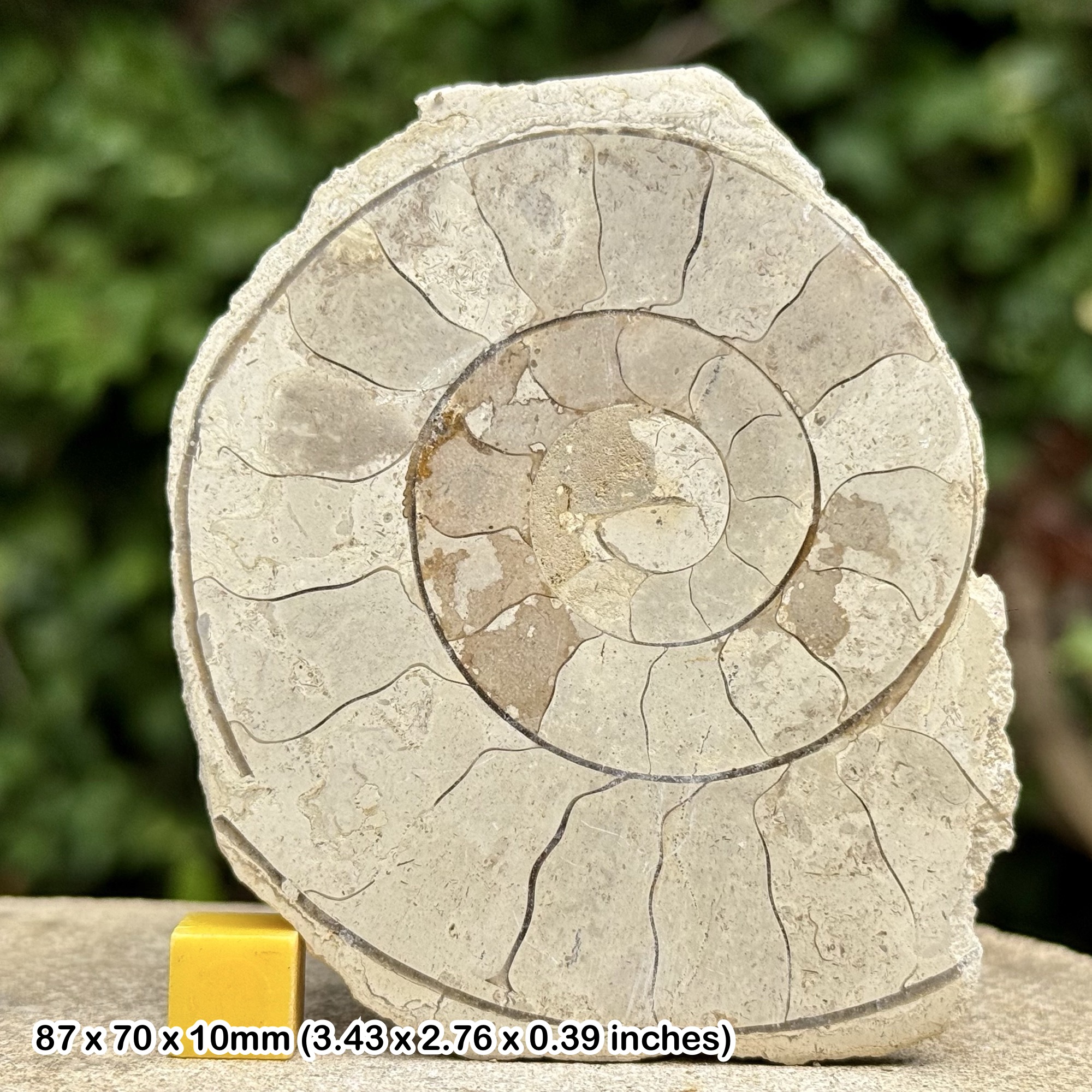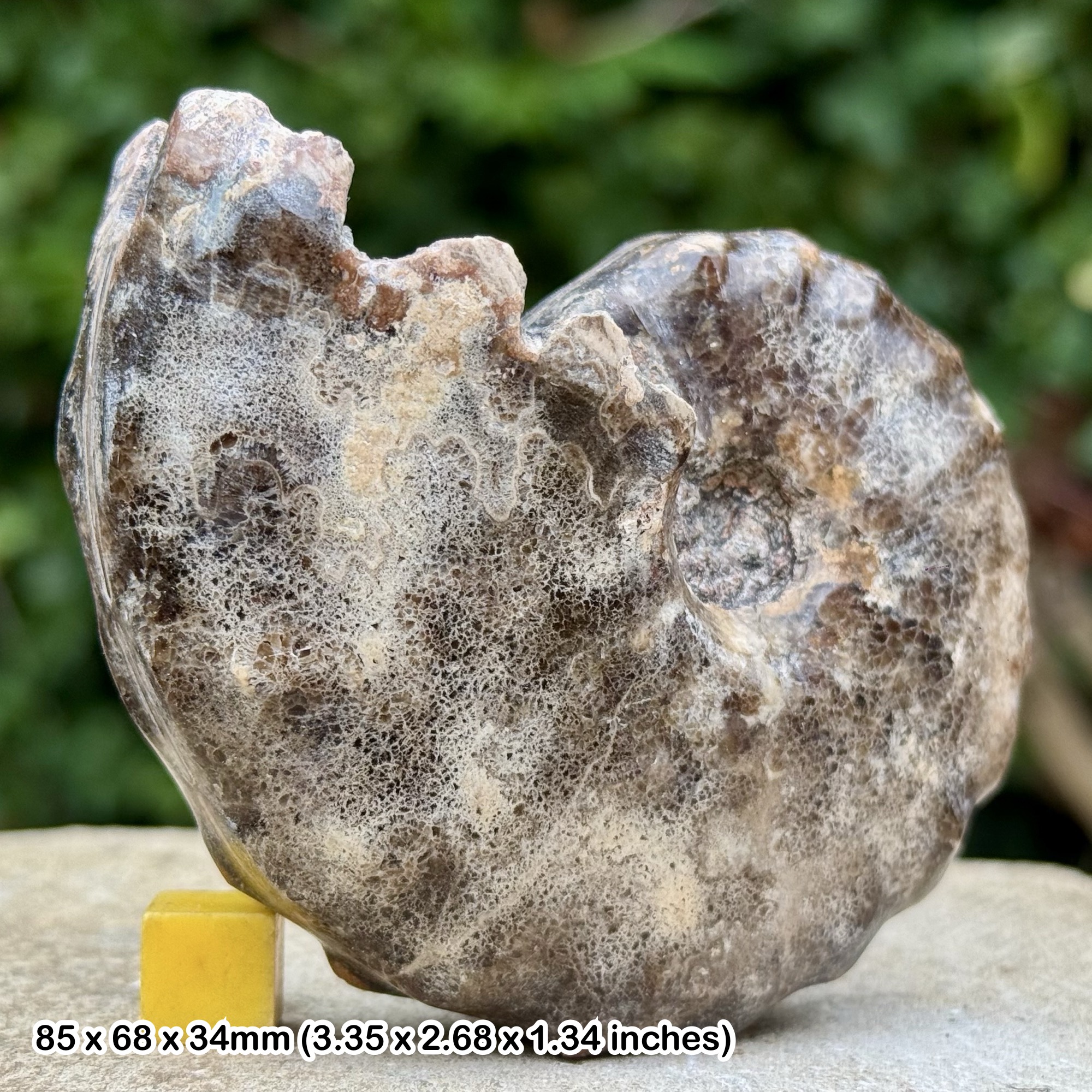
Pseudotissotia galliennei Fossil Ammonite Lower Turonian Cretaceous Morocco with Certificate of Authenticity
£ 72.00
AUTHENTIC PSEUDOTISSOTIA GALLIENNEI FOSSIL AMMONITEThis is a genuine Pseudotissotia (Pseudotissotia) galliennei fossil ammonite,
dating to the Lower Turonian Stage of the Late Cretaceous, approximately 93–90 million years old. The specimen was recovered from the fossil-rich formations of Morocco, a region globally renowned for its Cretaceous marine deposits. Every piece has been carefully selected for quality, and this fossil comes complete with a Certificate of Authenticity, ensuring its genuine nature. The photographs provided show the actual specimen you will receive, with a 1cm cube and scale rule included for full sizing accuracy. GEOLOGICAL CONTEXTThe Turonian Stage is a subdivision of the Late Cretaceous period, known for widespread warm seas and rich marine life. During this time, much of what is now North Africa was covered by shallow tropical seas, creating the perfect conditions for ammonites, belemnites, and other marine invertebrates to thrive. Fossils from this interval are highly significant because they help define and correlate global biozones across different continents.The Moroccan deposits where this specimen was found are particularly prized for their preservation quality, revealing fine shell features that provide invaluable insights into ammonite morphology and paleoecology. SCIENTIFIC CLASSIFICATION
• Genus: Pseudotissotia
• Subgenus: (Pseudotissotia)
• Species: Pseudotissotia galliennei
• Order: Ammonitida
• Superfamily: Acanthocerataceae
• Family: Vascoceratidae
• Geological Stage: Lower Turonian, Late Cretaceous
• Provenance: MoroccoThis species was first described from Cretaceous sediments of Europe and North Africa, and it remains an important fossil for stratigraphic correlation. MORPHOLOGICAL FEATURESThis specimen of Pseudotissotia galliennei shows the distinctive features of the species, including:
• Involute coiling with compressed whorls.
• Strong ribbing crossing the flanks, a diagnostic trait of the genus.
• Prominent tubercles along the spiral, often serving as points of rib bifurcation.
• A well-defined venter, sometimes keeled, reflecting adaptations to stable swimming in open marine environments.These characteristics not only make this ammonite aesthetically appealing but also enable paleontologists to distinguish it from closely related genera within the Vascoceratidae family. COLLECTOR AND SCIENTIFIC VALUEAmmonites such as Pseudotissotia galliennei are highly valued as biostratigraphic markers, helping geologists date and correlate sedimentary rocks from the Turonian Stage across Europe, Africa, and beyond. Their relatively short time range and widespread distribution make them excellent index fossils.For collectors, this specimen offers both scientific significance and display appeal. Its robust shell and striking ornamentation make it a standout addition to any fossil collection, while its provenance from Morocco connects it to one of the most important fossil-yielding regions of the Cretaceous. DISPLAY AND EDUCATIONAL IMPORTANCEThis ammonite is ideal for display in a private collection, academic setting, or educational context. It showcases the intricate shell ornamentation and evolutionary adaptations of heteromorph ammonites, providing a tangible link to marine life of the Cretaceous seas.Owning this specimen of Pseudotissotia galliennei fossil ammonite from Morocco allows you to hold a piece of deep geological history, preserving the legacy of marine ecosystems that flourished nearly 100 million years ago.
dating to the Lower Turonian Stage of the Late Cretaceous, approximately 93–90 million years old. The specimen was recovered from the fossil-rich formations of Morocco, a region globally renowned for its Cretaceous marine deposits. Every piece has been carefully selected for quality, and this fossil comes complete with a Certificate of Authenticity, ensuring its genuine nature. The photographs provided show the actual specimen you will receive, with a 1cm cube and scale rule included for full sizing accuracy. GEOLOGICAL CONTEXTThe Turonian Stage is a subdivision of the Late Cretaceous period, known for widespread warm seas and rich marine life. During this time, much of what is now North Africa was covered by shallow tropical seas, creating the perfect conditions for ammonites, belemnites, and other marine invertebrates to thrive. Fossils from this interval are highly significant because they help define and correlate global biozones across different continents.The Moroccan deposits where this specimen was found are particularly prized for their preservation quality, revealing fine shell features that provide invaluable insights into ammonite morphology and paleoecology. SCIENTIFIC CLASSIFICATION
• Genus: Pseudotissotia
• Subgenus: (Pseudotissotia)
• Species: Pseudotissotia galliennei
• Order: Ammonitida
• Superfamily: Acanthocerataceae
• Family: Vascoceratidae
• Geological Stage: Lower Turonian, Late Cretaceous
• Provenance: MoroccoThis species was first described from Cretaceous sediments of Europe and North Africa, and it remains an important fossil for stratigraphic correlation. MORPHOLOGICAL FEATURESThis specimen of Pseudotissotia galliennei shows the distinctive features of the species, including:
• Involute coiling with compressed whorls.
• Strong ribbing crossing the flanks, a diagnostic trait of the genus.
• Prominent tubercles along the spiral, often serving as points of rib bifurcation.
• A well-defined venter, sometimes keeled, reflecting adaptations to stable swimming in open marine environments.These characteristics not only make this ammonite aesthetically appealing but also enable paleontologists to distinguish it from closely related genera within the Vascoceratidae family. COLLECTOR AND SCIENTIFIC VALUEAmmonites such as Pseudotissotia galliennei are highly valued as biostratigraphic markers, helping geologists date and correlate sedimentary rocks from the Turonian Stage across Europe, Africa, and beyond. Their relatively short time range and widespread distribution make them excellent index fossils.For collectors, this specimen offers both scientific significance and display appeal. Its robust shell and striking ornamentation make it a standout addition to any fossil collection, while its provenance from Morocco connects it to one of the most important fossil-yielding regions of the Cretaceous. DISPLAY AND EDUCATIONAL IMPORTANCEThis ammonite is ideal for display in a private collection, academic setting, or educational context. It showcases the intricate shell ornamentation and evolutionary adaptations of heteromorph ammonites, providing a tangible link to marine life of the Cretaceous seas.Owning this specimen of Pseudotissotia galliennei fossil ammonite from Morocco allows you to hold a piece of deep geological history, preserving the legacy of marine ecosystems that flourished nearly 100 million years ago.
Other Products