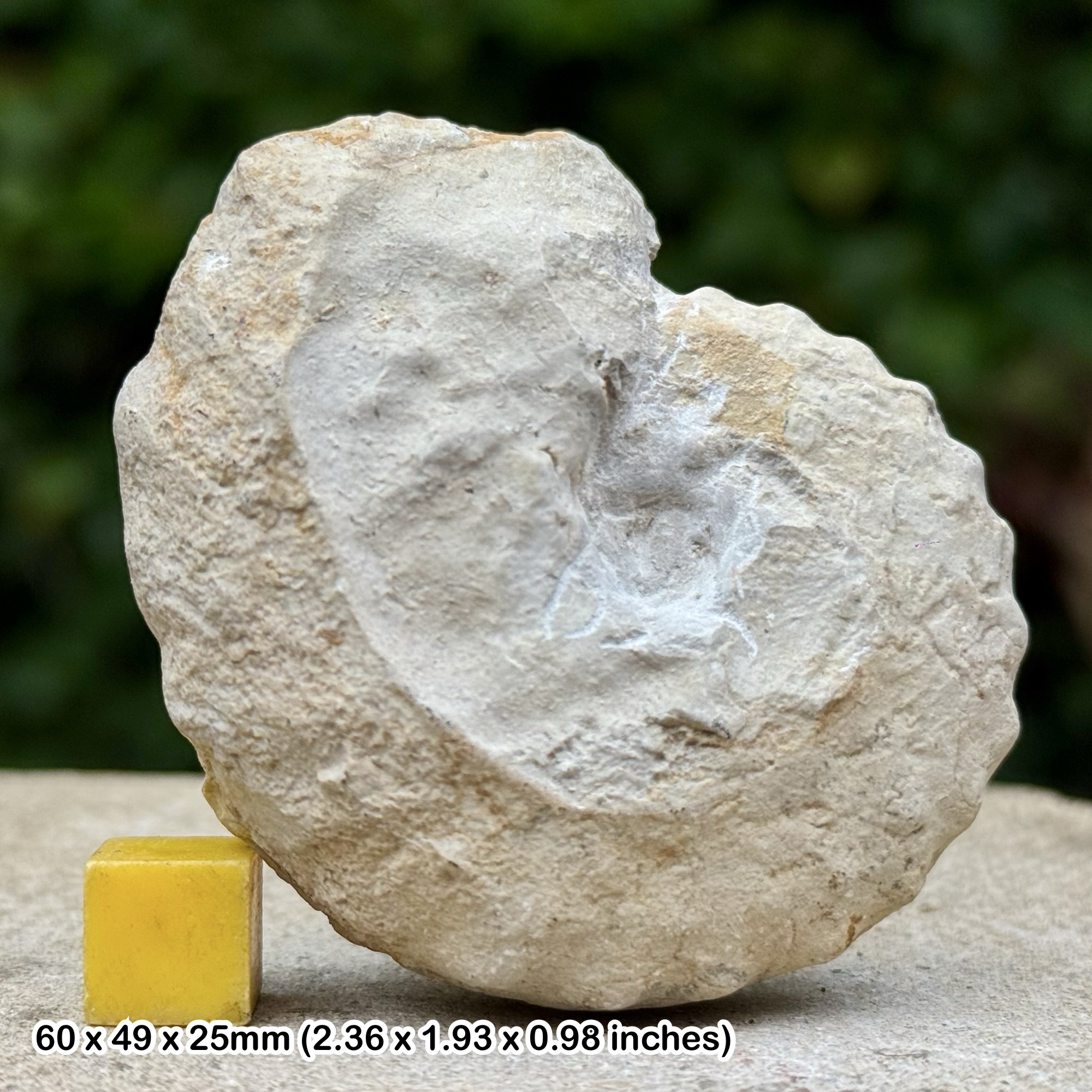
Metiococeras Fossil Ammonite Lower Turonian Cretaceous Soria Burgos Spain with Certificate of Authenticity
£ 14.40
AUTHENTIC METIOCOCERAS FOSSIL AMMONITE FROM SPAINThis is a genuine Metiococeras fossil ammonite from the Lower Turonian stage of
the Late Cretaceous, dating to approximately 93–89 million years ago. Found in the well-documented fossil beds of Soria, Burgos, Spain, this specimen represents one of the key ammonite genera used in scientific research and stratigraphy. Each fossil is hand-selected for quality and preservation and comes with a Certificate of Authenticity. The accompanying photos show the actual specimen you will receive, with a 1 cm scale cube for accurate sizing. GEOLOGICAL CONTEXTDuring the Lower Turonian, much of Spain was covered by shallow epicontinental seas that supported abundant marine life. These seas provided the perfect conditions for ammonites, which thrived as active swimmers and predators in the open marine environment. The Soria Burgos region is particularly significant for paleontologists, as its deposits preserve fossils that document life and environmental changes following the Cenomanian–Turonian boundary event, one of the most important oceanic anoxic events in Earth’s history.The sediments here are fine-grained limestones and marls, typical of warm Cretaceous seas, offering excellent preservation of shell ornamentation and suture patterns. SCIENTIFIC CLASSIFICATION
• Genus: Metiococeras
• Order: Ammonitida
• Superfamily: Acanthoceratoidea
• Family: Acanthoceratidae
• Age: Lower Turonian, Cretaceous (approx. 93–89 million years ago)
• Locality: Soria, Burgos, SpainAs a member of the Acanthoceratidae family, this ammonite is part of a group widely recognised as index fossils, vital for correlating and dating marine deposits across Europe and beyond. MORPHOLOGICAL FEATURESThis specimen of Metiococeras shows the typical features associated with the genus, including:
• Evolute shell coiling, with earlier whorls exposed.
• Strong ribbing extending across the flanks and ventral side.
• Tubercles (nodes) along the ventrolateral region, providing a textured appearance.
• A relatively compressed whorl section, giving the fossil a more streamlined profile.
• Distinctive suture lines, representing the internal chamber divisions of the shell.These morphological traits highlight the evolutionary adaptations of ammonites to life as fast-moving nektonic predators. PALEONTOLOGICAL IMPORTANCEMetiococeras is of particular interest to paleontologists because it marks a critical interval in the Turonian biostratigraphy. Its presence in marine strata helps geologists establish precise age correlations, making it a fossil of both scientific and stratigraphic significance.For collectors, this ammonite is a prized acquisition due to its rarity outside classic European sites and its contribution to understanding Cretaceous marine life. Its bold ornamentation and robust preservation make it both scientifically important and visually striking. DISPLAY AND EDUCATIONAL VALUEA Metiococeras ammonite fossil from Soria, Burgos is not only a unique collector’s item but also a powerful educational tool. It demonstrates the diversity of Cretaceous ammonites and the richness of Spain’s fossil record.
• Collectors: A rare Turonian ammonite from a historic Spanish locality.
• Educators: A prime specimen for teaching ammonite morphology, evolution, and stratigraphy.
• Display: A natural conversation piece, showcasing the beauty and history of marine life from 90 million years ago.Every fossil offered is guaranteed authentic and comes with a Certificate of Authenticity, making this ammonite both a scientifically valuable specimen and a remarkable piece of natural history to own.
the Late Cretaceous, dating to approximately 93–89 million years ago. Found in the well-documented fossil beds of Soria, Burgos, Spain, this specimen represents one of the key ammonite genera used in scientific research and stratigraphy. Each fossil is hand-selected for quality and preservation and comes with a Certificate of Authenticity. The accompanying photos show the actual specimen you will receive, with a 1 cm scale cube for accurate sizing. GEOLOGICAL CONTEXTDuring the Lower Turonian, much of Spain was covered by shallow epicontinental seas that supported abundant marine life. These seas provided the perfect conditions for ammonites, which thrived as active swimmers and predators in the open marine environment. The Soria Burgos region is particularly significant for paleontologists, as its deposits preserve fossils that document life and environmental changes following the Cenomanian–Turonian boundary event, one of the most important oceanic anoxic events in Earth’s history.The sediments here are fine-grained limestones and marls, typical of warm Cretaceous seas, offering excellent preservation of shell ornamentation and suture patterns. SCIENTIFIC CLASSIFICATION
• Genus: Metiococeras
• Order: Ammonitida
• Superfamily: Acanthoceratoidea
• Family: Acanthoceratidae
• Age: Lower Turonian, Cretaceous (approx. 93–89 million years ago)
• Locality: Soria, Burgos, SpainAs a member of the Acanthoceratidae family, this ammonite is part of a group widely recognised as index fossils, vital for correlating and dating marine deposits across Europe and beyond. MORPHOLOGICAL FEATURESThis specimen of Metiococeras shows the typical features associated with the genus, including:
• Evolute shell coiling, with earlier whorls exposed.
• Strong ribbing extending across the flanks and ventral side.
• Tubercles (nodes) along the ventrolateral region, providing a textured appearance.
• A relatively compressed whorl section, giving the fossil a more streamlined profile.
• Distinctive suture lines, representing the internal chamber divisions of the shell.These morphological traits highlight the evolutionary adaptations of ammonites to life as fast-moving nektonic predators. PALEONTOLOGICAL IMPORTANCEMetiococeras is of particular interest to paleontologists because it marks a critical interval in the Turonian biostratigraphy. Its presence in marine strata helps geologists establish precise age correlations, making it a fossil of both scientific and stratigraphic significance.For collectors, this ammonite is a prized acquisition due to its rarity outside classic European sites and its contribution to understanding Cretaceous marine life. Its bold ornamentation and robust preservation make it both scientifically important and visually striking. DISPLAY AND EDUCATIONAL VALUEA Metiococeras ammonite fossil from Soria, Burgos is not only a unique collector’s item but also a powerful educational tool. It demonstrates the diversity of Cretaceous ammonites and the richness of Spain’s fossil record.
• Collectors: A rare Turonian ammonite from a historic Spanish locality.
• Educators: A prime specimen for teaching ammonite morphology, evolution, and stratigraphy.
• Display: A natural conversation piece, showcasing the beauty and history of marine life from 90 million years ago.Every fossil offered is guaranteed authentic and comes with a Certificate of Authenticity, making this ammonite both a scientifically valuable specimen and a remarkable piece of natural history to own.
Other Products