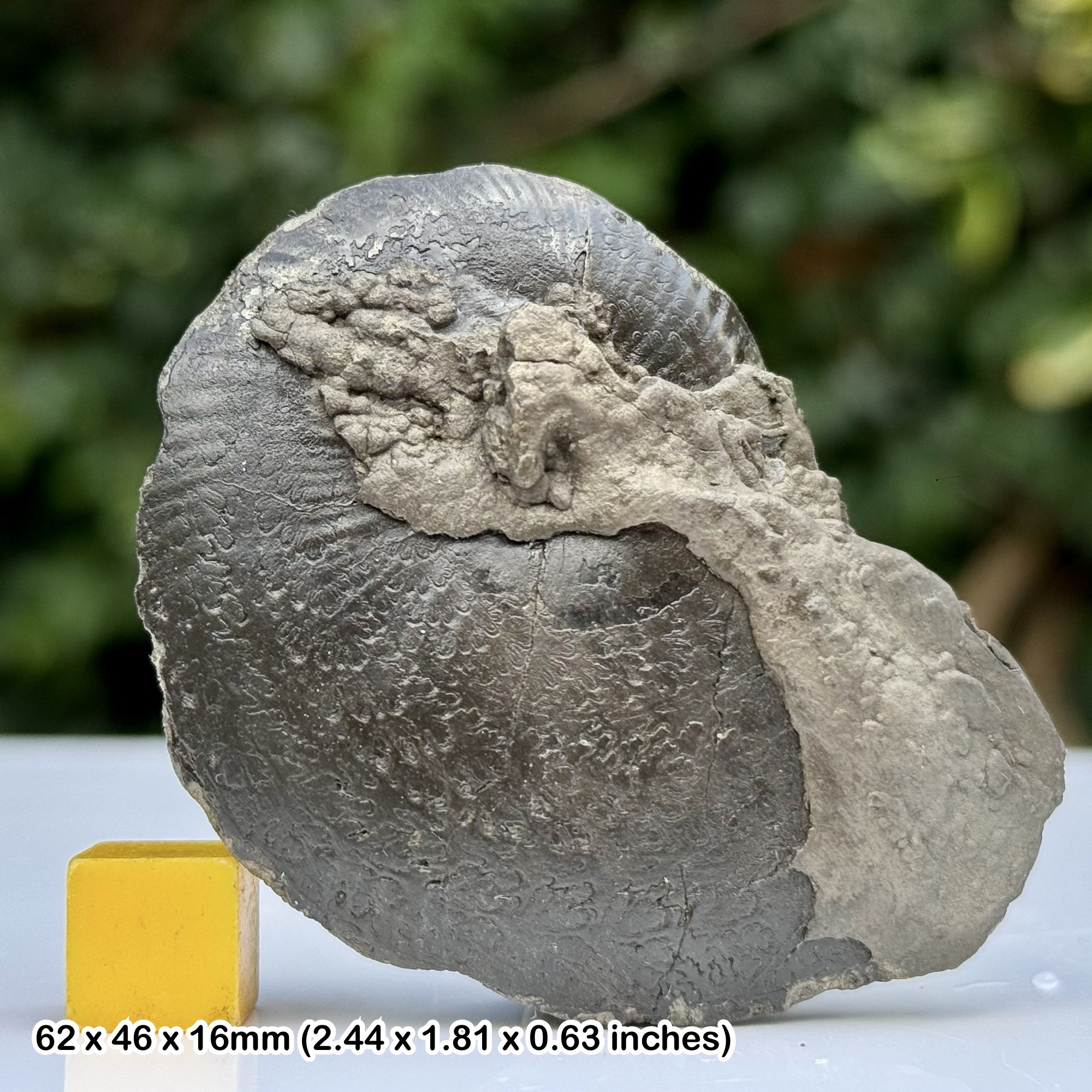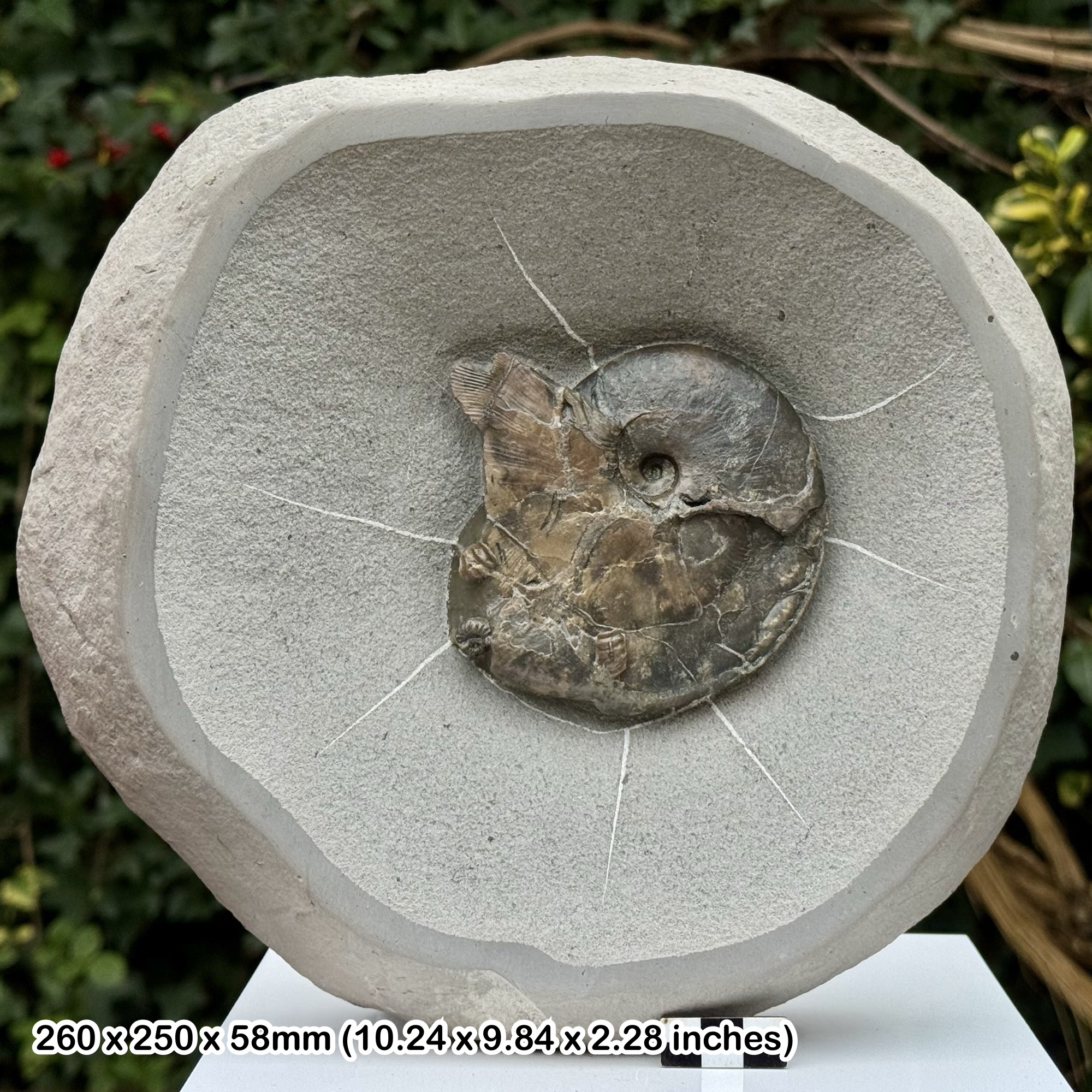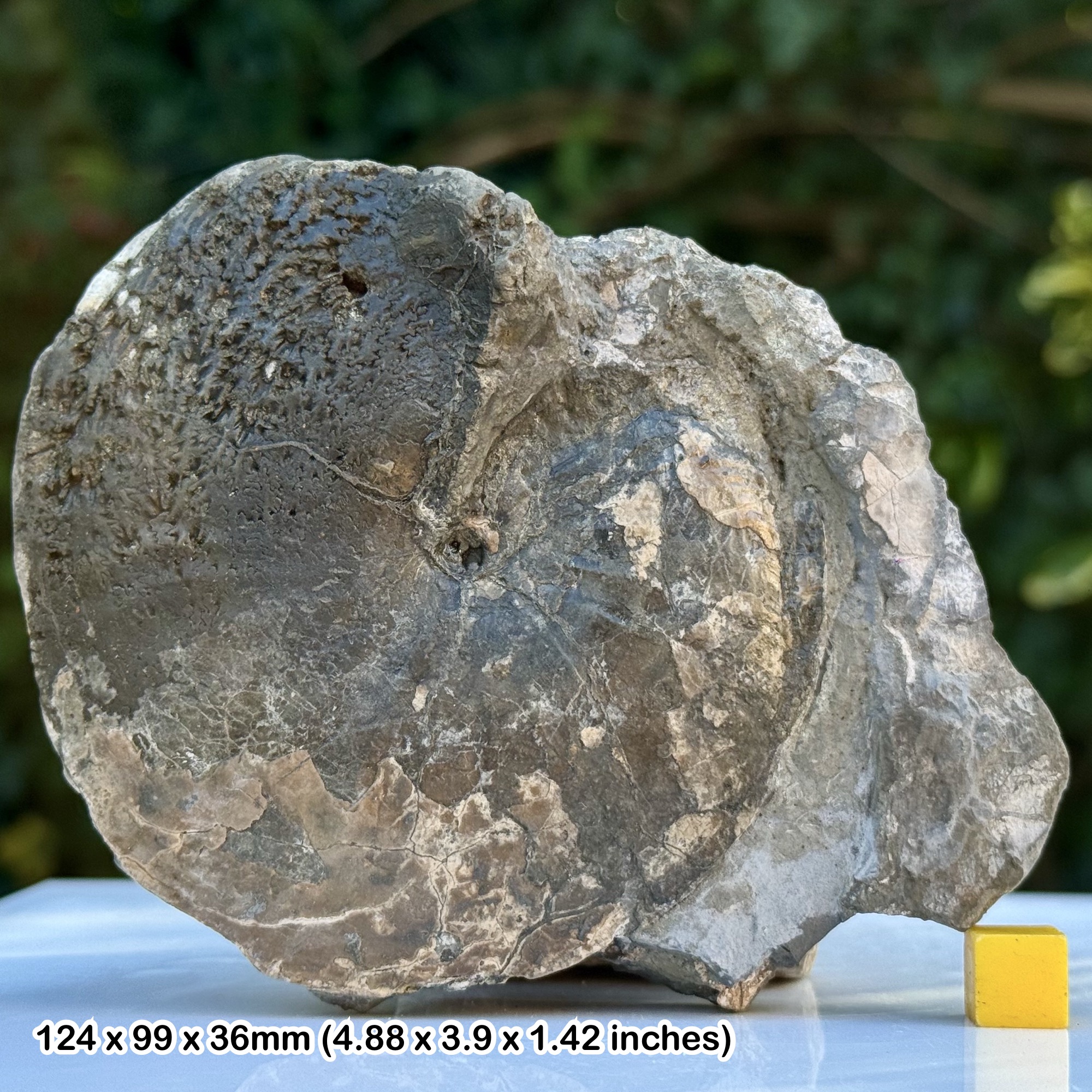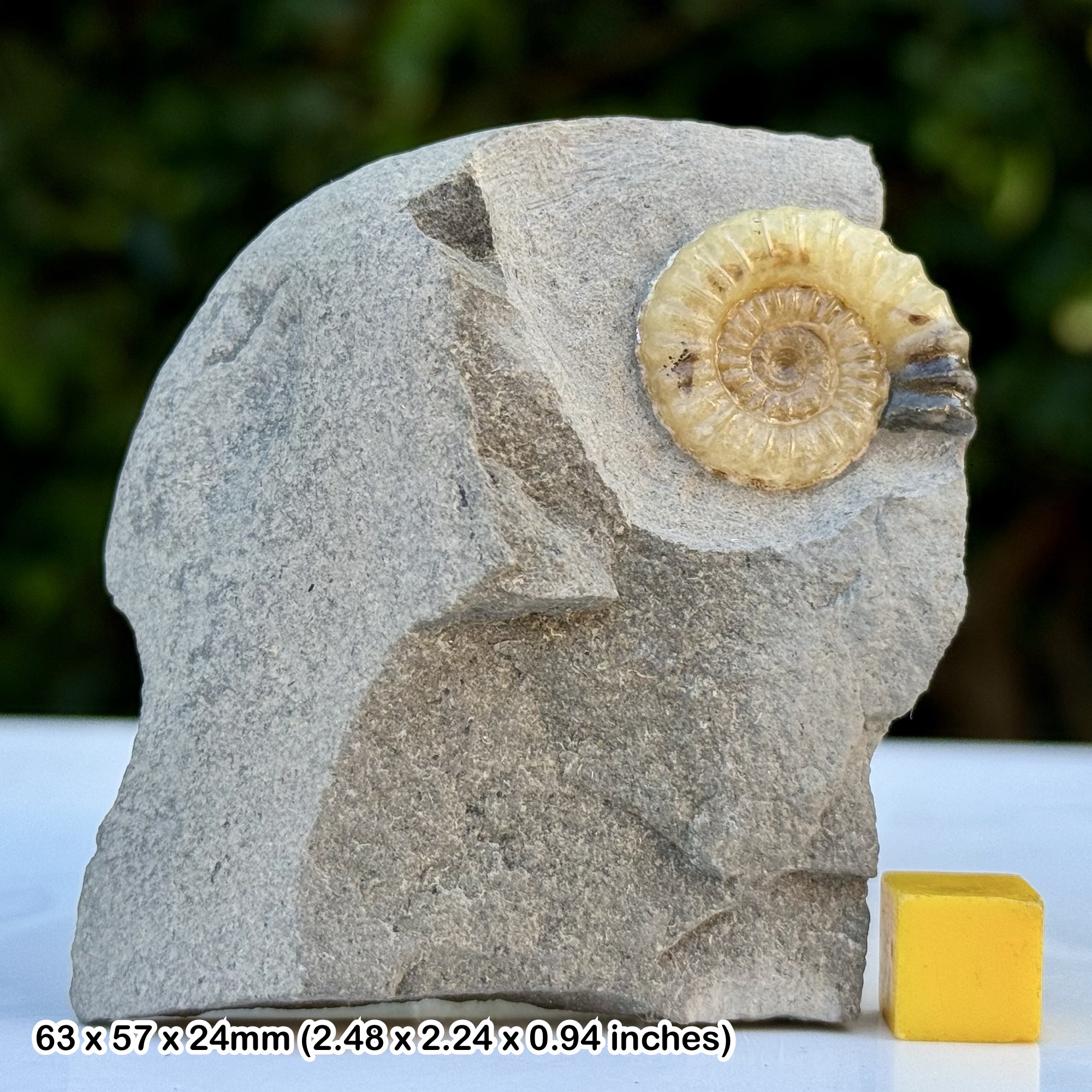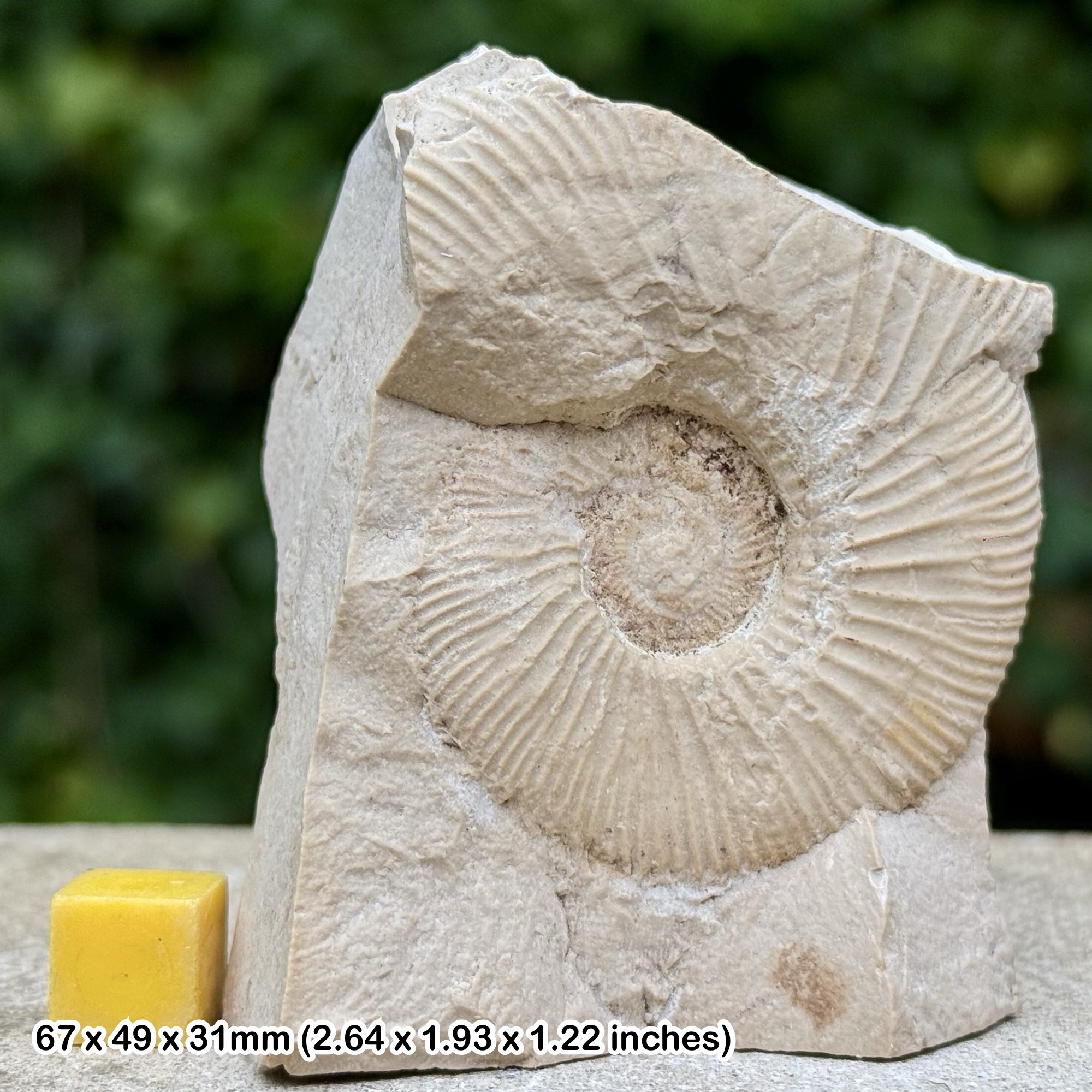
Rare Subthurmia Ammonite Fossil from Lower Aptian Cretaceous Thorne Region France Authentic Collectible
£ 12.60
GEOLOGICAL CONTEXT AND PROVENANCEThis rare specimen is a genuine Subthurmia fossil ammonite from the Lower Aptian
Stage of the Early Cretaceous Period, dating to approximately 125 – 113 million years ago. It comes from the Thorne region in southeastern France, a locality renowned for its Early Cretaceous fossil-bearing strata. The Aptian Stage is an important interval in Earth’s geological history, marking significant evolutionary events among marine invertebrates, particularly ammonites, which diversified rapidly during this time.The Thorne deposits were formed in shallow marine environments associated with the ancient Tethys Ocean. Fine limestones and marls deposited here have preserved ammonites in exquisite detail, making the locality a valuable reference point for Lower Aptian stratigraphy and ammonite taxonomy. FOSSIL TYPE AND SPECIES INFORMATIONSubthurmia belongs to the Order Ammonitida, Superfamily Desmoceratoidea, and is part of a group of ammonites highly significant to Lower Cretaceous biostratigraphy. These ammonites are identified by their distinctive ribbing and whorl structures, which set them apart from other Aptian genera.As nektonic cephalopods, ammonites like Subthurmia were active predators, related to modern squid and cuttlefish. Their shells contained multiple chambers that allowed them to regulate buoyancy, enabling them to move efficiently within the marine water column in search of prey. MORPHOLOGICAL FEATURES AND IDENTIFICATIONThis specimen of Subthurmia displays the defining ribbing patterns characteristic of the genus. The ribs are strong and extend across the flanks toward the venter, providing the fossil with an ornate and recognisable appearance. The shell is moderately involute, with a coiling style that reflects evolutionary adaptations to its marine environment.The ribbing is not merely ornamental but also served structural and hydrodynamic functions, strengthening the shell and stabilising the ammonite as it swam in open waters. These features make Subthurmia both a scientifically important fossil and an aesthetically appealing specimen for collectors. DEPOSITIONAL ENVIRONMENTDuring the Aptian Stage, the Thorne region lay beneath warm seas connected to the Tethys Ocean. These shallow continental shelf environments were rich in marine life, supporting ammonites, belemnites, bivalves, gastropods, and larger marine reptiles. Fine sedimentation in limestones and marls created ideal conditions for fossilisation, encapsulating ammonites in layers that preserved their ribbing and coiling in remarkable clarity.The Subthurmia ammonite lived in these seas as a predator and prey species, playing a vital role within the marine ecosystem. Its presence in Aptian strata makes it an important index fossil, helping geologists to define and correlate sedimentary layers across Europe. COLLECTOR APPEAL AND AUTHENTICITYThis Subthurmia ammonite fossil is both rare and scientifically significant, representing a key species from the Lower Aptian of France. Its ribbed shell, elegant coiling, and provenance from the Thorne region make it a highly desirable specimen for fossil collectors and natural history enthusiasts.
• 100% Genuine Specimen – Every fossil we supply is authentic and comes with a Certificate of Authenticity.
• Exact Fossil Shown – The photographs depict the actual specimen you will receive.
• Scale Reference – Scale rule squares / cube = 1 cm. Please refer to the photos for accurate sizing.This carefully chosen ammonite is an outstanding addition to any collection, providing both visual appeal and scientific importance. As a rare Subthurmia fossil from the Early Cretaceous seas of France, it offers a unique opportunity to own a piece of natural history that connects directly to the marine ecosystems of over 120 million years ago.
Stage of the Early Cretaceous Period, dating to approximately 125 – 113 million years ago. It comes from the Thorne region in southeastern France, a locality renowned for its Early Cretaceous fossil-bearing strata. The Aptian Stage is an important interval in Earth’s geological history, marking significant evolutionary events among marine invertebrates, particularly ammonites, which diversified rapidly during this time.The Thorne deposits were formed in shallow marine environments associated with the ancient Tethys Ocean. Fine limestones and marls deposited here have preserved ammonites in exquisite detail, making the locality a valuable reference point for Lower Aptian stratigraphy and ammonite taxonomy. FOSSIL TYPE AND SPECIES INFORMATIONSubthurmia belongs to the Order Ammonitida, Superfamily Desmoceratoidea, and is part of a group of ammonites highly significant to Lower Cretaceous biostratigraphy. These ammonites are identified by their distinctive ribbing and whorl structures, which set them apart from other Aptian genera.As nektonic cephalopods, ammonites like Subthurmia were active predators, related to modern squid and cuttlefish. Their shells contained multiple chambers that allowed them to regulate buoyancy, enabling them to move efficiently within the marine water column in search of prey. MORPHOLOGICAL FEATURES AND IDENTIFICATIONThis specimen of Subthurmia displays the defining ribbing patterns characteristic of the genus. The ribs are strong and extend across the flanks toward the venter, providing the fossil with an ornate and recognisable appearance. The shell is moderately involute, with a coiling style that reflects evolutionary adaptations to its marine environment.The ribbing is not merely ornamental but also served structural and hydrodynamic functions, strengthening the shell and stabilising the ammonite as it swam in open waters. These features make Subthurmia both a scientifically important fossil and an aesthetically appealing specimen for collectors. DEPOSITIONAL ENVIRONMENTDuring the Aptian Stage, the Thorne region lay beneath warm seas connected to the Tethys Ocean. These shallow continental shelf environments were rich in marine life, supporting ammonites, belemnites, bivalves, gastropods, and larger marine reptiles. Fine sedimentation in limestones and marls created ideal conditions for fossilisation, encapsulating ammonites in layers that preserved their ribbing and coiling in remarkable clarity.The Subthurmia ammonite lived in these seas as a predator and prey species, playing a vital role within the marine ecosystem. Its presence in Aptian strata makes it an important index fossil, helping geologists to define and correlate sedimentary layers across Europe. COLLECTOR APPEAL AND AUTHENTICITYThis Subthurmia ammonite fossil is both rare and scientifically significant, representing a key species from the Lower Aptian of France. Its ribbed shell, elegant coiling, and provenance from the Thorne region make it a highly desirable specimen for fossil collectors and natural history enthusiasts.
• 100% Genuine Specimen – Every fossil we supply is authentic and comes with a Certificate of Authenticity.
• Exact Fossil Shown – The photographs depict the actual specimen you will receive.
• Scale Reference – Scale rule squares / cube = 1 cm. Please refer to the photos for accurate sizing.This carefully chosen ammonite is an outstanding addition to any collection, providing both visual appeal and scientific importance. As a rare Subthurmia fossil from the Early Cretaceous seas of France, it offers a unique opportunity to own a piece of natural history that connects directly to the marine ecosystems of over 120 million years ago.
Other Products