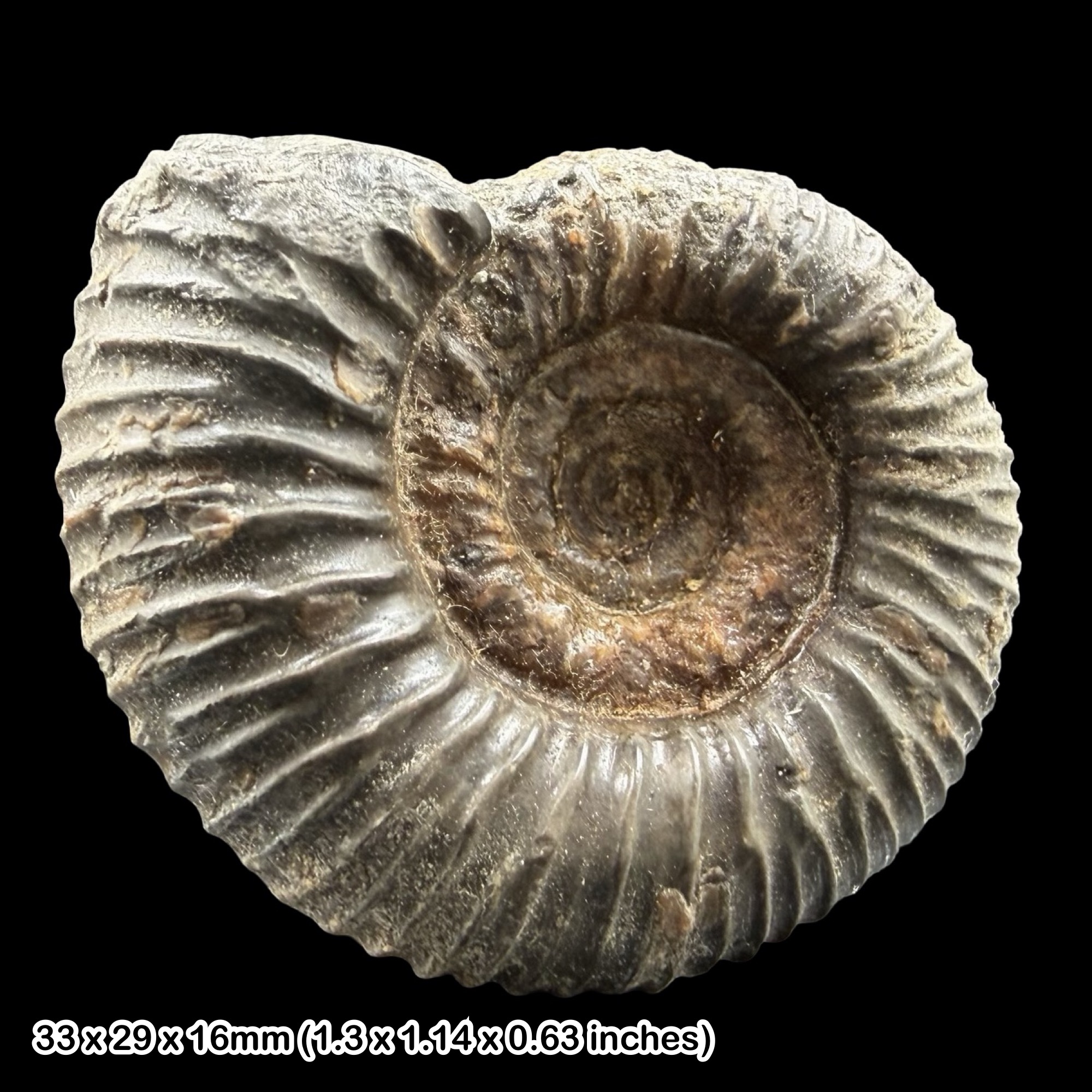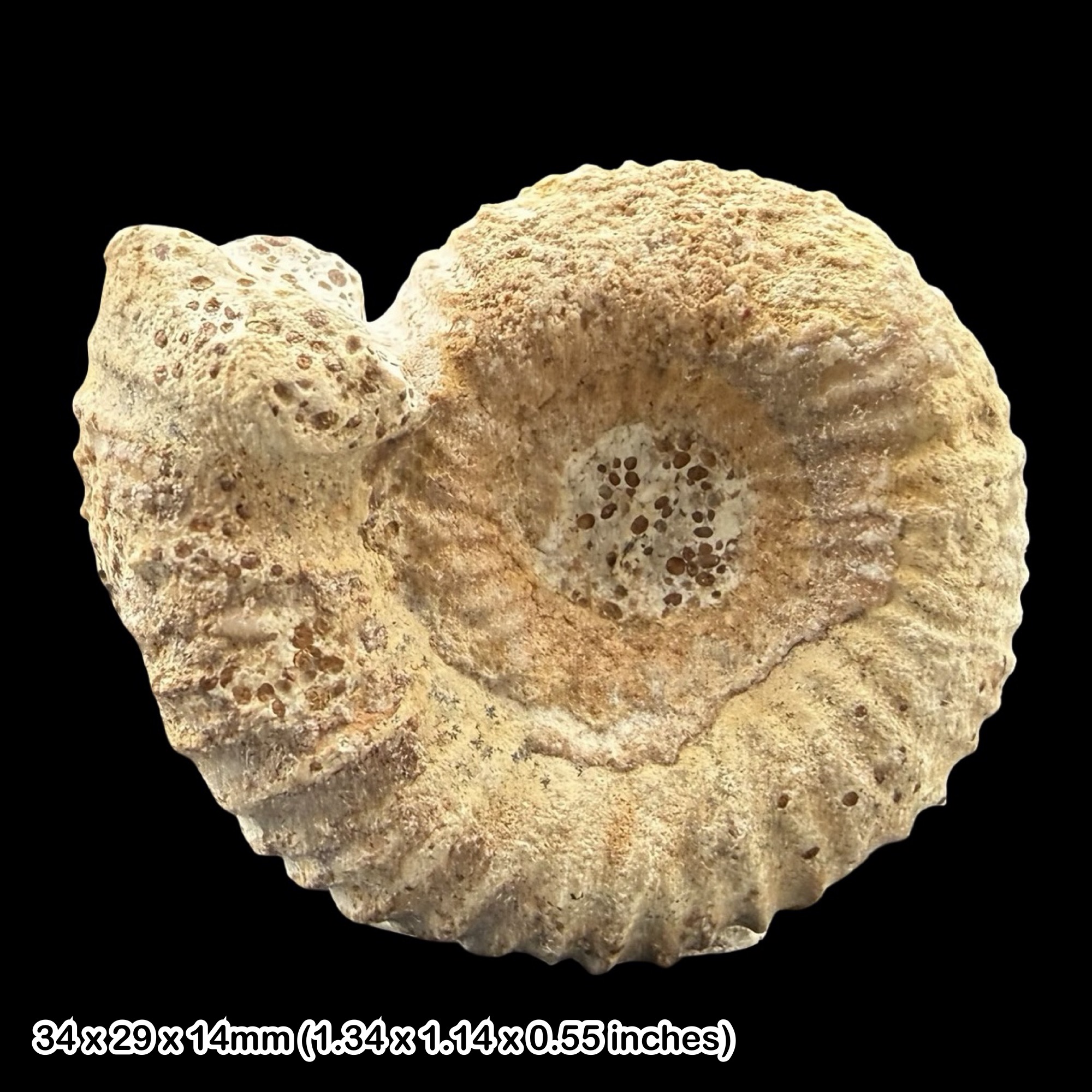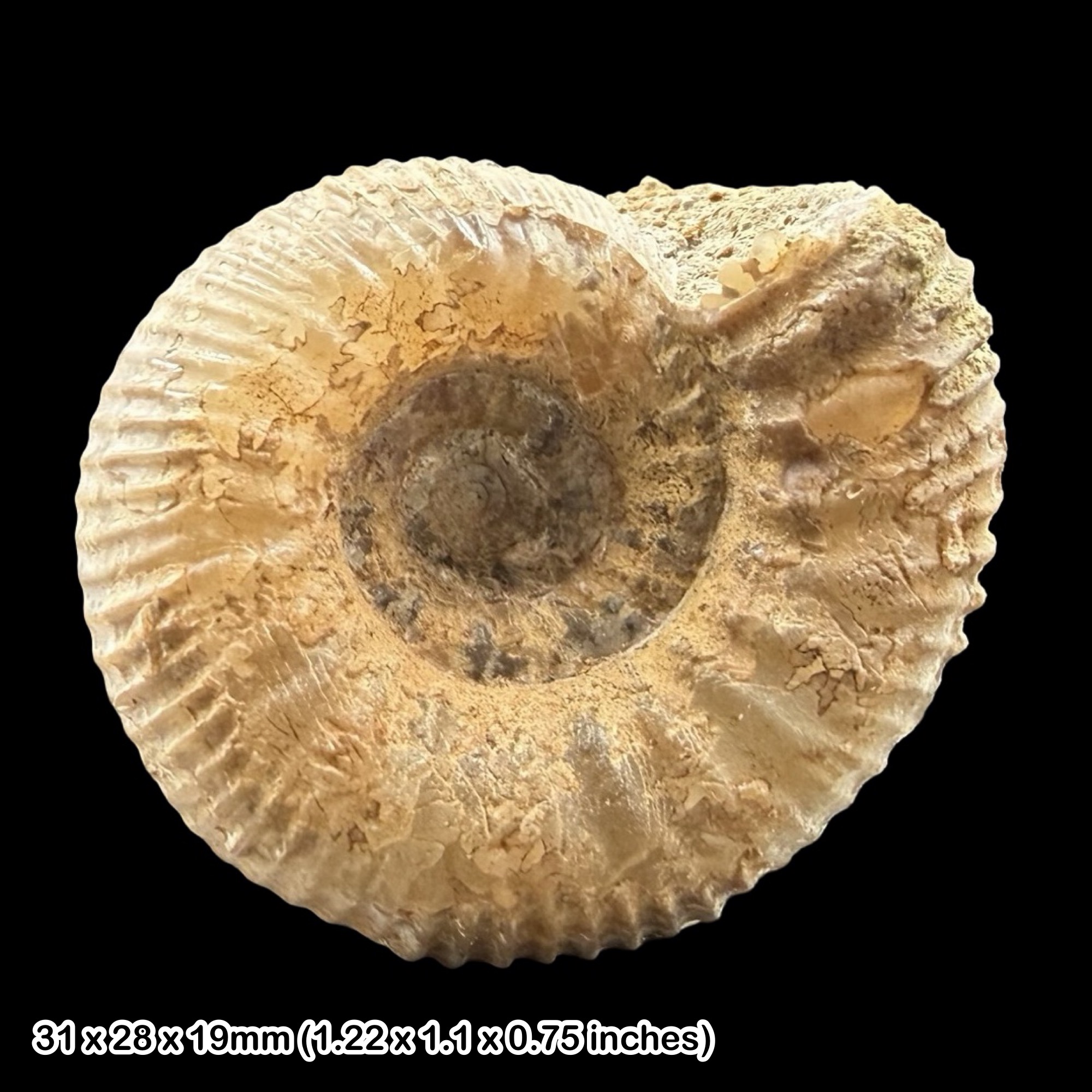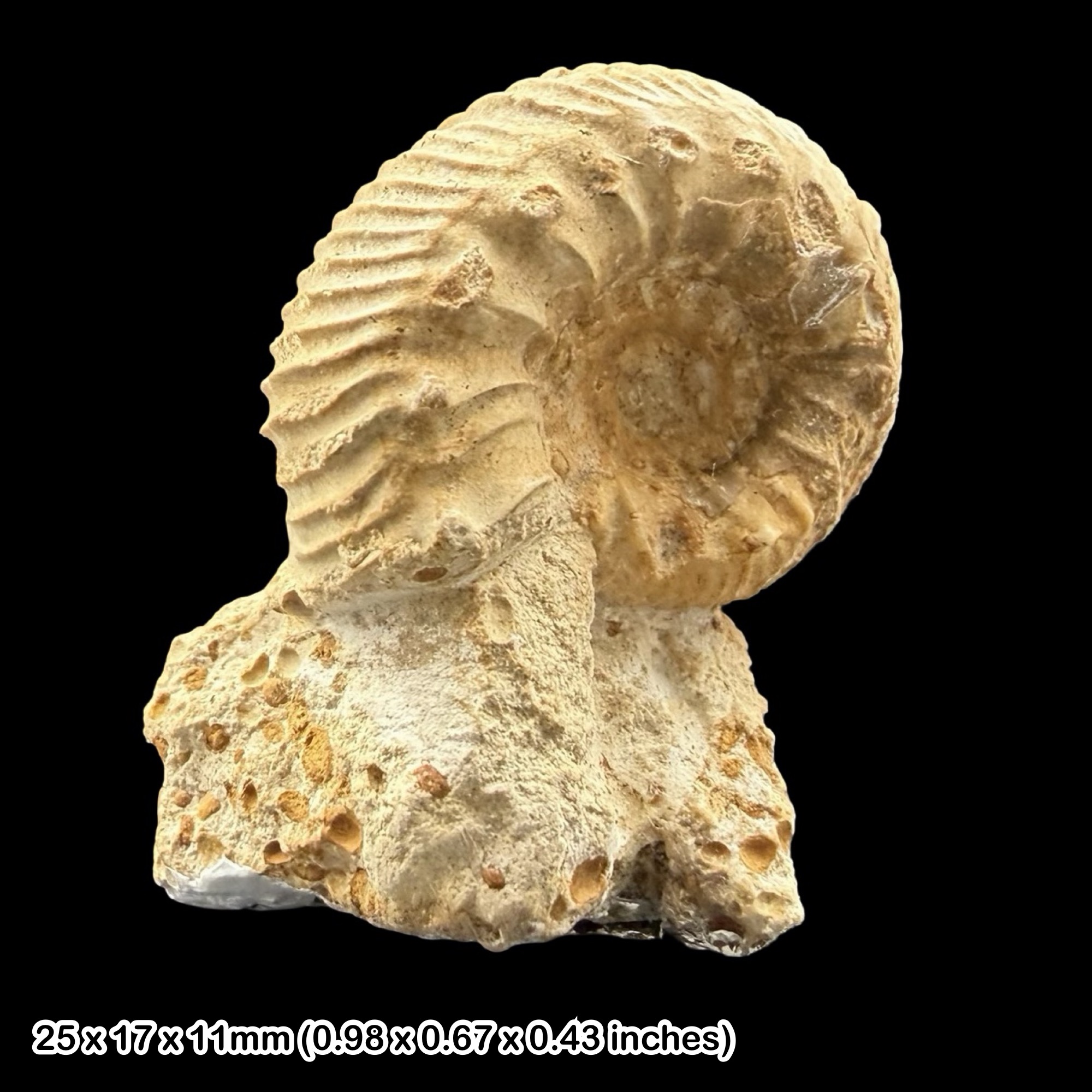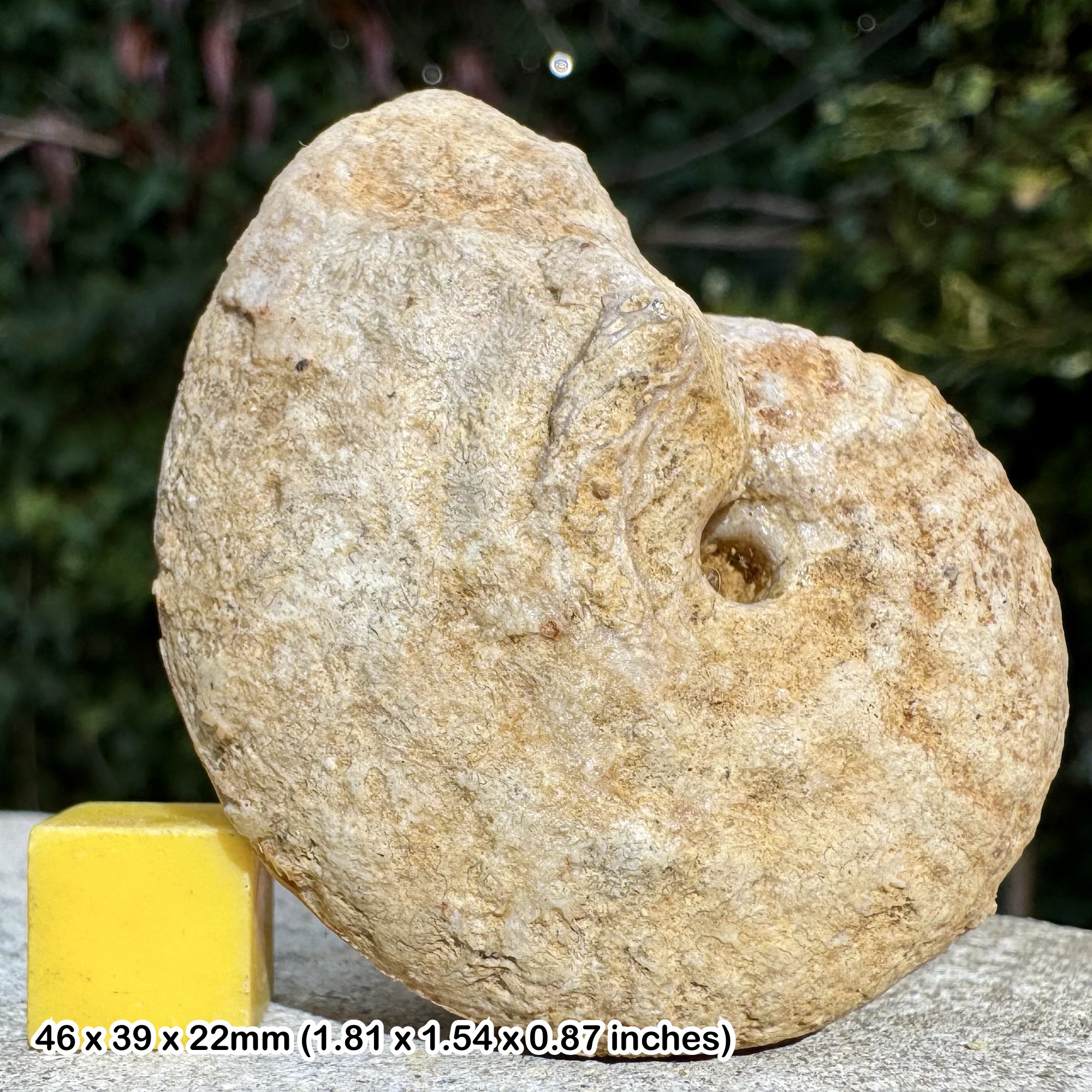
Rare Strigoceras septicarinitum Ammonite Fossil, Upper Bajocian Stage Jurassic, Authentic Caen France Specimen with COA
£ 18.00
AUTHENTIC JURASSIC AMMONITE FOSSILThis listing offers a genuine Strigoceras septicarinitum Ammonite Fossil from
the Upper Bajocian Stage of the Jurassic, discovered in Caen, Normandy, France. Ammonites are extinct marine molluscs belonging to the subclass Ammonoidea, closely related to modern squid and cuttlefish. Their elegant, chambered shells made them efficient predators and survivors in Jurassic oceans. This specimen has been carefully chosen for its preservation and provenance, with photographs showing the exact fossil you will receive. A 1 cm scale cube is included for accurate measurement. GEOLOGICAL CONTEXT – UPPER BAJOCIAN, JURASSICThe Bajocian Stage, part of the Middle Jurassic (around 170–168 million years ago), marks an important period of ammonite diversification. The Upper Bajocian, in particular, is well known for the presence of distinctive ammonite faunas such as Strigoceras, which serve as critical index fossils for stratigraphic dating.The Caen region of Normandy, France is famous for its Jurassic outcrops, where shallow marine sediments preserve a rich array of ammonite fossils. These deposits were laid down in warm, epicontinental seas connected to the Tethys Ocean, capturing the biodiversity of the Jurassic seas in remarkable detail. SPECIES PROFILE – STRIGOCERAS SEPTICARINITUMThe species Strigoceras septicarinitum belongs to the order Ammonitida, superfamily Stephanoceratoidea, and family Strigoceratidae. Ammonites in this group are well known for their compressed shells and distinctive ribbing and keels.Key features of Strigoceras septicarinitum include:
• A compressed and strongly keeled shell, lending it a streamlined appearance.
• Prominent ribbing across the flanks, often terminating at the keel.
• A moderately involute coiling, with partially hidden inner whorls.
• Suture lines that are complex and highly diagnostic of Bajocian ammonites.
• A distinctive septal structure that gives the species its name, enhancing its paleontological value.These morphological traits make Strigoceras septicarinitum easily identifiable and scientifically significant for dating Bajocian marine deposits. PALEOENVIRONMENT AND SCIENTIFIC IMPORTANCEDuring the Bajocian, Normandy was covered by shallow, tropical seas rich in invertebrate life. Ammonites such as Strigoceras septicarinitum thrived as fast-moving, nektonic predators feeding on smaller molluscs and crustaceans. Their chambered shells, divided by intricate septa, allowed for precise buoyancy control, giving them evolutionary advantages in the competitive Jurassic oceans.This species is particularly important for biostratigraphy, as its relatively short geological range makes it highly reliable for correlating Jurassic sequences across Europe and beyond. Specimens such as this not only offer aesthetic appeal but also contribute to the scientific understanding of Middle Jurassic paleoecology and ammonite evolution. 100% GENUINE WITH CERTIFICATE OF AUTHENTICITYAll our specimens are 100% genuine fossils and are supplied with a Certificate of Authenticity, providing full assurance that this ammonite is an authentic relic from the Jurassic seas of Caen, France. A COLLECTOR’S AND DISPLAY FOSSILThis Strigoceras septicarinitum ammonite fossil from the Upper Bajocian of Caen, France is a highly collectible specimen. With its striking ribbing, distinctive keel, and excellent preservation, it is a remarkable addition to any fossil collection, educational display, or natural history showcase. Its scientific significance, paired with its aesthetic qualities, makes it an exceptional specimen for collectors and enthusiasts alike.Scale Rule Squares / Cube = 1 cm. Please see listing photos for the full sizing of this exact specimen.
the Upper Bajocian Stage of the Jurassic, discovered in Caen, Normandy, France. Ammonites are extinct marine molluscs belonging to the subclass Ammonoidea, closely related to modern squid and cuttlefish. Their elegant, chambered shells made them efficient predators and survivors in Jurassic oceans. This specimen has been carefully chosen for its preservation and provenance, with photographs showing the exact fossil you will receive. A 1 cm scale cube is included for accurate measurement. GEOLOGICAL CONTEXT – UPPER BAJOCIAN, JURASSICThe Bajocian Stage, part of the Middle Jurassic (around 170–168 million years ago), marks an important period of ammonite diversification. The Upper Bajocian, in particular, is well known for the presence of distinctive ammonite faunas such as Strigoceras, which serve as critical index fossils for stratigraphic dating.The Caen region of Normandy, France is famous for its Jurassic outcrops, where shallow marine sediments preserve a rich array of ammonite fossils. These deposits were laid down in warm, epicontinental seas connected to the Tethys Ocean, capturing the biodiversity of the Jurassic seas in remarkable detail. SPECIES PROFILE – STRIGOCERAS SEPTICARINITUMThe species Strigoceras septicarinitum belongs to the order Ammonitida, superfamily Stephanoceratoidea, and family Strigoceratidae. Ammonites in this group are well known for their compressed shells and distinctive ribbing and keels.Key features of Strigoceras septicarinitum include:
• A compressed and strongly keeled shell, lending it a streamlined appearance.
• Prominent ribbing across the flanks, often terminating at the keel.
• A moderately involute coiling, with partially hidden inner whorls.
• Suture lines that are complex and highly diagnostic of Bajocian ammonites.
• A distinctive septal structure that gives the species its name, enhancing its paleontological value.These morphological traits make Strigoceras septicarinitum easily identifiable and scientifically significant for dating Bajocian marine deposits. PALEOENVIRONMENT AND SCIENTIFIC IMPORTANCEDuring the Bajocian, Normandy was covered by shallow, tropical seas rich in invertebrate life. Ammonites such as Strigoceras septicarinitum thrived as fast-moving, nektonic predators feeding on smaller molluscs and crustaceans. Their chambered shells, divided by intricate septa, allowed for precise buoyancy control, giving them evolutionary advantages in the competitive Jurassic oceans.This species is particularly important for biostratigraphy, as its relatively short geological range makes it highly reliable for correlating Jurassic sequences across Europe and beyond. Specimens such as this not only offer aesthetic appeal but also contribute to the scientific understanding of Middle Jurassic paleoecology and ammonite evolution. 100% GENUINE WITH CERTIFICATE OF AUTHENTICITYAll our specimens are 100% genuine fossils and are supplied with a Certificate of Authenticity, providing full assurance that this ammonite is an authentic relic from the Jurassic seas of Caen, France. A COLLECTOR’S AND DISPLAY FOSSILThis Strigoceras septicarinitum ammonite fossil from the Upper Bajocian of Caen, France is a highly collectible specimen. With its striking ribbing, distinctive keel, and excellent preservation, it is a remarkable addition to any fossil collection, educational display, or natural history showcase. Its scientific significance, paired with its aesthetic qualities, makes it an exceptional specimen for collectors and enthusiasts alike.Scale Rule Squares / Cube = 1 cm. Please see listing photos for the full sizing of this exact specimen.
Other Products