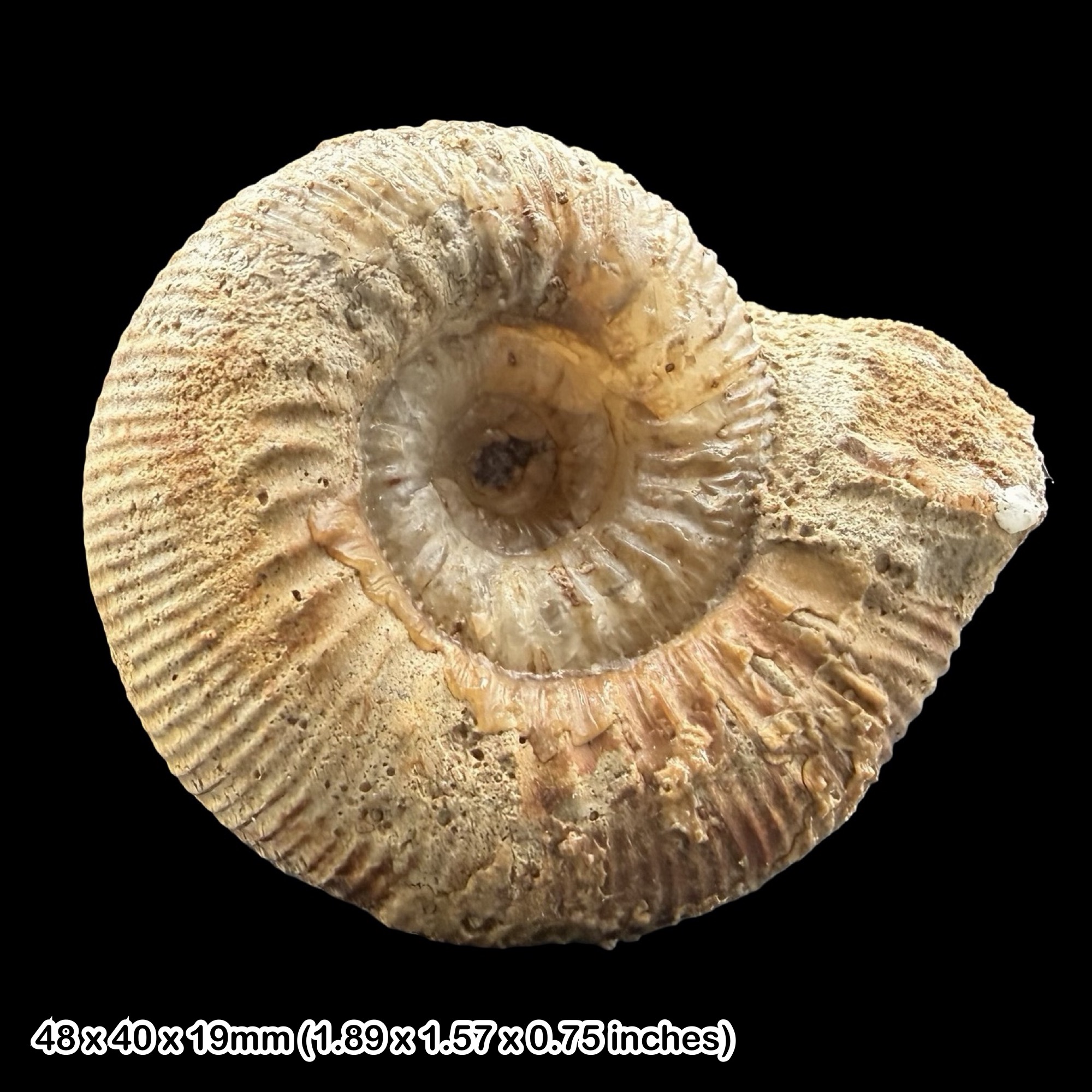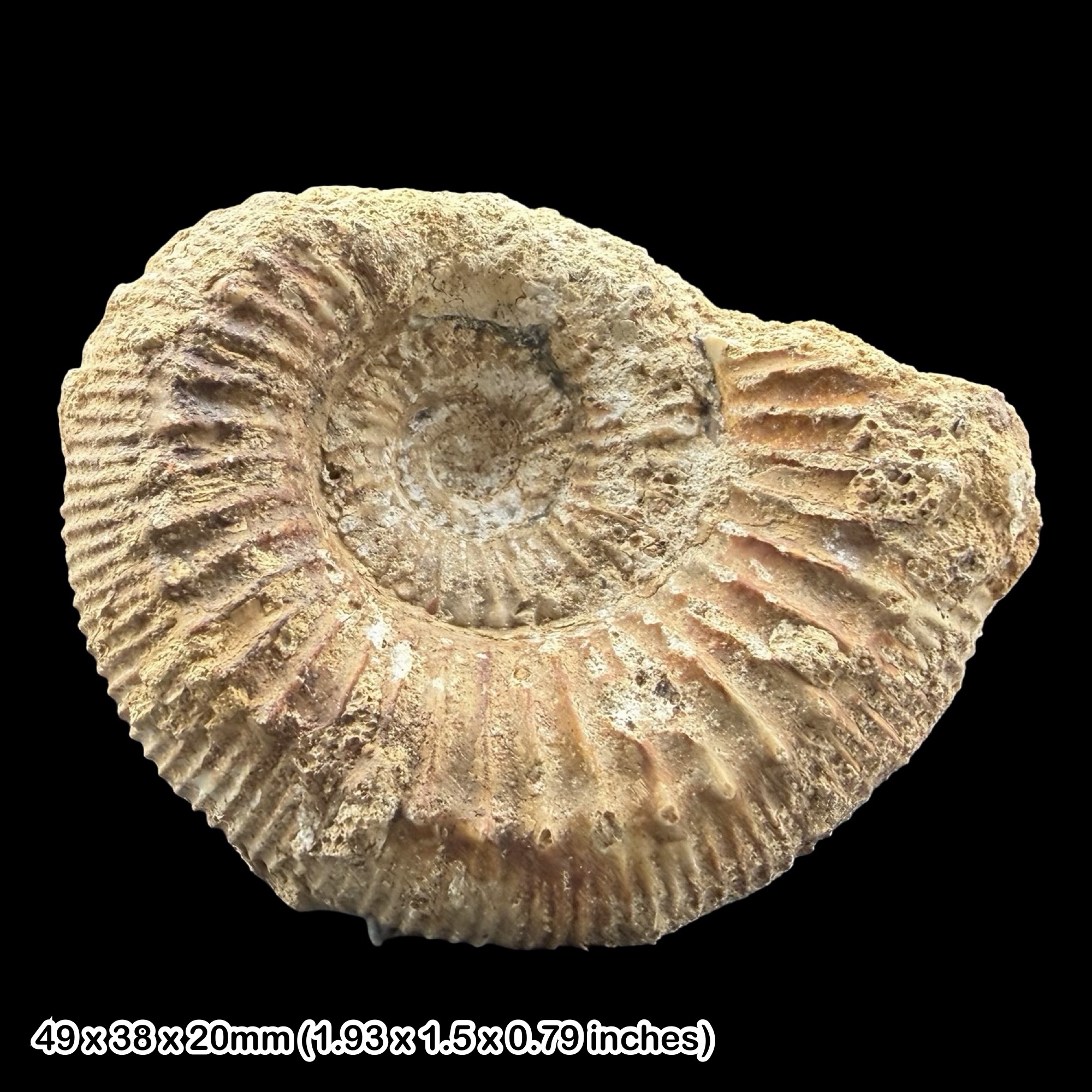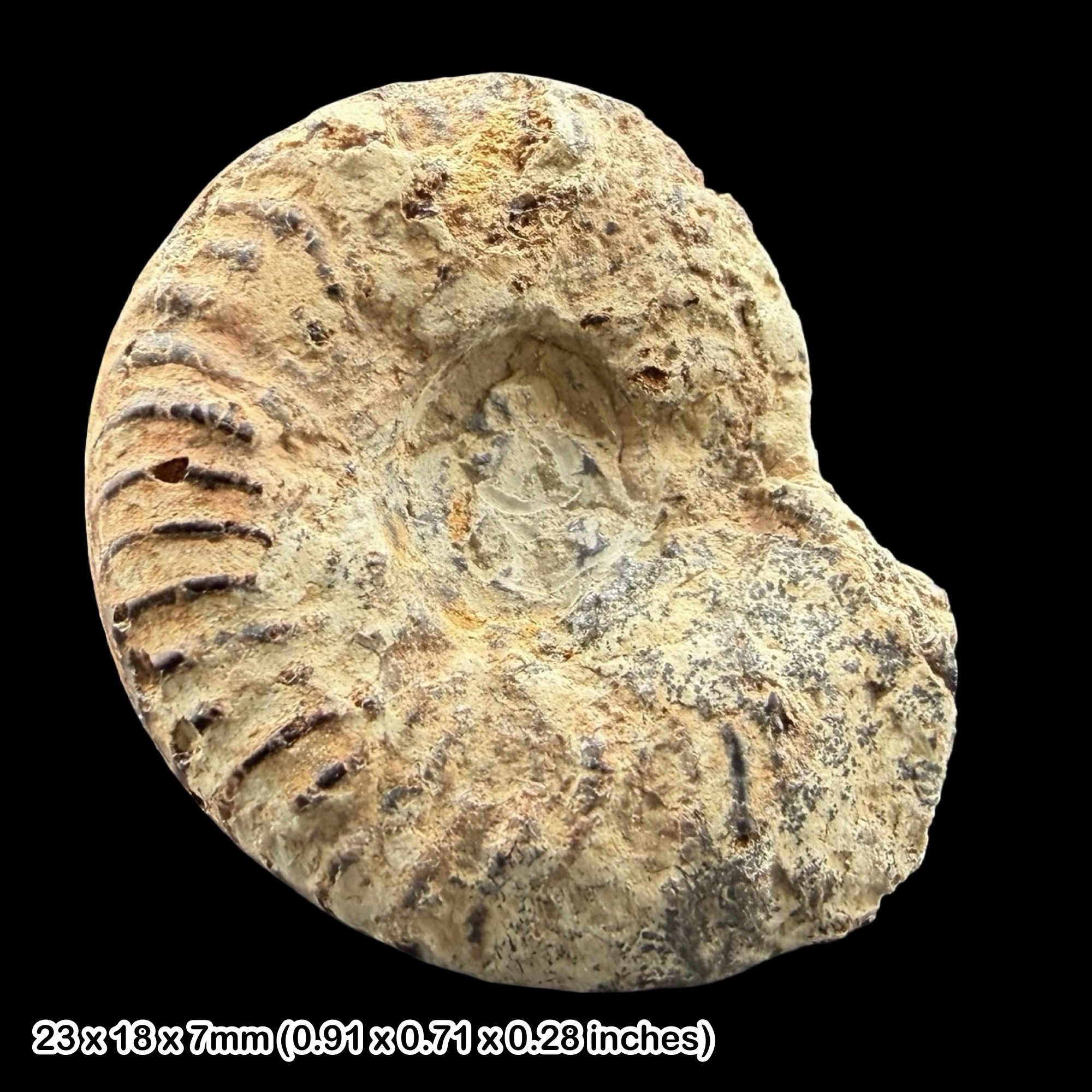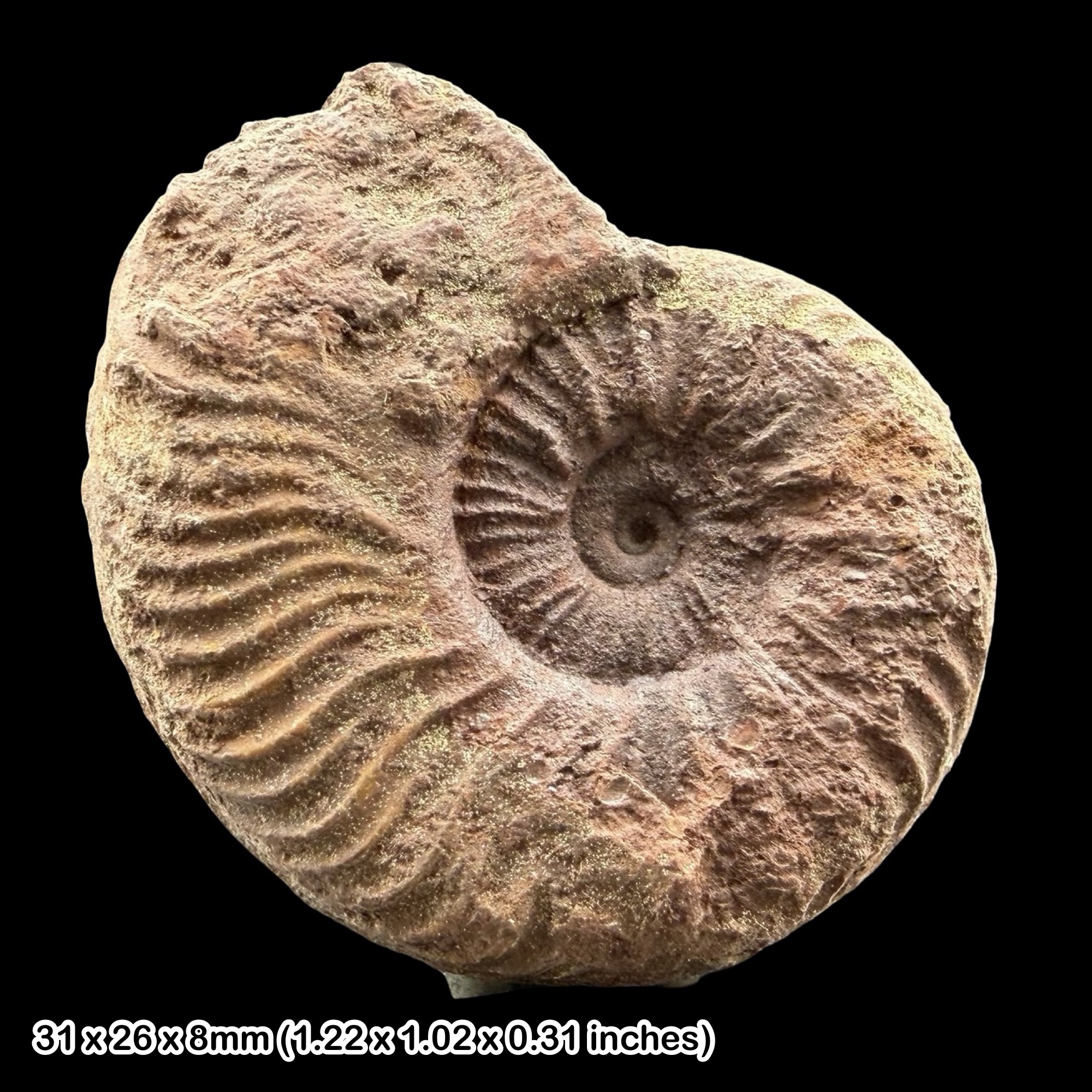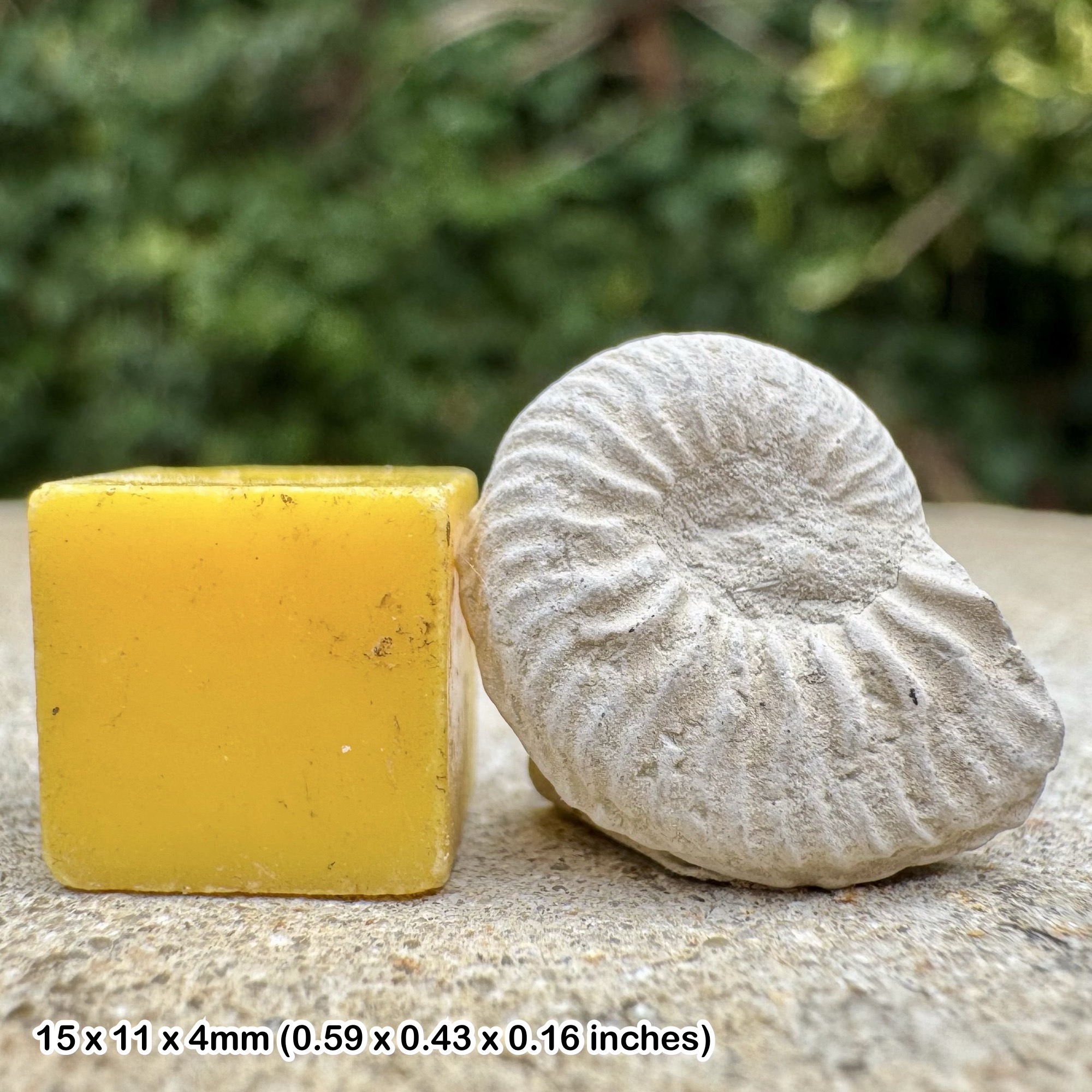
Litioceras cryptoceras Ammonite Fossil Lower Hauterivian Cretaceous Poland Genuine Certified
£ 6.90
AUTHENTIC LITIOCERAS CRYPTOCERAS AMMONITE FOSSIL FROM POLANDThis fine Litioceras cryptoceras ammonite fossil comes from the renowned fossil
beds of Zalas, Poland, and dates back to the Lower Hauterivian stage of the Early Cretaceous, approximately 132–129 million years ago. A carefully chosen and beautifully preserved example, this specimen provides a unique opportunity to own an authentic ammonite fossil from a scientifically important region of Central Europe. Every fossil we offer is guaranteed genuine and supplied with a Certificate of Authenticity. The scale cube in the photograph represents 1 cm, ensuring accurate size reference. The exact fossil shown in the photographs is the specimen you will receive. GEOLOGICAL SETTING – LOWER HAUTERIVIAN OF THE CRETACEOUSThe Hauterivian stage is a well-defined subdivision of the Early Cretaceous, characterised by dynamic marine environments and diverse ammonite faunas. The Lower Hauterivian, in particular, saw the expansion and diversification of genera such as Litioceras, which flourished in European seas. Zalas, located in southern Poland, has long been recognised as a key fossil locality for Early Cretaceous stratigraphy. The marine sediments here, primarily composed of limestone and marl, were deposited in warm shallow seas linked to the Tethys Ocean, creating exceptional conditions for the preservation of ammonites. SCIENTIFIC CLASSIFICATION
• Class: Cephalopoda
• Subclass: Ammonoidea
• Order: Ammonitida
• Superfamily: Perisphinctoidea
• Family: Lytoceratidae
• Genus: Litioceras
• Species: Litioceras cryptocerasThe genus Litioceras is part of the ammonite family Lytoceratidae, known for their evolute coiling and highly distinctive shell ornamentation. The group is important for understanding ammonite evolution and serves as an index fossil for the Hauterivian stage, helping geologists correlate rock layers across Europe and beyond. MORPHOLOGY AND DISTINCTIVE FEATURESLitioceras cryptoceras is noted for its evolute shell, where earlier whorls remain exposed, giving the fossil an open, balanced appearance. The ribs are sharp and well defined, radiating across the whorl flanks in a rhythmic pattern. In some individuals, ribs bifurcate or exhibit secondary branching, producing a complex ornamental style that makes these ammonites particularly striking when viewed under natural light.The suture lines, characteristic of ammonites, are deeply folded and intricate, serving as both structural reinforcement and a fascinating subject for collectors interested in the fine details of cephalopod anatomy. These features highlight the adaptability of ammonites to changing marine pressures and depths, as well as their evolutionary success throughout the Jurassic and Cretaceous periods. PALEOENVIRONMENT AND FOSSIL PROVENANCEDuring the Early Cretaceous, the Zalas area was submerged under a shallow marine shelf environment at the northern edge of the Tethys Ocean. The warm waters supported a diverse ecosystem of ammonites, bivalves, gastropods, and early marine reptiles. Ammonites such as Litioceras cryptoceras played a critical role as mid-level predators, feeding on small crustaceans and planktonic organisms while themselves serving as prey for larger marine animals.The Zalas locality is particularly well regarded among paleontologists for its clearly stratified deposits that allow precise dating and correlation of ammonite faunas. Fossils from this site provide valuable insight into marine biodiversity, depositional environments, and evolutionary changes in the Early Cretaceous. COLLECTIBLE AND SCIENTIFIC IMPORTANCEThis Litioceras cryptoceras ammonite fossil is an exceptional addition to any fossil collection, combining aesthetic appeal with scientific value. Its well-preserved ribbing and open coiling make it a visually striking specimen, while its provenance from the Lower Hauterivian of Zalas ensures its importance as a stratigraphic marker.Collectors value these ammonites not only for their beauty but also for their role in deepening our understanding of Early Cretaceous ecosystems. Owning such a specimen is a chance to hold a genuine piece of Earth’s natural history, a fossil that has endured for over 130 million years and continues to inspire awe and fascination today.
beds of Zalas, Poland, and dates back to the Lower Hauterivian stage of the Early Cretaceous, approximately 132–129 million years ago. A carefully chosen and beautifully preserved example, this specimen provides a unique opportunity to own an authentic ammonite fossil from a scientifically important region of Central Europe. Every fossil we offer is guaranteed genuine and supplied with a Certificate of Authenticity. The scale cube in the photograph represents 1 cm, ensuring accurate size reference. The exact fossil shown in the photographs is the specimen you will receive. GEOLOGICAL SETTING – LOWER HAUTERIVIAN OF THE CRETACEOUSThe Hauterivian stage is a well-defined subdivision of the Early Cretaceous, characterised by dynamic marine environments and diverse ammonite faunas. The Lower Hauterivian, in particular, saw the expansion and diversification of genera such as Litioceras, which flourished in European seas. Zalas, located in southern Poland, has long been recognised as a key fossil locality for Early Cretaceous stratigraphy. The marine sediments here, primarily composed of limestone and marl, were deposited in warm shallow seas linked to the Tethys Ocean, creating exceptional conditions for the preservation of ammonites. SCIENTIFIC CLASSIFICATION
• Class: Cephalopoda
• Subclass: Ammonoidea
• Order: Ammonitida
• Superfamily: Perisphinctoidea
• Family: Lytoceratidae
• Genus: Litioceras
• Species: Litioceras cryptocerasThe genus Litioceras is part of the ammonite family Lytoceratidae, known for their evolute coiling and highly distinctive shell ornamentation. The group is important for understanding ammonite evolution and serves as an index fossil for the Hauterivian stage, helping geologists correlate rock layers across Europe and beyond. MORPHOLOGY AND DISTINCTIVE FEATURESLitioceras cryptoceras is noted for its evolute shell, where earlier whorls remain exposed, giving the fossil an open, balanced appearance. The ribs are sharp and well defined, radiating across the whorl flanks in a rhythmic pattern. In some individuals, ribs bifurcate or exhibit secondary branching, producing a complex ornamental style that makes these ammonites particularly striking when viewed under natural light.The suture lines, characteristic of ammonites, are deeply folded and intricate, serving as both structural reinforcement and a fascinating subject for collectors interested in the fine details of cephalopod anatomy. These features highlight the adaptability of ammonites to changing marine pressures and depths, as well as their evolutionary success throughout the Jurassic and Cretaceous periods. PALEOENVIRONMENT AND FOSSIL PROVENANCEDuring the Early Cretaceous, the Zalas area was submerged under a shallow marine shelf environment at the northern edge of the Tethys Ocean. The warm waters supported a diverse ecosystem of ammonites, bivalves, gastropods, and early marine reptiles. Ammonites such as Litioceras cryptoceras played a critical role as mid-level predators, feeding on small crustaceans and planktonic organisms while themselves serving as prey for larger marine animals.The Zalas locality is particularly well regarded among paleontologists for its clearly stratified deposits that allow precise dating and correlation of ammonite faunas. Fossils from this site provide valuable insight into marine biodiversity, depositional environments, and evolutionary changes in the Early Cretaceous. COLLECTIBLE AND SCIENTIFIC IMPORTANCEThis Litioceras cryptoceras ammonite fossil is an exceptional addition to any fossil collection, combining aesthetic appeal with scientific value. Its well-preserved ribbing and open coiling make it a visually striking specimen, while its provenance from the Lower Hauterivian of Zalas ensures its importance as a stratigraphic marker.Collectors value these ammonites not only for their beauty but also for their role in deepening our understanding of Early Cretaceous ecosystems. Owning such a specimen is a chance to hold a genuine piece of Earth’s natural history, a fossil that has endured for over 130 million years and continues to inspire awe and fascination today.
Other Products