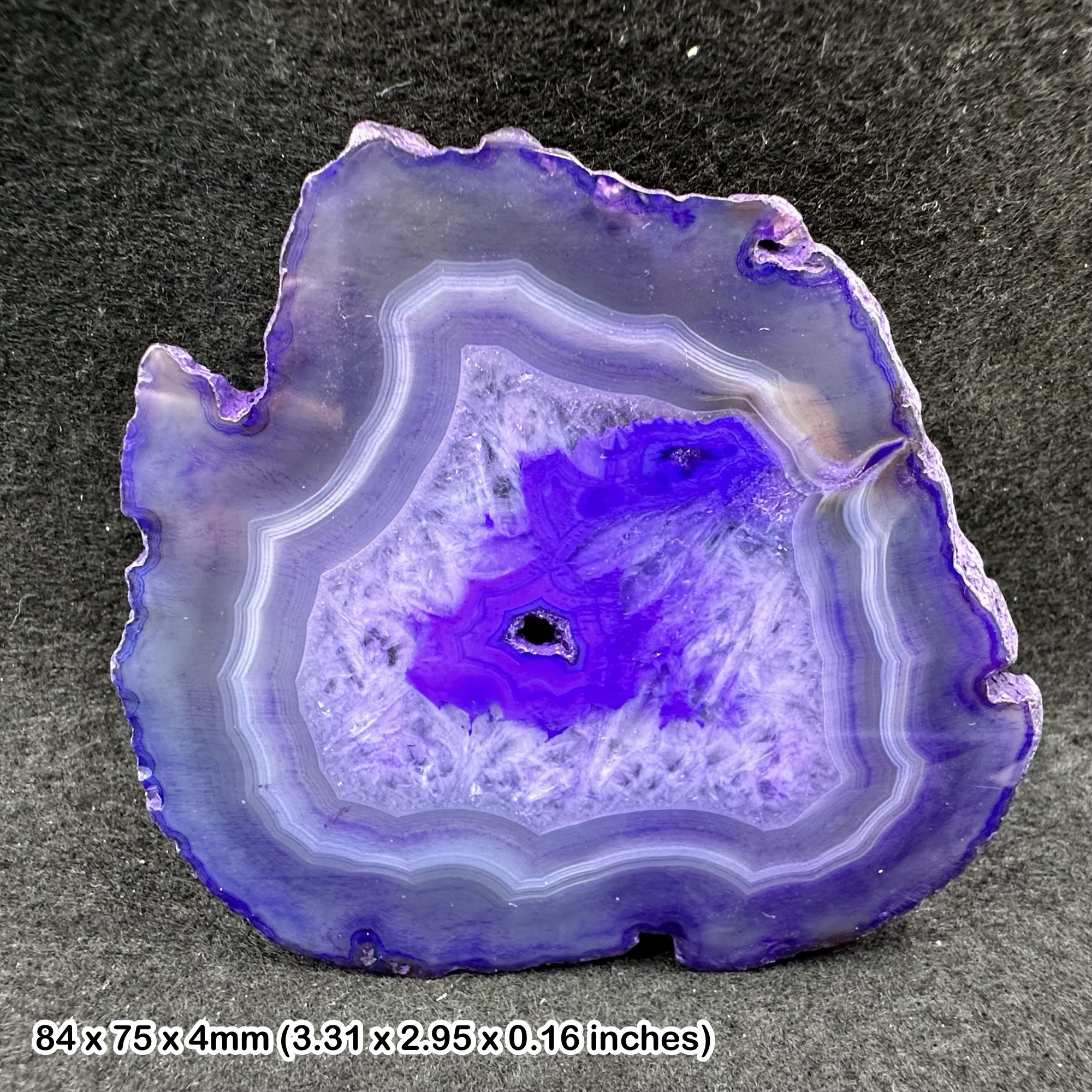
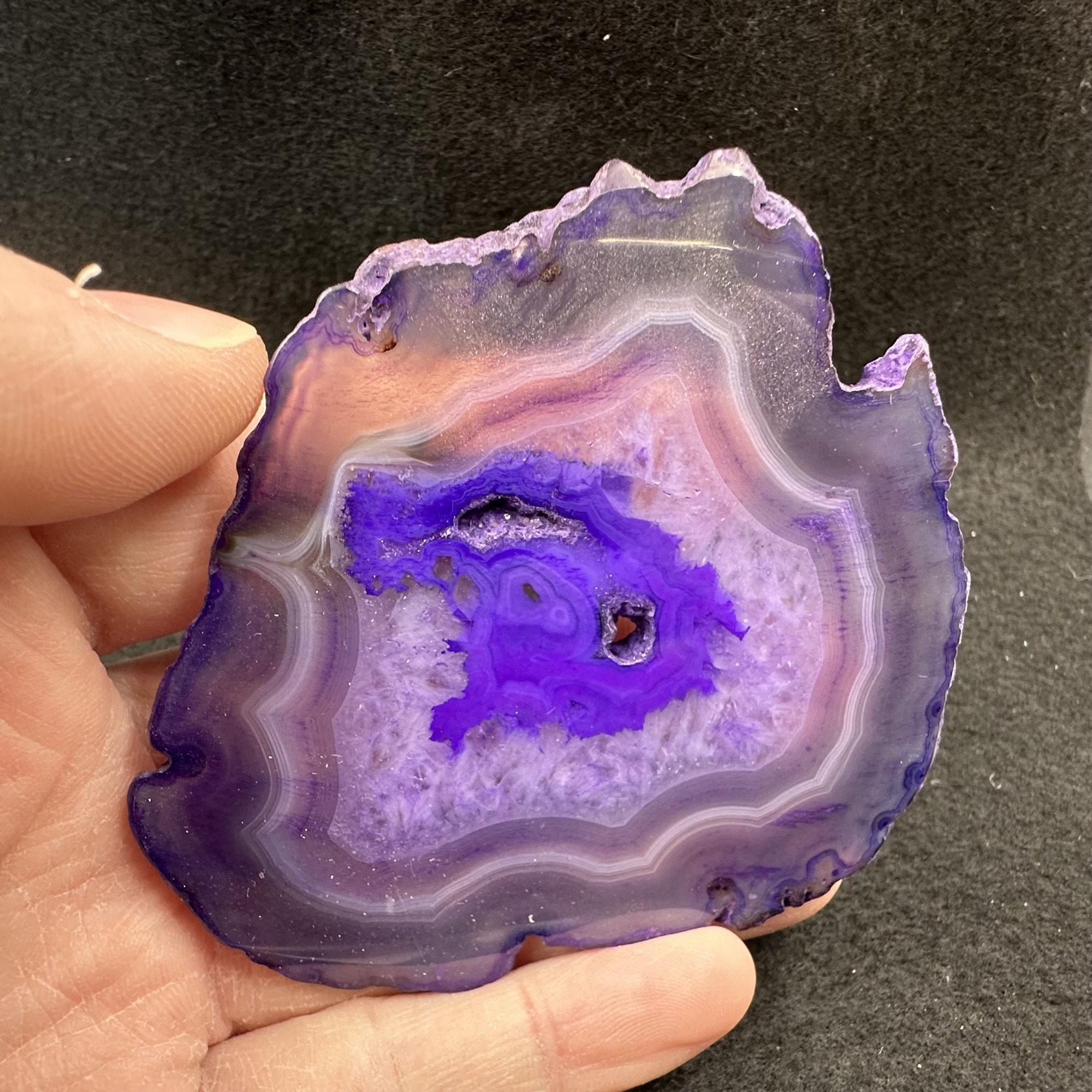
Agate Slice 2-2.5 Inch Natural Banded Chalcedony Quartz Crystal Polished Mineral Specimen Display Stone
£ 13.20
NATURAL AGATE SLICE 2–2.5 INCH BANDED CHALCEDONY QUARTZ MINERAL SPECIMENThis natural Agate slice measuring approximately 2–2.5 inches is a polished
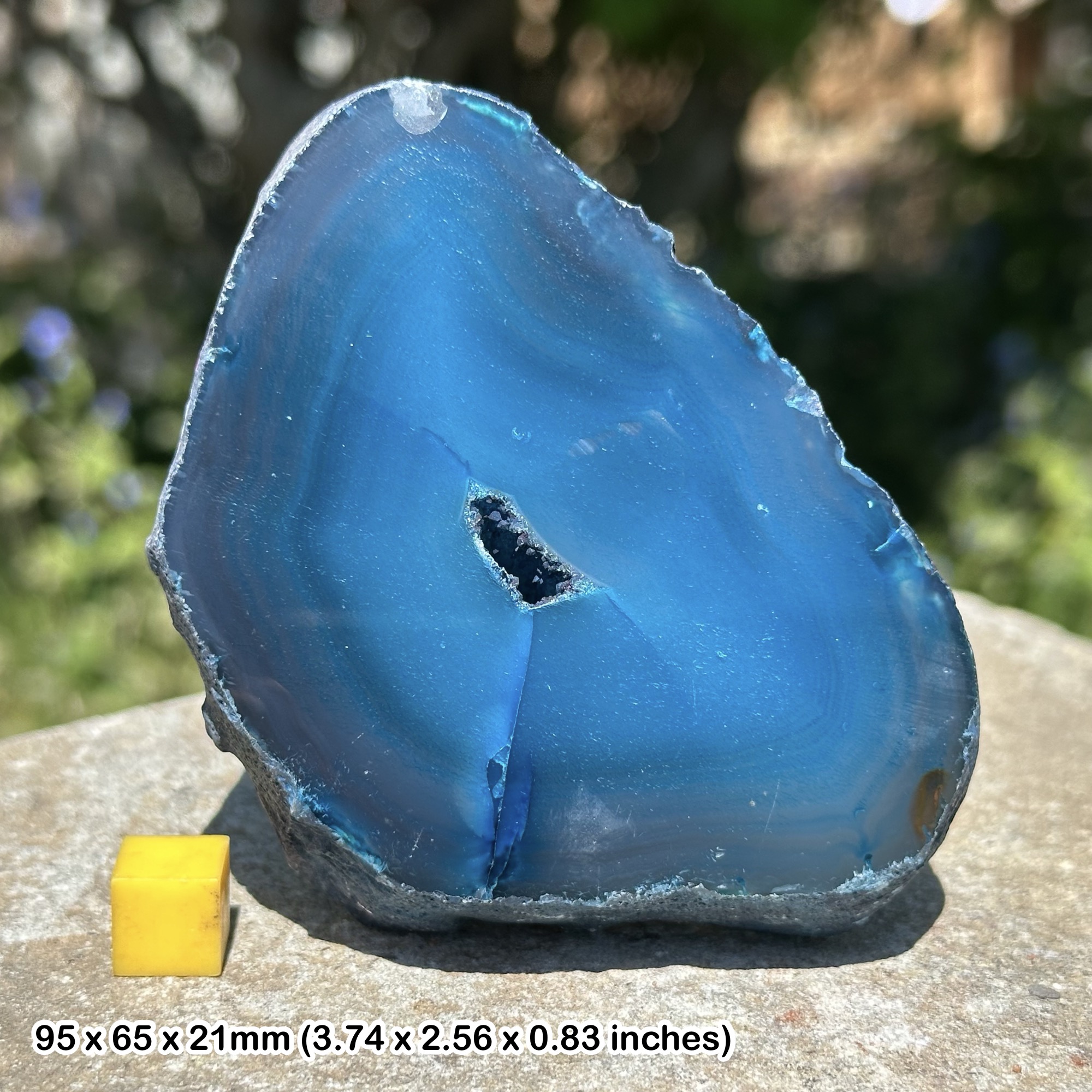
mineral specimen formed from banded chalcedony, a microcrystalline variety of quartz. The slice has been cut and polished to reveal the internal concentric banding patterns that make agate one of the most visually distinctive minerals within the quartz family.The specimen has been carefully selected for natural banding clarity, colour variation, and overall mineral structure. Polishing the surface reveals the intricate layered formation created over long geological periods. The photographs in this listing show the exact agate slice you will receive, allowing collectors and buyers to examine the mineral’s natural banding, translucency, and crystal features before purchase.For accurate measurements and scale, please refer to the sizing information shown in the listing photographs. This mineral specimen includes a Certificate of Authenticity lifetime guarantee generic card, confirming that the stone is a genuine natural mineral. MINERAL SPECIES AND GEOLOGICAL CLASSIFICATIONAgate is a variety of chalcedony, which is a cryptocrystalline form of silica composed primarily of extremely fine intergrowths of quartz and moganite. These microscopic fibres form tightly packed layers that give agate its distinctive banded appearance.The mineral has the chemical composition silicon dioxide (SiO₂), identical to quartz. However, unlike large quartz crystals, chalcedony forms as fibrous microscopic crystals that develop layered patterns during mineral deposition.Quartz minerals crystallise in the trigonal crystal system, although the crystals within chalcedony are typically too small to be individually visible without magnification.Agate is defined specifically by its distinctive concentric or layered banding, which forms as silica-rich fluids deposit successive layers within cavities inside volcanic rock. COLOUR PATTERNS, TRANSPARENCY AND PHYSICAL PROPERTIESAgate slices are known for their distinct layered banding patterns, which form naturally as silica deposits accumulate over thousands or millions of years. Each layer represents a stage in the mineral’s formation, resulting in the complex internal structures visible when the stone is cut and polished.Colours may include combinations of:• White• Grey• Cream• Brown• Amber• Red• Blue tones in some specimensTypical mineral properties include:• Mineral Species: Chalcedony (Agate variety)• Mineral Group: Quartz• Chemical Formula: SiO₂• Crystal System: Trigonal• Colour: Banded layers of natural mineral colours• Transparency: Translucent to opaque• Lustre: Vitreous when polished• Mohs Hardness: Approximately 6.5–7Some agate slices may also contain central crystal pockets, where quartz crystals formed in the remaining open cavity after the chalcedony layers were deposited. GEOLOGICAL FORMATION OF AGATEAgate forms primarily within volcanic rocks such as basalt and rhyolite, where trapped gas bubbles create hollow cavities known as vesicles. These cavities provide the space in which silica-rich groundwater deposits mineral layers over long geological periods.As silica precipitates from solution, thin layers of chalcedony build along the interior walls of the cavity. Each successive layer forms under slightly different chemical conditions, creating the distinctive banded structures known as fortification patterns.In some agates, the cavity eventually fills completely with chalcedony, while in others a central space remains where quartz crystals grow inward, forming geode-like interiors.Trace elements such as iron, manganese, and other mineral inclusions influence the colours present in agate banding. POLISHED SLICE FORM AND COLLECTING APPEALAgate slices are produced by cutting through agate nodules and polishing the exposed interior surface to reveal the mineral’s banded structure. The polished surface enhances the clarity of the bands and allows the stone’s natural translucency to be visible.Slices in the 2–2.5 inch size range are popular among collectors and decorators because they provide a detailed view of agate banding while remaining compact and easy to display.Agate slices are commonly used in:• Mineral collections• Geological displays• Decorative natural stone arrangements• Educational mineral collections• Desk or shelf display piecesBecause every agate forms in unique geological conditions, each slice displays its own distinct banding patterns, colour transitions, and internal mineral structures.In various cultural traditions, agate has been traditionally associated with symbolic ideas related to balance or stability, though such interpretations are cultural perspectives rather than scientifically established properties. AUTHENTICITY AND SPECIMEN INFORMATION• Mineral Species: Chalcedony (Agate variety)• Mineral Group: Quartz• Chemical Formula: SiO₂• Crystal System: Trigonal• Colour: Natural banded layers with variable colours• Transparency: Translucent to opaque• Lustre: Vitreous when polished• Hardness: 6.5–7 Mohs• Formation: Silica deposition inside volcanic rock cavities• Shape: Polished agate slice• Size: Approximately 2–2.5 inches• Authenticity: Genuine mineral specimen• Included: Certificate of Authenticity lifetime guarantee generic card• Exact Item: The agate slice shown in the photographs is the specimen you will receiveThis 2–2.5 inch natural Agate slice reveals the layered structure of chalcedony quartz and offers a compact yet detailed example of one of the most distinctive minerals formed in volcanic environments. It makes a visually appealing addition to mineral collections, geological displays, and decorative natural stone arrangements.
mineral specimen formed from banded chalcedony, a microcrystalline variety of quartz. The slice has been cut and polished to reveal the internal concentric banding patterns that make agate one of the most visually distinctive minerals within the quartz family.The specimen has been carefully selected for natural banding clarity, colour variation, and overall mineral structure. Polishing the surface reveals the intricate layered formation created over long geological periods. The photographs in this listing show the exact agate slice you will receive, allowing collectors and buyers to examine the mineral’s natural banding, translucency, and crystal features before purchase.For accurate measurements and scale, please refer to the sizing information shown in the listing photographs. This mineral specimen includes a Certificate of Authenticity lifetime guarantee generic card, confirming that the stone is a genuine natural mineral. MINERAL SPECIES AND GEOLOGICAL CLASSIFICATIONAgate is a variety of chalcedony, which is a cryptocrystalline form of silica composed primarily of extremely fine intergrowths of quartz and moganite. These microscopic fibres form tightly packed layers that give agate its distinctive banded appearance.The mineral has the chemical composition silicon dioxide (SiO₂), identical to quartz. However, unlike large quartz crystals, chalcedony forms as fibrous microscopic crystals that develop layered patterns during mineral deposition.Quartz minerals crystallise in the trigonal crystal system, although the crystals within chalcedony are typically too small to be individually visible without magnification.Agate is defined specifically by its distinctive concentric or layered banding, which forms as silica-rich fluids deposit successive layers within cavities inside volcanic rock. COLOUR PATTERNS, TRANSPARENCY AND PHYSICAL PROPERTIESAgate slices are known for their distinct layered banding patterns, which form naturally as silica deposits accumulate over thousands or millions of years. Each layer represents a stage in the mineral’s formation, resulting in the complex internal structures visible when the stone is cut and polished.Colours may include combinations of:• White• Grey• Cream• Brown• Amber• Red• Blue tones in some specimensTypical mineral properties include:• Mineral Species: Chalcedony (Agate variety)• Mineral Group: Quartz• Chemical Formula: SiO₂• Crystal System: Trigonal• Colour: Banded layers of natural mineral colours• Transparency: Translucent to opaque• Lustre: Vitreous when polished• Mohs Hardness: Approximately 6.5–7Some agate slices may also contain central crystal pockets, where quartz crystals formed in the remaining open cavity after the chalcedony layers were deposited. GEOLOGICAL FORMATION OF AGATEAgate forms primarily within volcanic rocks such as basalt and rhyolite, where trapped gas bubbles create hollow cavities known as vesicles. These cavities provide the space in which silica-rich groundwater deposits mineral layers over long geological periods.As silica precipitates from solution, thin layers of chalcedony build along the interior walls of the cavity. Each successive layer forms under slightly different chemical conditions, creating the distinctive banded structures known as fortification patterns.In some agates, the cavity eventually fills completely with chalcedony, while in others a central space remains where quartz crystals grow inward, forming geode-like interiors.Trace elements such as iron, manganese, and other mineral inclusions influence the colours present in agate banding. POLISHED SLICE FORM AND COLLECTING APPEALAgate slices are produced by cutting through agate nodules and polishing the exposed interior surface to reveal the mineral’s banded structure. The polished surface enhances the clarity of the bands and allows the stone’s natural translucency to be visible.Slices in the 2–2.5 inch size range are popular among collectors and decorators because they provide a detailed view of agate banding while remaining compact and easy to display.Agate slices are commonly used in:• Mineral collections• Geological displays• Decorative natural stone arrangements• Educational mineral collections• Desk or shelf display piecesBecause every agate forms in unique geological conditions, each slice displays its own distinct banding patterns, colour transitions, and internal mineral structures.In various cultural traditions, agate has been traditionally associated with symbolic ideas related to balance or stability, though such interpretations are cultural perspectives rather than scientifically established properties. AUTHENTICITY AND SPECIMEN INFORMATION• Mineral Species: Chalcedony (Agate variety)• Mineral Group: Quartz• Chemical Formula: SiO₂• Crystal System: Trigonal• Colour: Natural banded layers with variable colours• Transparency: Translucent to opaque• Lustre: Vitreous when polished• Hardness: 6.5–7 Mohs• Formation: Silica deposition inside volcanic rock cavities• Shape: Polished agate slice• Size: Approximately 2–2.5 inches• Authenticity: Genuine mineral specimen• Included: Certificate of Authenticity lifetime guarantee generic card• Exact Item: The agate slice shown in the photographs is the specimen you will receiveThis 2–2.5 inch natural Agate slice reveals the layered structure of chalcedony quartz and offers a compact yet detailed example of one of the most distinctive minerals formed in volcanic environments. It makes a visually appealing addition to mineral collections, geological displays, and decorative natural stone arrangements.
Other Products