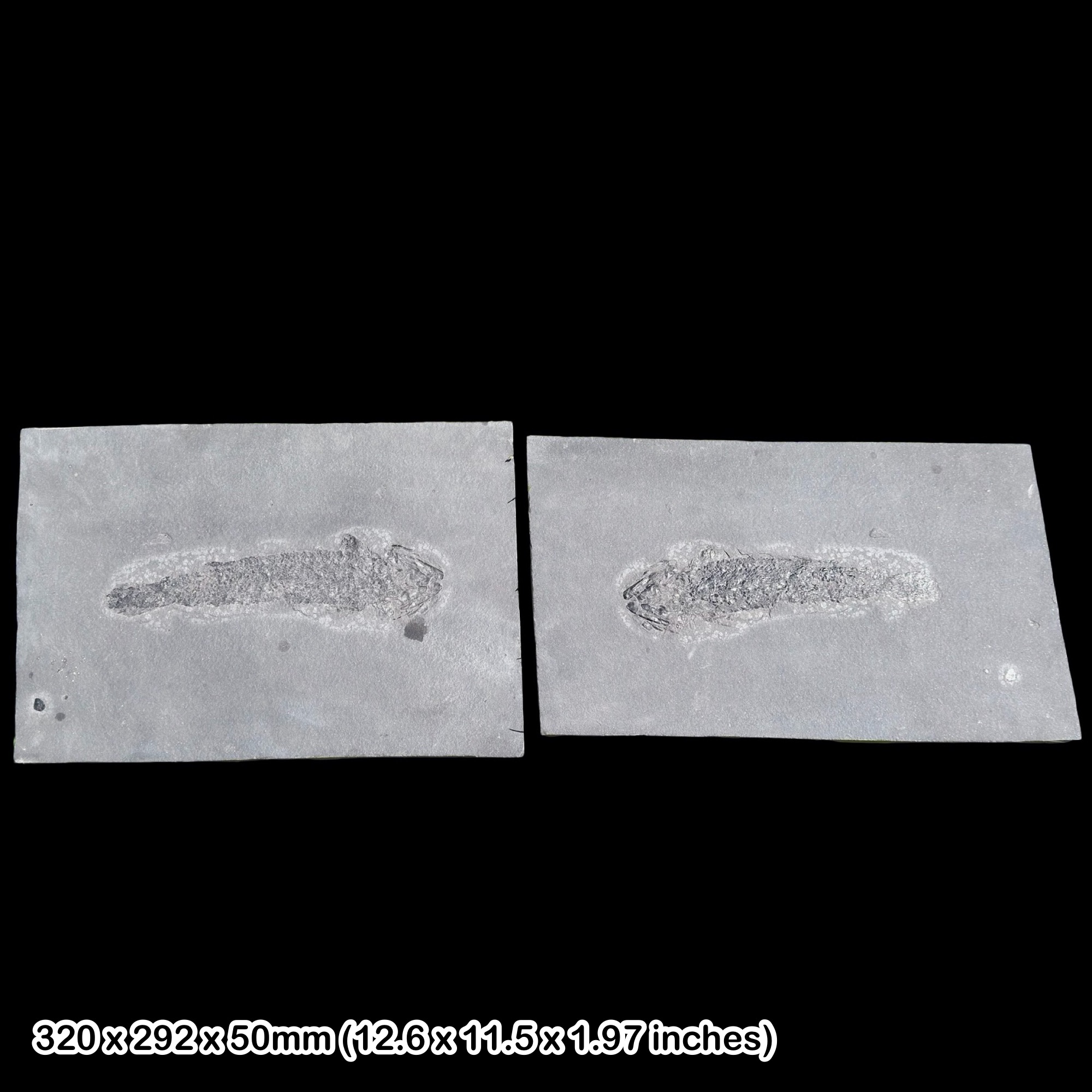
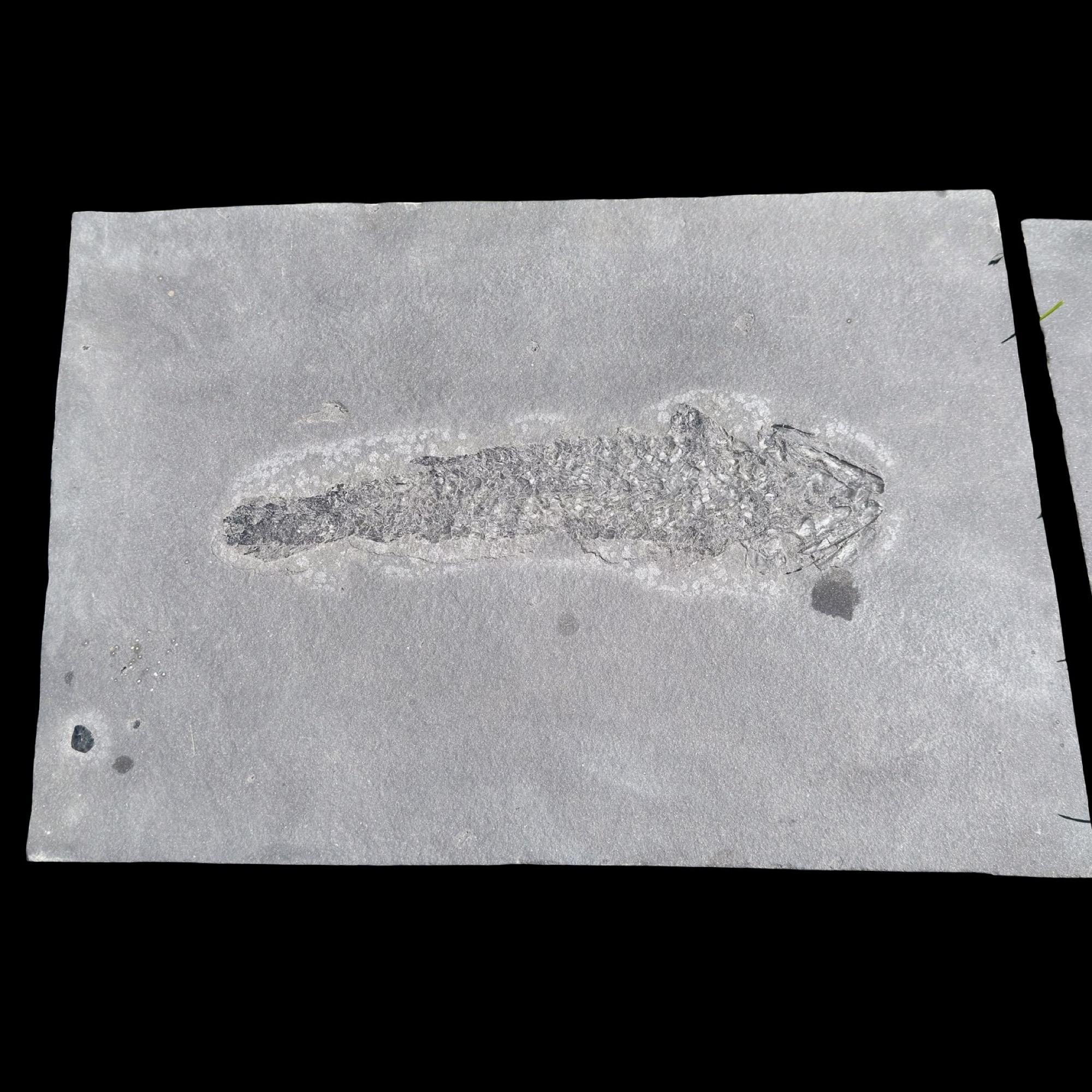
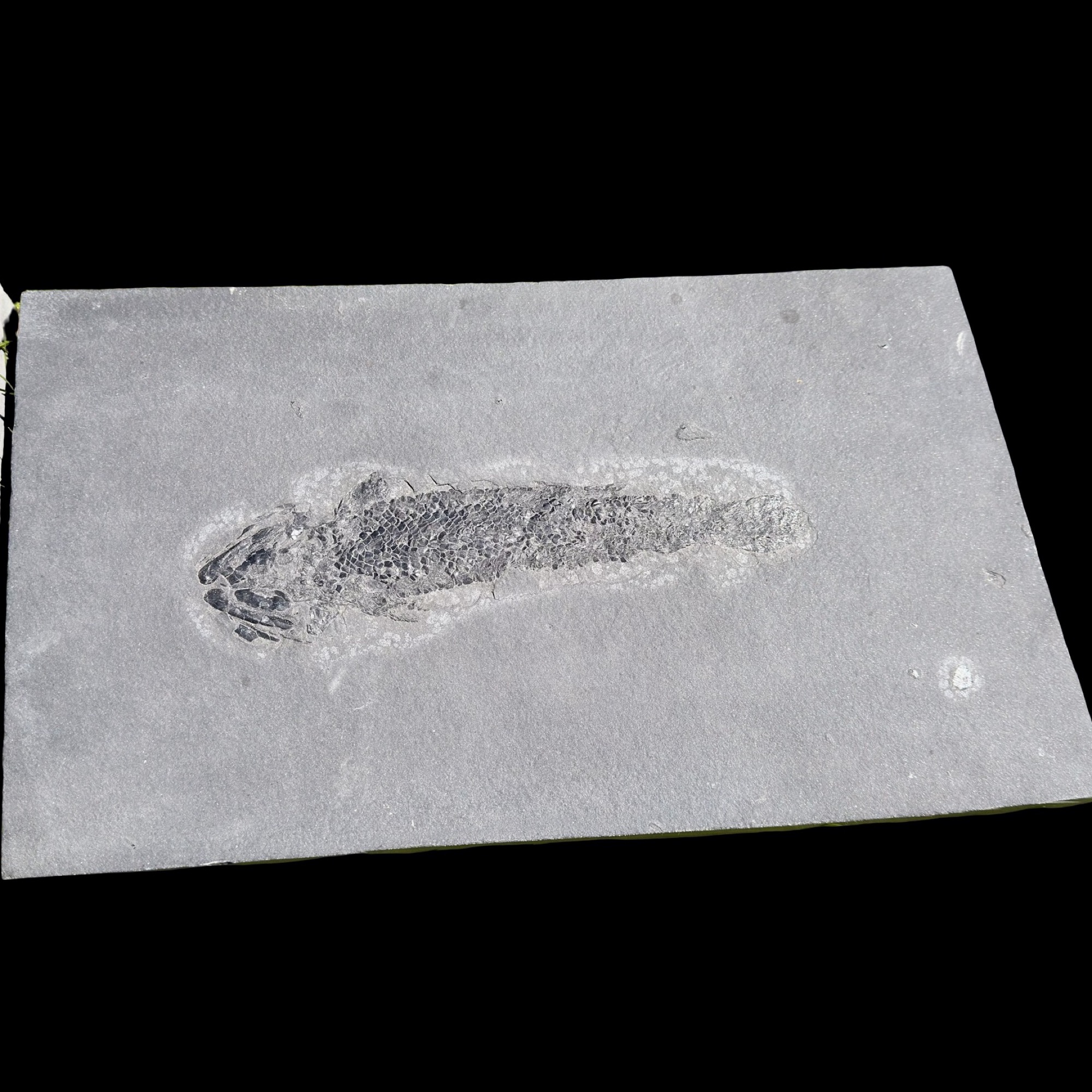
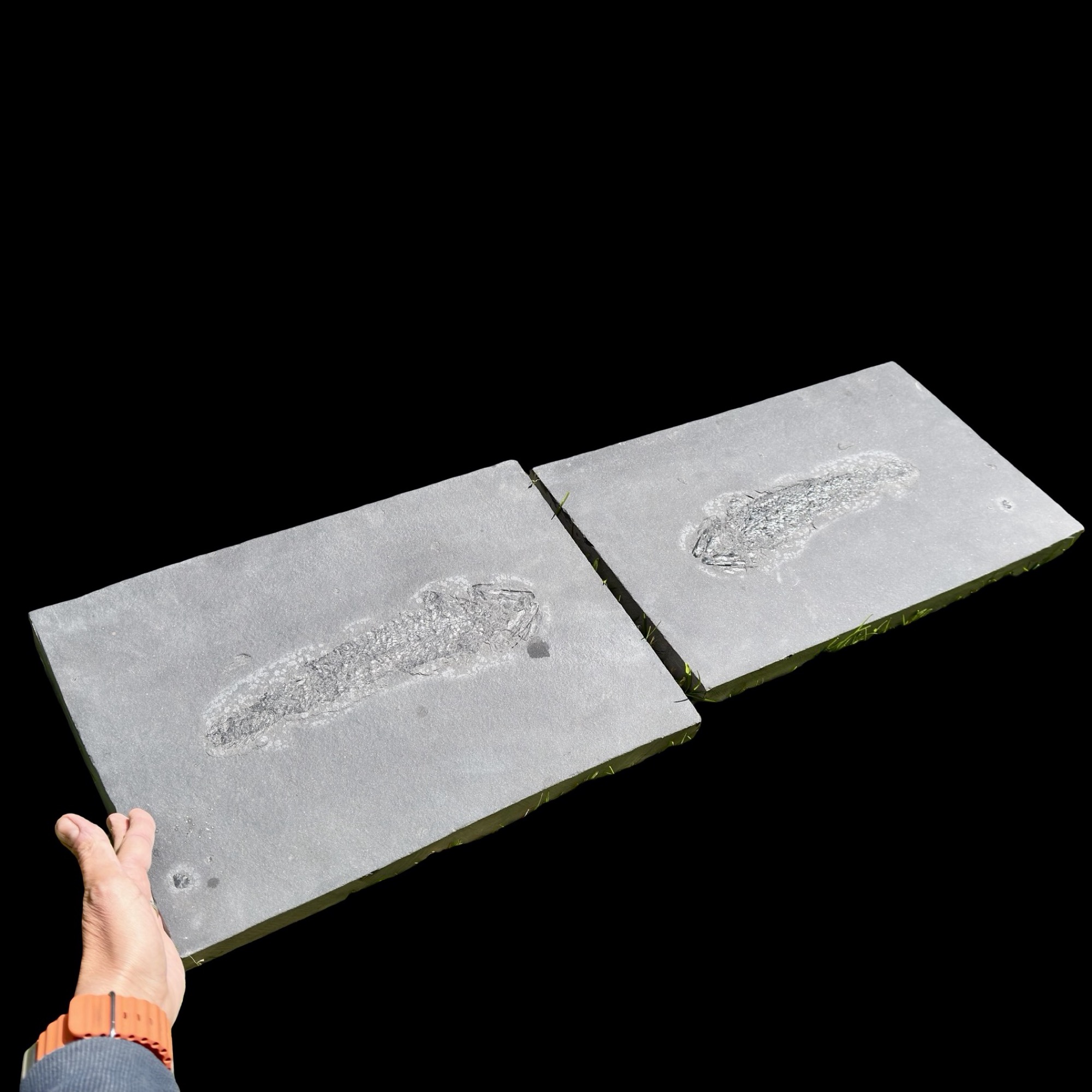
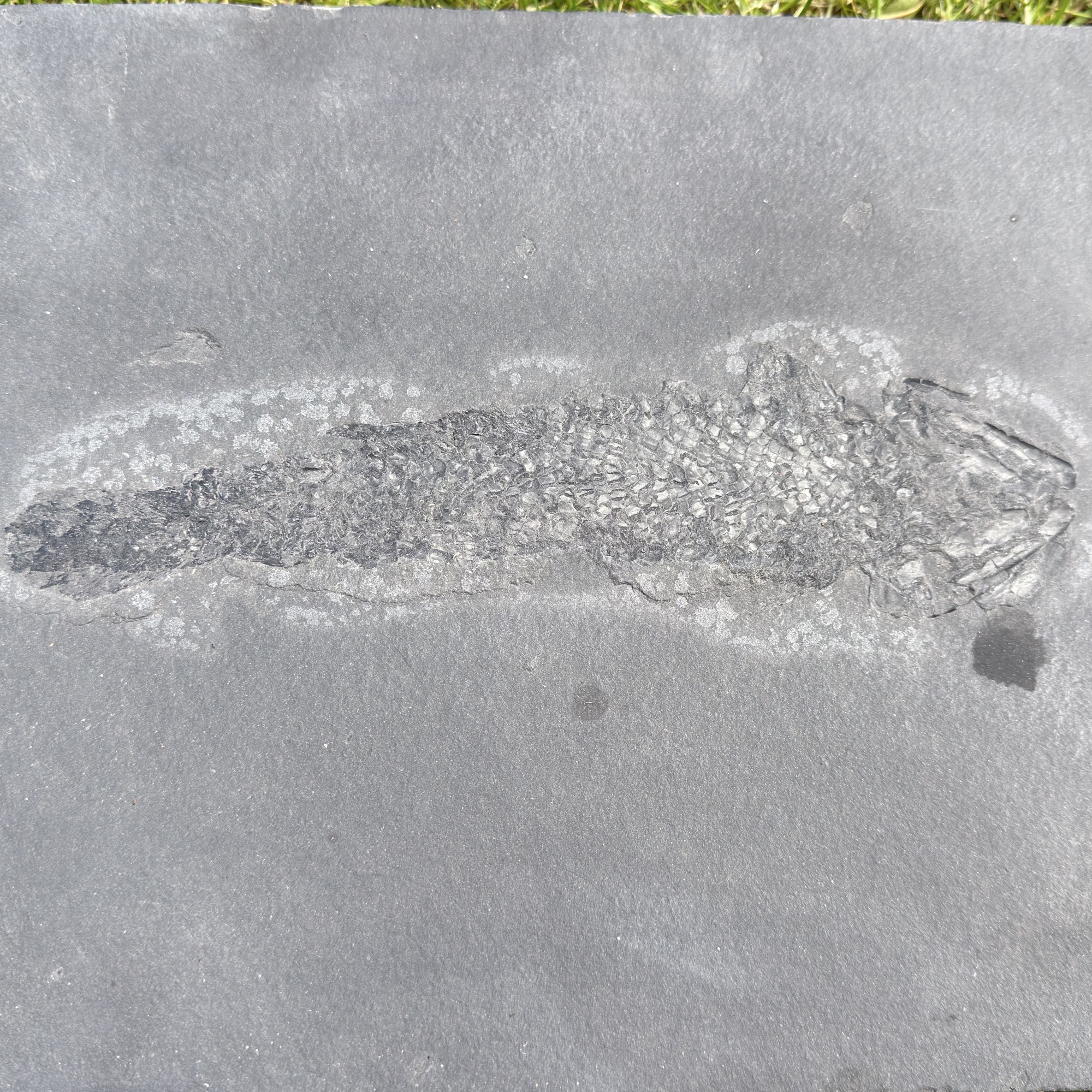
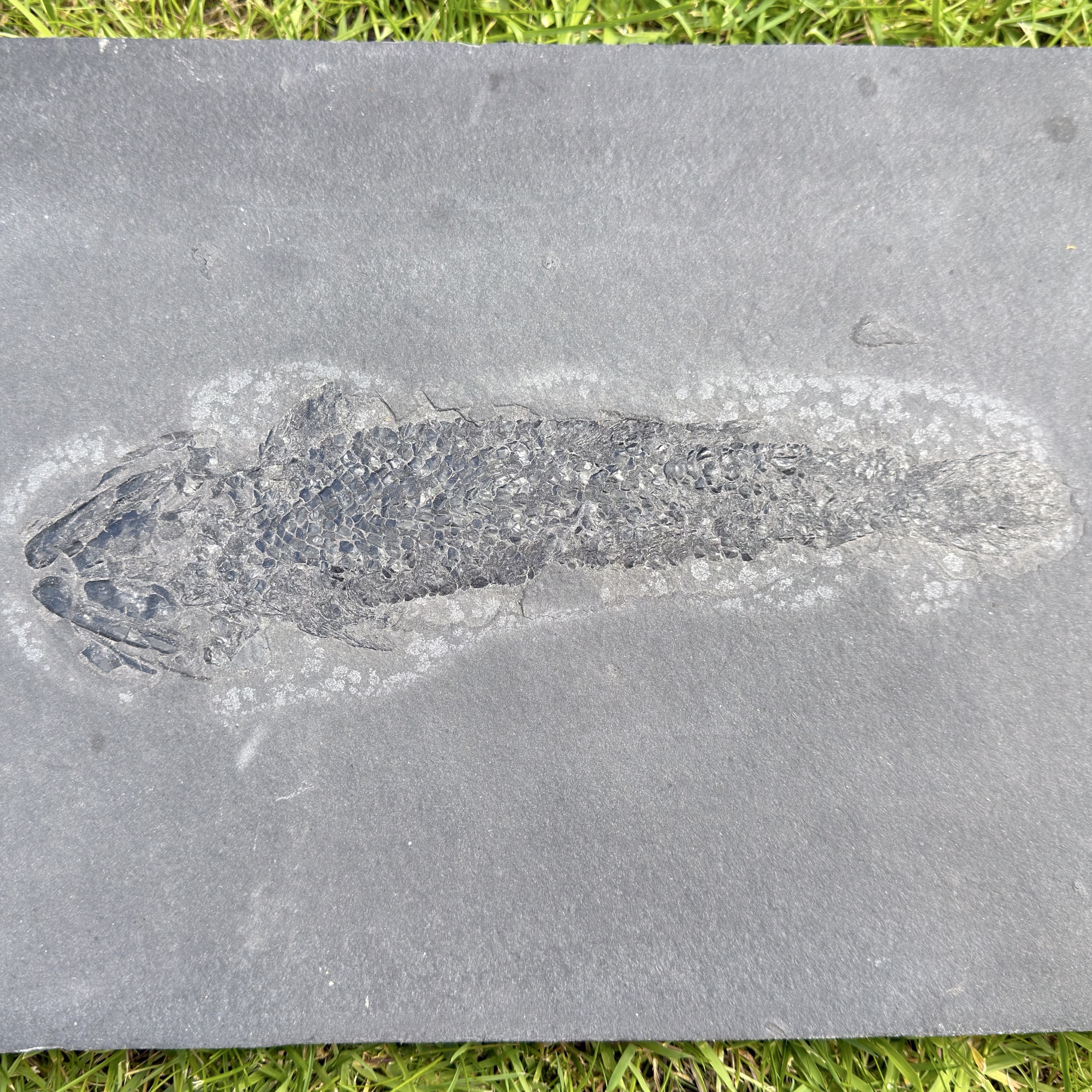
Rare Gyroptychius Fish Fossil Positive and Negative Devonian Orkney Genuine Fossil Specimen
£ 1920.00
RARE GENUINE GYROPTYCHIUS FISH FOSSIL POSITIVE AND NEGATIVE FROM ORKNEYThis rare genuine Gyroptychius fish fossil preserves both positive and negative
impressions within the original Old Red Sandstone matrix from the famous Sandwick Fish Bed of the Mey Supergroup, Cruaday Hill Quarry, Quoyloo, Orkney, Scotland. Dating to the Early Devonian Period approximately 400 million years ago, this exceptional fossil provides a remarkable glimpse into one of the earliest freshwater vertebrate ecosystems preserved in Britain.The exact fossil shown in the photographs is the specimen you will receive. This carefully chosen display piece includes a fully hand-signed Premium Certificate of Authenticity confirming the fossil is completely genuine.Please refer to the photographs for full sizing and scale. ABOUT GYROPTYCHIUSGyroptychius was an extinct genus of prehistoric lobe-finned fish belonging to the class Sarcopterygii, an important evolutionary group closely related to the ancestors of terrestrial vertebrates. These early fishes lived during the Devonian Period, often referred to as the “Age of Fishes,” when vertebrate life underwent major evolutionary diversification in freshwater and marine environments.Gyroptychius is recognised for its elongated body form, thick rhomboidal scales, and robust paired fins. As a sarcopterygian fish, it possessed fleshy lobe-supported fins containing internal skeletal structures that are evolutionarily significant in understanding the eventual transition of vertebrates onto land.The genus is also known for its heavily armoured scale covering and predatory adaptations suited to ancient freshwater lake ecosystems. Fossils from Orkney frequently preserve exquisite anatomical detail, including scale patterns, fin structures, cranial outlines, and body proportions.Positive and negative fossil preservation is especially desirable among collectors because it provides both the raised impression and corresponding counterpart slab formed during sediment splitting, offering a more complete representation of the fossilised organism. GEOLOGICAL FORMATION AND DEPOSITIONAL ENVIRONMENTThis specimen originates from the Sandwick Fish Bed within the Mey Supergroup of the Old Red Sandstone succession, one of the most internationally significant Devonian fossil fish deposits in Europe. The fossil-bearing strata of Orkney were deposited within extensive freshwater lake systems occupying the Orcadian Basin during the Early Devonian.The Sandwick Fish Bed formed in calm lacustrine environments where very fine sediments accumulated on lake bottoms under periodically oxygen-poor conditions. These low-oxygen environments reduced scavenging and decomposition, enabling exceptional preservation of delicate vertebrate remains.The Old Red Sandstone deposits of northern Scotland are famous for preserving a diverse assemblage of early fishes including placoderms, osteolepiforms, lungfish, and primitive lobe-finned fishes such as Gyroptychius. These formations provide critical insight into vertebrate evolution during the Devonian Period.Fine-grained flagstone sediments from the quarry split naturally along bedding planes, often revealing highly detailed fossil fish impressions preserved over hundreds of millions of years. FOSSIL PRESERVATION AND MORPHOLOGICAL FEATURESThis specimen preserves both positive and negative impressions of Gyroptychius within the original matrix, significantly increasing its display quality and scientific appeal. Depending on preservation, visible features may include body outline, scale ornamentation, fin placement, cranial detail, and natural articulation of skeletal structures.The characteristic rhomboidal scales of Gyroptychius may display fine textural detail and natural mineral contrast against the surrounding sandstone matrix. The positive impression retains raised fossil detail, while the counterpart negative slab preserves the corresponding recessed imprint formed during burial and compaction.Natural colouration of the matrix may include shades of grey, brown, reddish ochre, cream, or dark carbonaceous fossil tones depending on mineral content and sediment composition. Fine sedimentary laminations and natural geological textures enhance the authenticity and aesthetic appeal of the specimen.As a genuine fossil formed naturally during the Devonian Period, every specimen is completely unique in preservation, orientation, and geological character. MUSEUM QUALITY DEVONIAN FOSSIL DISPLAYFossil fish from the Old Red Sandstone of Orkney are highly respected among collectors and palaeontologists due to their scientific significance and outstanding preservation. Positive and negative fish fossil pairs are especially sought after because they provide a more complete and visually impressive display than single-sided specimens.This specimen is ideal for:
• Advanced fossil collections
• Devonian fossil collections
• Fossil fish collections
• Museum-style geological displays
• Educational and evolutionary study collections
• Natural history displays
• British fossil collections
• Curiosity cabinets and interior décor
• Gifts for serious fossil collectors and palaeontology enthusiastsThe combination of positive and negative preservation creates an especially attractive and scientifically important display piece representing vertebrate life from approximately 400 million years ago. GENUINE DEVONIAN FOSSIL FISH SPECIMENThis RARE Gyroptychius fish fossil positive and negative from Cruaday Hill Quarry, Quoyloo, Orkney is a genuine carefully selected specimen chosen for its rarity, preservation quality, and display appeal.The exact fossil shown in the photographs is the specimen you will receive. Every fossil supplied by us is 100% genuine and includes a fully hand-signed Premium Certificate of Authenticity, providing confidence in the authenticity and geological significance of this remarkable Early Devonian fossil fish specimen from Scotland’s famous Old Red Sandstone deposits.
impressions within the original Old Red Sandstone matrix from the famous Sandwick Fish Bed of the Mey Supergroup, Cruaday Hill Quarry, Quoyloo, Orkney, Scotland. Dating to the Early Devonian Period approximately 400 million years ago, this exceptional fossil provides a remarkable glimpse into one of the earliest freshwater vertebrate ecosystems preserved in Britain.The exact fossil shown in the photographs is the specimen you will receive. This carefully chosen display piece includes a fully hand-signed Premium Certificate of Authenticity confirming the fossil is completely genuine.Please refer to the photographs for full sizing and scale. ABOUT GYROPTYCHIUSGyroptychius was an extinct genus of prehistoric lobe-finned fish belonging to the class Sarcopterygii, an important evolutionary group closely related to the ancestors of terrestrial vertebrates. These early fishes lived during the Devonian Period, often referred to as the “Age of Fishes,” when vertebrate life underwent major evolutionary diversification in freshwater and marine environments.Gyroptychius is recognised for its elongated body form, thick rhomboidal scales, and robust paired fins. As a sarcopterygian fish, it possessed fleshy lobe-supported fins containing internal skeletal structures that are evolutionarily significant in understanding the eventual transition of vertebrates onto land.The genus is also known for its heavily armoured scale covering and predatory adaptations suited to ancient freshwater lake ecosystems. Fossils from Orkney frequently preserve exquisite anatomical detail, including scale patterns, fin structures, cranial outlines, and body proportions.Positive and negative fossil preservation is especially desirable among collectors because it provides both the raised impression and corresponding counterpart slab formed during sediment splitting, offering a more complete representation of the fossilised organism. GEOLOGICAL FORMATION AND DEPOSITIONAL ENVIRONMENTThis specimen originates from the Sandwick Fish Bed within the Mey Supergroup of the Old Red Sandstone succession, one of the most internationally significant Devonian fossil fish deposits in Europe. The fossil-bearing strata of Orkney were deposited within extensive freshwater lake systems occupying the Orcadian Basin during the Early Devonian.The Sandwick Fish Bed formed in calm lacustrine environments where very fine sediments accumulated on lake bottoms under periodically oxygen-poor conditions. These low-oxygen environments reduced scavenging and decomposition, enabling exceptional preservation of delicate vertebrate remains.The Old Red Sandstone deposits of northern Scotland are famous for preserving a diverse assemblage of early fishes including placoderms, osteolepiforms, lungfish, and primitive lobe-finned fishes such as Gyroptychius. These formations provide critical insight into vertebrate evolution during the Devonian Period.Fine-grained flagstone sediments from the quarry split naturally along bedding planes, often revealing highly detailed fossil fish impressions preserved over hundreds of millions of years. FOSSIL PRESERVATION AND MORPHOLOGICAL FEATURESThis specimen preserves both positive and negative impressions of Gyroptychius within the original matrix, significantly increasing its display quality and scientific appeal. Depending on preservation, visible features may include body outline, scale ornamentation, fin placement, cranial detail, and natural articulation of skeletal structures.The characteristic rhomboidal scales of Gyroptychius may display fine textural detail and natural mineral contrast against the surrounding sandstone matrix. The positive impression retains raised fossil detail, while the counterpart negative slab preserves the corresponding recessed imprint formed during burial and compaction.Natural colouration of the matrix may include shades of grey, brown, reddish ochre, cream, or dark carbonaceous fossil tones depending on mineral content and sediment composition. Fine sedimentary laminations and natural geological textures enhance the authenticity and aesthetic appeal of the specimen.As a genuine fossil formed naturally during the Devonian Period, every specimen is completely unique in preservation, orientation, and geological character. MUSEUM QUALITY DEVONIAN FOSSIL DISPLAYFossil fish from the Old Red Sandstone of Orkney are highly respected among collectors and palaeontologists due to their scientific significance and outstanding preservation. Positive and negative fish fossil pairs are especially sought after because they provide a more complete and visually impressive display than single-sided specimens.This specimen is ideal for:
• Advanced fossil collections
• Devonian fossil collections
• Fossil fish collections
• Museum-style geological displays
• Educational and evolutionary study collections
• Natural history displays
• British fossil collections
• Curiosity cabinets and interior décor
• Gifts for serious fossil collectors and palaeontology enthusiastsThe combination of positive and negative preservation creates an especially attractive and scientifically important display piece representing vertebrate life from approximately 400 million years ago. GENUINE DEVONIAN FOSSIL FISH SPECIMENThis RARE Gyroptychius fish fossil positive and negative from Cruaday Hill Quarry, Quoyloo, Orkney is a genuine carefully selected specimen chosen for its rarity, preservation quality, and display appeal.The exact fossil shown in the photographs is the specimen you will receive. Every fossil supplied by us is 100% genuine and includes a fully hand-signed Premium Certificate of Authenticity, providing confidence in the authenticity and geological significance of this remarkable Early Devonian fossil fish specimen from Scotland’s famous Old Red Sandstone deposits.
Other Products