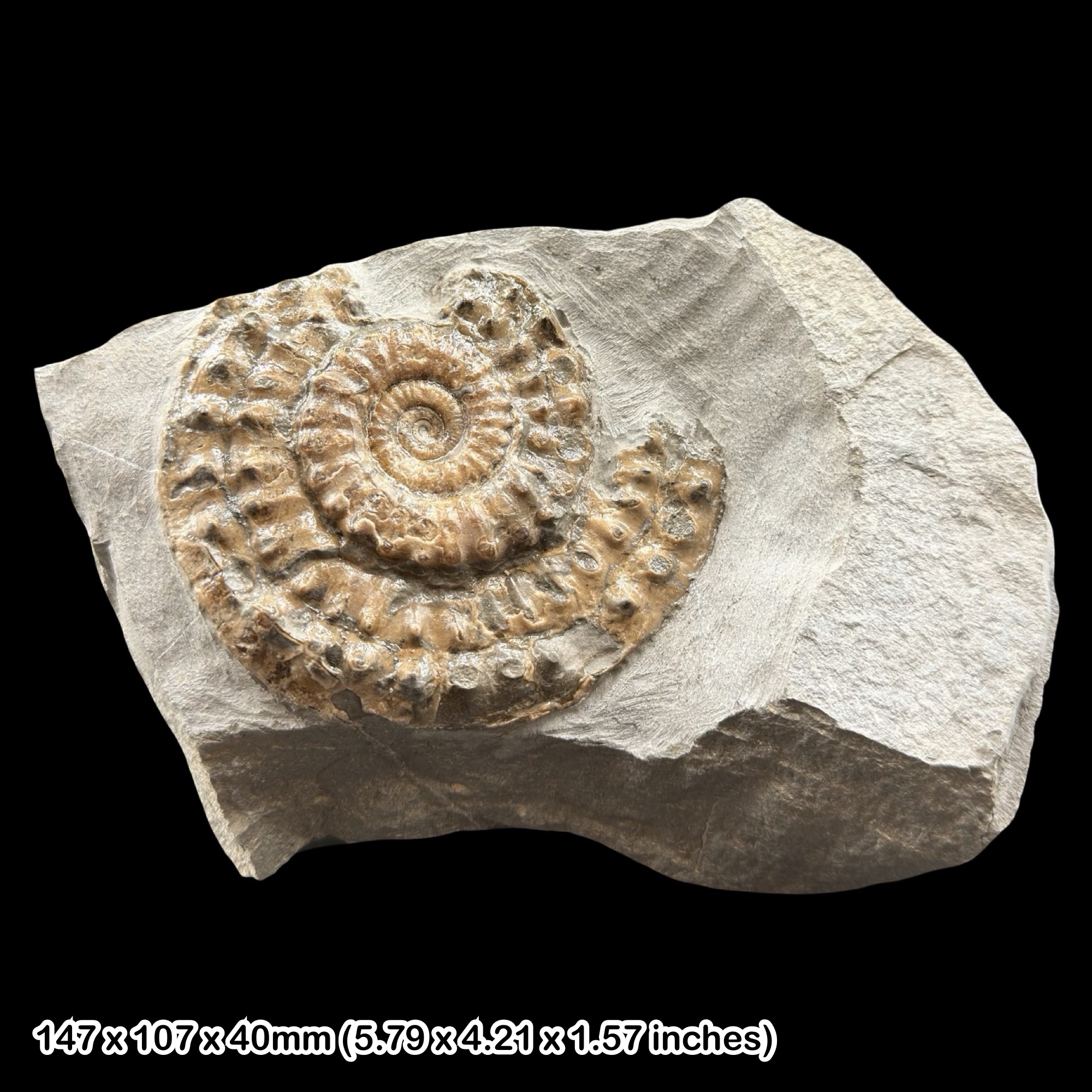
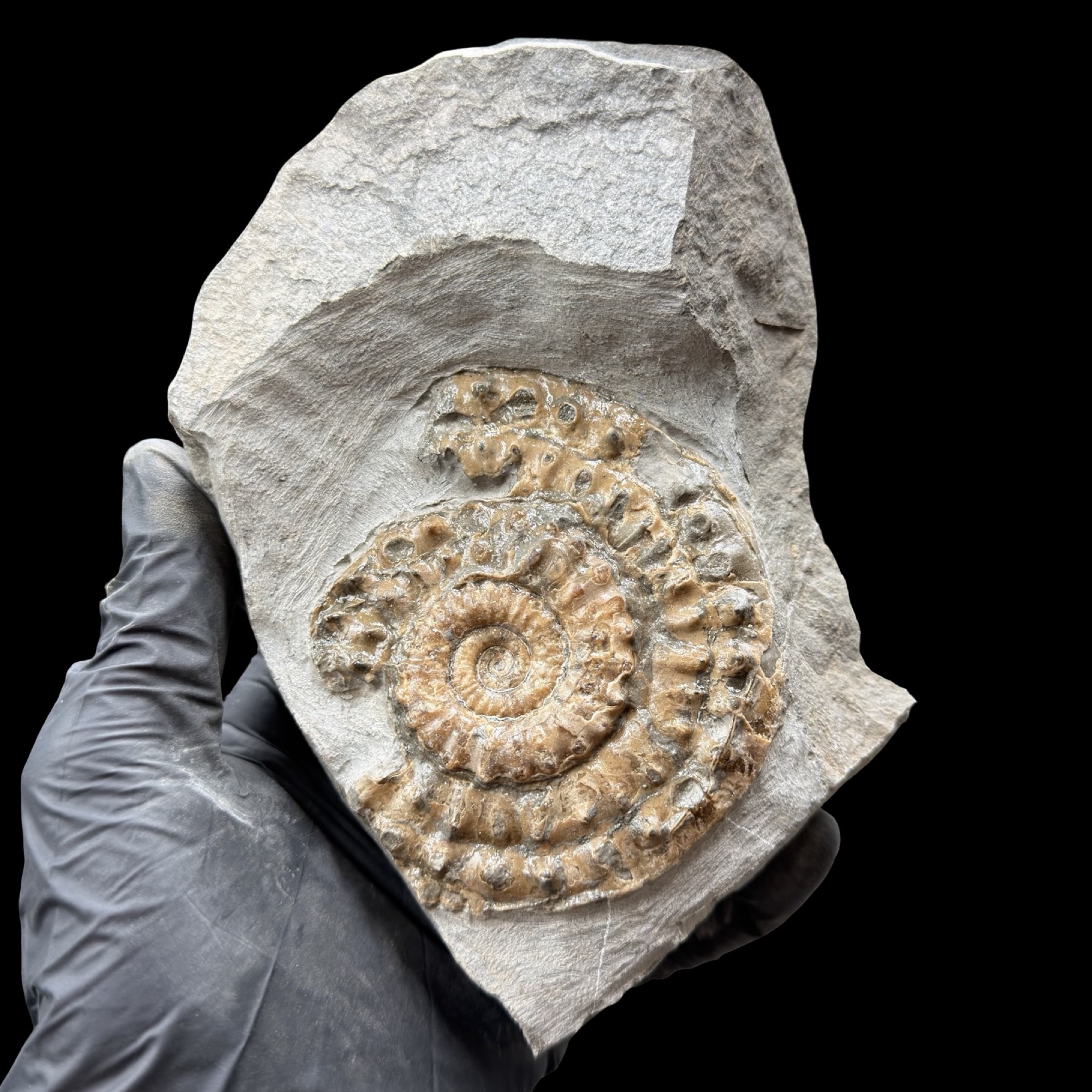
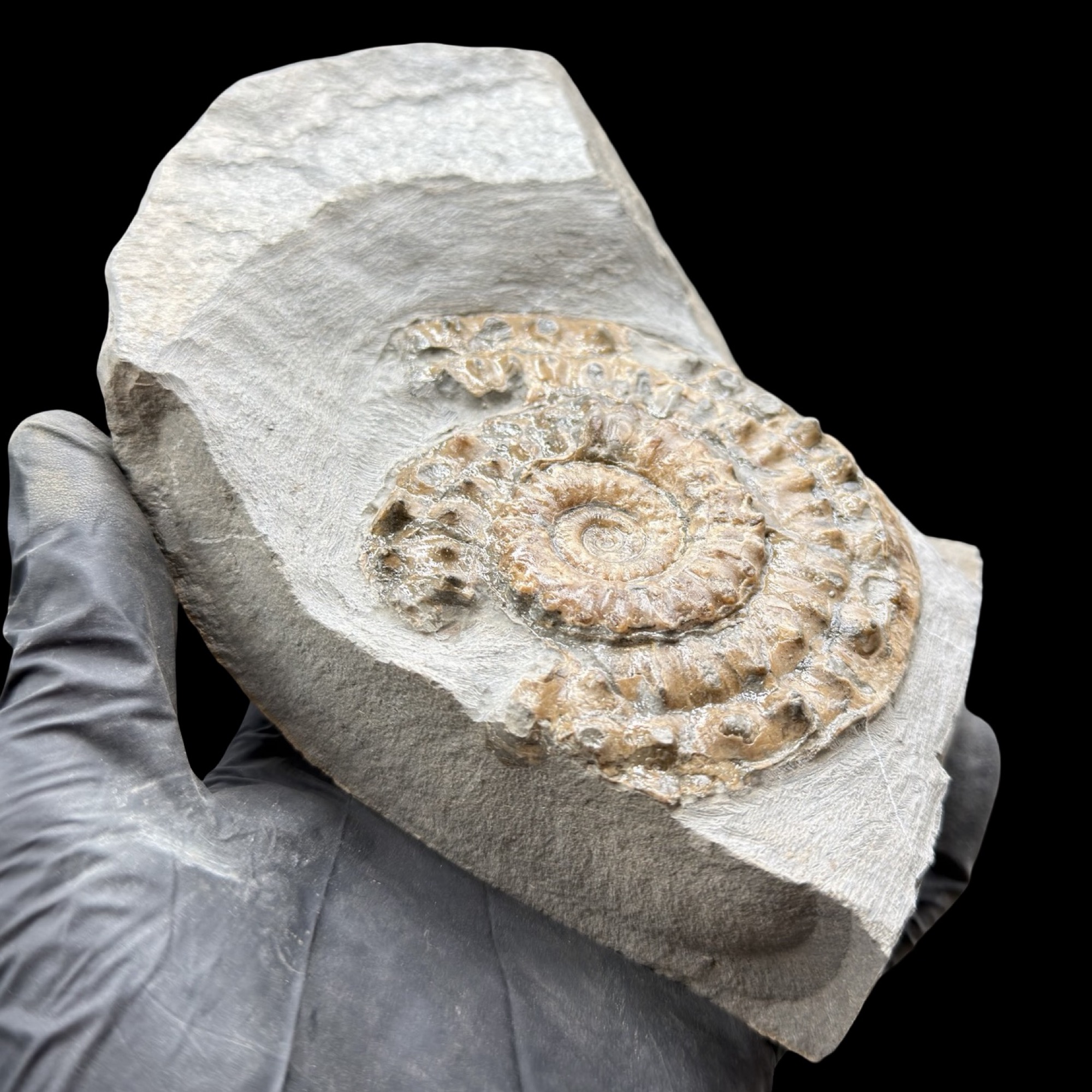
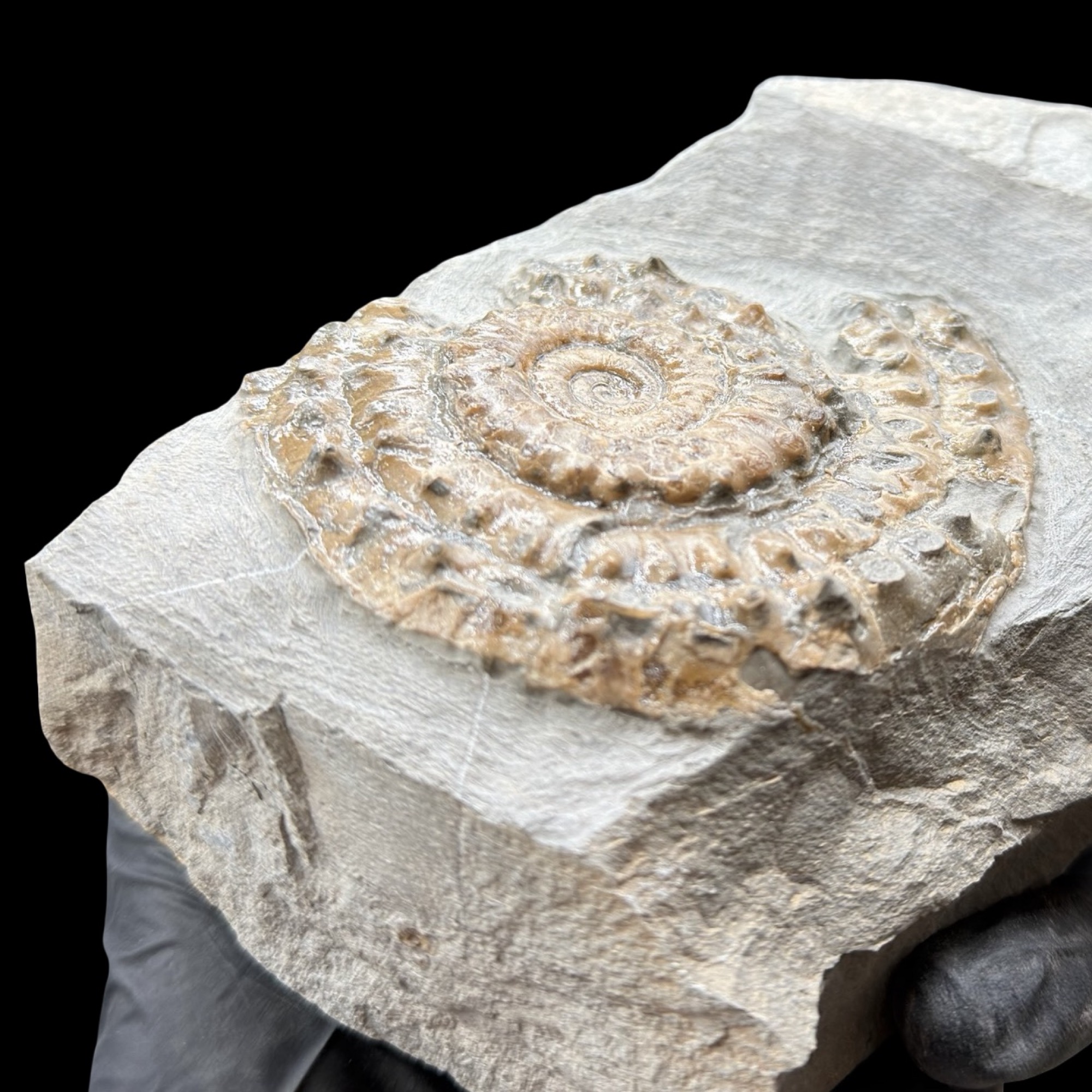
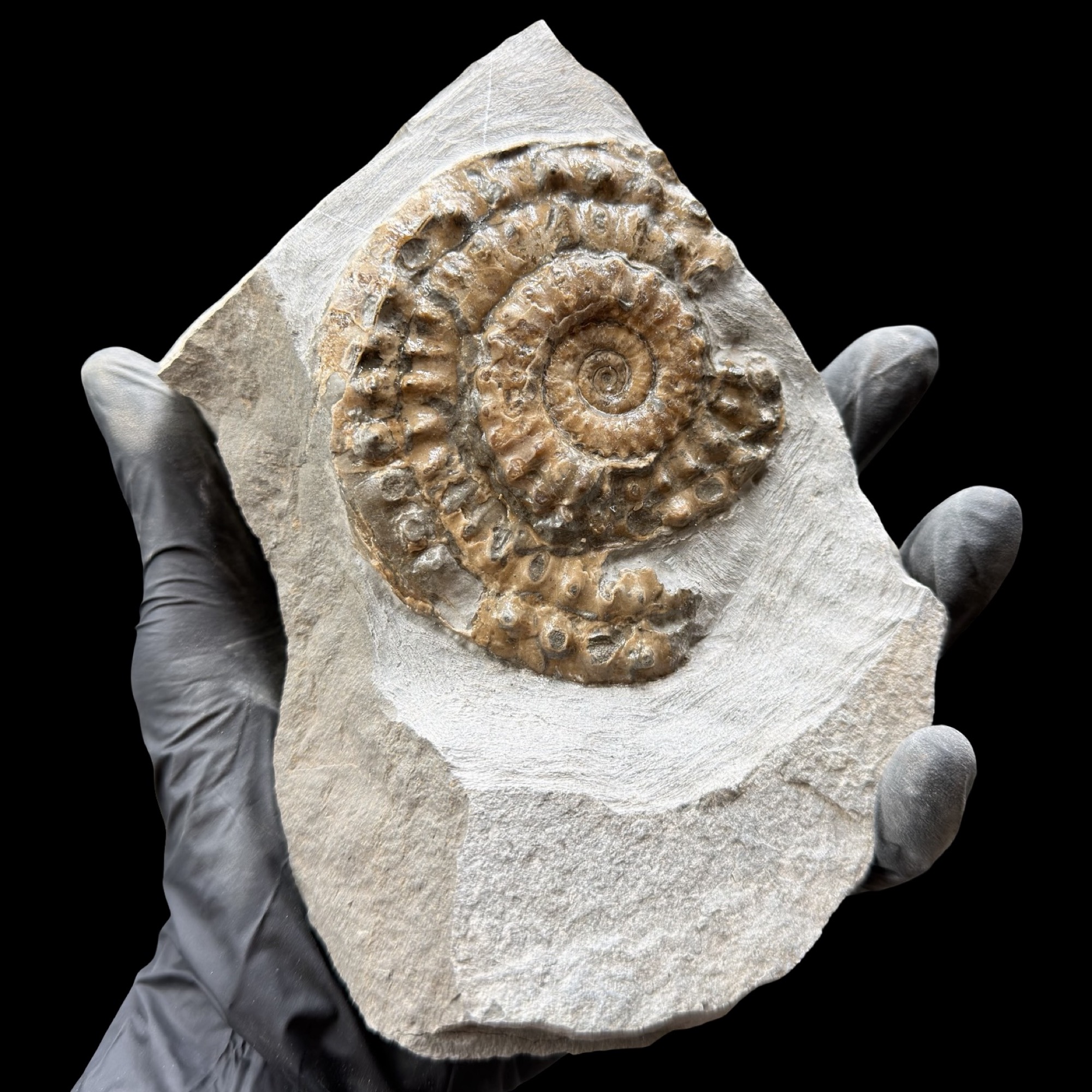
Microderoceras Ammonite Fossil Lower Lias Dorset UK COA Genuine Jurassic Coast Black Ven Marls Lyme Regis Fossil Specimen
£ 120.00
Genuine Microderoceras Ammonite Fossil from Black Ven, Lyme RegisThis Microderoceras fossil ammonite is a genuine Jurassic Coast specimen from
the Black Ven Marls of the Lower Lias at Black Ven, Lyme Regis, Dorset, UK. It is a carefully chosen fossil with strong scientific interest, classic British Jurassic appeal and an excellent connection to one of the most famous fossil collecting areas in the world.The photograph shows the actual specimen you will receive, making this a unique individual fossil rather than a stock image or representative example. For full sizing and visible condition, please see the listing photo.Species and Scientific InterestMicroderoceras is a distinctive genus of Lower Jurassic ammonite, belonging to an extinct group of marine cephalopods related to modern squid, cuttlefish and nautilus. Ammonites lived inside coiled external shells divided into internal chambers. These chambers helped regulate buoyancy, allowing the animal to move through the ancient sea while the soft body occupied the final living chamber.Microderoceras ammonites are known for their attractive ribbed shell form, often with strong ornamentation and a coiled shape typical of early Jurassic ammonite groups. Many examples display pronounced ribs that cross the whorl, sometimes with small tubercles or raised points depending on preservation and growth stage. These features make Microderoceras especially collectable, as the shell can show both elegant coiling and bold surface detail.The genus is associated with the family Eoderoceratidae, a group of early Jurassic ammonites that includes several strongly ornamented forms. These ammonites are part of the order Ammonitida and are important to palaeontologists because ammonites evolved rapidly and are widely used as index fossils for dating and correlating marine rock layers.Geology, Age and LocalityThis fossil comes from the Black Ven Marls, part of the Lower Lias sequence exposed around Black Ven and Lyme Regis on the Dorset Jurassic Coast. The Lower Lias was deposited during the Early Jurassic, when southern England was covered by marine waters rich in ammonites, belemnites, bivalves, marine reptiles and other ancient sea life.The Black Ven area is internationally famous for its fossil-bearing cliffs and foreshore exposures. Sediments here were laid down in a marine environment of muds, silts and calcareous deposits, preserving an exceptional record of Jurassic life. Fossils from Black Ven and Lyme Regis have been collected and studied for generations, making this locality one of the most historically significant fossil areas in Britain.Microderoceras is commonly associated with the Sinemurian Stage of the Lower Jurassic, a time when ammonites were diversifying in warm epicontinental seas. The fossil-bearing beds of this region provide an important window into that ancient marine ecosystem, where ammonites played a major role as active swimming predators and scavengers.Preparation and AuthenticityYour specimen was discovered by our own team members, Alister and Alison, and has been cleaned, prepped and treated by Alison. This careful preparation helps reveal the fossil’s natural form while preserving its genuine character as an authentic geological specimen.This fossil is a genuine specimen and includes a Certificate of Authenticity lifetime guarantee generic card. It is supplied exactly as shown in the listing photograph, so the fossil pictured is the actual specimen you will receive.Display, Collecting and Educational ValueThis Microderoceras ammonite fossil is ideal for fossil collectors, geology enthusiasts, natural history displays, educational collections and anyone interested in British Jurassic fossils. Its Lower Lias age, Black Ven Marls origin and classic Lyme Regis locality give it strong appeal as both a display fossil and a scientifically interesting specimen.As a genuine ammonite from Black Ven, Lyme Regis, Dorset, this fossil offers a direct link to the ancient Jurassic seas that once covered the region. It would make an excellent collector’s item, teaching specimen, natural history gift or display piece for anyone interested in ammonites, cephalopods, the Jurassic Coast, Lower Lias fossils and the rich palaeontological history of Dorset.
the Black Ven Marls of the Lower Lias at Black Ven, Lyme Regis, Dorset, UK. It is a carefully chosen fossil with strong scientific interest, classic British Jurassic appeal and an excellent connection to one of the most famous fossil collecting areas in the world.The photograph shows the actual specimen you will receive, making this a unique individual fossil rather than a stock image or representative example. For full sizing and visible condition, please see the listing photo.Species and Scientific InterestMicroderoceras is a distinctive genus of Lower Jurassic ammonite, belonging to an extinct group of marine cephalopods related to modern squid, cuttlefish and nautilus. Ammonites lived inside coiled external shells divided into internal chambers. These chambers helped regulate buoyancy, allowing the animal to move through the ancient sea while the soft body occupied the final living chamber.Microderoceras ammonites are known for their attractive ribbed shell form, often with strong ornamentation and a coiled shape typical of early Jurassic ammonite groups. Many examples display pronounced ribs that cross the whorl, sometimes with small tubercles or raised points depending on preservation and growth stage. These features make Microderoceras especially collectable, as the shell can show both elegant coiling and bold surface detail.The genus is associated with the family Eoderoceratidae, a group of early Jurassic ammonites that includes several strongly ornamented forms. These ammonites are part of the order Ammonitida and are important to palaeontologists because ammonites evolved rapidly and are widely used as index fossils for dating and correlating marine rock layers.Geology, Age and LocalityThis fossil comes from the Black Ven Marls, part of the Lower Lias sequence exposed around Black Ven and Lyme Regis on the Dorset Jurassic Coast. The Lower Lias was deposited during the Early Jurassic, when southern England was covered by marine waters rich in ammonites, belemnites, bivalves, marine reptiles and other ancient sea life.The Black Ven area is internationally famous for its fossil-bearing cliffs and foreshore exposures. Sediments here were laid down in a marine environment of muds, silts and calcareous deposits, preserving an exceptional record of Jurassic life. Fossils from Black Ven and Lyme Regis have been collected and studied for generations, making this locality one of the most historically significant fossil areas in Britain.Microderoceras is commonly associated with the Sinemurian Stage of the Lower Jurassic, a time when ammonites were diversifying in warm epicontinental seas. The fossil-bearing beds of this region provide an important window into that ancient marine ecosystem, where ammonites played a major role as active swimming predators and scavengers.Preparation and AuthenticityYour specimen was discovered by our own team members, Alister and Alison, and has been cleaned, prepped and treated by Alison. This careful preparation helps reveal the fossil’s natural form while preserving its genuine character as an authentic geological specimen.This fossil is a genuine specimen and includes a Certificate of Authenticity lifetime guarantee generic card. It is supplied exactly as shown in the listing photograph, so the fossil pictured is the actual specimen you will receive.Display, Collecting and Educational ValueThis Microderoceras ammonite fossil is ideal for fossil collectors, geology enthusiasts, natural history displays, educational collections and anyone interested in British Jurassic fossils. Its Lower Lias age, Black Ven Marls origin and classic Lyme Regis locality give it strong appeal as both a display fossil and a scientifically interesting specimen.As a genuine ammonite from Black Ven, Lyme Regis, Dorset, this fossil offers a direct link to the ancient Jurassic seas that once covered the region. It would make an excellent collector’s item, teaching specimen, natural history gift or display piece for anyone interested in ammonites, cephalopods, the Jurassic Coast, Lower Lias fossils and the rich palaeontological history of Dorset.
Other Products