Fossil Ammonite Gagaticeras funiculatum Upper Sinemurian Jurassic Robinhoods Bay UK
£ 6.90
FOSSIL AMMONITE – GAGATICERAS FUNICULATUMPresented here is a fine specimen of the fossil ammonite Gagaticeras
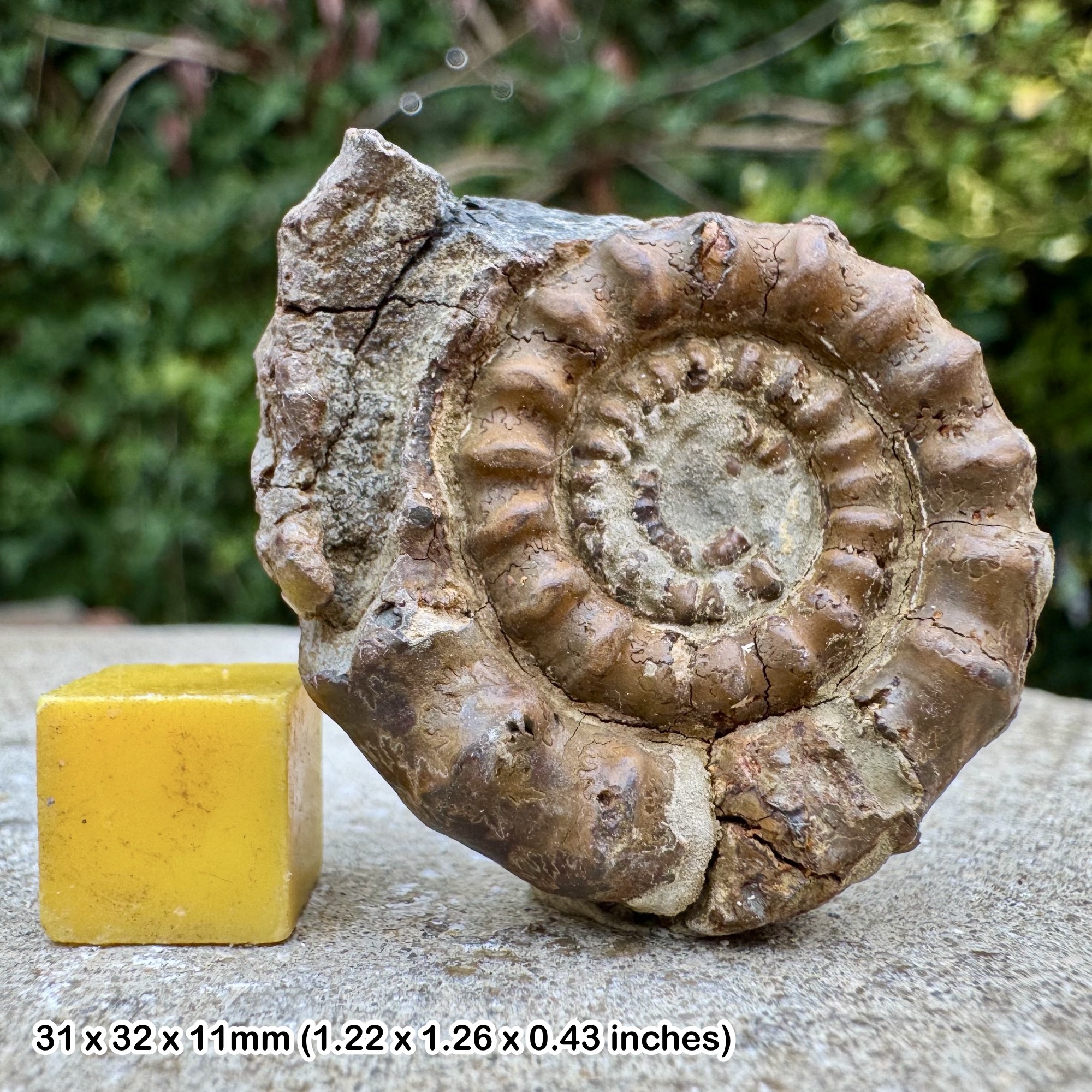
funiculatum, originating from the Upper Sinemurian stage of the Early Jurassic (approximately 195 million years ago). This fossil comes from the renowned Jurassic exposures of Robin Hood’s Bay, Yorkshire, United Kingdom. The photographs display the actual fossil you will receive, with a 1 cm scale cube included for accurate measurement. Every specimen is supplied with a Certificate of Authenticity, ensuring it is a genuine fossil chosen for both its scientific and aesthetic value. GEOLOGICAL CONTEXTThe Upper Sinemurian is a vital subdivision of the Early Jurassic and is well represented in the Yorkshire coast exposures. At Robin Hood’s Bay, the rocks belong to the Lower Lias Group, a sequence of marine shales and limestones deposited in shallow seas. These strata are famous for their rich ammonite faunas, used to define internationally recognised biozones. Fossils like Gagaticeras funiculatum not only capture the biological diversity of the period but also play a critical role in stratigraphy, helping geologists date and correlate rock formations across Europe. SCIENTIFIC CLASSIFICATION
• Kingdom: Animalia
• Phylum: Mollusca
• Class: Cephalopoda
• Order: Ammonitida
• Superfamily: Eoderoceratoidea
• Family: Eoderoceratidae
• Genus: Gagaticeras
• Species: Gagaticeras funiculatum MORPHOLOGICAL FEATURESThis ammonite is characterised by its evolute shell, where all whorls are visible, creating an open coiling style typical of the genus. Gagaticeras funiculatum is noted for its strong, radiating ribs that curve slightly forward as they cross the flanks before meeting at the rounded venter. These ribs give the ammonite a distinctive ornamentation, making it highly recognisable and appealing to collectors. The shell morphology suggests it was a fast-moving, nektonic predator, well-adapted to the marine ecosystems of the Sinemurian seas. PALEOENVIRONMENT AND ECOLOGYDuring the Early Jurassic, the Yorkshire region lay beneath a shallow, warm epicontinental sea. Fine-grained sediments of mudstone and shale steadily accumulated, forming an environment conducive to the preservation of marine organisms. Ammonites such as Gagaticeras were active swimmers, preying on small crustaceans, molluscs, and other marine invertebrates. Their ribbed shells provided reinforcement for deeper dives and may have aided hydrodynamics. The burial of their remains in low-oxygen seabed sediments enabled their preservation for nearly 200 million years. SCIENTIFIC AND COLLECTING IMPORTANCEGagaticeras funiculatum is of particular importance in defining parts of the Upper Sinemurian biozones, making it a key species for paleontological and geological studies. Ammonites of this type are highly valued by collectors due to their diagnostic features, rarity, and their origin from Robin Hood’s Bay, a site of great scientific and historic significance. Fossils from this locality have long attracted geologists, fossil enthusiasts, and naturalists from around the world. PROVENANCE AND AUTHENTICITYThis specimen was discovered in Robin Hood’s Bay, Yorkshire, a globally recognised site for Early Jurassic fossils. It has been carefully prepared to display its diagnostic features and is sold with a Certificate of Authenticity. The specimen has been photographed under natural lighting to ensure transparency, so the buyer receives exactly what is shown. A UNIQUE COLLECTOR’S SPECIMENThis ammonite represents a rare opportunity to own a well-preserved example of Gagaticeras funiculatum from the famous Yorkshire coast. Combining scientific significance with natural beauty, it is an excellent addition to any fossil collection, educational display, or natural history cabinet. Its provenance and preparation make it a particularly desirable specimen for both collectors and enthusiasts of Britain’s Jurassic heritage.
funiculatum, originating from the Upper Sinemurian stage of the Early Jurassic (approximately 195 million years ago). This fossil comes from the renowned Jurassic exposures of Robin Hood’s Bay, Yorkshire, United Kingdom. The photographs display the actual fossil you will receive, with a 1 cm scale cube included for accurate measurement. Every specimen is supplied with a Certificate of Authenticity, ensuring it is a genuine fossil chosen for both its scientific and aesthetic value. GEOLOGICAL CONTEXTThe Upper Sinemurian is a vital subdivision of the Early Jurassic and is well represented in the Yorkshire coast exposures. At Robin Hood’s Bay, the rocks belong to the Lower Lias Group, a sequence of marine shales and limestones deposited in shallow seas. These strata are famous for their rich ammonite faunas, used to define internationally recognised biozones. Fossils like Gagaticeras funiculatum not only capture the biological diversity of the period but also play a critical role in stratigraphy, helping geologists date and correlate rock formations across Europe. SCIENTIFIC CLASSIFICATION
• Kingdom: Animalia
• Phylum: Mollusca
• Class: Cephalopoda
• Order: Ammonitida
• Superfamily: Eoderoceratoidea
• Family: Eoderoceratidae
• Genus: Gagaticeras
• Species: Gagaticeras funiculatum MORPHOLOGICAL FEATURESThis ammonite is characterised by its evolute shell, where all whorls are visible, creating an open coiling style typical of the genus. Gagaticeras funiculatum is noted for its strong, radiating ribs that curve slightly forward as they cross the flanks before meeting at the rounded venter. These ribs give the ammonite a distinctive ornamentation, making it highly recognisable and appealing to collectors. The shell morphology suggests it was a fast-moving, nektonic predator, well-adapted to the marine ecosystems of the Sinemurian seas. PALEOENVIRONMENT AND ECOLOGYDuring the Early Jurassic, the Yorkshire region lay beneath a shallow, warm epicontinental sea. Fine-grained sediments of mudstone and shale steadily accumulated, forming an environment conducive to the preservation of marine organisms. Ammonites such as Gagaticeras were active swimmers, preying on small crustaceans, molluscs, and other marine invertebrates. Their ribbed shells provided reinforcement for deeper dives and may have aided hydrodynamics. The burial of their remains in low-oxygen seabed sediments enabled their preservation for nearly 200 million years. SCIENTIFIC AND COLLECTING IMPORTANCEGagaticeras funiculatum is of particular importance in defining parts of the Upper Sinemurian biozones, making it a key species for paleontological and geological studies. Ammonites of this type are highly valued by collectors due to their diagnostic features, rarity, and their origin from Robin Hood’s Bay, a site of great scientific and historic significance. Fossils from this locality have long attracted geologists, fossil enthusiasts, and naturalists from around the world. PROVENANCE AND AUTHENTICITYThis specimen was discovered in Robin Hood’s Bay, Yorkshire, a globally recognised site for Early Jurassic fossils. It has been carefully prepared to display its diagnostic features and is sold with a Certificate of Authenticity. The specimen has been photographed under natural lighting to ensure transparency, so the buyer receives exactly what is shown. A UNIQUE COLLECTOR’S SPECIMENThis ammonite represents a rare opportunity to own a well-preserved example of Gagaticeras funiculatum from the famous Yorkshire coast. Combining scientific significance with natural beauty, it is an excellent addition to any fossil collection, educational display, or natural history cabinet. Its provenance and preparation make it a particularly desirable specimen for both collectors and enthusiasts of Britain’s Jurassic heritage.