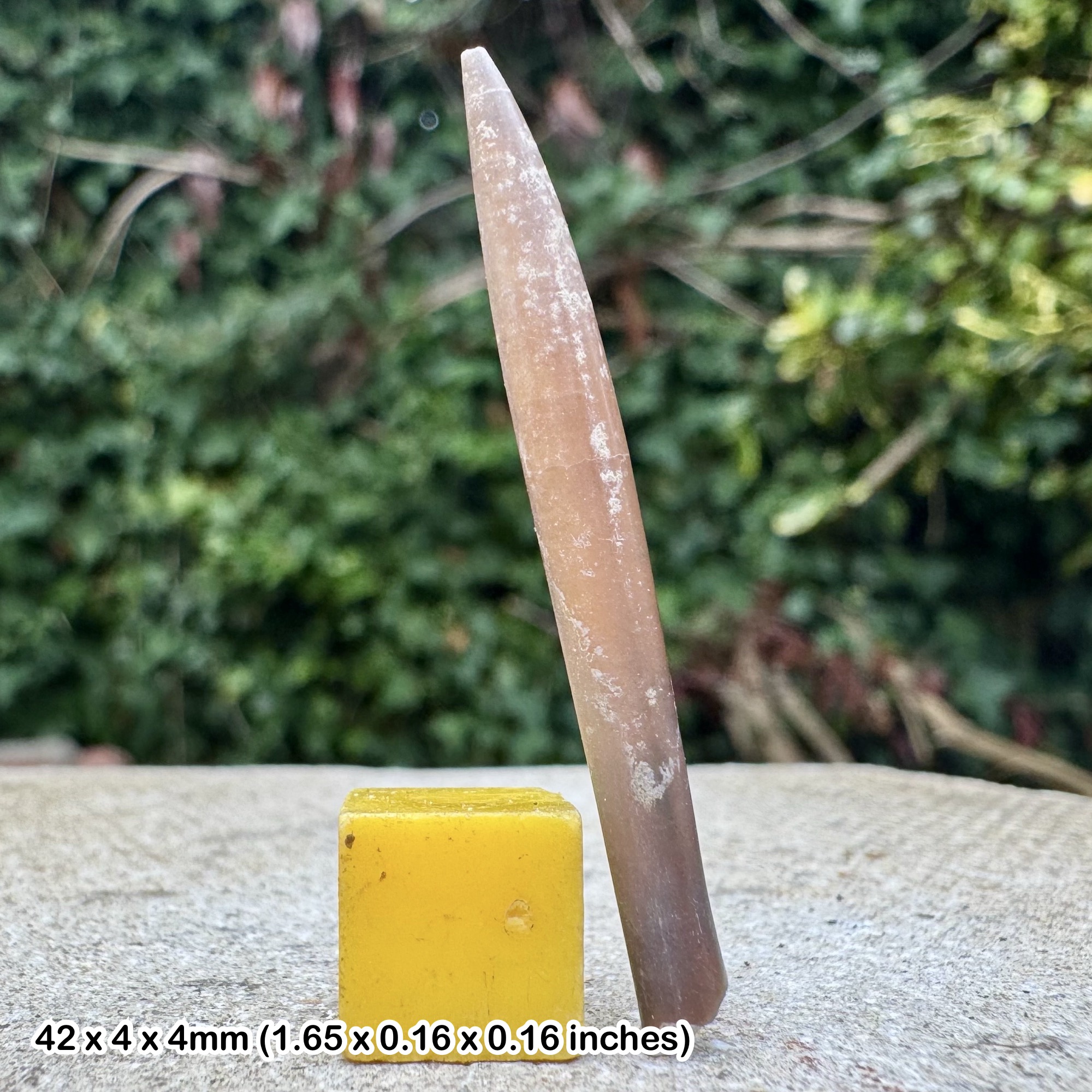
Hibolites hastatus Fossil Belemnite Callovian Jurassic Bradley Fen Whittlesea Peterborough UK with COA
£ 12.60
HIBOLITES HASTATUS BELEMNITE FROM BRADLEY FEN, WHITTLESEAThis listing features a genuine Hibolites hastatus fossil belemnite, collected
from the Callovian Stage of the Middle Jurassic, at Bradley Fen, Whittlesea, Peterborough, United Kingdom. Dating back approximately 166–163 million years, this specimen represents the calcified guard (rostrum) of an extinct squid-like cephalopod. Its streamlined form and distinctive features make it both scientifically valuable and visually striking as a collector’s piece.All of our fossils are 100% genuine specimens and are supplied with a Certificate of Authenticity. The photographs show the exact specimen you will receive, with a 1cm scale cube and rule squares included for precise sizing. GEOLOGICAL AGE AND PROVENANCEThis specimen originates from the Callovian Stage of the Middle Jurassic, a time when much of southern England was submerged under warm, shallow seas. These environments supported thriving populations of ammonites, belemnites, marine reptiles, and bivalves.The Bradley Fen site in Whittlesea, Peterborough, is particularly famous for its Oxford Clay deposits, which preserve an exceptional range of marine fossils. Specimens from this locality are renowned for their preservation quality and their importance to Jurassic palaeontology in the United Kingdom. FOSSIL TYPE AND SCIENTIFIC CLASSIFICATION
• Genus: Hibolites
• Species: Hibolites hastatus
• Order: Belemnitida
• Superfamily: Belemnitoidea
• Family: HibolitidaeBelemnites were marine predators, closely related to modern squid and cuttlefish. The fossilised part most often preserved is the rostrum, a bullet-shaped guard that acted as an internal skeleton and stabiliser. Hibolites hastatus is a well-documented Callovian species, important in Jurassic marine stratigraphy. MORPHOLOGICAL FEATURESThe diagnostic characteristics of Hibolites hastatus include:
• Slender Guard: More elongate and cylindrical than many other belemnite species.
• Tapered Apex: A sharply pointed posterior end designed for streamlining in open water.
• Distinct Alveolus: A hollow cavity at the anterior end where the chambered phragmocone attached.
• Surface Texture: Often smooth, with subtle growth lines visible on well-preserved specimens.These adaptations enabled H. hastatus to be an active predator, swimming efficiently while pursuing small fish and invertebrates. SCIENTIFIC AND COLLECTOR IMPORTANCEHibolites hastatus is of special significance in biostratigraphy, as its presence helps to identify and date Callovian-aged marine deposits across Europe. Its distinct morphology makes it an excellent reference fossil for stratigraphic studies.Collectors appreciate this species for its slender form, historical importance, and provenance from the Oxford Clay of Peterborough, one of the most famous fossil-bearing formations in Britain. Specimens from Bradley Fen are especially desirable due to their quality preservation and locality prestige. DISPLAY AND EDUCATIONAL VALUEThis specimen has been carefully selected for its completeness and clarity of detail. Its elegant, tapering rostrum makes it a beautiful display fossil, while its geological context adds educational depth.Ideal for private fossil collections, museum exhibits, or teaching displays, this Hibolites hastatus belemnite from Bradley Fen, Whittlesea, Peterborough is a superb example of Middle Jurassic marine life. It connects us directly to the thriving ecosystems of Britain’s Jurassic seas and provides both scientific insight and aesthetic appeal.
from the Callovian Stage of the Middle Jurassic, at Bradley Fen, Whittlesea, Peterborough, United Kingdom. Dating back approximately 166–163 million years, this specimen represents the calcified guard (rostrum) of an extinct squid-like cephalopod. Its streamlined form and distinctive features make it both scientifically valuable and visually striking as a collector’s piece.All of our fossils are 100% genuine specimens and are supplied with a Certificate of Authenticity. The photographs show the exact specimen you will receive, with a 1cm scale cube and rule squares included for precise sizing. GEOLOGICAL AGE AND PROVENANCEThis specimen originates from the Callovian Stage of the Middle Jurassic, a time when much of southern England was submerged under warm, shallow seas. These environments supported thriving populations of ammonites, belemnites, marine reptiles, and bivalves.The Bradley Fen site in Whittlesea, Peterborough, is particularly famous for its Oxford Clay deposits, which preserve an exceptional range of marine fossils. Specimens from this locality are renowned for their preservation quality and their importance to Jurassic palaeontology in the United Kingdom. FOSSIL TYPE AND SCIENTIFIC CLASSIFICATION
• Genus: Hibolites
• Species: Hibolites hastatus
• Order: Belemnitida
• Superfamily: Belemnitoidea
• Family: HibolitidaeBelemnites were marine predators, closely related to modern squid and cuttlefish. The fossilised part most often preserved is the rostrum, a bullet-shaped guard that acted as an internal skeleton and stabiliser. Hibolites hastatus is a well-documented Callovian species, important in Jurassic marine stratigraphy. MORPHOLOGICAL FEATURESThe diagnostic characteristics of Hibolites hastatus include:
• Slender Guard: More elongate and cylindrical than many other belemnite species.
• Tapered Apex: A sharply pointed posterior end designed for streamlining in open water.
• Distinct Alveolus: A hollow cavity at the anterior end where the chambered phragmocone attached.
• Surface Texture: Often smooth, with subtle growth lines visible on well-preserved specimens.These adaptations enabled H. hastatus to be an active predator, swimming efficiently while pursuing small fish and invertebrates. SCIENTIFIC AND COLLECTOR IMPORTANCEHibolites hastatus is of special significance in biostratigraphy, as its presence helps to identify and date Callovian-aged marine deposits across Europe. Its distinct morphology makes it an excellent reference fossil for stratigraphic studies.Collectors appreciate this species for its slender form, historical importance, and provenance from the Oxford Clay of Peterborough, one of the most famous fossil-bearing formations in Britain. Specimens from Bradley Fen are especially desirable due to their quality preservation and locality prestige. DISPLAY AND EDUCATIONAL VALUEThis specimen has been carefully selected for its completeness and clarity of detail. Its elegant, tapering rostrum makes it a beautiful display fossil, while its geological context adds educational depth.Ideal for private fossil collections, museum exhibits, or teaching displays, this Hibolites hastatus belemnite from Bradley Fen, Whittlesea, Peterborough is a superb example of Middle Jurassic marine life. It connects us directly to the thriving ecosystems of Britain’s Jurassic seas and provides both scientific insight and aesthetic appeal.