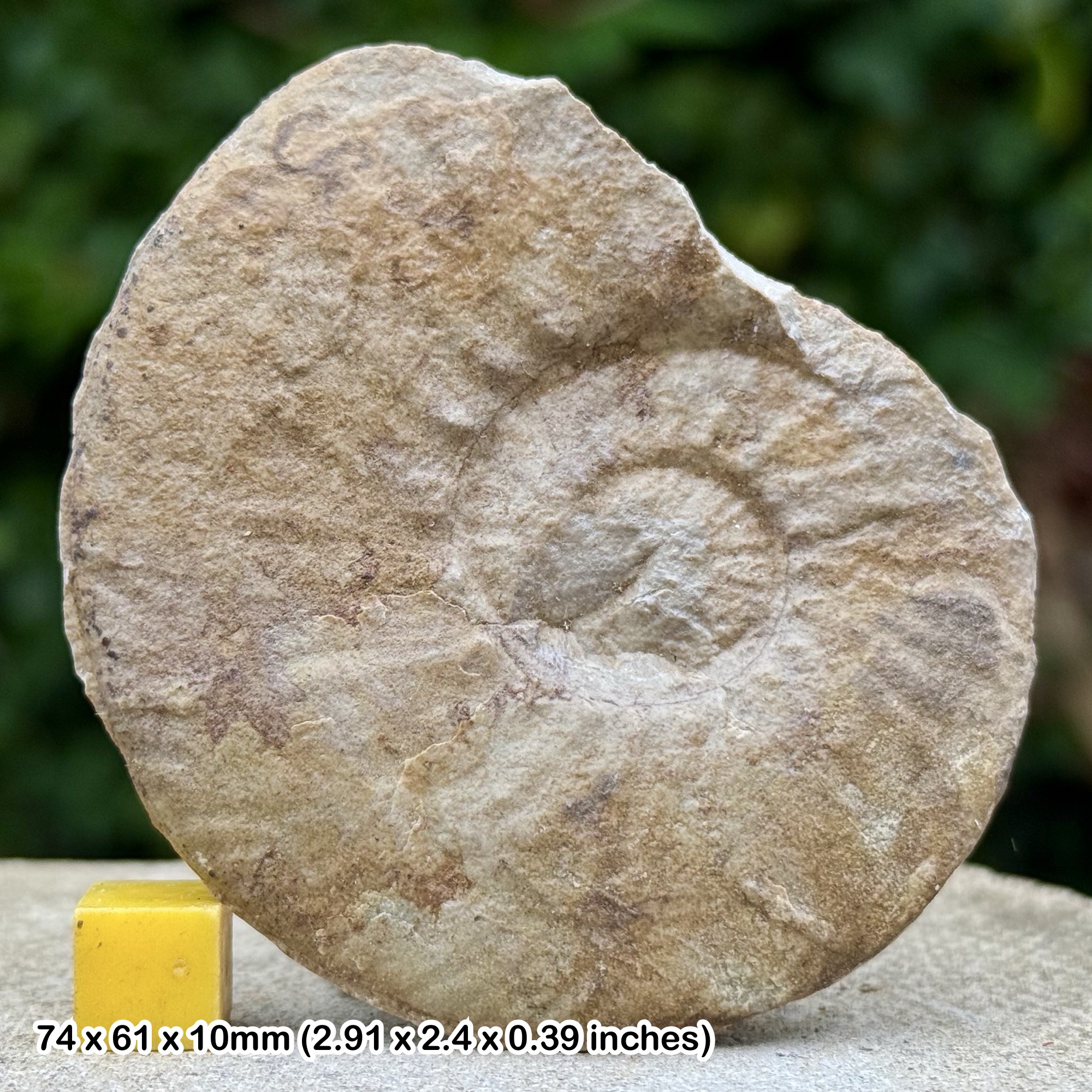
Subalpinites Ammonite Fossil from Berriasian Cretaceous Lacisterne Boisset Gard France Authentic Specimen
£ 14.40
GEOLOGICAL CONTEXT AND PROVENANCEThis rare specimen is a genuine Subalpinites ammonite fossil from the Berriasian
Stage of the Early Cretaceous Period, dating to approximately 145 – 139 million years ago. It was discovered at Lacisterne, Boisset, Gard, France, a region internationally recognised for its Lower Cretaceous fossil deposits. These deposits formed in shallow marine environments along the margins of the Tethys Ocean, where ammonites thrived and became some of the most significant index fossils for defining the start of the Cretaceous.The Berriasian is the earliest stage of the Cretaceous Period, making fossils from this interval especially valuable for both collectors and researchers. Ammonites such as Subalpinites play an important role in refining the geological timescale, as their distinctive features allow geologists to correlate rock layers across Europe and beyond. FOSSIL TYPE AND SPECIES INFORMATIONSubalpinites belongs to the Order Ammonitida, Superfamily Perisphinctoidea, and Family Neocomitidae. Members of this genus are widely used as index fossils, helping to identify and subdivide the Berriasian Stage. Their distribution across Europe makes them particularly significant in biostratigraphy.The genus is characterised by its strongly ribbed shell morphology and tightly coiled whorls, making specimens easily recognisable to palaeontologists. Their role as biostratigraphic markers has ensured their prominence in the study of Early Cretaceous ammonite faunas. MORPHOLOGICAL FEATURES AND IDENTIFICATIONThis specimen of Subalpinites shows the classic features of the genus, including prominent ribs that extend across the flanks and over the venter. The shell is moderately involute, with tightly coiled whorls forming a compact and elegant structure. The ribs may branch or bifurcate, giving the fossil an ornate and detailed appearance.These morphological traits were evolutionary adaptations that provided both strength and hydrodynamic benefits. The ribbing reinforced the shell against water pressure and predators, while the overall coiling and structure enhanced the ammonite’s ability to manoeuvre through the marine environment. Like other ammonites, Subalpinites possessed a chambered shell for buoyancy control, allowing it to occupy different depths of the ancient Tethys seas. DEPOSITIONAL ENVIRONMENTDuring the Berriasian, the Lacisterne–Boisset region of Gard was submerged beneath shallow, warm seas. Sedimentation in this environment was dominated by limestones and marls, which provided ideal conditions for the preservation of ammonites. The fossil record from these deposits is rich and diverse, including ammonites, belemnites, bivalves, gastropods, echinoids, and marine reptiles.Subalpinites ammonites were active nektonic predators, feeding on smaller invertebrates such as crustaceans and planktonic molluscs. At the same time, they were an important food source for larger marine reptiles and fish, forming a vital link in the Early Cretaceous food web. COLLECTOR APPEAL AND AUTHENTICITYThis Subalpinites ammonite fossil is both a scientifically significant and visually striking specimen. Its strong ribbing, excellent preservation, and provenance from the classic Berriasian beds of Gard, France, make it an outstanding choice for collectors and educators alike.
• 100% Genuine Specimen – Every fossil we supply is authentic and accompanied by a Certificate of Authenticity.
• Exact Fossil Shown – The photographs depict the actual ammonite you will receive.
• Scale Reference – Scale rule squares / cube = 1 cm. Please check the photos for accurate sizing.This carefully chosen Subalpinites ammonite fossil connects you directly to the dawn of the Cretaceous Period. With its rarity, striking ribbed morphology, and scientific importance, it is a superb addition to any fossil collection or natural history display.
Stage of the Early Cretaceous Period, dating to approximately 145 – 139 million years ago. It was discovered at Lacisterne, Boisset, Gard, France, a region internationally recognised for its Lower Cretaceous fossil deposits. These deposits formed in shallow marine environments along the margins of the Tethys Ocean, where ammonites thrived and became some of the most significant index fossils for defining the start of the Cretaceous.The Berriasian is the earliest stage of the Cretaceous Period, making fossils from this interval especially valuable for both collectors and researchers. Ammonites such as Subalpinites play an important role in refining the geological timescale, as their distinctive features allow geologists to correlate rock layers across Europe and beyond. FOSSIL TYPE AND SPECIES INFORMATIONSubalpinites belongs to the Order Ammonitida, Superfamily Perisphinctoidea, and Family Neocomitidae. Members of this genus are widely used as index fossils, helping to identify and subdivide the Berriasian Stage. Their distribution across Europe makes them particularly significant in biostratigraphy.The genus is characterised by its strongly ribbed shell morphology and tightly coiled whorls, making specimens easily recognisable to palaeontologists. Their role as biostratigraphic markers has ensured their prominence in the study of Early Cretaceous ammonite faunas. MORPHOLOGICAL FEATURES AND IDENTIFICATIONThis specimen of Subalpinites shows the classic features of the genus, including prominent ribs that extend across the flanks and over the venter. The shell is moderately involute, with tightly coiled whorls forming a compact and elegant structure. The ribs may branch or bifurcate, giving the fossil an ornate and detailed appearance.These morphological traits were evolutionary adaptations that provided both strength and hydrodynamic benefits. The ribbing reinforced the shell against water pressure and predators, while the overall coiling and structure enhanced the ammonite’s ability to manoeuvre through the marine environment. Like other ammonites, Subalpinites possessed a chambered shell for buoyancy control, allowing it to occupy different depths of the ancient Tethys seas. DEPOSITIONAL ENVIRONMENTDuring the Berriasian, the Lacisterne–Boisset region of Gard was submerged beneath shallow, warm seas. Sedimentation in this environment was dominated by limestones and marls, which provided ideal conditions for the preservation of ammonites. The fossil record from these deposits is rich and diverse, including ammonites, belemnites, bivalves, gastropods, echinoids, and marine reptiles.Subalpinites ammonites were active nektonic predators, feeding on smaller invertebrates such as crustaceans and planktonic molluscs. At the same time, they were an important food source for larger marine reptiles and fish, forming a vital link in the Early Cretaceous food web. COLLECTOR APPEAL AND AUTHENTICITYThis Subalpinites ammonite fossil is both a scientifically significant and visually striking specimen. Its strong ribbing, excellent preservation, and provenance from the classic Berriasian beds of Gard, France, make it an outstanding choice for collectors and educators alike.
• 100% Genuine Specimen – Every fossil we supply is authentic and accompanied by a Certificate of Authenticity.
• Exact Fossil Shown – The photographs depict the actual ammonite you will receive.
• Scale Reference – Scale rule squares / cube = 1 cm. Please check the photos for accurate sizing.This carefully chosen Subalpinites ammonite fossil connects you directly to the dawn of the Cretaceous Period. With its rarity, striking ribbed morphology, and scientific importance, it is a superb addition to any fossil collection or natural history display.
Other Products