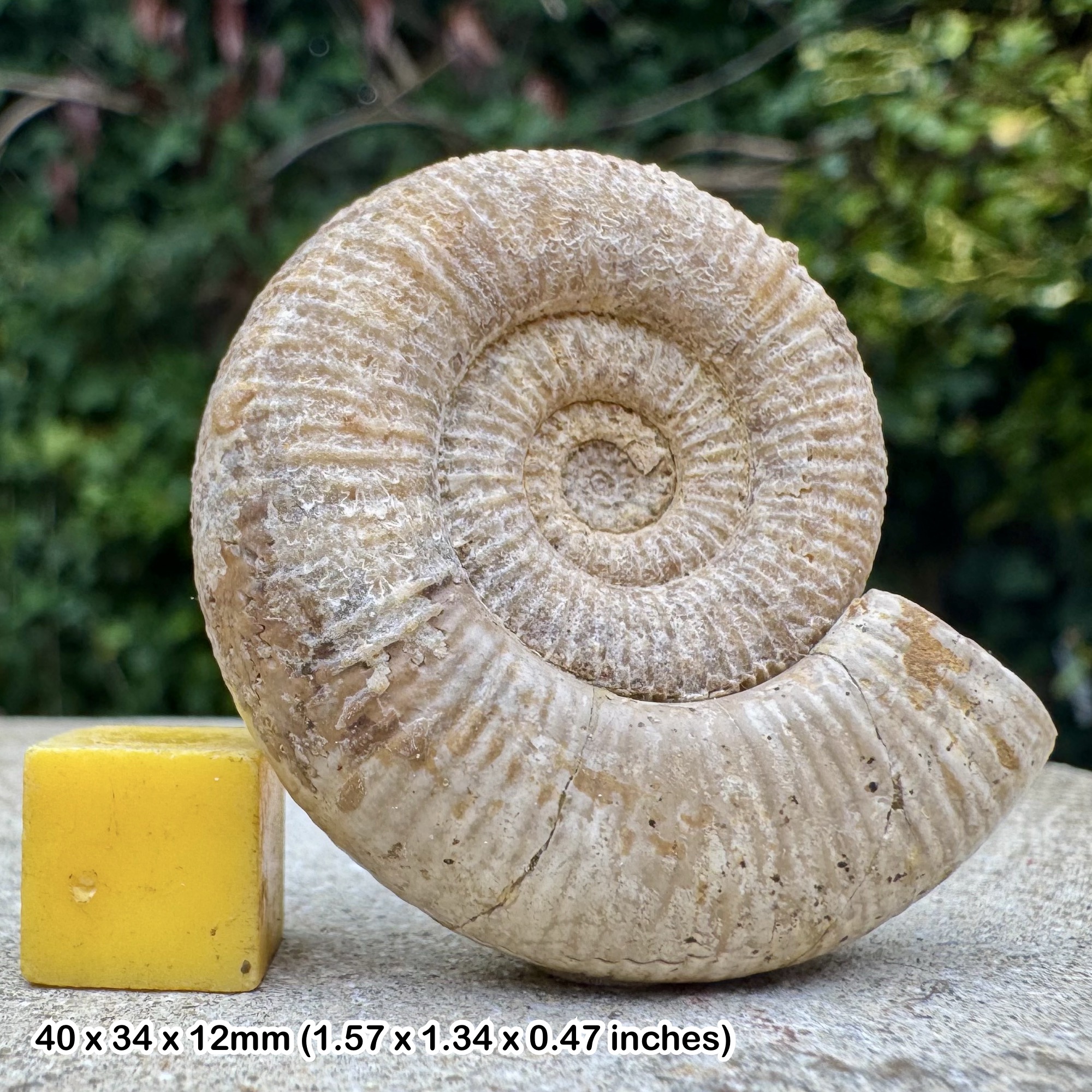
Dactylioceras clevelandicum Fossil Ammonite Lower Toarcian Jurassic Nurnberg Bavaria Germany with COA
£ 14.40
DACTYLIOCERAS CLEVELANDICUM AMMONITE FROM NURNBERG, BAVARIAThis specimen is a striking example of Dactylioceras clevelandicum, a classic
ammonite species from the Lower Toarcian Stage of the Early Jurassic, collected in the region of Nurnberg, Bavaria, Germany. Dating back approximately 182–174 million years, this ammonite is part of the famous Dactylioceratidae family, well known for their ornate ribbing and important role in Jurassic stratigraphy.Every specimen is a 100% genuine fossil and comes with a Certificate of Authenticity. The exact ammonite shown in the photographs is the one you will receive, with a 1cm scale cube and rule squares included for accurate sizing. GEOLOGICAL AGE AND LOCALITYThe Lower Toarcian Stage marks an interval in the Early Jurassic characterised by significant marine faunal diversification. During this time, ammonites thrived in abundance across Europe’s shallow seas, evolving into diverse forms.The Nurnberg area in Bavaria, Germany, is a historically important locality for Jurassic fossils. Its finely layered marine sediments have preserved ammonites of exceptional detail, with Dactylioceras clevelandicum among the most recognisable and stratigraphically important species. Fossils from this region are highly sought after by collectors due to their quality preservation and geological importance. FOSSIL TYPE AND SCIENTIFIC CLASSIFICATION
• Genus: Dactylioceras
• Species: Dactylioceras clevelandicum
• Order: Ammonitida
• Superfamily: Eoderoceratoidea
• Family: DactylioceratidaeThis species is closely associated with the Clevelandicum Subzone, a biostratigraphic division within the Toarcian. Its presence in deposits provides a precise marker for correlating Jurassic strata across Europe. MORPHOLOGICAL FEATURESThe diagnostic features of Dactylioceras clevelandicum include:
• Planispiral Shell: A flat-coiled form with overlapping whorls.
• Strong Ribbing: Prominent ribs radiating across the whorls, bifurcating towards the venter.
• Umbilicus: Wide and open, with inner whorls clearly visible.
• Continuous Ornamentation: Ribs extend uninterrupted across the venter, giving the fossil a striking appearance.These features make Dactylioceras clevelandicum both easily identifiable and highly decorative as a display fossil. SCIENTIFIC AND COLLECTOR IMPORTANCEDactylioceras clevelandicum is one of the most important ammonites for Toarcian biostratigraphy, serving as a key index fossil for the Lower Toarcian. Its well-defined stratigraphic range allows geologists to date and correlate marine deposits with high accuracy.For collectors, this ammonite is particularly desirable due to its robust ribbing and open umbilicus, which together produce a visually appealing specimen. Fossils from Bavaria carry additional prestige, as the region is known for producing scientifically important material since the early days of palaeontology. DISPLAY AND EDUCATIONAL VALUEThis fossil has been carefully selected for its quality and strong morphological detail, making it an ideal specimen for both study and display. Its characteristic ribbing and coiling showcase the evolutionary success of the Dactylioceratidae family and highlight the beauty of Jurassic marine life.Perfect for museum exhibits, teaching collections, or private fossil displays, this Dactylioceras clevelandicum ammonite from Nurnberg, Bavaria combines scientific significance with aesthetic appeal. It provides an exceptional glimpse into the rich biodiversity of the Early Jurassic seas and is an outstanding addition to any fossil collection.
ammonite species from the Lower Toarcian Stage of the Early Jurassic, collected in the region of Nurnberg, Bavaria, Germany. Dating back approximately 182–174 million years, this ammonite is part of the famous Dactylioceratidae family, well known for their ornate ribbing and important role in Jurassic stratigraphy.Every specimen is a 100% genuine fossil and comes with a Certificate of Authenticity. The exact ammonite shown in the photographs is the one you will receive, with a 1cm scale cube and rule squares included for accurate sizing. GEOLOGICAL AGE AND LOCALITYThe Lower Toarcian Stage marks an interval in the Early Jurassic characterised by significant marine faunal diversification. During this time, ammonites thrived in abundance across Europe’s shallow seas, evolving into diverse forms.The Nurnberg area in Bavaria, Germany, is a historically important locality for Jurassic fossils. Its finely layered marine sediments have preserved ammonites of exceptional detail, with Dactylioceras clevelandicum among the most recognisable and stratigraphically important species. Fossils from this region are highly sought after by collectors due to their quality preservation and geological importance. FOSSIL TYPE AND SCIENTIFIC CLASSIFICATION
• Genus: Dactylioceras
• Species: Dactylioceras clevelandicum
• Order: Ammonitida
• Superfamily: Eoderoceratoidea
• Family: DactylioceratidaeThis species is closely associated with the Clevelandicum Subzone, a biostratigraphic division within the Toarcian. Its presence in deposits provides a precise marker for correlating Jurassic strata across Europe. MORPHOLOGICAL FEATURESThe diagnostic features of Dactylioceras clevelandicum include:
• Planispiral Shell: A flat-coiled form with overlapping whorls.
• Strong Ribbing: Prominent ribs radiating across the whorls, bifurcating towards the venter.
• Umbilicus: Wide and open, with inner whorls clearly visible.
• Continuous Ornamentation: Ribs extend uninterrupted across the venter, giving the fossil a striking appearance.These features make Dactylioceras clevelandicum both easily identifiable and highly decorative as a display fossil. SCIENTIFIC AND COLLECTOR IMPORTANCEDactylioceras clevelandicum is one of the most important ammonites for Toarcian biostratigraphy, serving as a key index fossil for the Lower Toarcian. Its well-defined stratigraphic range allows geologists to date and correlate marine deposits with high accuracy.For collectors, this ammonite is particularly desirable due to its robust ribbing and open umbilicus, which together produce a visually appealing specimen. Fossils from Bavaria carry additional prestige, as the region is known for producing scientifically important material since the early days of palaeontology. DISPLAY AND EDUCATIONAL VALUEThis fossil has been carefully selected for its quality and strong morphological detail, making it an ideal specimen for both study and display. Its characteristic ribbing and coiling showcase the evolutionary success of the Dactylioceratidae family and highlight the beauty of Jurassic marine life.Perfect for museum exhibits, teaching collections, or private fossil displays, this Dactylioceras clevelandicum ammonite from Nurnberg, Bavaria combines scientific significance with aesthetic appeal. It provides an exceptional glimpse into the rich biodiversity of the Early Jurassic seas and is an outstanding addition to any fossil collection.