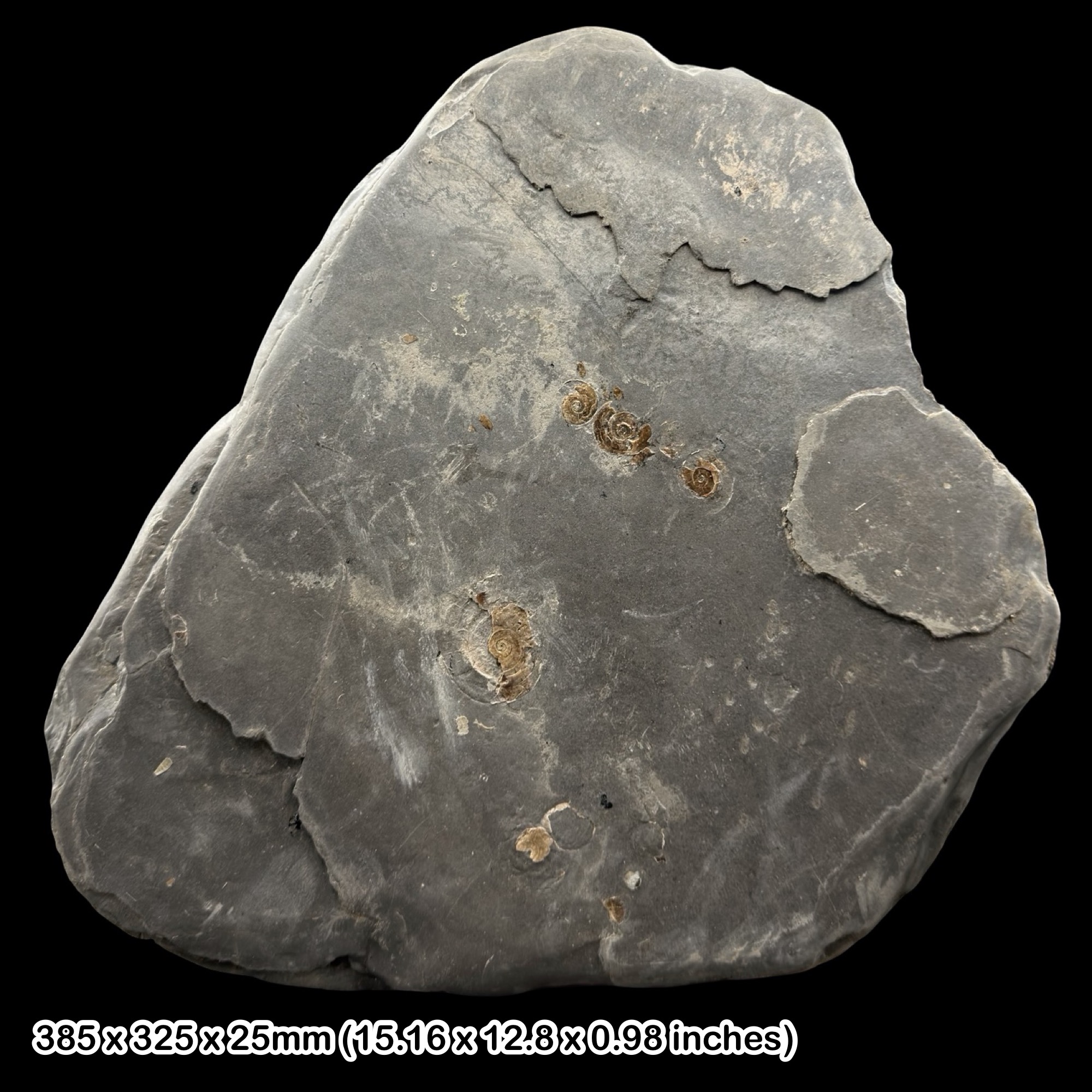
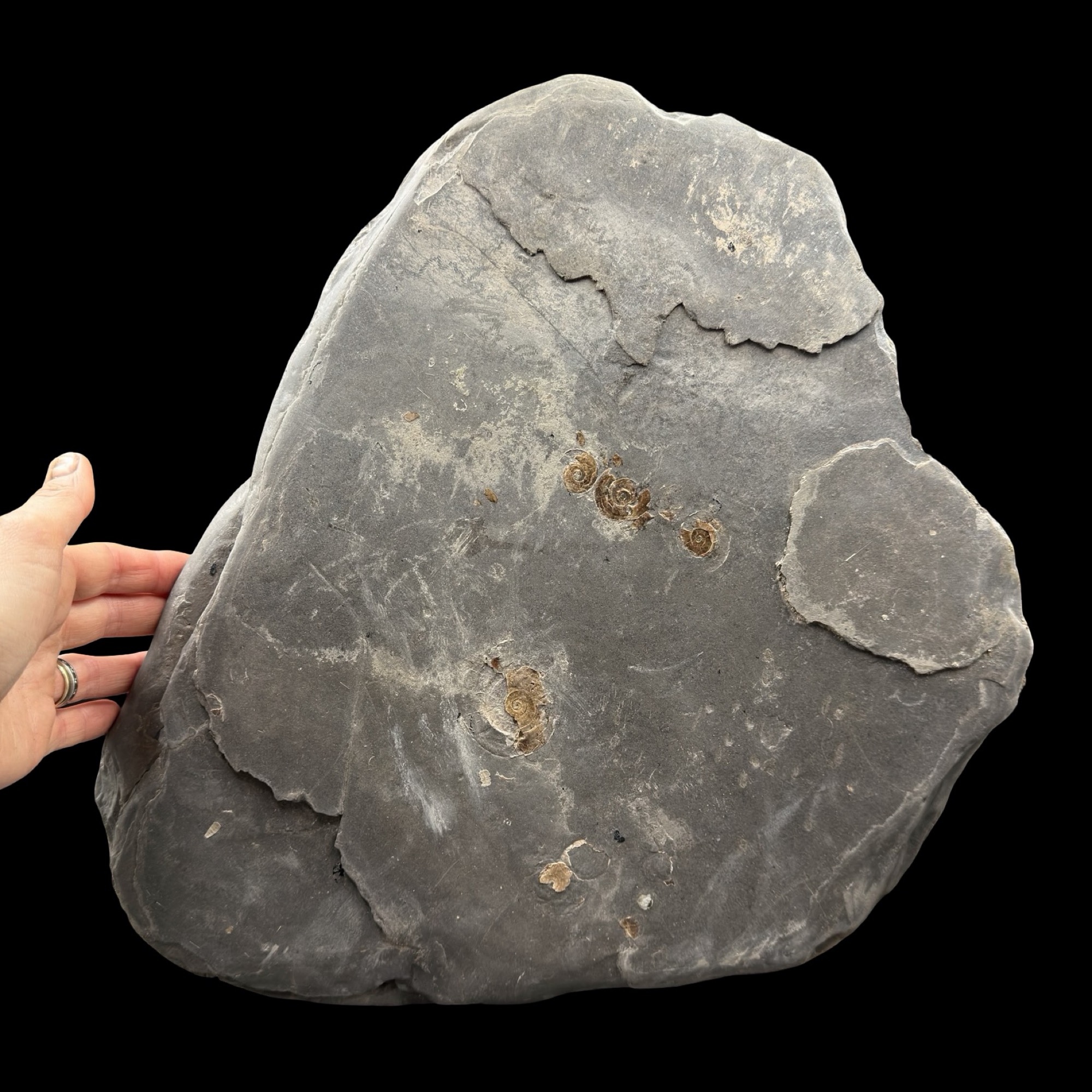
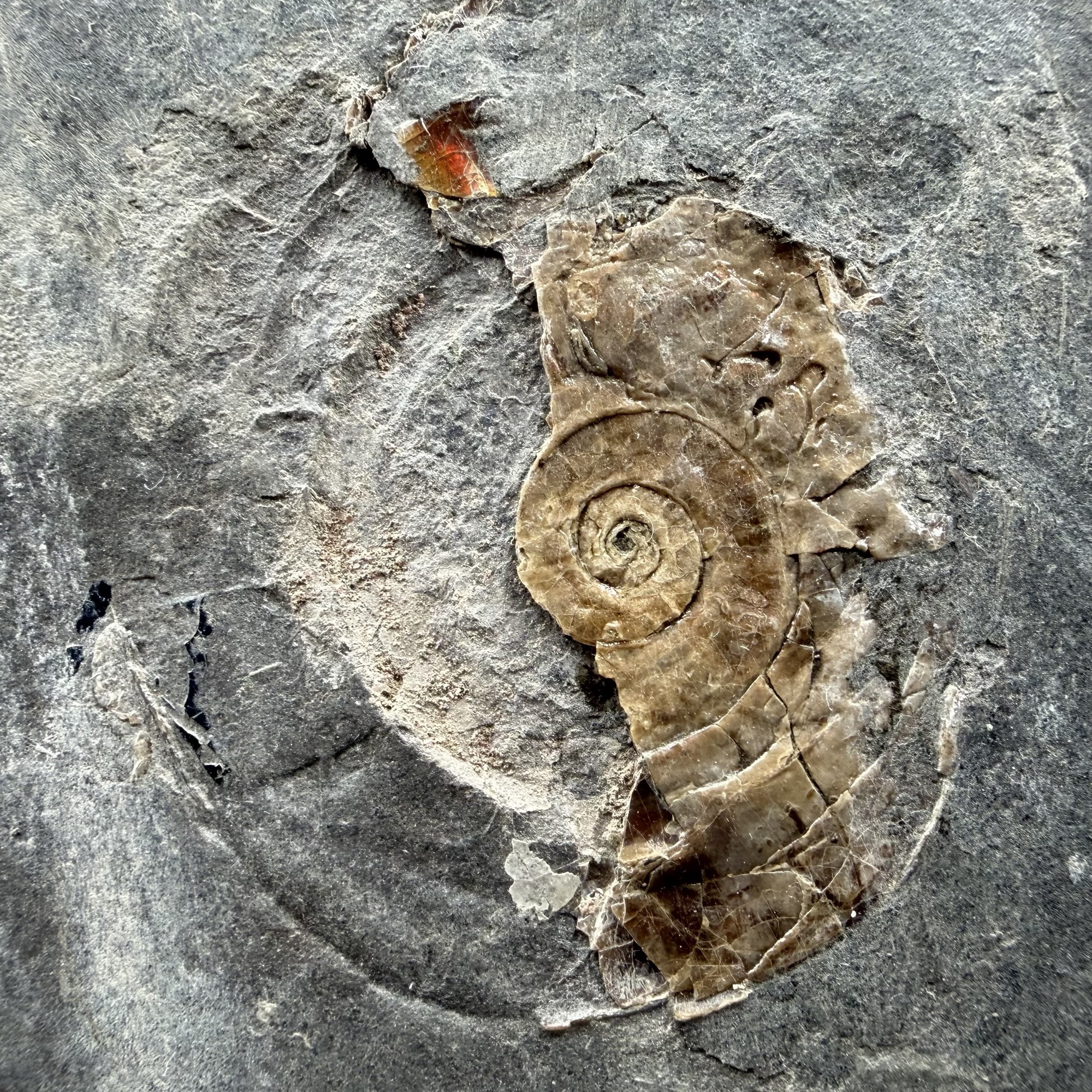
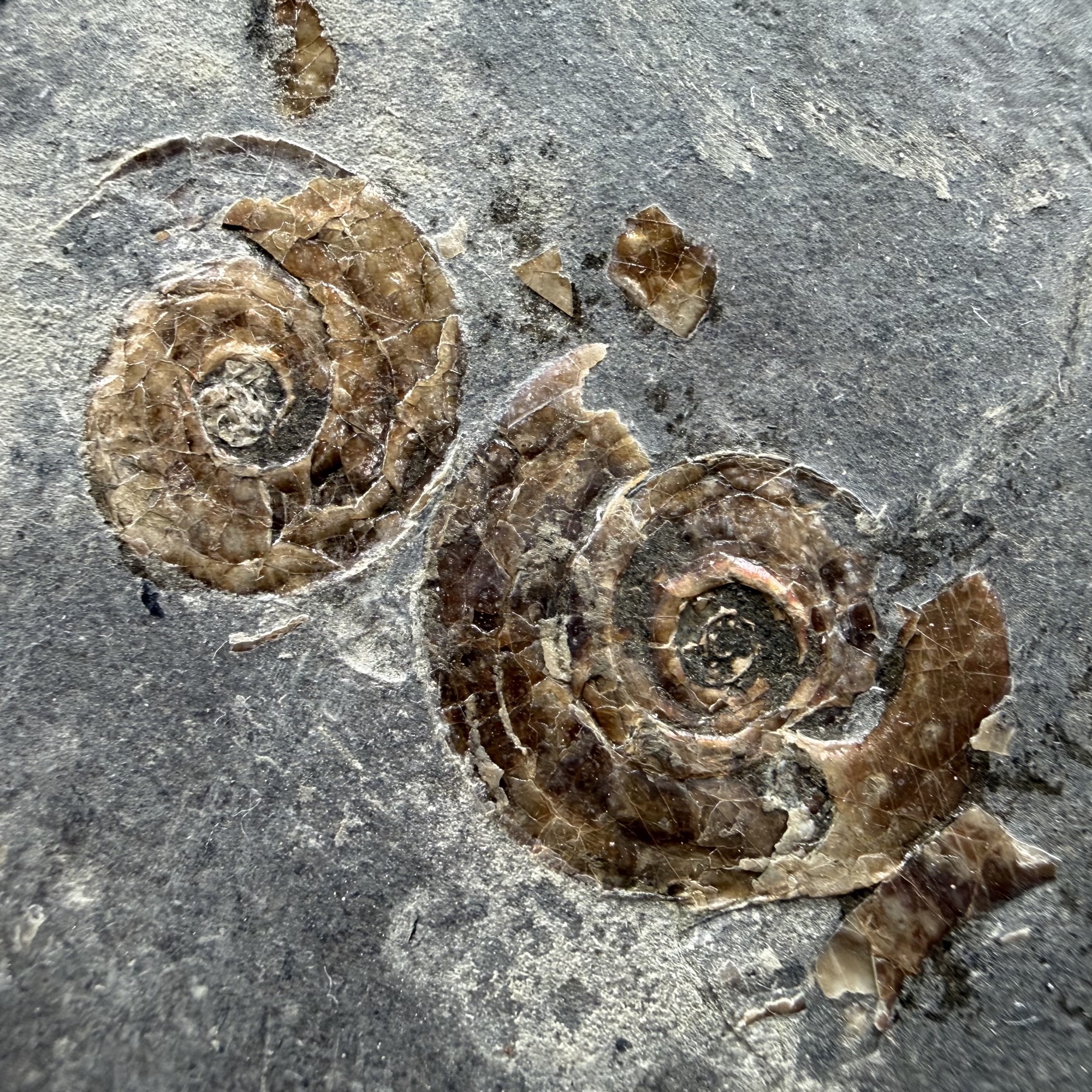
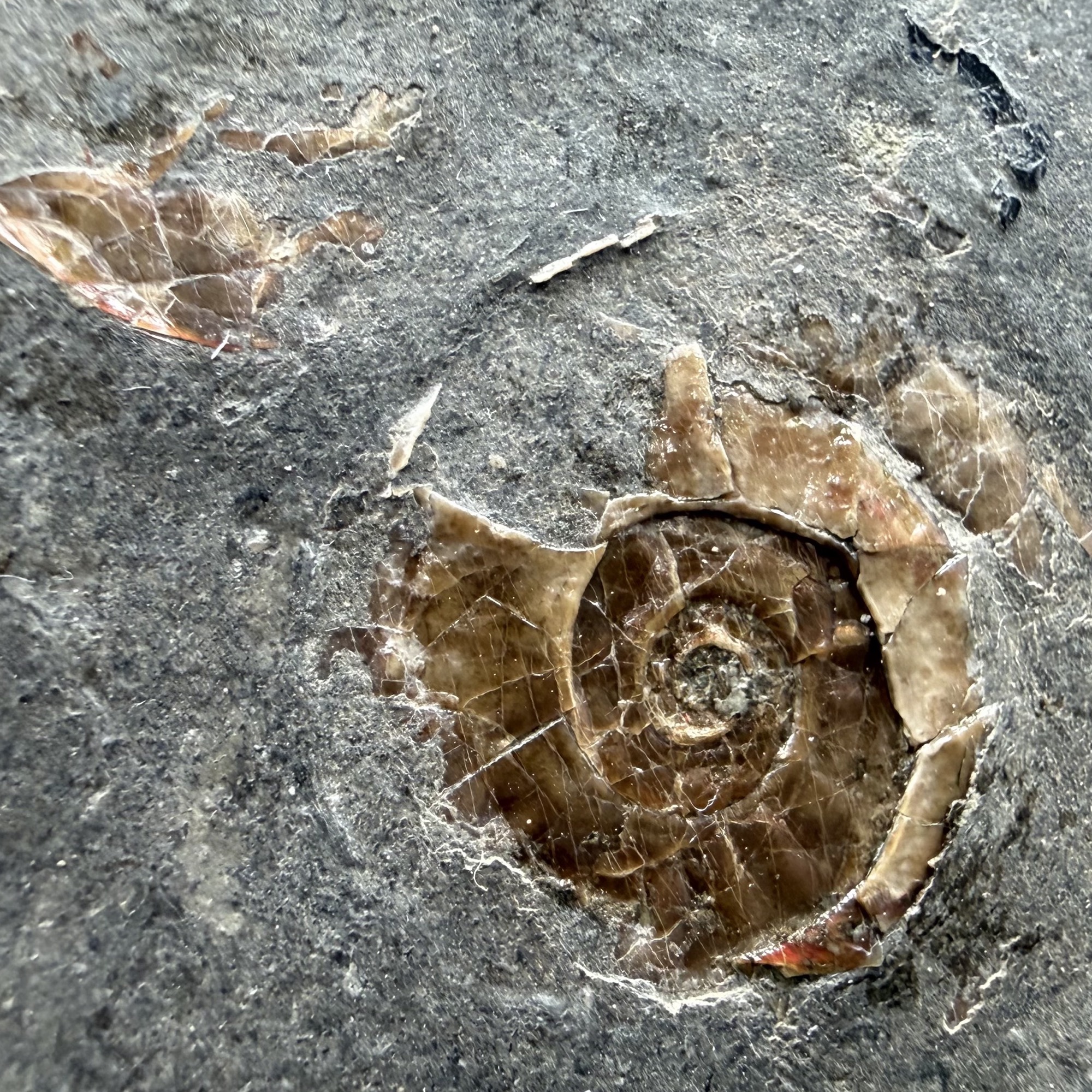
Iridescent Psiloceras Ammonite Fossil Multi Slab Blue Lias Jurassic Doniford Bay UK
£ 120.00
Iridescent Psiloceras Ammonite Fossil Multi Slab from the Blue Lias of SomersetThis beautiful iridescent Psiloceras ammonite fossil multi slab originates from
the famous Blue Lias Formation at Doniford Bay near Watchet, Somerset, on the Jurassic Coast of the United Kingdom. The slab contains multiple well-preserved ammonite fossils displaying striking natural iridescence, a rare optical effect created during the fossilisation process that enhances the visual appeal of the specimen.The fossil shown in the photographs is the exact specimen you will receive. This fossil is a genuine specimen and includes a Certificate of Authenticity lifetime guarantee generic card. For full sizing please see photo.This specimen was discovered by our own team members, Alister and Alison, on the 28 February 2026 along the Somerset coast. After recovery, the fossil has been carefully cleaned, prepared, and treated by Alison to reveal the fine details of the ammonite shells and preserve their natural iridescent surface.Species Identification and Scientific ClassificationThe ammonites preserved within this slab belong to the genus Psiloceras, one of the earliest ammonites to appear after the end-Triassic mass extinction. These ammonites are among the most important index fossils for identifying the earliest Jurassic strata.Scientific classification:Order: AmmonitidaFamily: PsiloceratidaeGenus: PsilocerasThe genus Psiloceras was formally established by paleontologist John Phillips in 1845. Species within this genus are widely used in stratigraphy because their appearance marks the base of the Jurassic Period. Their presence is so important that the earliest Jurassic ammonite biozone is known as the Psiloceras planorbis Zone.These ammonites thrived during the Hettangian Stage of the Early Jurassic, approximately 201 million years ago.Geological Age and the Blue Lias FormationThis fossil slab originates from the Blue Lias Formation, a sequence of alternating limestone and shale layers deposited during the earliest Jurassic period. The Blue Lias is famous across southern England for producing exceptional marine fossils including ammonites, marine reptiles, fish, crustaceans, and bivalves.At Doniford Bay, these sediments were deposited in a shallow epicontinental sea that covered much of what is now southern Britain. Fine sediments accumulated on the seabed, creating ideal conditions for preserving marine organisms after death.The periodic alternation between limestone and shale beds reflects subtle environmental cycles in the ancient sea. When marine organisms such as ammonites died, their shells settled on the sea floor and were rapidly buried by sediment. Over millions of years, mineralisation preserved their shells as fossils within the rock.Morphology and Features of Psiloceras AmmonitesAmmonites are extinct marine cephalopods related to modern squid, cuttlefish, and nautiluses. Their shells were divided into chambers separated by septa, with the animal living in the outermost chamber while gas-filled inner chambers helped regulate buoyancy.Psiloceras ammonites are characterised by their relatively smooth shells and simple whorl structure compared with later Jurassic ammonites. The shell typically forms a tightly coiled spiral with minimal ribbing, giving the fossil a clean and elegant appearance.The ammonites preserved on this slab display the classic rounded whorls typical of the genus. Multiple specimens on a single slab create a natural fossil assemblage that reflects how these animals accumulated on the seabed in the Jurassic ocean.The natural iridescence visible on parts of the shell surface is caused by microscopic structural preservation of the original shell layers or mineral replacement that produces shimmering colour effects when light reflects from the fossil surface.The Jurassic Seas of SomersetDuring the Early Jurassic, the region that is now Somerset was submerged beneath a warm shallow sea connected to the broader European marine basin. This ocean supported a rich ecosystem of marine invertebrates and early marine reptiles.Ammonites such as Psiloceras were active swimmers that moved through the water column using jet propulsion. They likely fed on small marine organisms and played an important role in the marine food chain.Because ammonites evolved rapidly and were widely distributed throughout ancient oceans, their fossils are extremely valuable for dating geological layers and reconstructing prehistoric marine environments.A Naturally Collected and Prepared British Ammonite FossilThis fossil slab represents a genuine piece of the Early Jurassic sea floor preserved within the Blue Lias Formation. The multiple ammonites preserved together make this specimen particularly attractive for collectors, while the iridescent shell preservation adds an additional visual dimension rarely seen in ammonite fossils.Discovered by Alister and Alison on the Somerset coast and carefully prepared by Alison, this specimen represents a beautifully preserved example of classic British Jurassic fossil material.The photograph shows the exact specimen you will receive. This fossil is a genuine specimen and includes a Certificate of Authenticity lifetime guarantee generic card, making it an excellent addition to any collection of Jurassic fossils, ammonites, or specimens from the world-famous Blue Lias Formation of Somerset, United Kingdom.
the famous Blue Lias Formation at Doniford Bay near Watchet, Somerset, on the Jurassic Coast of the United Kingdom. The slab contains multiple well-preserved ammonite fossils displaying striking natural iridescence, a rare optical effect created during the fossilisation process that enhances the visual appeal of the specimen.The fossil shown in the photographs is the exact specimen you will receive. This fossil is a genuine specimen and includes a Certificate of Authenticity lifetime guarantee generic card. For full sizing please see photo.This specimen was discovered by our own team members, Alister and Alison, on the 28 February 2026 along the Somerset coast. After recovery, the fossil has been carefully cleaned, prepared, and treated by Alison to reveal the fine details of the ammonite shells and preserve their natural iridescent surface.Species Identification and Scientific ClassificationThe ammonites preserved within this slab belong to the genus Psiloceras, one of the earliest ammonites to appear after the end-Triassic mass extinction. These ammonites are among the most important index fossils for identifying the earliest Jurassic strata.Scientific classification:Order: AmmonitidaFamily: PsiloceratidaeGenus: PsilocerasThe genus Psiloceras was formally established by paleontologist John Phillips in 1845. Species within this genus are widely used in stratigraphy because their appearance marks the base of the Jurassic Period. Their presence is so important that the earliest Jurassic ammonite biozone is known as the Psiloceras planorbis Zone.These ammonites thrived during the Hettangian Stage of the Early Jurassic, approximately 201 million years ago.Geological Age and the Blue Lias FormationThis fossil slab originates from the Blue Lias Formation, a sequence of alternating limestone and shale layers deposited during the earliest Jurassic period. The Blue Lias is famous across southern England for producing exceptional marine fossils including ammonites, marine reptiles, fish, crustaceans, and bivalves.At Doniford Bay, these sediments were deposited in a shallow epicontinental sea that covered much of what is now southern Britain. Fine sediments accumulated on the seabed, creating ideal conditions for preserving marine organisms after death.The periodic alternation between limestone and shale beds reflects subtle environmental cycles in the ancient sea. When marine organisms such as ammonites died, their shells settled on the sea floor and were rapidly buried by sediment. Over millions of years, mineralisation preserved their shells as fossils within the rock.Morphology and Features of Psiloceras AmmonitesAmmonites are extinct marine cephalopods related to modern squid, cuttlefish, and nautiluses. Their shells were divided into chambers separated by septa, with the animal living in the outermost chamber while gas-filled inner chambers helped regulate buoyancy.Psiloceras ammonites are characterised by their relatively smooth shells and simple whorl structure compared with later Jurassic ammonites. The shell typically forms a tightly coiled spiral with minimal ribbing, giving the fossil a clean and elegant appearance.The ammonites preserved on this slab display the classic rounded whorls typical of the genus. Multiple specimens on a single slab create a natural fossil assemblage that reflects how these animals accumulated on the seabed in the Jurassic ocean.The natural iridescence visible on parts of the shell surface is caused by microscopic structural preservation of the original shell layers or mineral replacement that produces shimmering colour effects when light reflects from the fossil surface.The Jurassic Seas of SomersetDuring the Early Jurassic, the region that is now Somerset was submerged beneath a warm shallow sea connected to the broader European marine basin. This ocean supported a rich ecosystem of marine invertebrates and early marine reptiles.Ammonites such as Psiloceras were active swimmers that moved through the water column using jet propulsion. They likely fed on small marine organisms and played an important role in the marine food chain.Because ammonites evolved rapidly and were widely distributed throughout ancient oceans, their fossils are extremely valuable for dating geological layers and reconstructing prehistoric marine environments.A Naturally Collected and Prepared British Ammonite FossilThis fossil slab represents a genuine piece of the Early Jurassic sea floor preserved within the Blue Lias Formation. The multiple ammonites preserved together make this specimen particularly attractive for collectors, while the iridescent shell preservation adds an additional visual dimension rarely seen in ammonite fossils.Discovered by Alister and Alison on the Somerset coast and carefully prepared by Alison, this specimen represents a beautifully preserved example of classic British Jurassic fossil material.The photograph shows the exact specimen you will receive. This fossil is a genuine specimen and includes a Certificate of Authenticity lifetime guarantee generic card, making it an excellent addition to any collection of Jurassic fossils, ammonites, or specimens from the world-famous Blue Lias Formation of Somerset, United Kingdom.