Agate Bookend Natural Banded Agate Crystal Mineral Display Book End, Polished Agate Geode Bookend Specimen Decorative Stone with Certificate
£ 42.00
NATURAL AGATE BOOKEND MINERAL DISPLAY PIECE
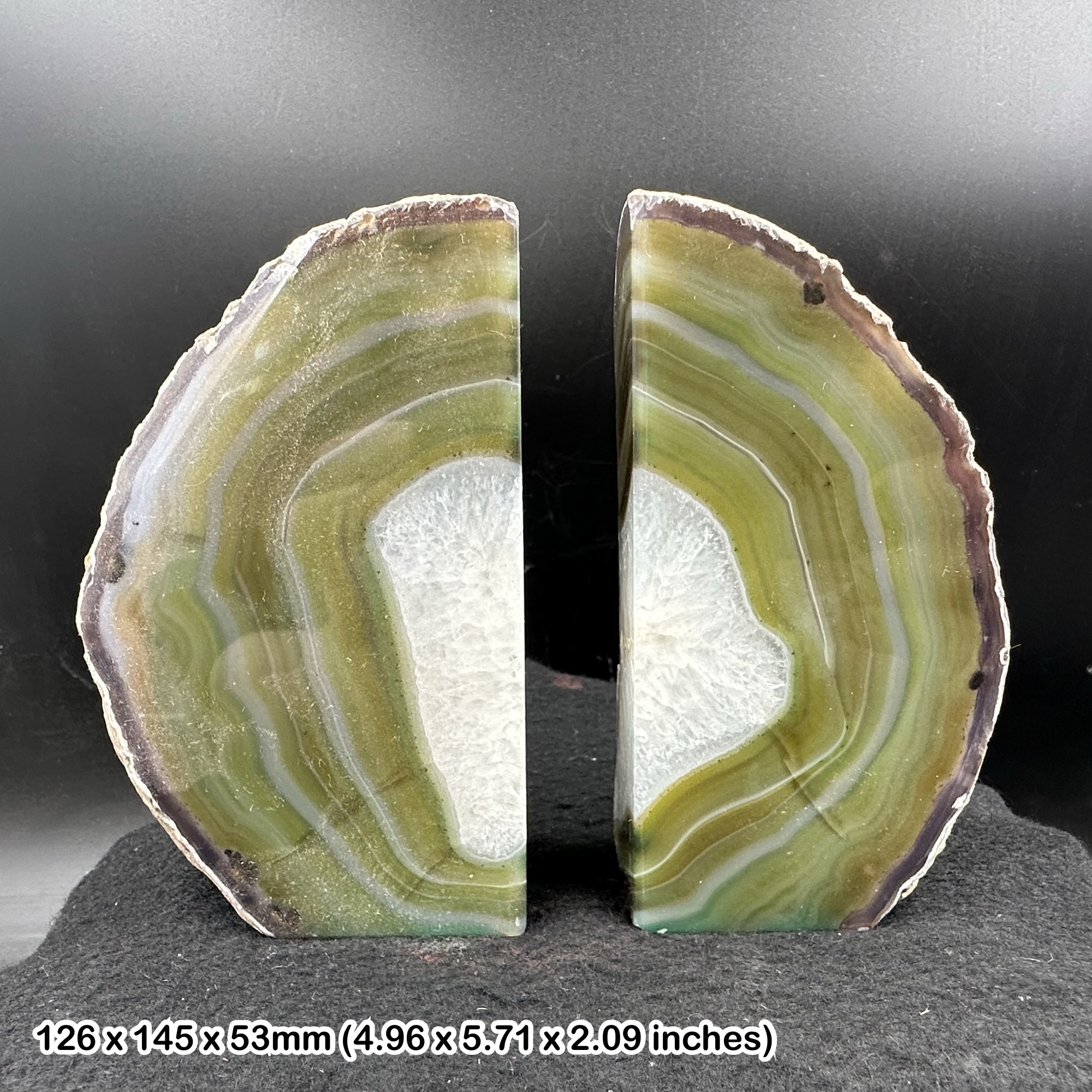
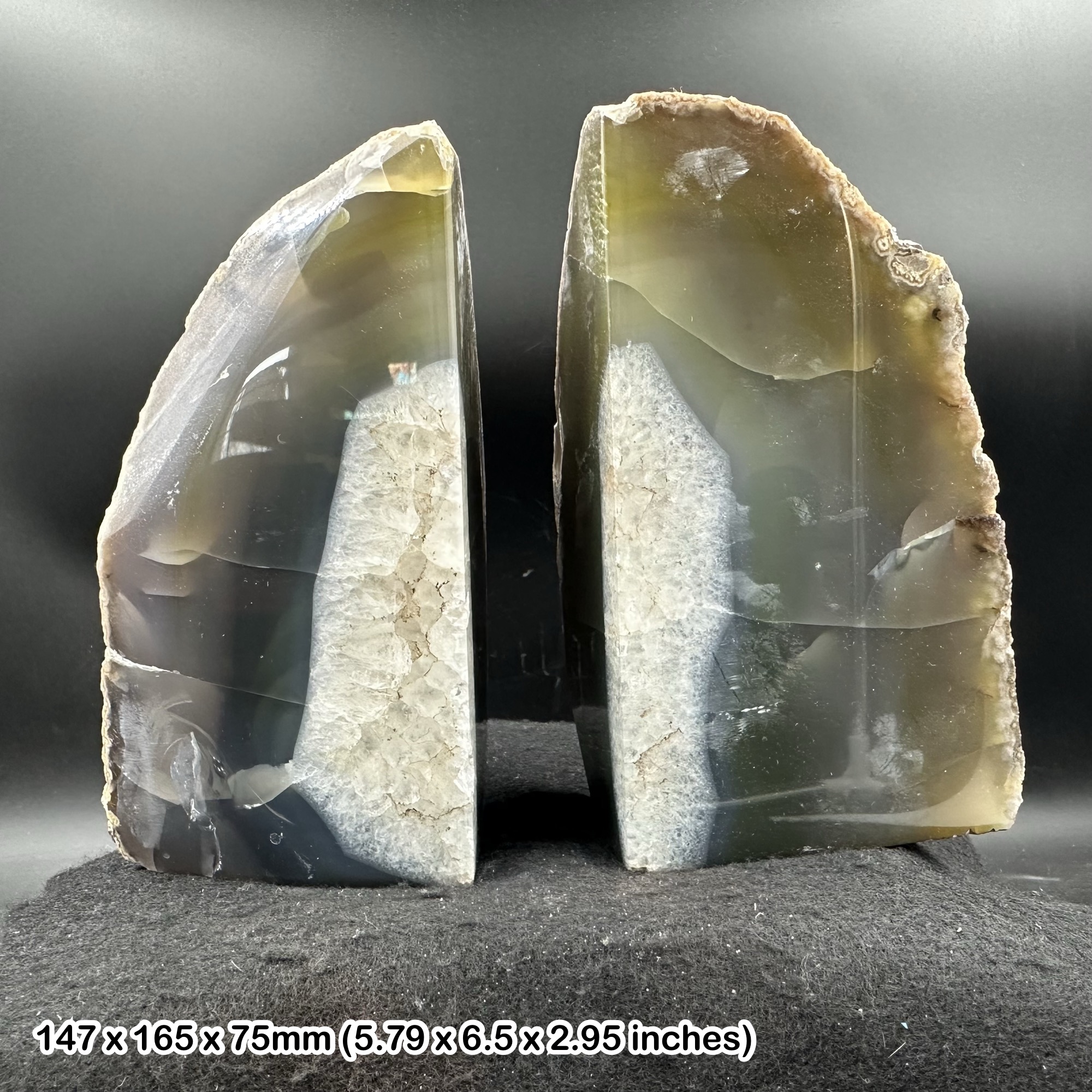
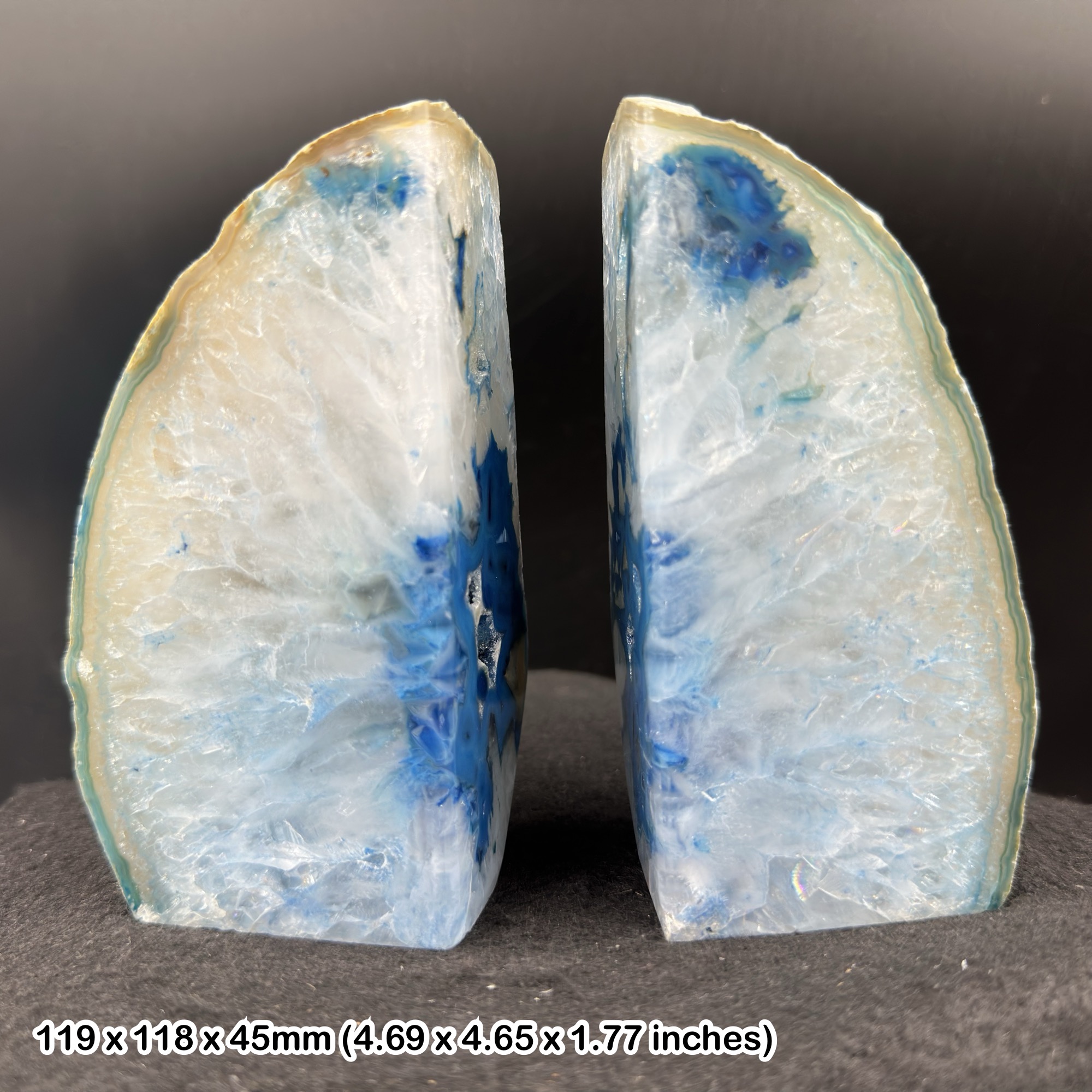
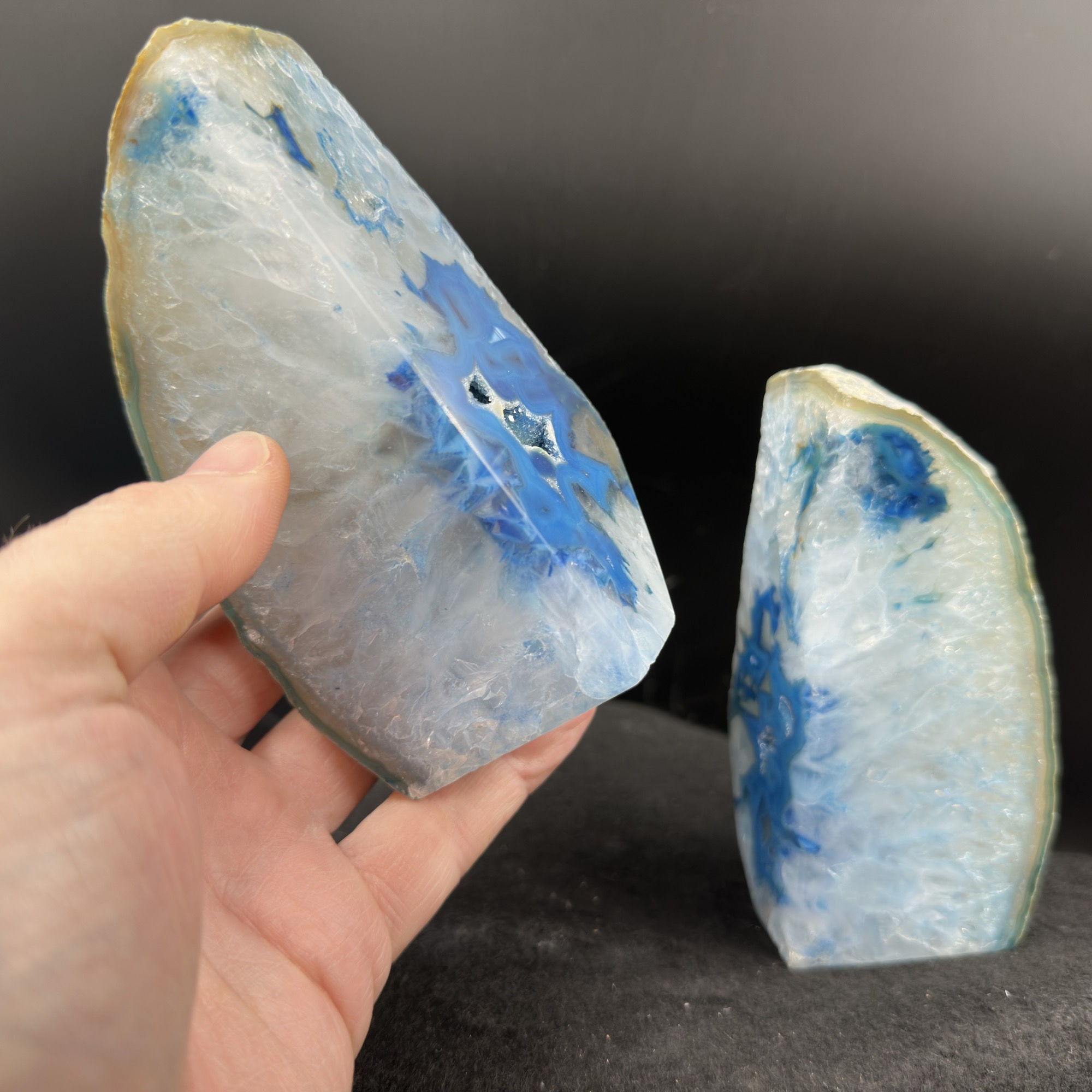
This listing features a natural agate bookend specimen, carefully cut and polished to reveal the distinctive banded structure that agate is known for. Agate bookends are created by slicing sections of agate geodes or nodules and polishing the exposed interior surfaces, allowing the natural mineral patterns to become visible while maintaining the natural outer surface of the stone. The photographs show an example of the type of specimen you will receive, and each piece is individually selected for its visual character and mineral patterning. As agate forms naturally within geological environments, every specimen displays its own unique banding, colour variation, and internal structure. Each bookend includes a Certificate of Authenticity lifetime guarantee card, confirming that the mineral is a genuine natural specimen. For exact measurements and scale, please refer to the listing photographs. MINERAL SPECIES AND COMPOSITION Agate is a variety of chalcedony, which itself is a microcrystalline form of quartz (silicon dioxide, SiO₂). Chalcedony forms when microscopic quartz crystals grow in extremely fine interlocking fibres, creating a dense and durable stone with a smooth texture. Agate is particularly recognised for its distinctive banded structure, formed by the gradual layering of silica deposits over long geological timescales. These layers may vary in colour, translucency, and thickness depending on the minerals present during formation. Quartz and chalcedony belong to the trigonal crystal system, although the microcrystalline structure of chalcedony means individual crystals are typically too small to be seen without magnification. COLOUR VARIATIONS AND NATURAL BANDING Agate is known for its wide variety of natural colours and banding patterns. These layers form as mineral-rich fluids deposit silica within cavities of volcanic rock. Over time, trace elements and mineral inclusions influence the colour and pattern of each layer. Common agate colours include white, grey, blue, brown, orange, red, and cream tones, often appearing in curved or concentric bands that follow the internal shape of the original cavity. Some agates may also display semi-translucent sections where light passes through the silica layers. Polishing the interior surface of an agate slice reveals the natural patterns created during formation, while the outer surface often retains the original textured exterior of the nodule or geode. GEOLOGICAL FORMATION OF AGATE Agate typically forms in volcanic rock environments, particularly within cavities in basalt or rhyolite lava flows. As lava cools, gas bubbles become trapped within the rock, creating hollow spaces known as vesicles. Silica-rich groundwater or hydrothermal fluids later seep into these cavities and begin depositing layers of microscopic quartz crystals along the inner walls. Over time, these layers accumulate to form the characteristic banded structure of agate. This process can take thousands to millions of years, gradually building the layered mineral patterns that make each agate specimen unique. Agate deposits are found worldwide, with notable sources including Brazil, Uruguay, Mexico, Madagascar, India, and parts of the United States. Many of the agates used for decorative pieces originate from volcanic regions known for producing large geode deposits. ASSOCIATED MINERALS AND INTERIOR FEATURES In some agate specimens, the centre of the stone may contain quartz crystal formations or drusy crystal pockets, created when the cavity is only partially filled with chalcedony layers. These sparkling crystal surfaces form when larger quartz crystals grow inward toward the centre of the cavity. Agate can also occur alongside minerals such as calcite, quartz, jasper, and iron oxides, which may influence the colour and pattern of the bands. Natural inclusions, colour variations, and irregular banding are normal characteristics of genuine agate and contribute to the individuality of each specimen. BOOKEND CRAFTSMANSHIP AND DECORATIVE APPEAL Agate bookends are created by cutting a geode or agate nodule into two matching halves and polishing the inner surfaces. This process reveals the intricate banding patterns while allowing the outer surface of the stone to retain its natural texture. The flat base created during cutting allows the bookend to stand securely on shelves, desks, or display cabinets. The polished interior contrasts with the natural outer rock surface, highlighting the geological structure of the mineral. These mineral bookends serve both functional and decorative purposes, providing support for books while also acting as natural stone display pieces. TRADITIONAL AND CULTURAL ASSOCIATIONS Agate has been used in decorative objects, carvings, and ornamental stones for thousands of years. Throughout history, it has appeared in jewellery, seals, and carved artefacts across many cultures. In modern spiritual traditions, agate is sometimes traditionally associated with balance and grounding symbolism, though these interpretations vary between cultures and belief systems. These ideas are presented as historical or cultural traditions rather than scientific claims. MINERAL COLLECTING AND GIFT APPEAL Agate bookends are popular with mineral collectors, geology enthusiasts, interior décor enthusiasts, and gemstone collectors due to their natural patterns and practical function. Each specimen offers a unique combination of banding and colour created by geological processes. They are often displayed in libraries, offices, mineral cabinets, and decorative interiors, where the polished mineral surface and natural banding create a striking visual focal point. Because each agate forms naturally, no two pieces are identical, making every bookend a one-of-a-kind mineral display object. AUTHENTICITY AND PRESENTATION This agate bookend is a genuine natural mineral specimen and includes a Certificate of Authenticity lifetime guarantee card confirming its authenticity. The listing photographs show an example of the type of specimen you will receive, with each piece carefully selected for its natural beauty and mineral structure. Please refer to the images for sizing and appearance. Agate remains one of the most recognisable banded minerals in the world, valued for its geological formation, natural colour patterns, and decorative appeal. This polished agate bookend offers a distinctive mineral display piece suitable for both practical use and mineral collecting.
This listing features a natural agate bookend specimen, carefully cut and polished to reveal the distinctive banded structure that agate is known for. Agate bookends are created by slicing sections of agate geodes or nodules and polishing the exposed interior surfaces, allowing the natural mineral patterns to become visible while maintaining the natural outer surface of the stone. The photographs show an example of the type of specimen you will receive, and each piece is individually selected for its visual character and mineral patterning. As agate forms naturally within geological environments, every specimen displays its own unique banding, colour variation, and internal structure. Each bookend includes a Certificate of Authenticity lifetime guarantee card, confirming that the mineral is a genuine natural specimen. For exact measurements and scale, please refer to the listing photographs. MINERAL SPECIES AND COMPOSITION Agate is a variety of chalcedony, which itself is a microcrystalline form of quartz (silicon dioxide, SiO₂). Chalcedony forms when microscopic quartz crystals grow in extremely fine interlocking fibres, creating a dense and durable stone with a smooth texture. Agate is particularly recognised for its distinctive banded structure, formed by the gradual layering of silica deposits over long geological timescales. These layers may vary in colour, translucency, and thickness depending on the minerals present during formation. Quartz and chalcedony belong to the trigonal crystal system, although the microcrystalline structure of chalcedony means individual crystals are typically too small to be seen without magnification. COLOUR VARIATIONS AND NATURAL BANDING Agate is known for its wide variety of natural colours and banding patterns. These layers form as mineral-rich fluids deposit silica within cavities of volcanic rock. Over time, trace elements and mineral inclusions influence the colour and pattern of each layer. Common agate colours include white, grey, blue, brown, orange, red, and cream tones, often appearing in curved or concentric bands that follow the internal shape of the original cavity. Some agates may also display semi-translucent sections where light passes through the silica layers. Polishing the interior surface of an agate slice reveals the natural patterns created during formation, while the outer surface often retains the original textured exterior of the nodule or geode. GEOLOGICAL FORMATION OF AGATE Agate typically forms in volcanic rock environments, particularly within cavities in basalt or rhyolite lava flows. As lava cools, gas bubbles become trapped within the rock, creating hollow spaces known as vesicles. Silica-rich groundwater or hydrothermal fluids later seep into these cavities and begin depositing layers of microscopic quartz crystals along the inner walls. Over time, these layers accumulate to form the characteristic banded structure of agate. This process can take thousands to millions of years, gradually building the layered mineral patterns that make each agate specimen unique. Agate deposits are found worldwide, with notable sources including Brazil, Uruguay, Mexico, Madagascar, India, and parts of the United States. Many of the agates used for decorative pieces originate from volcanic regions known for producing large geode deposits. ASSOCIATED MINERALS AND INTERIOR FEATURES In some agate specimens, the centre of the stone may contain quartz crystal formations or drusy crystal pockets, created when the cavity is only partially filled with chalcedony layers. These sparkling crystal surfaces form when larger quartz crystals grow inward toward the centre of the cavity. Agate can also occur alongside minerals such as calcite, quartz, jasper, and iron oxides, which may influence the colour and pattern of the bands. Natural inclusions, colour variations, and irregular banding are normal characteristics of genuine agate and contribute to the individuality of each specimen. BOOKEND CRAFTSMANSHIP AND DECORATIVE APPEAL Agate bookends are created by cutting a geode or agate nodule into two matching halves and polishing the inner surfaces. This process reveals the intricate banding patterns while allowing the outer surface of the stone to retain its natural texture. The flat base created during cutting allows the bookend to stand securely on shelves, desks, or display cabinets. The polished interior contrasts with the natural outer rock surface, highlighting the geological structure of the mineral. These mineral bookends serve both functional and decorative purposes, providing support for books while also acting as natural stone display pieces. TRADITIONAL AND CULTURAL ASSOCIATIONS Agate has been used in decorative objects, carvings, and ornamental stones for thousands of years. Throughout history, it has appeared in jewellery, seals, and carved artefacts across many cultures. In modern spiritual traditions, agate is sometimes traditionally associated with balance and grounding symbolism, though these interpretations vary between cultures and belief systems. These ideas are presented as historical or cultural traditions rather than scientific claims. MINERAL COLLECTING AND GIFT APPEAL Agate bookends are popular with mineral collectors, geology enthusiasts, interior décor enthusiasts, and gemstone collectors due to their natural patterns and practical function. Each specimen offers a unique combination of banding and colour created by geological processes. They are often displayed in libraries, offices, mineral cabinets, and decorative interiors, where the polished mineral surface and natural banding create a striking visual focal point. Because each agate forms naturally, no two pieces are identical, making every bookend a one-of-a-kind mineral display object. AUTHENTICITY AND PRESENTATION This agate bookend is a genuine natural mineral specimen and includes a Certificate of Authenticity lifetime guarantee card confirming its authenticity. The listing photographs show an example of the type of specimen you will receive, with each piece carefully selected for its natural beauty and mineral structure. Please refer to the images for sizing and appearance. Agate remains one of the most recognisable banded minerals in the world, valued for its geological formation, natural colour patterns, and decorative appeal. This polished agate bookend offers a distinctive mineral display piece suitable for both practical use and mineral collecting.