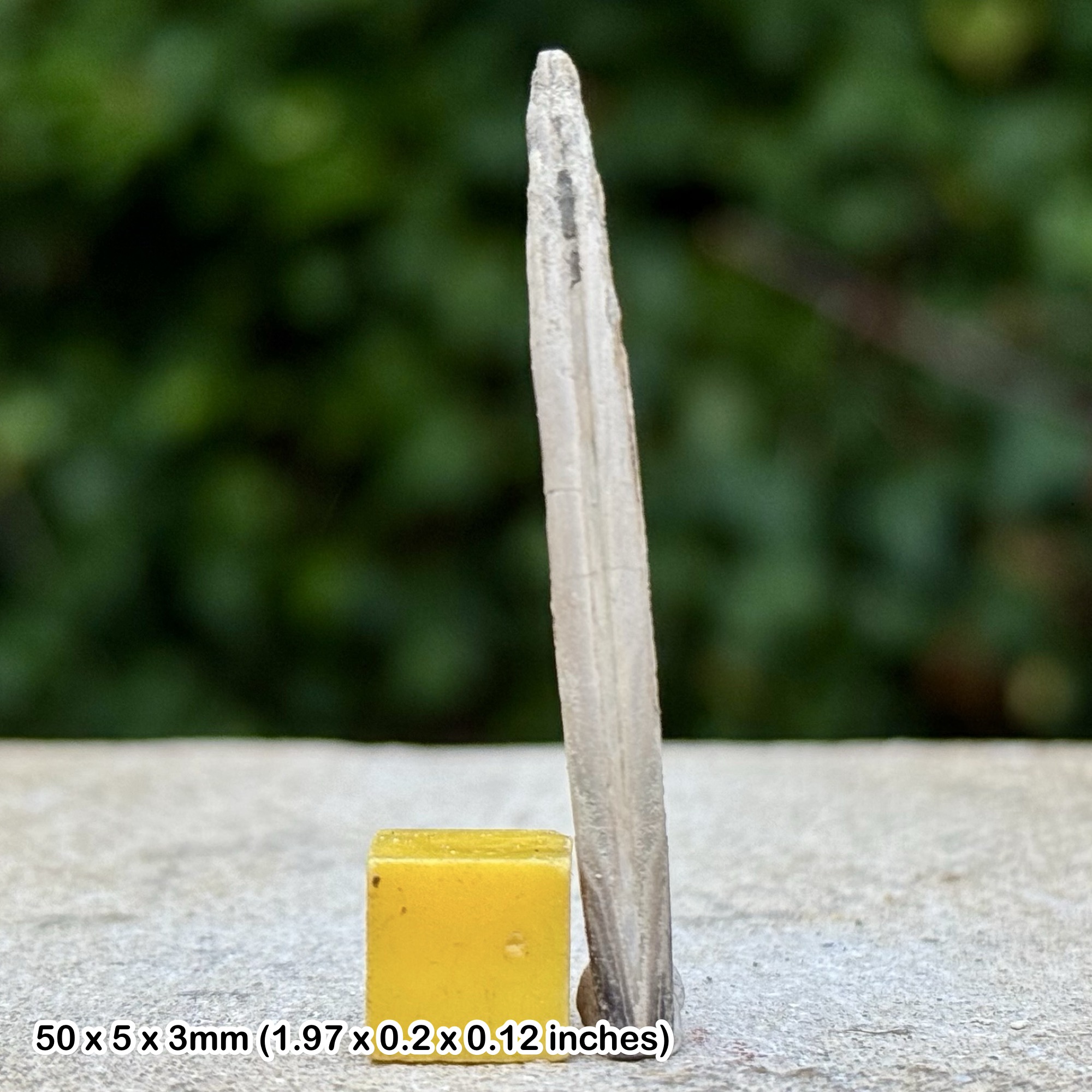
Belemnopsis Odontobelus bessina Fossil Belemnite Callovian Jurassic Bradley Fen Whittlesea UK with COA
£ 12.60
BELEMNOPSIS (ODONTOBELUS) BESSINA BELEMNITE FROM BRADLEY FEN, WHITTLESEAThis listing is for a genuine Belemnopsis (Odontobelus) bessina fossil
belemnite, collected from the Callovian Stage of the Middle Jurassic, at Bradley Fen, Whittlesea, Peterborough, United Kingdom. Dating back approximately 166–163 million years, this fossil represents the calcified guard (rostrum) of a cephalopod related to modern squid and cuttlefish. Fossils such as this are highly valued for their scientific significance as well as their beauty and rarity.All of our fossils are 100% genuine specimens and are supplied with a Certificate of Authenticity. The exact specimen you see in the photographs is the one you will receive, with a 1cm scale cube and rule squares provided for accurate sizing. GEOLOGICAL AGE AND PROVENANCEThe Callovian Stage of the Jurassic represents a time when warm, shallow seas extended across much of Europe. These seas created an ideal habitat for diverse marine life, including ammonites, belemnites, marine reptiles, bivalves, and other invertebrates.The Bradley Fen site in Whittlesea, Peterborough, is one of the most important British localities for Jurassic fossils. Its finely bedded Oxford Clay deposits are renowned for their preservation of marine fauna, particularly cephalopods such as belemnites. Specimens from this region are scientifically valuable and prized by collectors worldwide. FOSSIL TYPE AND SCIENTIFIC CLASSIFICATION
• Genus: Belemnopsis
• Subgenus: Odontobelus
• Species: Belemnopsis (Odontobelus) bessina
• Order: Belemnitida
• Superfamily: Belemnitoidea
• Family: BelemnitidaeBelemnites are extinct marine cephalopods, close relatives of squid, with an internal skeleton that included a robust, bullet-shaped guard. These guards are the most commonly fossilised remains of the group. Belemnopsis (Odontobelus) bessina is a characteristic Callovian species, often used in stratigraphic correlation of Jurassic deposits. MORPHOLOGICAL FEATURESThis specimen exhibits the distinctive features of B. (O.) bessina:
• Elongated Guard: Cylindrical, tapering form with a smooth to slightly striated surface.
• Sulci and Grooves: Shallow longitudinal grooves (sulci) that distinguish it from other species.
• Apex: Tapered posterior end, streamlined for active swimming.
• Alveolus: The anterior cavity where the phragmocone was attached, essential for buoyancy control in life.These structural adaptations enabled belemnites to live as agile predators, hunting fish and smaller cephalopods in the Jurassic seas. SCIENTIFIC AND COLLECTOR IMPORTANCEBelemnopsis (Odontobelus) bessina holds special significance as an index fossil for the Callovian Stage. Its clear morphology and restricted stratigraphic range allow geologists to precisely date marine deposits.Collectors value this species for its rarity and the fine preservation often found in British Oxford Clay deposits. Specimens from Bradley Fen carry additional provenance, as the site is recognised as one of the United Kingdom’s classic fossil localities. DISPLAY AND EDUCATIONAL VALUEThis fossil has been carefully selected for its condition and diagnostic features. It is both scientifically informative and visually appealing, making it an excellent choice for collectors, educators, or museums.Perfect for private fossil collections, teaching displays, or museum exhibitions, this Belemnopsis (Odontobelus) bessina belemnite from Bradley Fen, Whittlesea represents a remarkable piece of Jurassic natural history. It provides a tangible link to the Middle Jurassic seas of Britain more than 160 million years ago and is a superb addition to any collection.
belemnite, collected from the Callovian Stage of the Middle Jurassic, at Bradley Fen, Whittlesea, Peterborough, United Kingdom. Dating back approximately 166–163 million years, this fossil represents the calcified guard (rostrum) of a cephalopod related to modern squid and cuttlefish. Fossils such as this are highly valued for their scientific significance as well as their beauty and rarity.All of our fossils are 100% genuine specimens and are supplied with a Certificate of Authenticity. The exact specimen you see in the photographs is the one you will receive, with a 1cm scale cube and rule squares provided for accurate sizing. GEOLOGICAL AGE AND PROVENANCEThe Callovian Stage of the Jurassic represents a time when warm, shallow seas extended across much of Europe. These seas created an ideal habitat for diverse marine life, including ammonites, belemnites, marine reptiles, bivalves, and other invertebrates.The Bradley Fen site in Whittlesea, Peterborough, is one of the most important British localities for Jurassic fossils. Its finely bedded Oxford Clay deposits are renowned for their preservation of marine fauna, particularly cephalopods such as belemnites. Specimens from this region are scientifically valuable and prized by collectors worldwide. FOSSIL TYPE AND SCIENTIFIC CLASSIFICATION
• Genus: Belemnopsis
• Subgenus: Odontobelus
• Species: Belemnopsis (Odontobelus) bessina
• Order: Belemnitida
• Superfamily: Belemnitoidea
• Family: BelemnitidaeBelemnites are extinct marine cephalopods, close relatives of squid, with an internal skeleton that included a robust, bullet-shaped guard. These guards are the most commonly fossilised remains of the group. Belemnopsis (Odontobelus) bessina is a characteristic Callovian species, often used in stratigraphic correlation of Jurassic deposits. MORPHOLOGICAL FEATURESThis specimen exhibits the distinctive features of B. (O.) bessina:
• Elongated Guard: Cylindrical, tapering form with a smooth to slightly striated surface.
• Sulci and Grooves: Shallow longitudinal grooves (sulci) that distinguish it from other species.
• Apex: Tapered posterior end, streamlined for active swimming.
• Alveolus: The anterior cavity where the phragmocone was attached, essential for buoyancy control in life.These structural adaptations enabled belemnites to live as agile predators, hunting fish and smaller cephalopods in the Jurassic seas. SCIENTIFIC AND COLLECTOR IMPORTANCEBelemnopsis (Odontobelus) bessina holds special significance as an index fossil for the Callovian Stage. Its clear morphology and restricted stratigraphic range allow geologists to precisely date marine deposits.Collectors value this species for its rarity and the fine preservation often found in British Oxford Clay deposits. Specimens from Bradley Fen carry additional provenance, as the site is recognised as one of the United Kingdom’s classic fossil localities. DISPLAY AND EDUCATIONAL VALUEThis fossil has been carefully selected for its condition and diagnostic features. It is both scientifically informative and visually appealing, making it an excellent choice for collectors, educators, or museums.Perfect for private fossil collections, teaching displays, or museum exhibitions, this Belemnopsis (Odontobelus) bessina belemnite from Bradley Fen, Whittlesea represents a remarkable piece of Jurassic natural history. It provides a tangible link to the Middle Jurassic seas of Britain more than 160 million years ago and is a superb addition to any collection.
Other Products