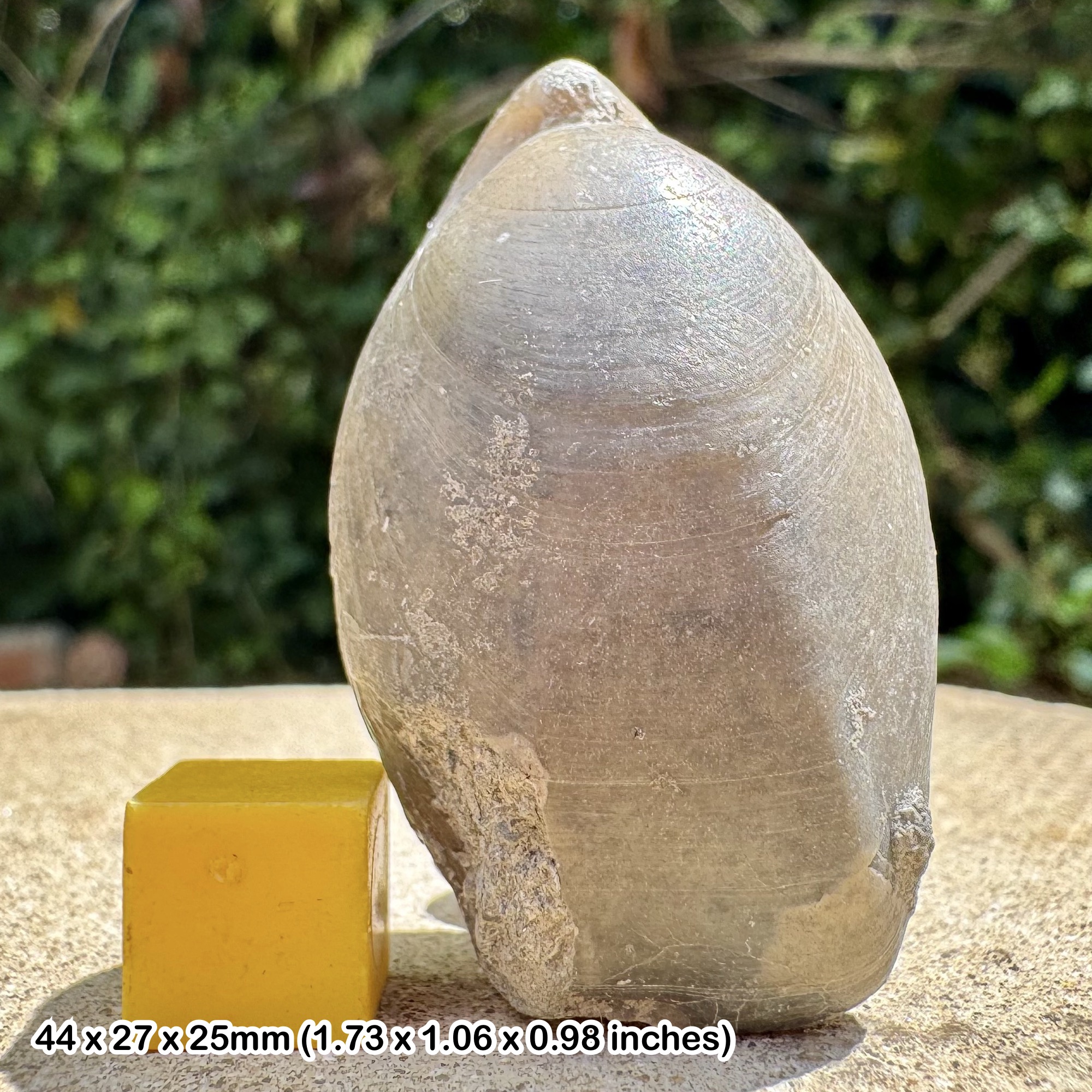
Ornithella lagenalis Fossil Brachiopod – Bathonian – Jurassic Rushden UK – Genuine with Certificate
£ 6.90
Ornithella lagenalis (Schlotheim) – Fossil BrachiopodBathonian Stage, Middle Jurassic – Rushden, Northamptonshire, United KingdomSpecies: Ornithella lagenalis (Schlotheim, 1820)Order: TerebratulidaSuperfamily: TerebratuloideaFamily: LoboidothyrididaeGeological Stage: Bathonian (Middle Jurassic)Location: Rushden, Northamptonshire, UKAge: ~168–166 million years agoFormation: Great Oolite GroupScale Reference: 1cm square cube in imageAuthenticity: 100% Genuine – Certificate of Authenticity IncludedImage Note: The photo shows the actual specimen you will receive.GEOLOGICAL AND PALAEONTOLOGICAL CONTEXT:Ornithella lagenalis is a classic loboidothyridid brachiopod from the Bathonian
Stage of the Middle Jurassic period. It is one of the more widely distributed terebratulid brachiopods within European Jurassic strata and is known from multiple fossiliferous localities in England and France.
• Morphology:
• This species is characterised by a small, flask-shaped shell (hence the species name lagenalis, meaning “flask-shaped”) with smooth convex valves and a well-defined beak. The shell is relatively thick, with a short hinge line and curved anterior margin. It often shows subtle growth lines and may exhibit minor radial ornamentation in some specimens.
• Depositional Environment:
• The Bathonian beds in Northamptonshire formed in a shallow, warm, epicontinental sea, favouring carbonate deposition and shelly faunas. The Great Oolite Group represents a patchwork of bioclastic limestones, shelly sandstones, and mudstones, ideal for the preservation of benthic marine organisms such as brachiopods, bivalves, gastropods, and echinoderms.
• Stratigraphic Significance:
• Though not a primary zonal fossil, O. lagenalis occurs alongside ammonite faunas characteristic of the Morrisi Zone and Subcontractus Subzone of the Bathonian, allowing relative correlation within the Middle Jurassic.
• Scientific Relevance:
• The species was first formally described by Schlotheim (1820), and has since been frequently referenced in monographs and faunal inventories concerning British Bathonian palaeontology. Its abundance and distribution have made it a useful species for palaeoenvironmental reconstruction studies in mid-Jurassic carbonate platforms.ABOUT THIS SPECIMEN:This authentic fossil was collected from the Jurassic Bathonian strata of Rushden, Northamptonshire, an area known for its rich fossil-bearing limestones. It is part of the distinguished Alice Purnell Collection, known for its scientifically relevant and expertly curated specimens.This particular fossil has been hand-selected and professionally cleaned to ensure its fine morphological features are well-preserved and easily visible for study or display.YOU WILL RECEIVE:
• 1 x Ornithella lagenalis fossil brachiopod
• From the Bathonian Stage, Jurassic (~168–166 Ma)
• Location: Rushden, Northamptonshire, United Kingdom
• Exact specimen as shown in the photos
• Certificate of Authenticity included
• Carefully selected from the Alice Purnell CollectionSUMMARY:A classic and highly collectable Middle Jurassic brachiopod, Ornithella lagenalis, ideal for fossil enthusiasts, educational use, or as a striking piece of natural history. This is a fully authentic and scientifically identified specimen from a trusted and certified source.
Stage of the Middle Jurassic period. It is one of the more widely distributed terebratulid brachiopods within European Jurassic strata and is known from multiple fossiliferous localities in England and France.
• Morphology:
• This species is characterised by a small, flask-shaped shell (hence the species name lagenalis, meaning “flask-shaped”) with smooth convex valves and a well-defined beak. The shell is relatively thick, with a short hinge line and curved anterior margin. It often shows subtle growth lines and may exhibit minor radial ornamentation in some specimens.
• Depositional Environment:
• The Bathonian beds in Northamptonshire formed in a shallow, warm, epicontinental sea, favouring carbonate deposition and shelly faunas. The Great Oolite Group represents a patchwork of bioclastic limestones, shelly sandstones, and mudstones, ideal for the preservation of benthic marine organisms such as brachiopods, bivalves, gastropods, and echinoderms.
• Stratigraphic Significance:
• Though not a primary zonal fossil, O. lagenalis occurs alongside ammonite faunas characteristic of the Morrisi Zone and Subcontractus Subzone of the Bathonian, allowing relative correlation within the Middle Jurassic.
• Scientific Relevance:
• The species was first formally described by Schlotheim (1820), and has since been frequently referenced in monographs and faunal inventories concerning British Bathonian palaeontology. Its abundance and distribution have made it a useful species for palaeoenvironmental reconstruction studies in mid-Jurassic carbonate platforms.ABOUT THIS SPECIMEN:This authentic fossil was collected from the Jurassic Bathonian strata of Rushden, Northamptonshire, an area known for its rich fossil-bearing limestones. It is part of the distinguished Alice Purnell Collection, known for its scientifically relevant and expertly curated specimens.This particular fossil has been hand-selected and professionally cleaned to ensure its fine morphological features are well-preserved and easily visible for study or display.YOU WILL RECEIVE:
• 1 x Ornithella lagenalis fossil brachiopod
• From the Bathonian Stage, Jurassic (~168–166 Ma)
• Location: Rushden, Northamptonshire, United Kingdom
• Exact specimen as shown in the photos
• Certificate of Authenticity included
• Carefully selected from the Alice Purnell CollectionSUMMARY:A classic and highly collectable Middle Jurassic brachiopod, Ornithella lagenalis, ideal for fossil enthusiasts, educational use, or as a striking piece of natural history. This is a fully authentic and scientifically identified specimen from a trusted and certified source.