Actinolite with Quartz Crystal Natural Amphibole Mineral Specimen Collectors Stone
£ 228.00
ACTINOLITE WITH QUARTZ CRYSTAL MINERAL SPECIMEN
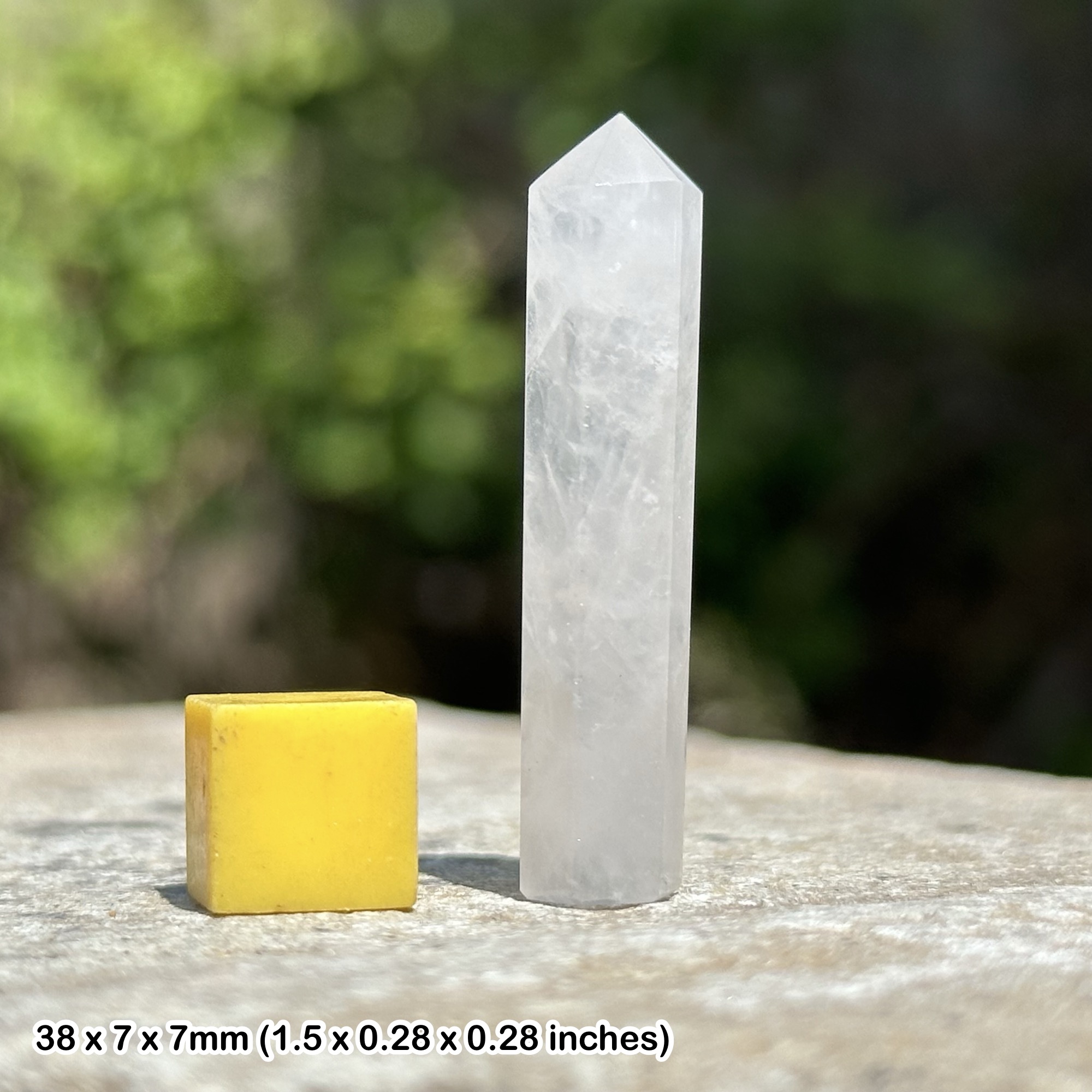
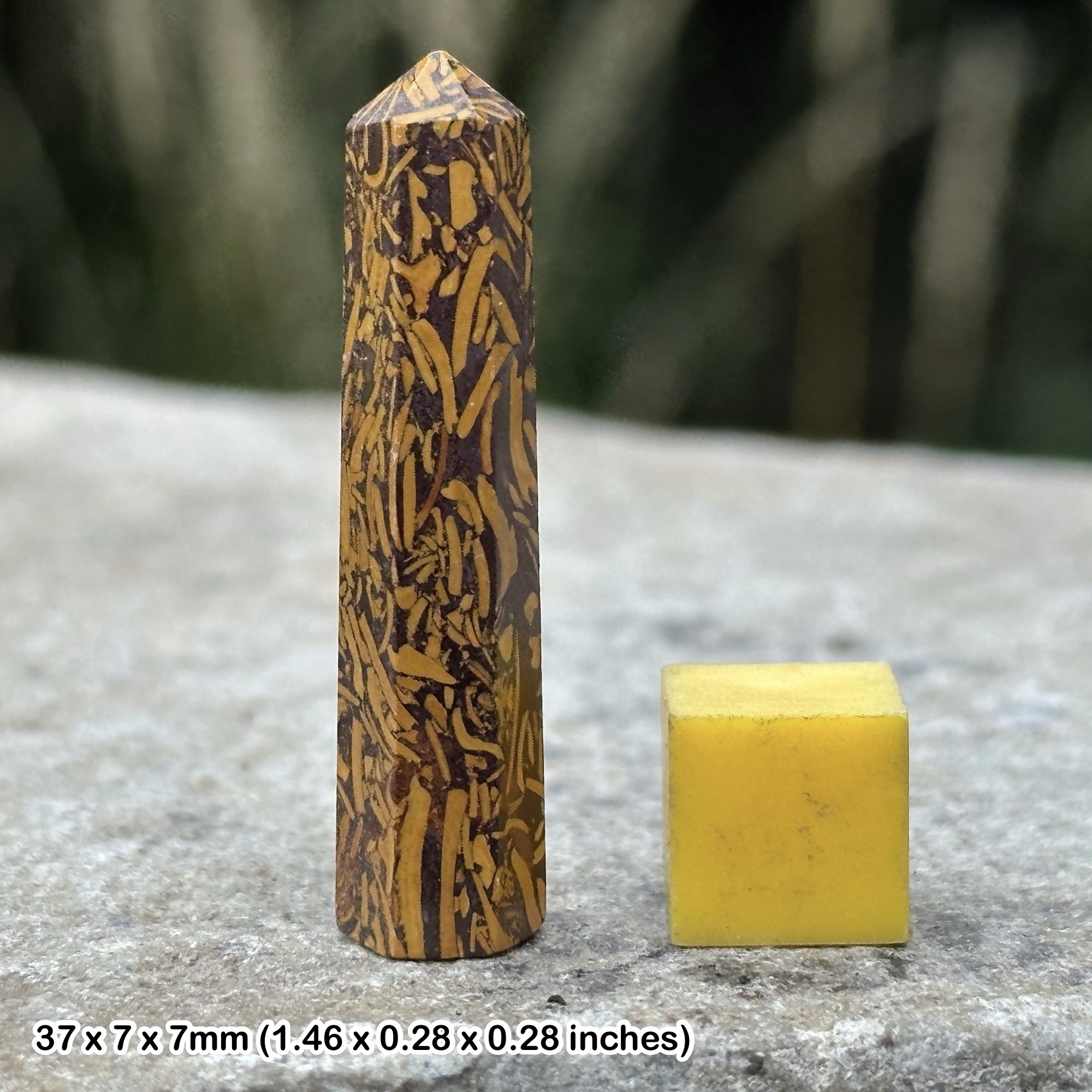
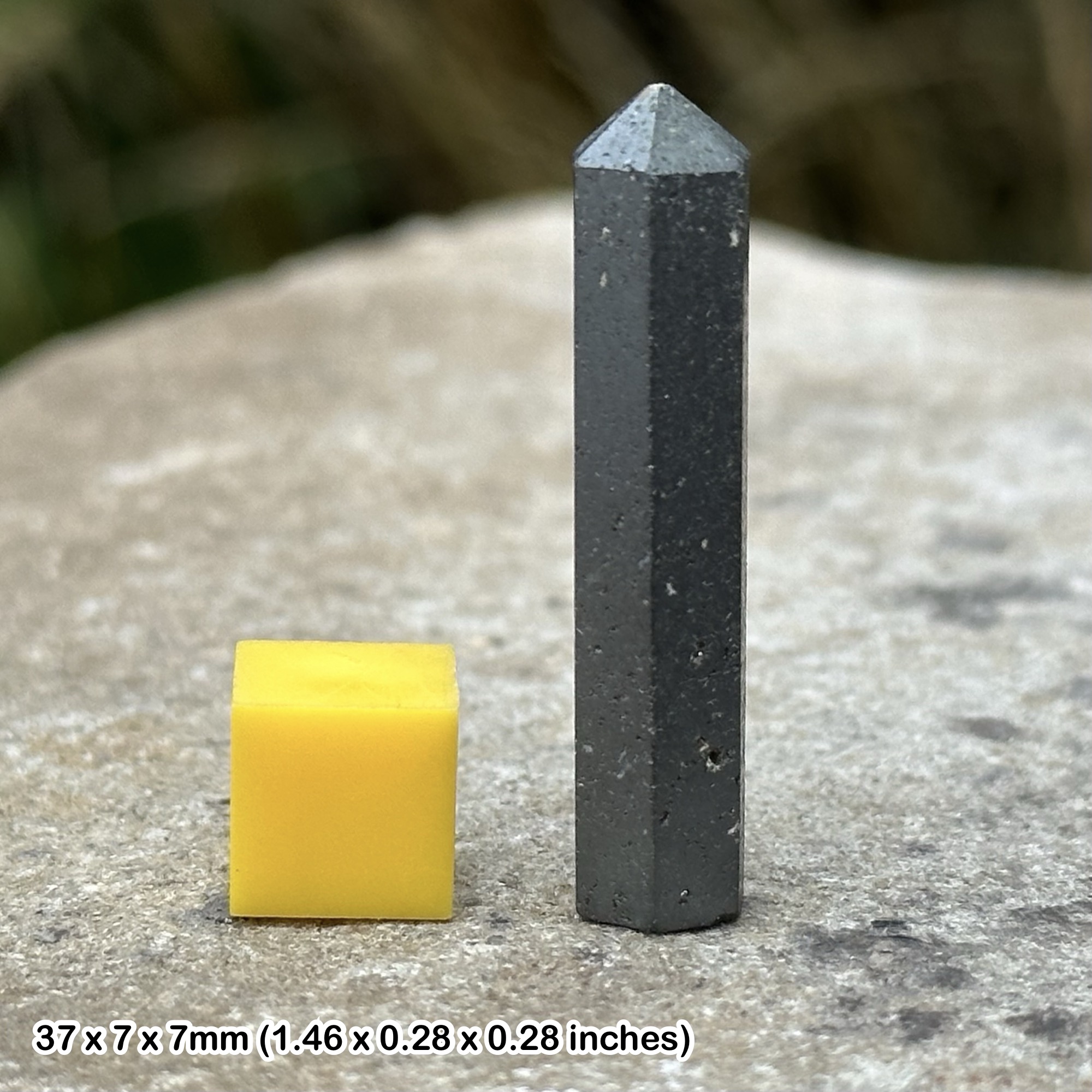
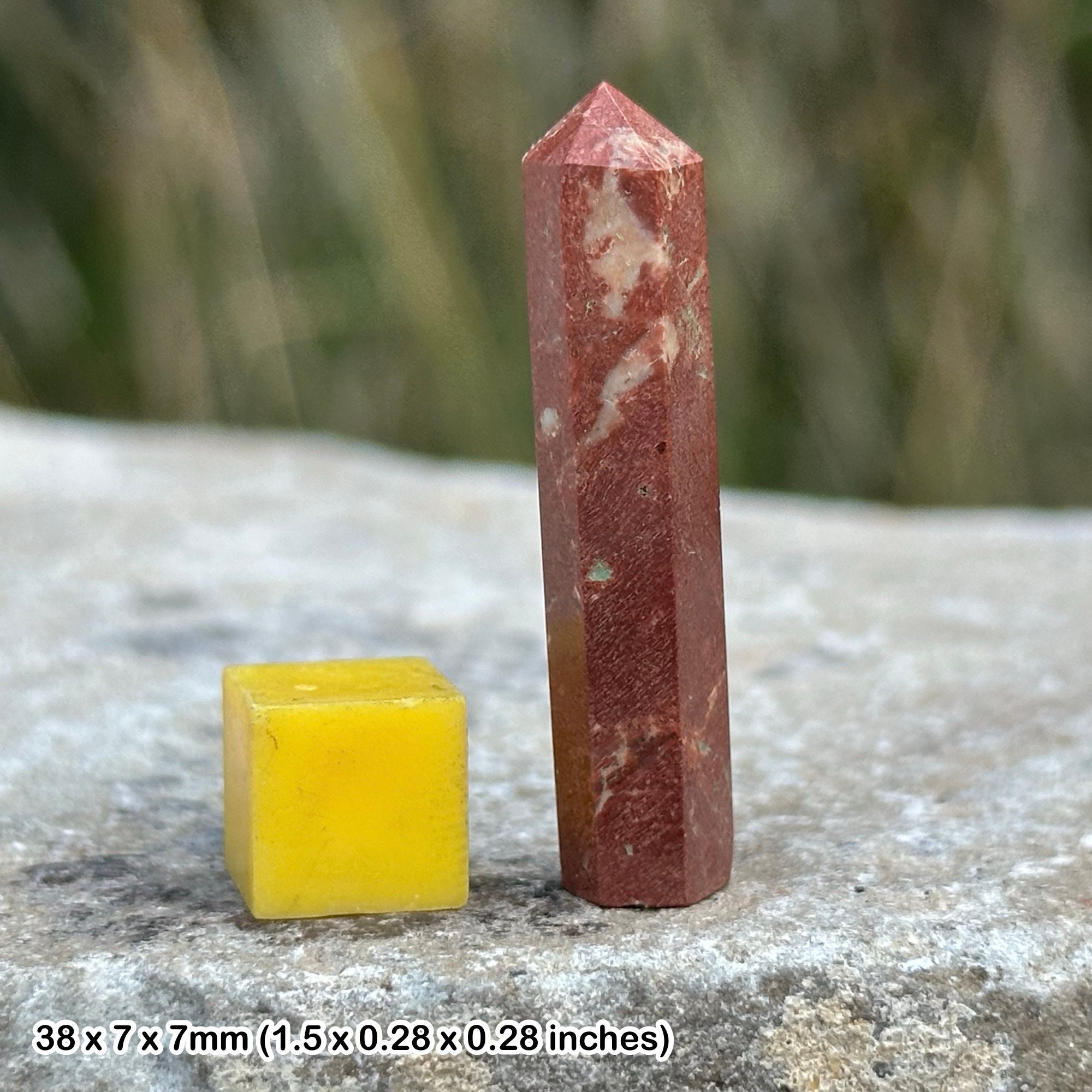
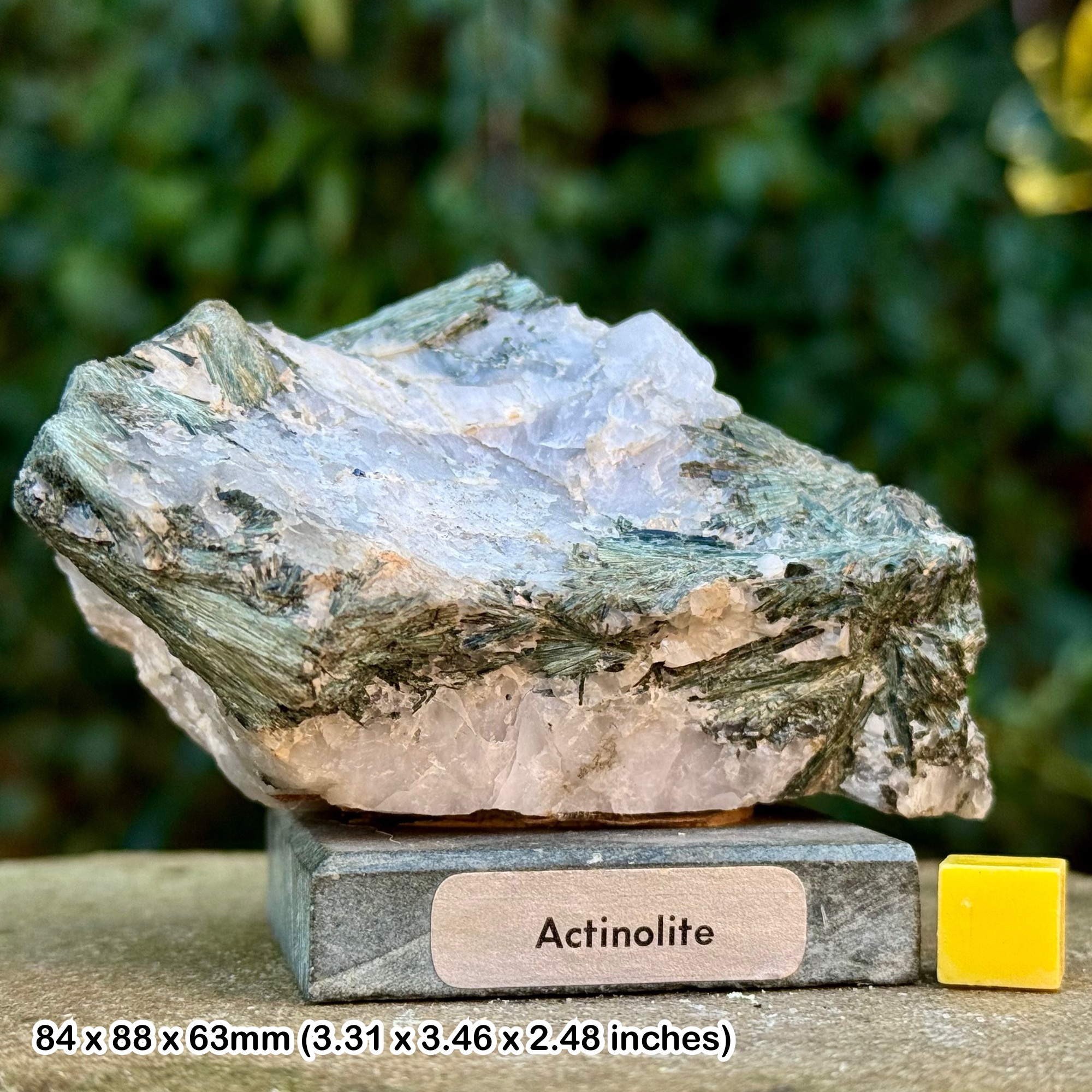
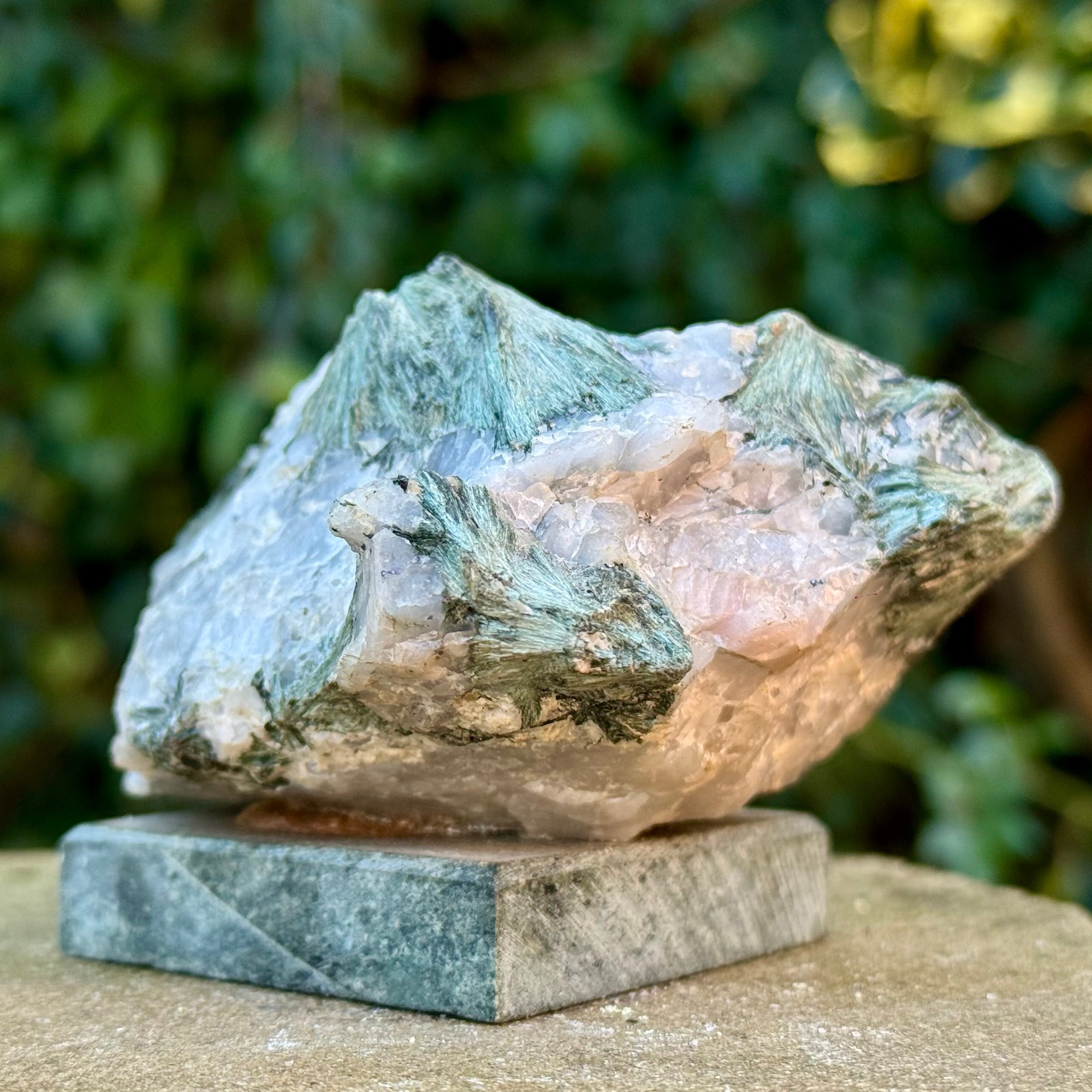
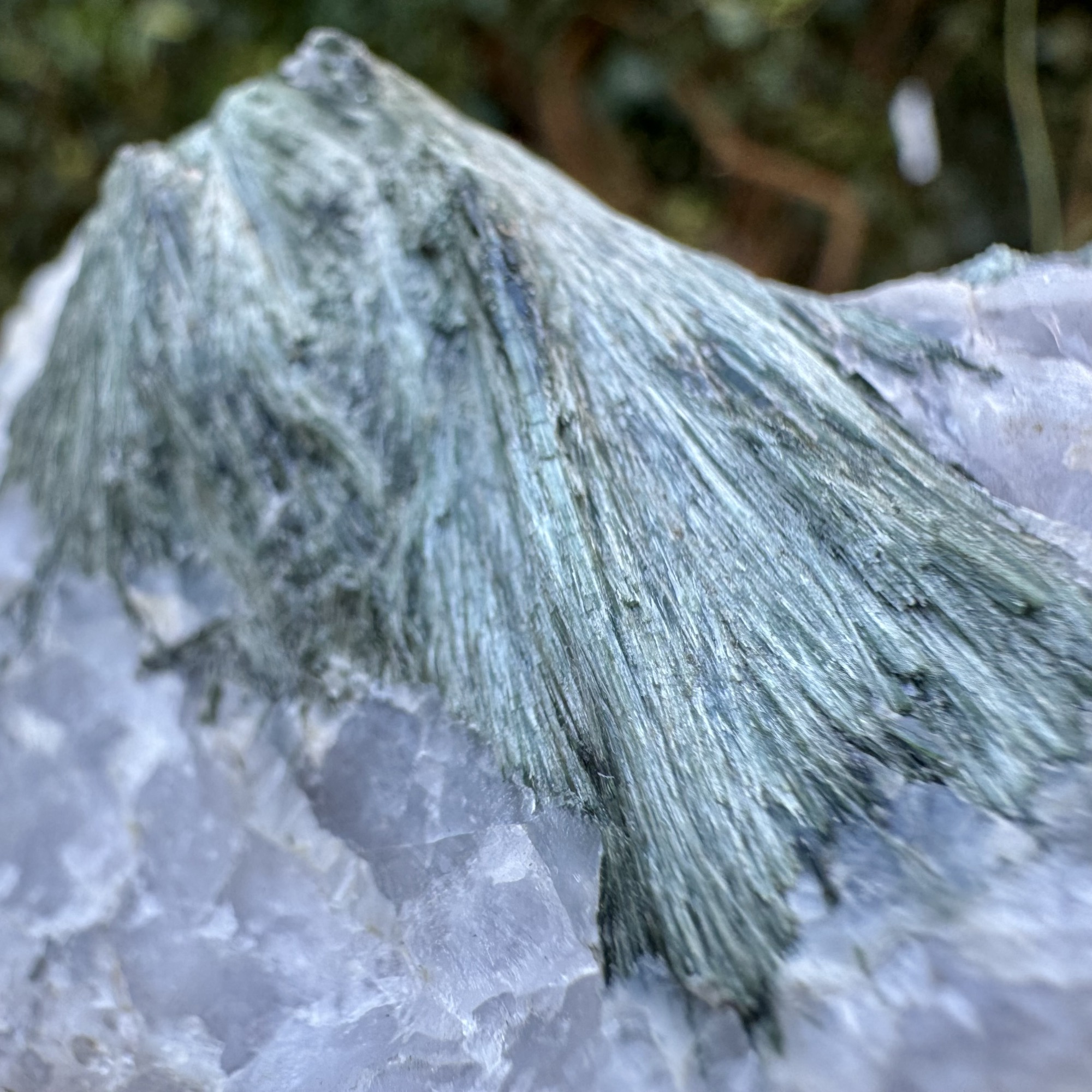
This Actinolite with Quartz crystal specimen is a natural mineral combination displaying fibrous or prismatic actinolite crystals associated with clear to translucent quartz. The specimen highlights the contrasting textures of two distinct mineral species that formed together during geological processes. Actinolite is an amphibole mineral that commonly forms elongated needle-like or fibrous crystals, often appearing in shades of dark green to pale green. When combined with quartz, the result is a visually distinctive specimen where the quartz matrix or crystal growth contrasts with the darker actinolite inclusions or crystal aggregates. The photographs in this listing show the exact specimen you will receive, allowing collectors to examine the crystal structure, colour, and mineral associations in detail before purchase. This crystal is a genuine specimen and includes a Certificate of Authenticity lifetime guarantee generic card. Please refer to the photographs for full sizing and scale. MINERAL IDENTIFICATION AND COMPOSITION This specimen contains two naturally occurring minerals: Actinolite and Quartz. ACTINOLITE Actinolite is a member of the amphibole mineral group and forms in metamorphic environments where magnesium and iron-rich minerals undergo transformation under heat and pressure. Key characteristics include:
• Mineral Name: Actinolite
• Mineral Group: Amphibole
• Chemical Formula: Ca₂(Mg,Fe)₅Si₈O₂₂(OH)₂
• Crystal System: Monoclinic
• Hardness: 5–6 on the Mohs scale
• Colour: Dark green, olive green, grey-green
• Crystal Habit: Fibrous, needle-like, or prismatic QUARTZ Quartz is one of the most abundant minerals in the Earth’s crust and forms a crystalline structure composed of silicon dioxide. Key characteristics include:
• Mineral Species: Quartz
• Chemical Formula: SiO₂ (Silicon Dioxide)
• Mineral Class: Silicate
• Crystal System: Trigonal
• Hardness: 7 on the Mohs scale
• Lustre: Vitreous
• Transparency: Transparent to translucent The presence of quartz alongside actinolite provides a visually striking mineral combination due to the difference in crystal habit and colour. GEOLOGICAL FORMATION OF ACTINOLITE AND QUARTZ Actinolite commonly forms in metamorphic rocks, particularly those that originated as basaltic or magnesium-rich sediments. During metamorphism, existing minerals recrystallise under heat and pressure, producing new mineral structures such as amphiboles. Quartz may form in the same environment through silica-rich fluids circulating within rock fractures or during metamorphic recrystallisation. These fluids deposit silica that crystallises into quartz, often surrounding or growing alongside existing mineral crystals. The combination of actinolite and quartz may develop through several geological processes:
• Regional metamorphism of magnesium-rich rocks
• Hydrothermal mineral deposition within fractures
• Recrystallisation during metamorphic transformation
• Silica-rich fluid circulation forming quartz veins This geological environment allows both minerals to crystallise together within the same rock matrix. CRYSTAL STRUCTURE AND NATURAL APPEARANCE Actinolite typically forms slender crystals that can appear as fine needles or fibrous bundles. In some specimens the crystals form radiating sprays or elongated prisms embedded within surrounding rock or quartz. Quartz crystals in associated specimens may appear as:
• Clear or milky crystalline masses
• Small prismatic crystal points
• Translucent quartz matrix surrounding actinolite inclusions The contrast between the dark green actinolite and the lighter quartz background often creates visually striking mineral specimens. Depending on the formation conditions, actinolite may appear:
• As fine fibrous inclusions within quartz
• As visible needle-like crystals protruding from the quartz matrix
• As dense mineral clusters within surrounding rock Each specimen develops its own unique mineral arrangement during formation. GEOLOGICAL OCCURRENCE AND MINERAL ASSOCIATIONS Actinolite is commonly found in metamorphic rocks such as schists and amphibolites, as well as in contact metamorphic environments where igneous intrusions interact with surrounding rock layers. Minerals frequently associated with actinolite include:
• Quartz
• Chlorite
• Epidote
• Calcite
• Garnet
• Tremolite Quartz commonly occurs in these environments because silica-rich fluids are often present during metamorphic and hydrothermal processes. MINERAL COLLECTING AND DISPLAY Actinolite with Quartz specimens are appreciated by mineral collectors because they display two contrasting mineral species within a single geological formation. The fibrous amphibole crystals combined with quartz crystal growth create visually interesting textures and mineral structures. This specimen may be suitable for:
• Mineral and crystal collections
• Geological specimen displays
• Educational mineral study collections
• Collector cabinets and display shelves
• Unique natural gifts for mineral enthusiasts In some traditions, minerals such as actinolite and quartz are traditionally associated with symbolic or spiritual interpretations, though these interpretations are cultural beliefs rather than scientific explanations. AUTHENTIC NATURAL MINERAL SPECIMEN This Actinolite with Quartz mineral specimen is a genuine natural crystal combination selected for its mineral structure and display quality. The specimen includes a Certificate of Authenticity lifetime guarantee generic card, confirming the authenticity of the mineral. Please review the photographs carefully for full sizing and scale, as they clearly show the exact specimen you will receive.
This Actinolite with Quartz crystal specimen is a natural mineral combination displaying fibrous or prismatic actinolite crystals associated with clear to translucent quartz. The specimen highlights the contrasting textures of two distinct mineral species that formed together during geological processes. Actinolite is an amphibole mineral that commonly forms elongated needle-like or fibrous crystals, often appearing in shades of dark green to pale green. When combined with quartz, the result is a visually distinctive specimen where the quartz matrix or crystal growth contrasts with the darker actinolite inclusions or crystal aggregates. The photographs in this listing show the exact specimen you will receive, allowing collectors to examine the crystal structure, colour, and mineral associations in detail before purchase. This crystal is a genuine specimen and includes a Certificate of Authenticity lifetime guarantee generic card. Please refer to the photographs for full sizing and scale. MINERAL IDENTIFICATION AND COMPOSITION This specimen contains two naturally occurring minerals: Actinolite and Quartz. ACTINOLITE Actinolite is a member of the amphibole mineral group and forms in metamorphic environments where magnesium and iron-rich minerals undergo transformation under heat and pressure. Key characteristics include:
• Mineral Name: Actinolite
• Mineral Group: Amphibole
• Chemical Formula: Ca₂(Mg,Fe)₅Si₈O₂₂(OH)₂
• Crystal System: Monoclinic
• Hardness: 5–6 on the Mohs scale
• Colour: Dark green, olive green, grey-green
• Crystal Habit: Fibrous, needle-like, or prismatic QUARTZ Quartz is one of the most abundant minerals in the Earth’s crust and forms a crystalline structure composed of silicon dioxide. Key characteristics include:
• Mineral Species: Quartz
• Chemical Formula: SiO₂ (Silicon Dioxide)
• Mineral Class: Silicate
• Crystal System: Trigonal
• Hardness: 7 on the Mohs scale
• Lustre: Vitreous
• Transparency: Transparent to translucent The presence of quartz alongside actinolite provides a visually striking mineral combination due to the difference in crystal habit and colour. GEOLOGICAL FORMATION OF ACTINOLITE AND QUARTZ Actinolite commonly forms in metamorphic rocks, particularly those that originated as basaltic or magnesium-rich sediments. During metamorphism, existing minerals recrystallise under heat and pressure, producing new mineral structures such as amphiboles. Quartz may form in the same environment through silica-rich fluids circulating within rock fractures or during metamorphic recrystallisation. These fluids deposit silica that crystallises into quartz, often surrounding or growing alongside existing mineral crystals. The combination of actinolite and quartz may develop through several geological processes:
• Regional metamorphism of magnesium-rich rocks
• Hydrothermal mineral deposition within fractures
• Recrystallisation during metamorphic transformation
• Silica-rich fluid circulation forming quartz veins This geological environment allows both minerals to crystallise together within the same rock matrix. CRYSTAL STRUCTURE AND NATURAL APPEARANCE Actinolite typically forms slender crystals that can appear as fine needles or fibrous bundles. In some specimens the crystals form radiating sprays or elongated prisms embedded within surrounding rock or quartz. Quartz crystals in associated specimens may appear as:
• Clear or milky crystalline masses
• Small prismatic crystal points
• Translucent quartz matrix surrounding actinolite inclusions The contrast between the dark green actinolite and the lighter quartz background often creates visually striking mineral specimens. Depending on the formation conditions, actinolite may appear:
• As fine fibrous inclusions within quartz
• As visible needle-like crystals protruding from the quartz matrix
• As dense mineral clusters within surrounding rock Each specimen develops its own unique mineral arrangement during formation. GEOLOGICAL OCCURRENCE AND MINERAL ASSOCIATIONS Actinolite is commonly found in metamorphic rocks such as schists and amphibolites, as well as in contact metamorphic environments where igneous intrusions interact with surrounding rock layers. Minerals frequently associated with actinolite include:
• Quartz
• Chlorite
• Epidote
• Calcite
• Garnet
• Tremolite Quartz commonly occurs in these environments because silica-rich fluids are often present during metamorphic and hydrothermal processes. MINERAL COLLECTING AND DISPLAY Actinolite with Quartz specimens are appreciated by mineral collectors because they display two contrasting mineral species within a single geological formation. The fibrous amphibole crystals combined with quartz crystal growth create visually interesting textures and mineral structures. This specimen may be suitable for:
• Mineral and crystal collections
• Geological specimen displays
• Educational mineral study collections
• Collector cabinets and display shelves
• Unique natural gifts for mineral enthusiasts In some traditions, minerals such as actinolite and quartz are traditionally associated with symbolic or spiritual interpretations, though these interpretations are cultural beliefs rather than scientific explanations. AUTHENTIC NATURAL MINERAL SPECIMEN This Actinolite with Quartz mineral specimen is a genuine natural crystal combination selected for its mineral structure and display quality. The specimen includes a Certificate of Authenticity lifetime guarantee generic card, confirming the authenticity of the mineral. Please review the photographs carefully for full sizing and scale, as they clearly show the exact specimen you will receive.
Other Products