Pyrite Faceted Pendulum Natural Iron Sulfide Crystal Dowsing Pendulum Mineral Specimen
£ 8.40
NATURAL PYRITE FACETED PENDULUM MINERAL SPECIMEN
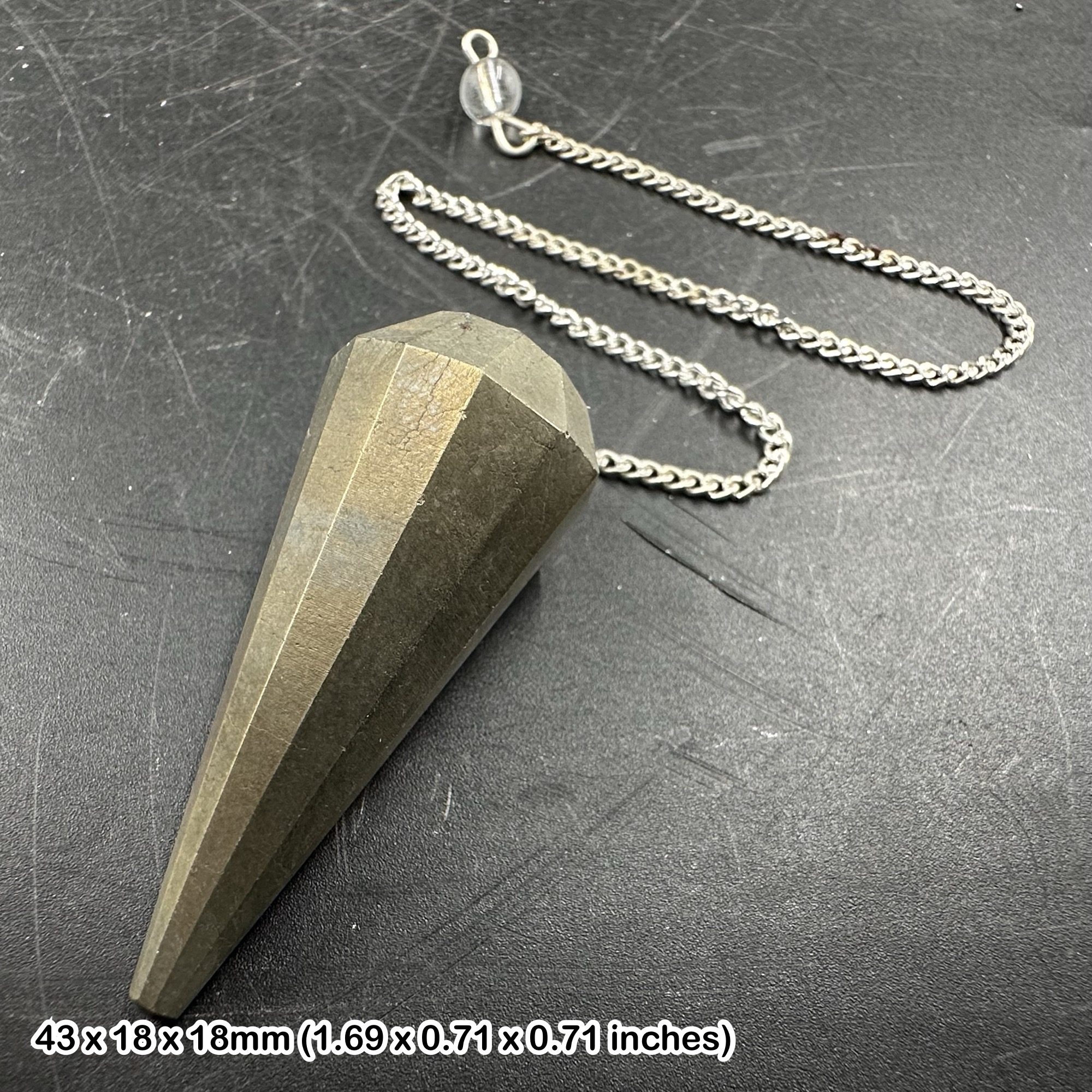
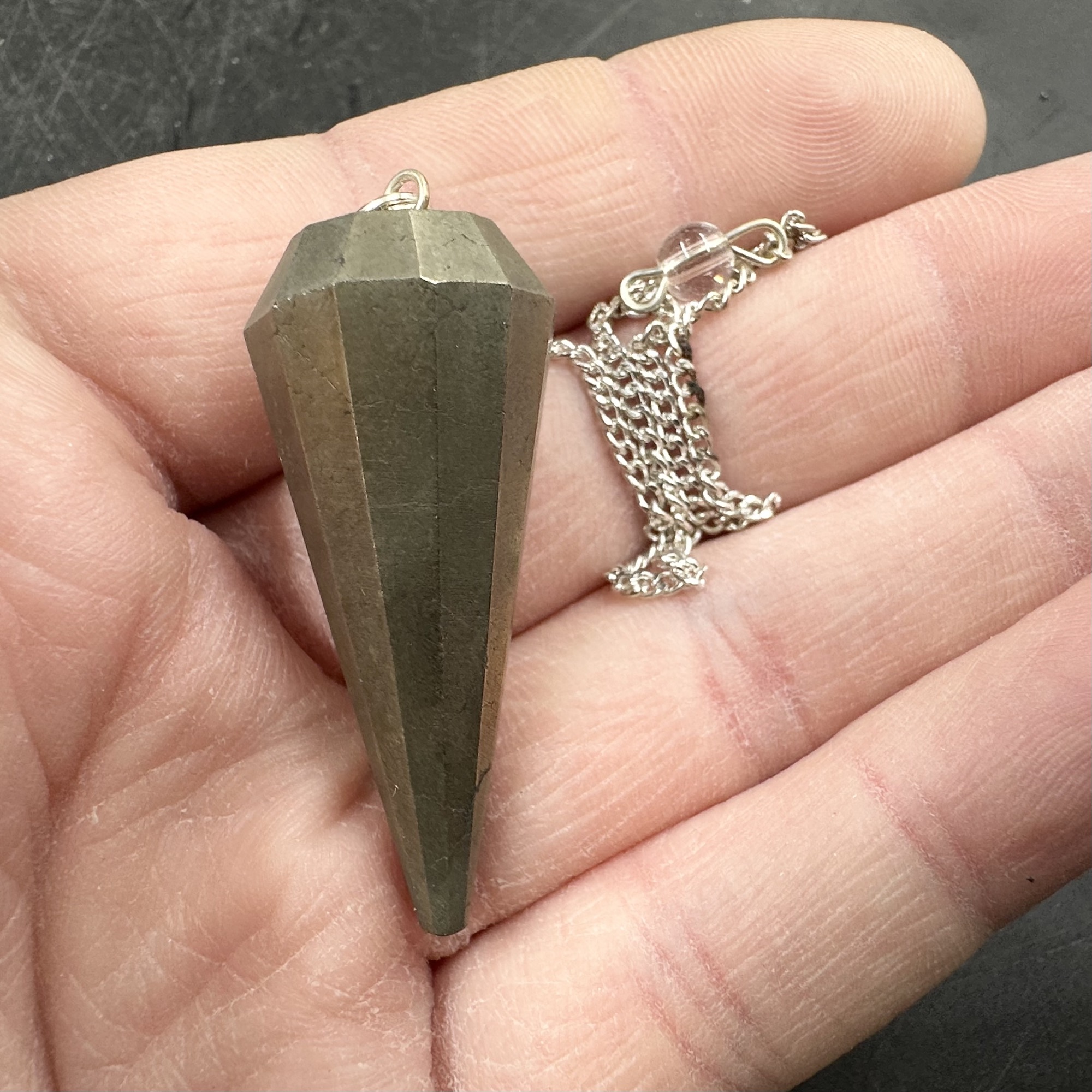
This listing features a Pyrite Faceted Pendulum crafted from genuine natural pyrite, a striking metallic mineral well known for its bright golden appearance and distinctive crystalline structure. The pendulum has been carefully shaped and faceted to highlight the natural reflective qualities of the stone while maintaining the character of the mineral. The specimen shown in the photographs is the exact pendulum you will receive, making it a unique and individually selected mineral piece. Each pendulum is supplied with a Certificate of Authenticity lifetime guarantee card, confirming that the stone is a genuine natural mineral specimen. Full sizing and proportions can be seen clearly in the accompanying photographs. MINERAL SPECIES AND CHEMICAL COMPOSITION Pyrite is an iron sulfide mineral with the chemical formula FeS₂, belonging to the sulfide mineral group. It is one of the most common sulfide minerals found in the Earth’s crust and is instantly recognisable due to its bright metallic lustre and brass-yellow colour, which has historically earned it the nickname “Fool’s Gold.” The mineral crystallises in the isometric (cubic) crystal system, meaning its natural crystals often form cubic, octahedral, or pyritohedral shapes. These symmetrical crystal forms are a defining feature of pyrite and are highly valued among mineral collectors and geological enthusiasts. Although this specimen has been faceted into a pendulum shape, the natural mineral composition and internal structure remain characteristic of pyrite. COLOUR, LUSTRE AND PHYSICAL PROPERTIES Pyrite is known for its distinctive metallic lustre and bright golden brass colour, which can range from pale gold to deeper bronze tones depending on formation conditions. Its reflective surfaces create an eye-catching appearance, especially when cut with facets that catch and reflect light. The mineral has a Mohs hardness of approximately 6 to 6.5, making it relatively durable compared to many other minerals used in decorative stone objects. Pyrite also exhibits a high specific gravity due to its iron content, giving the pendulum a satisfying natural weight. Natural inclusions, fine surface textures, and subtle variations in colour may be visible and are typical characteristics of authentic pyrite. GEOLOGICAL FORMATION AND NATURAL OCCURRENCE Pyrite forms in a wide range of geological environments. It commonly develops within sedimentary rocks, hydrothermal veins, metamorphic deposits, and igneous formations. The mineral forms when iron and sulfur combine under conditions where sulfur is abundant and oxygen is limited. Large pyrite deposits occur worldwide, with notable sources including Spain, Peru, Italy, the United States, and China. In many deposits, pyrite occurs alongside other minerals such as quartz, calcite, sphalerite, galena, chalcopyrite, and fluorite, reflecting the complex geochemical environments in which it forms. In sedimentary environments, pyrite can also develop within organic-rich layers, sometimes forming nodules or crystalline clusters. FACETED PENDULUM FORM AND CRAFTSMANSHIP The pendulum shape has been carefully crafted to produce a balanced form suitable for display, collecting, or traditional pendulum use. The faceted surfaces enhance the natural metallic sheen of the mineral while providing a symmetrical and aesthetically pleasing design. Pendulums made from natural minerals have been used historically in dowsing practices, spiritual traditions, and symbolic tools in various cultures. These practices vary widely and are part of cultural or spiritual traditions rather than scientific applications. As a mineral specimen, the faceted pendulum also functions as an attractive decorative crystal object, collector’s piece, or desk display stone. CRYSTAL COLLECTING, MINERAL DISPLAY AND GIFT IDEA Natural pyrite specimens remain popular with mineral collectors, geology enthusiasts, lapidary hobbyists, and gemstone collectors due to their striking appearance and geological significance. The metallic golden surfaces make pyrite one of the most visually distinctive minerals in any collection. A faceted pyrite pendulum can serve as an eye-catching display piece, mineral cabinet addition, educational geology specimen, or thoughtful gift for crystal and mineral collectors. Because each specimen is individually selected and photographed, you receive the exact crystal pendulum shown in the listing images, ensuring complete transparency about the mineral’s natural features. AUTHENTICITY AND PRESENTATION This pendulum is made from genuine natural pyrite and comes supplied with a Certificate of Authenticity lifetime guarantee card confirming the authenticity of the mineral. The stone has been carefully chosen and photographed to show the exact specimen you will receive. Please refer to the images for full size, shape, and natural surface characteristics. Pyrite remains one of the most iconic metallic minerals in the world, prized for its natural golden appearance, geological significance, and strong presence within mineral collections. This faceted pendulum specimen offers a distinctive example of this remarkable iron sulfide mineral.
This listing features a Pyrite Faceted Pendulum crafted from genuine natural pyrite, a striking metallic mineral well known for its bright golden appearance and distinctive crystalline structure. The pendulum has been carefully shaped and faceted to highlight the natural reflective qualities of the stone while maintaining the character of the mineral. The specimen shown in the photographs is the exact pendulum you will receive, making it a unique and individually selected mineral piece. Each pendulum is supplied with a Certificate of Authenticity lifetime guarantee card, confirming that the stone is a genuine natural mineral specimen. Full sizing and proportions can be seen clearly in the accompanying photographs. MINERAL SPECIES AND CHEMICAL COMPOSITION Pyrite is an iron sulfide mineral with the chemical formula FeS₂, belonging to the sulfide mineral group. It is one of the most common sulfide minerals found in the Earth’s crust and is instantly recognisable due to its bright metallic lustre and brass-yellow colour, which has historically earned it the nickname “Fool’s Gold.” The mineral crystallises in the isometric (cubic) crystal system, meaning its natural crystals often form cubic, octahedral, or pyritohedral shapes. These symmetrical crystal forms are a defining feature of pyrite and are highly valued among mineral collectors and geological enthusiasts. Although this specimen has been faceted into a pendulum shape, the natural mineral composition and internal structure remain characteristic of pyrite. COLOUR, LUSTRE AND PHYSICAL PROPERTIES Pyrite is known for its distinctive metallic lustre and bright golden brass colour, which can range from pale gold to deeper bronze tones depending on formation conditions. Its reflective surfaces create an eye-catching appearance, especially when cut with facets that catch and reflect light. The mineral has a Mohs hardness of approximately 6 to 6.5, making it relatively durable compared to many other minerals used in decorative stone objects. Pyrite also exhibits a high specific gravity due to its iron content, giving the pendulum a satisfying natural weight. Natural inclusions, fine surface textures, and subtle variations in colour may be visible and are typical characteristics of authentic pyrite. GEOLOGICAL FORMATION AND NATURAL OCCURRENCE Pyrite forms in a wide range of geological environments. It commonly develops within sedimentary rocks, hydrothermal veins, metamorphic deposits, and igneous formations. The mineral forms when iron and sulfur combine under conditions where sulfur is abundant and oxygen is limited. Large pyrite deposits occur worldwide, with notable sources including Spain, Peru, Italy, the United States, and China. In many deposits, pyrite occurs alongside other minerals such as quartz, calcite, sphalerite, galena, chalcopyrite, and fluorite, reflecting the complex geochemical environments in which it forms. In sedimentary environments, pyrite can also develop within organic-rich layers, sometimes forming nodules or crystalline clusters. FACETED PENDULUM FORM AND CRAFTSMANSHIP The pendulum shape has been carefully crafted to produce a balanced form suitable for display, collecting, or traditional pendulum use. The faceted surfaces enhance the natural metallic sheen of the mineral while providing a symmetrical and aesthetically pleasing design. Pendulums made from natural minerals have been used historically in dowsing practices, spiritual traditions, and symbolic tools in various cultures. These practices vary widely and are part of cultural or spiritual traditions rather than scientific applications. As a mineral specimen, the faceted pendulum also functions as an attractive decorative crystal object, collector’s piece, or desk display stone. CRYSTAL COLLECTING, MINERAL DISPLAY AND GIFT IDEA Natural pyrite specimens remain popular with mineral collectors, geology enthusiasts, lapidary hobbyists, and gemstone collectors due to their striking appearance and geological significance. The metallic golden surfaces make pyrite one of the most visually distinctive minerals in any collection. A faceted pyrite pendulum can serve as an eye-catching display piece, mineral cabinet addition, educational geology specimen, or thoughtful gift for crystal and mineral collectors. Because each specimen is individually selected and photographed, you receive the exact crystal pendulum shown in the listing images, ensuring complete transparency about the mineral’s natural features. AUTHENTICITY AND PRESENTATION This pendulum is made from genuine natural pyrite and comes supplied with a Certificate of Authenticity lifetime guarantee card confirming the authenticity of the mineral. The stone has been carefully chosen and photographed to show the exact specimen you will receive. Please refer to the images for full size, shape, and natural surface characteristics. Pyrite remains one of the most iconic metallic minerals in the world, prized for its natural golden appearance, geological significance, and strong presence within mineral collections. This faceted pendulum specimen offers a distinctive example of this remarkable iron sulfide mineral.