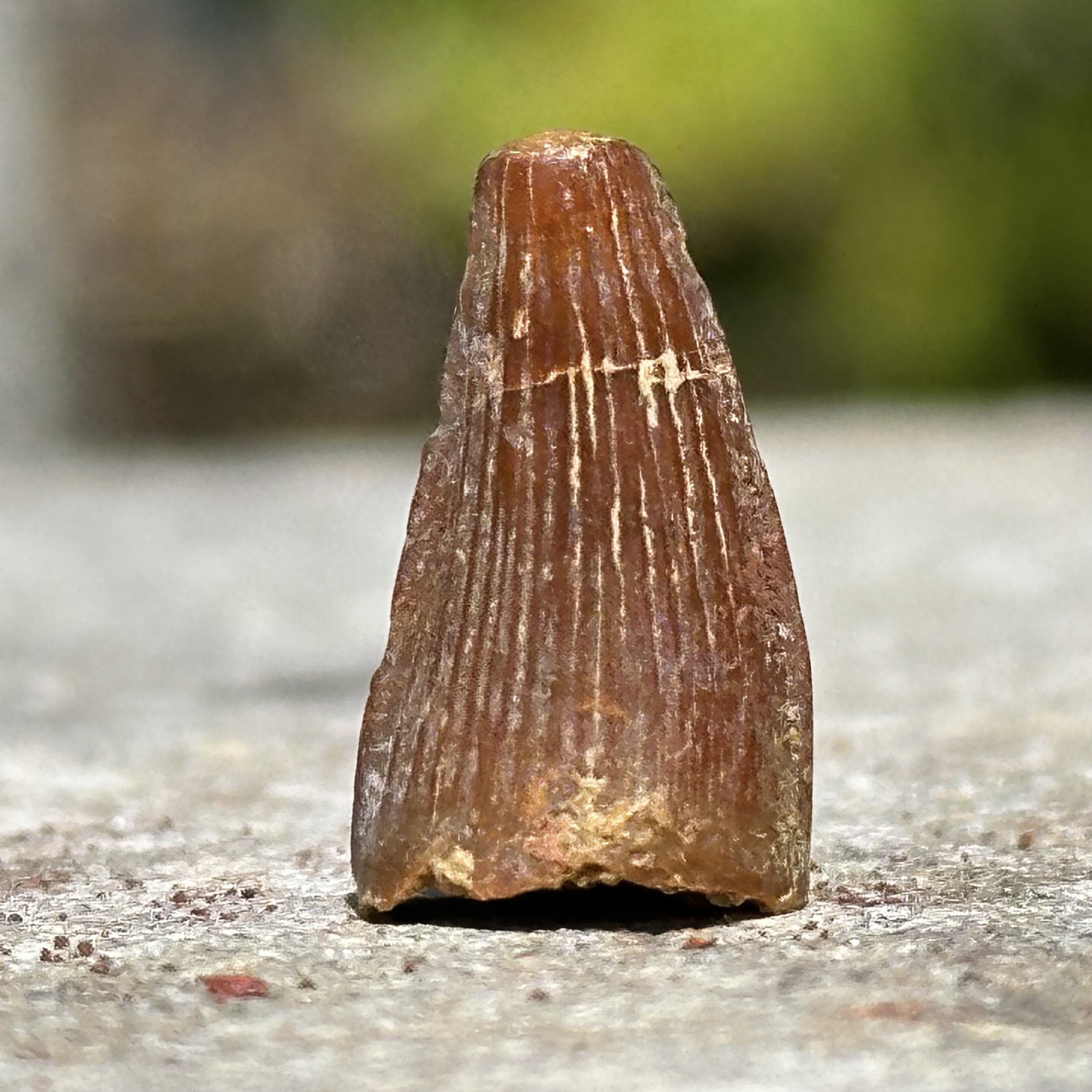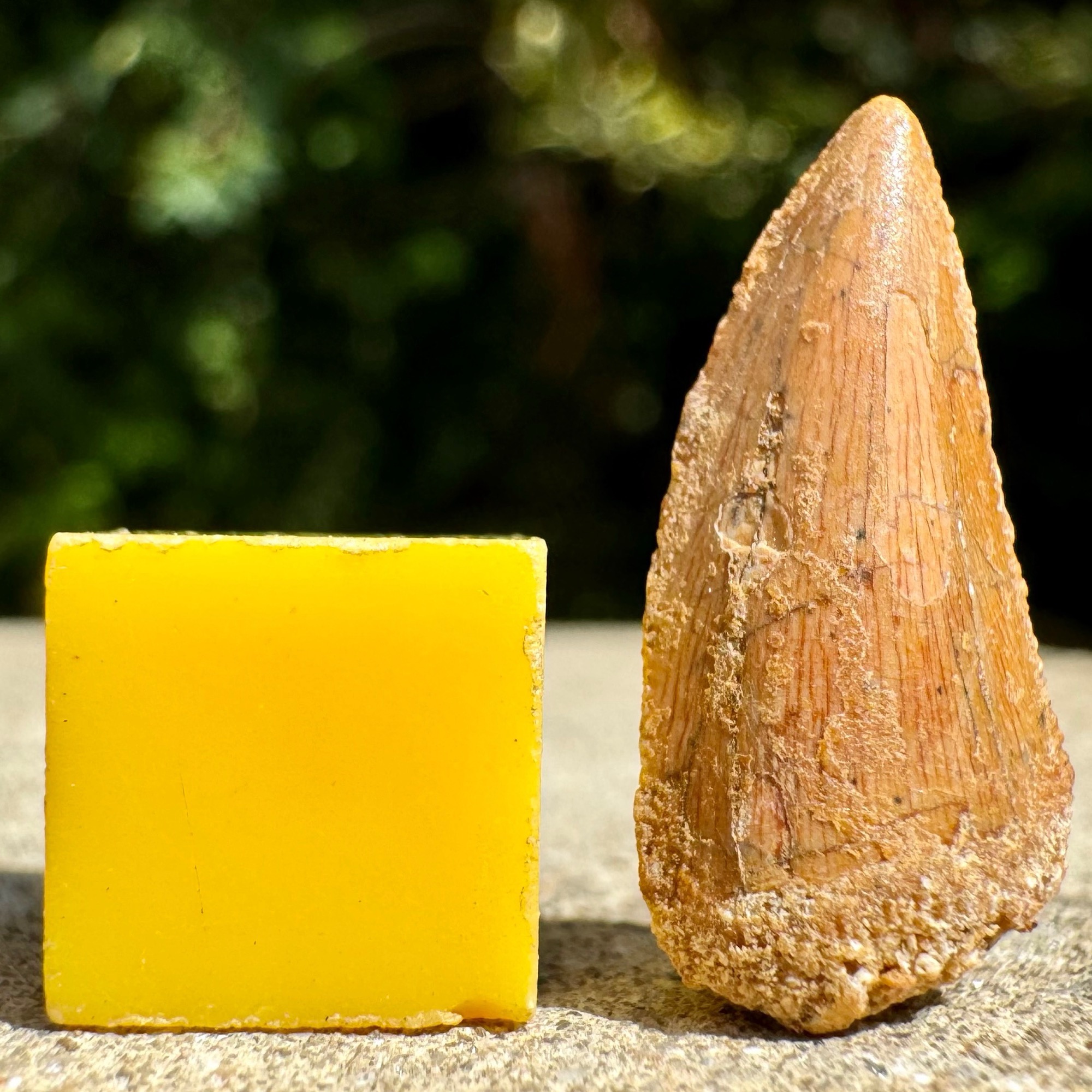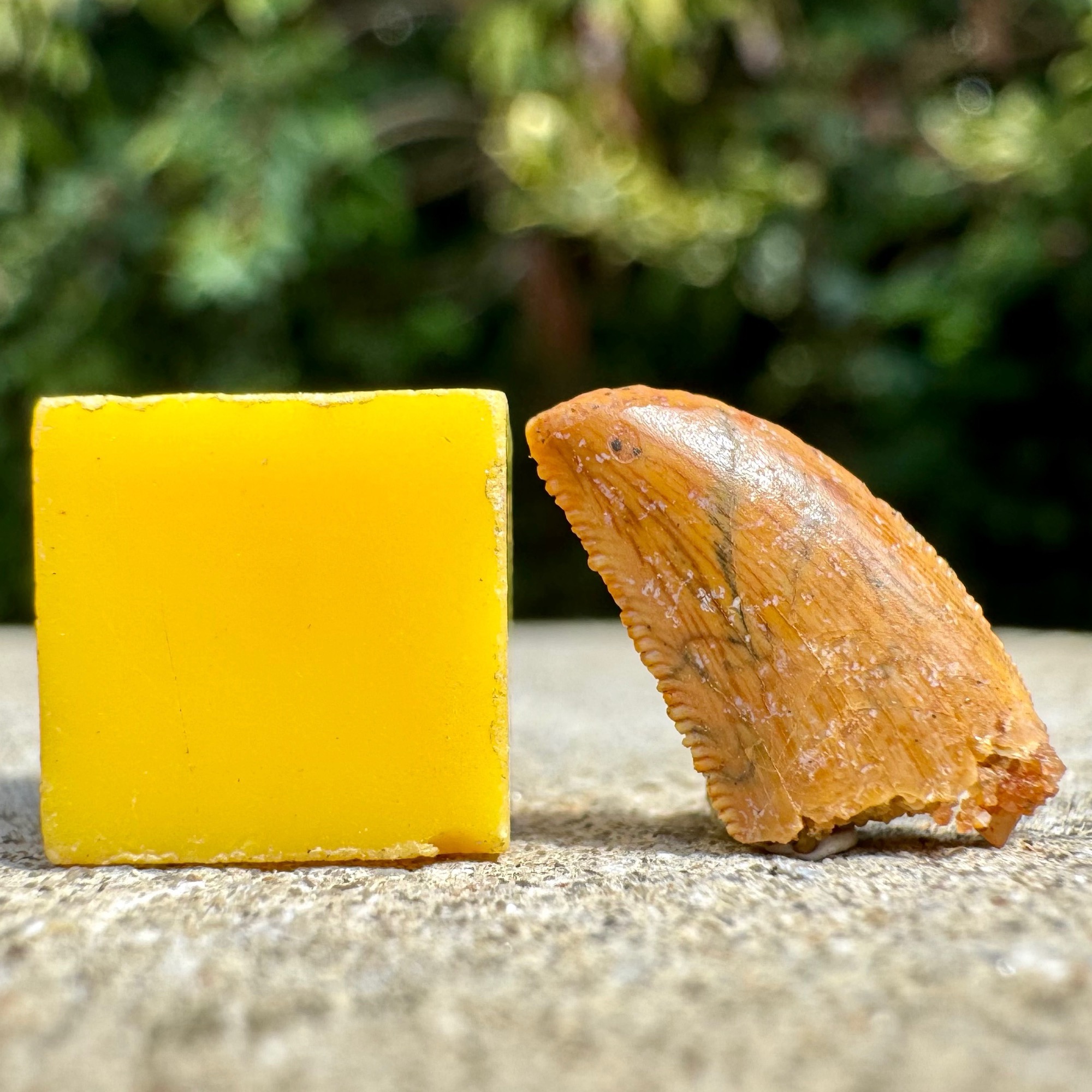
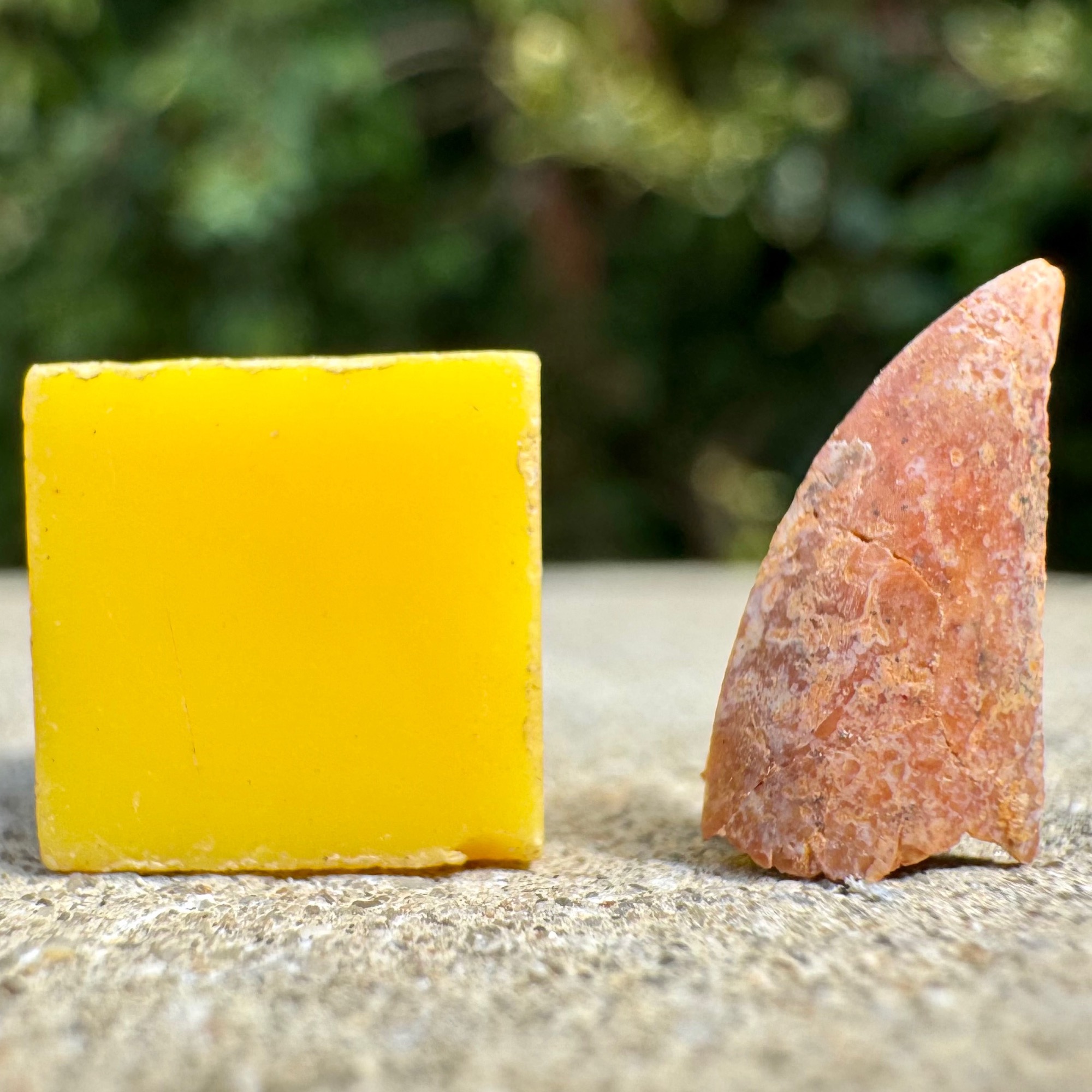
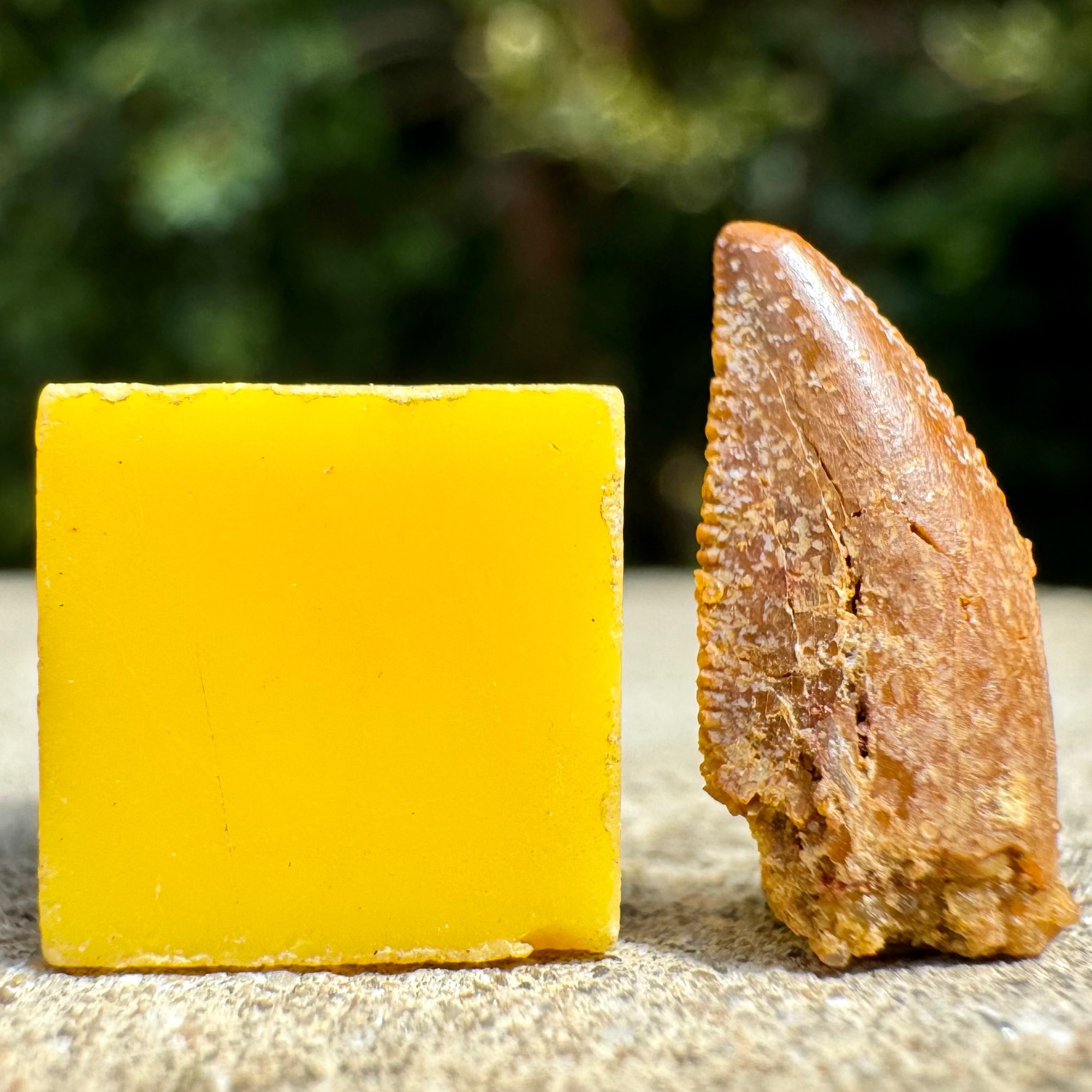
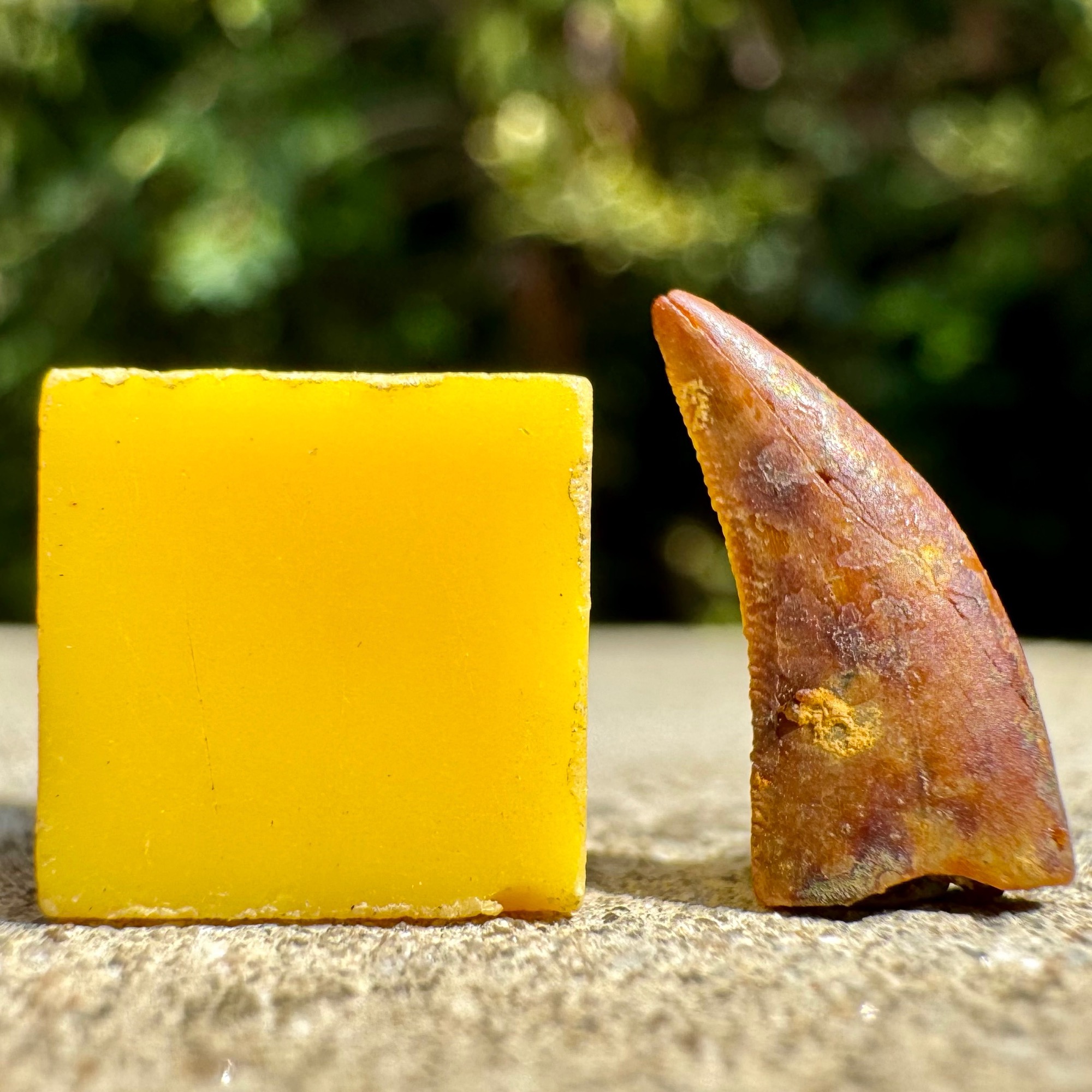
Raptor Tooth Deltadromeus agilis Fossil Cretaceous Morocco Kem Kem 6-15mm
£ 24.00
Deltadromeus agilis Raptor Tooth from the Kem Kem Beds, MoroccoThis genuine raptor tooth fossil, attributed to Deltadromeus agilis, comes from
the renowned Kem Kem Beds of the Tegana Formation in the Kem Kem Basin, Morocco. Dating to the Upper Cretaceous period, specifically the Cenomanian stage approximately 100–94 million years ago, this specimen represents a fast-moving predatory dinosaur that once dominated its environment. The photograph provided shows an example of the actual specimen you will receive, with each tooth carefully selected for quality, preservation, and collector appeal, measuring approximately 6–15mm.Geological Context – Kem Kem Beds, Tegana FormationThe Kem Kem Beds are among the most significant fossil deposits in North Africa, formed within an ancient river and delta system during the Cretaceous. These sediments, primarily composed of sandstones and siltstones, were laid down by dynamic fluvial environments connected to the Tethys Ocean. This region supported an extraordinary ecosystem that included large theropods, crocodilians, fish, and flying reptiles.The Tegana Formation is especially known for its vertebrate fossil content, where durable elements such as teeth were transported and buried in river channels. These conditions allowed for exceptional preservation of predatory dinosaur remains, making Kem Kem fossils highly sought after worldwide.Fossil Type and Taxonomic IdentificationDeltadromeus agilis is a theropod dinosaur within the order Saurischia and clade Theropoda. First described by Sereno et al. in 1996, this dinosaur is known for its long, slender limbs and adaptations for speed, suggesting an agile and efficient predator. Although skeletal remains are relatively rare, teeth attributed to this species provide important insight into its feeding behaviour and ecological role.These teeth are characteristic of carnivorous dinosaurs and are highly valued due to their association with active predation in Cretaceous ecosystems.Morphological Features and Predatory AdaptationsThis tooth exhibits the classic theropod morphology: laterally compressed, recurved, and sharply pointed. Its shape is perfectly adapted for gripping and slicing through prey. Fine serrations, or denticles, may be present along the edges, enhancing its cutting efficiency and making it a highly effective predatory tool.The enamel surface is robust and often shows subtle texture or wear patterns from use. Despite its smaller size range of 6–15mm, the tooth retains all the defining characteristics of a large predator’s dentition, offering a detailed and accessible example of theropod anatomy.The compact size makes it particularly suitable for collectors seeking authentic dinosaur material in a manageable and display-friendly form.Depositional Environment and PreservationThe fossilisation process occurred within river channel deposits where remains were buried by sand and sediment. Rapid burial protected the tooth from scavenging and erosion, allowing mineralisation to preserve its structure over millions of years. Teeth are among the most commonly preserved dinosaur fossils due to their density and durability.The Kem Kem Beds are well known for producing well-preserved theropod teeth with strong structural integrity and excellent detail.Authenticity and Certificate of GuaranteeThis fossil is a genuine specimen and includes a Certificate of Authenticity lifetime guarantee card. Each tooth is carefully selected and handled to preserve its natural condition, ensuring you receive a high-quality and authentic fossil suitable for any collection.Ideal for Collectors, Display, and EducationA Deltadromeus agilis tooth fossil is a highly desirable addition to any dinosaur or fossil collection. Its connection to a fast, agile predator from the Cretaceous period makes it both scientifically significant and visually compelling. Whether used for display, study, or as a unique gift, it offers a tangible connection to prehistoric life.Size and Specimen InformationEach specimen measures approximately 6–15mm. Please refer to the photograph for general size and quality reference. You will receive a carefully chosen example consistent with the image shown, ensuring a high-quality and authentic addition to your collection.
the renowned Kem Kem Beds of the Tegana Formation in the Kem Kem Basin, Morocco. Dating to the Upper Cretaceous period, specifically the Cenomanian stage approximately 100–94 million years ago, this specimen represents a fast-moving predatory dinosaur that once dominated its environment. The photograph provided shows an example of the actual specimen you will receive, with each tooth carefully selected for quality, preservation, and collector appeal, measuring approximately 6–15mm.Geological Context – Kem Kem Beds, Tegana FormationThe Kem Kem Beds are among the most significant fossil deposits in North Africa, formed within an ancient river and delta system during the Cretaceous. These sediments, primarily composed of sandstones and siltstones, were laid down by dynamic fluvial environments connected to the Tethys Ocean. This region supported an extraordinary ecosystem that included large theropods, crocodilians, fish, and flying reptiles.The Tegana Formation is especially known for its vertebrate fossil content, where durable elements such as teeth were transported and buried in river channels. These conditions allowed for exceptional preservation of predatory dinosaur remains, making Kem Kem fossils highly sought after worldwide.Fossil Type and Taxonomic IdentificationDeltadromeus agilis is a theropod dinosaur within the order Saurischia and clade Theropoda. First described by Sereno et al. in 1996, this dinosaur is known for its long, slender limbs and adaptations for speed, suggesting an agile and efficient predator. Although skeletal remains are relatively rare, teeth attributed to this species provide important insight into its feeding behaviour and ecological role.These teeth are characteristic of carnivorous dinosaurs and are highly valued due to their association with active predation in Cretaceous ecosystems.Morphological Features and Predatory AdaptationsThis tooth exhibits the classic theropod morphology: laterally compressed, recurved, and sharply pointed. Its shape is perfectly adapted for gripping and slicing through prey. Fine serrations, or denticles, may be present along the edges, enhancing its cutting efficiency and making it a highly effective predatory tool.The enamel surface is robust and often shows subtle texture or wear patterns from use. Despite its smaller size range of 6–15mm, the tooth retains all the defining characteristics of a large predator’s dentition, offering a detailed and accessible example of theropod anatomy.The compact size makes it particularly suitable for collectors seeking authentic dinosaur material in a manageable and display-friendly form.Depositional Environment and PreservationThe fossilisation process occurred within river channel deposits where remains were buried by sand and sediment. Rapid burial protected the tooth from scavenging and erosion, allowing mineralisation to preserve its structure over millions of years. Teeth are among the most commonly preserved dinosaur fossils due to their density and durability.The Kem Kem Beds are well known for producing well-preserved theropod teeth with strong structural integrity and excellent detail.Authenticity and Certificate of GuaranteeThis fossil is a genuine specimen and includes a Certificate of Authenticity lifetime guarantee card. Each tooth is carefully selected and handled to preserve its natural condition, ensuring you receive a high-quality and authentic fossil suitable for any collection.Ideal for Collectors, Display, and EducationA Deltadromeus agilis tooth fossil is a highly desirable addition to any dinosaur or fossil collection. Its connection to a fast, agile predator from the Cretaceous period makes it both scientifically significant and visually compelling. Whether used for display, study, or as a unique gift, it offers a tangible connection to prehistoric life.Size and Specimen InformationEach specimen measures approximately 6–15mm. Please refer to the photograph for general size and quality reference. You will receive a carefully chosen example consistent with the image shown, ensuring a high-quality and authentic addition to your collection.