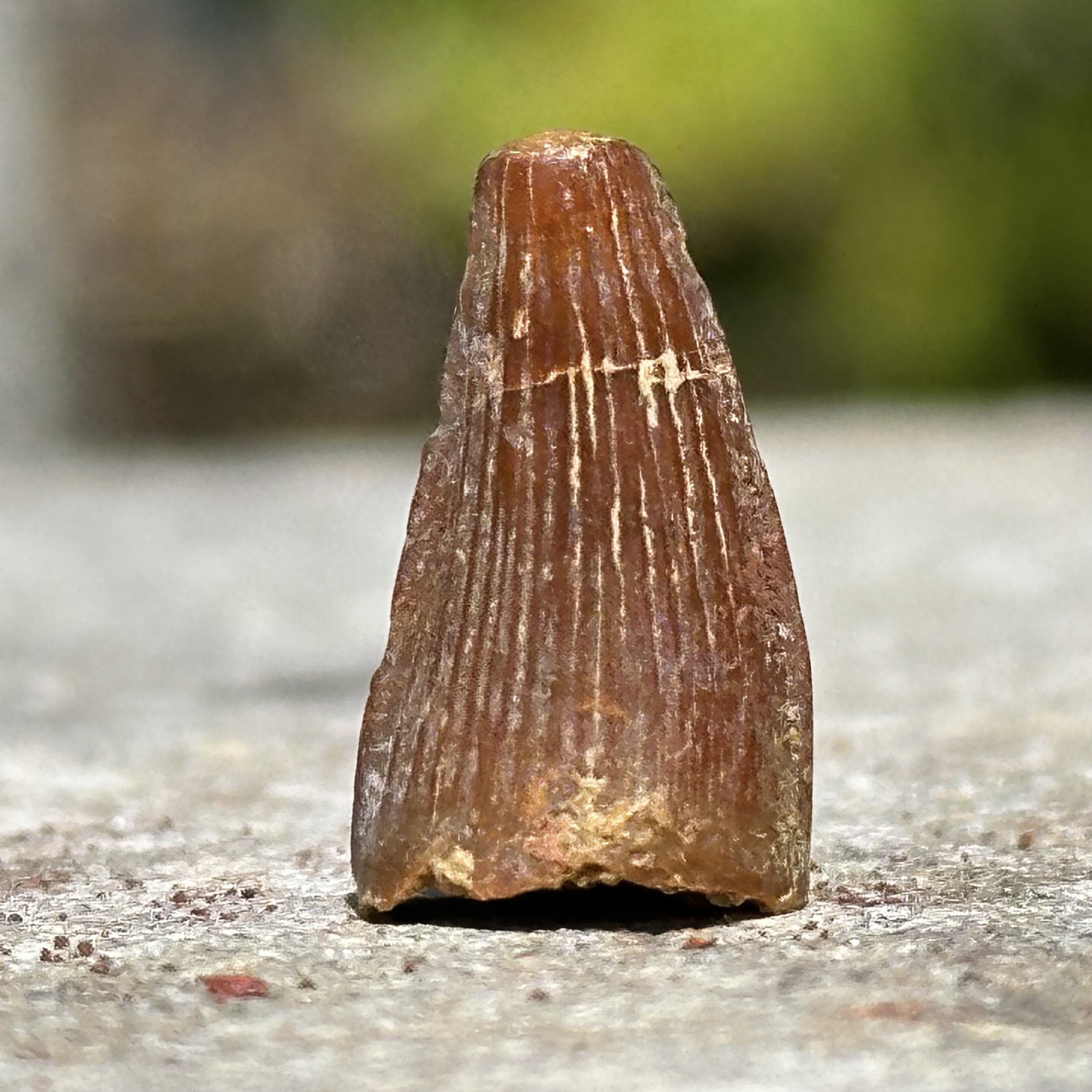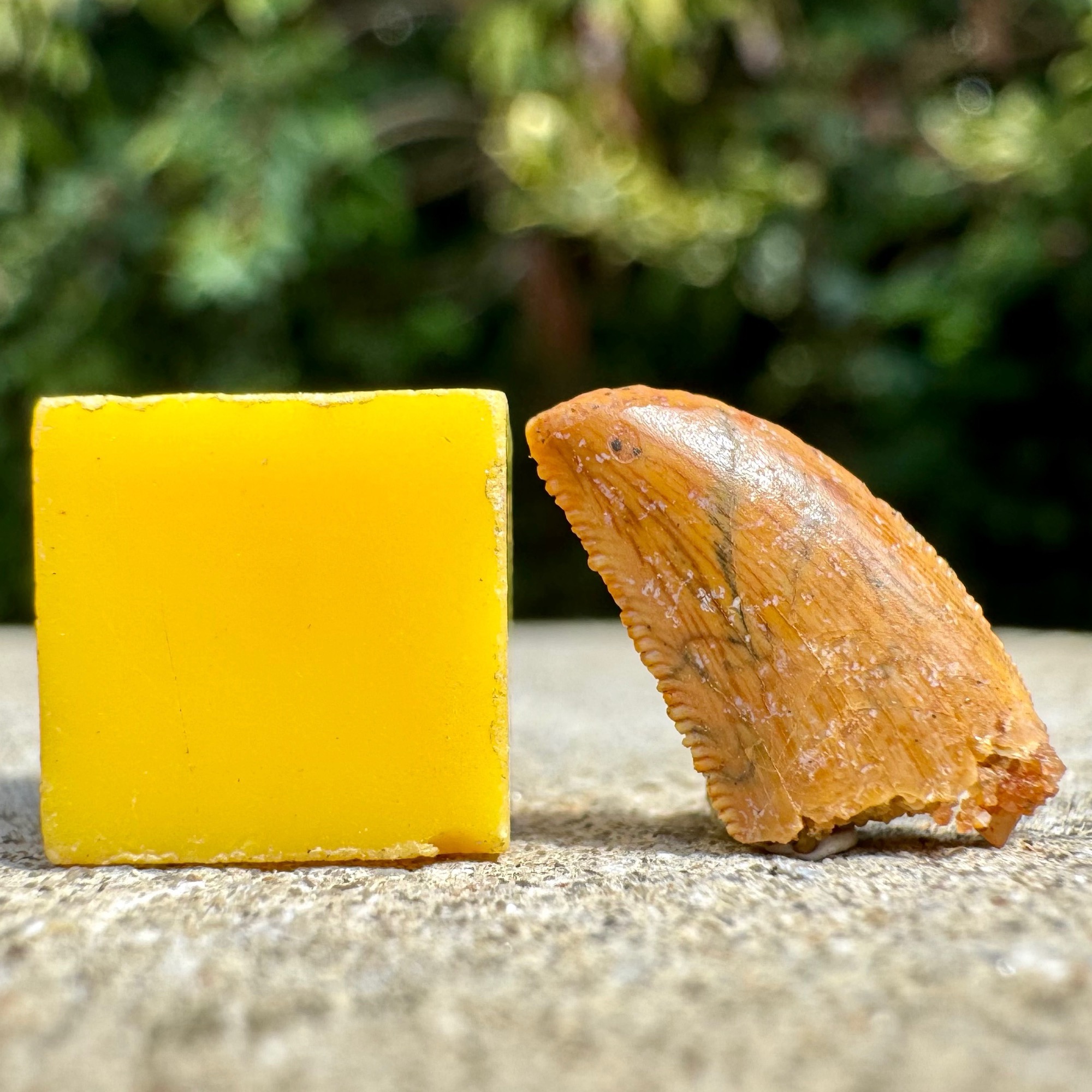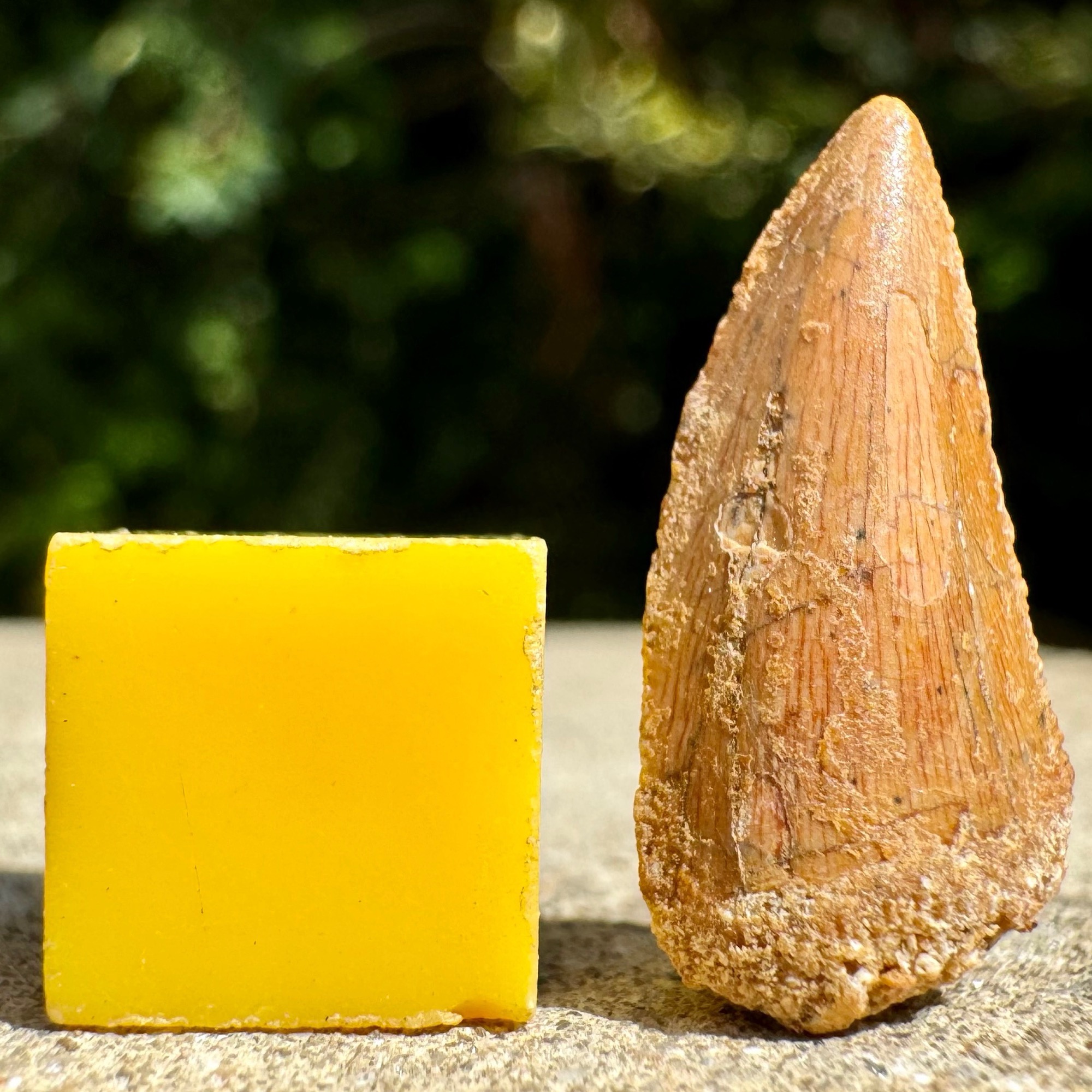
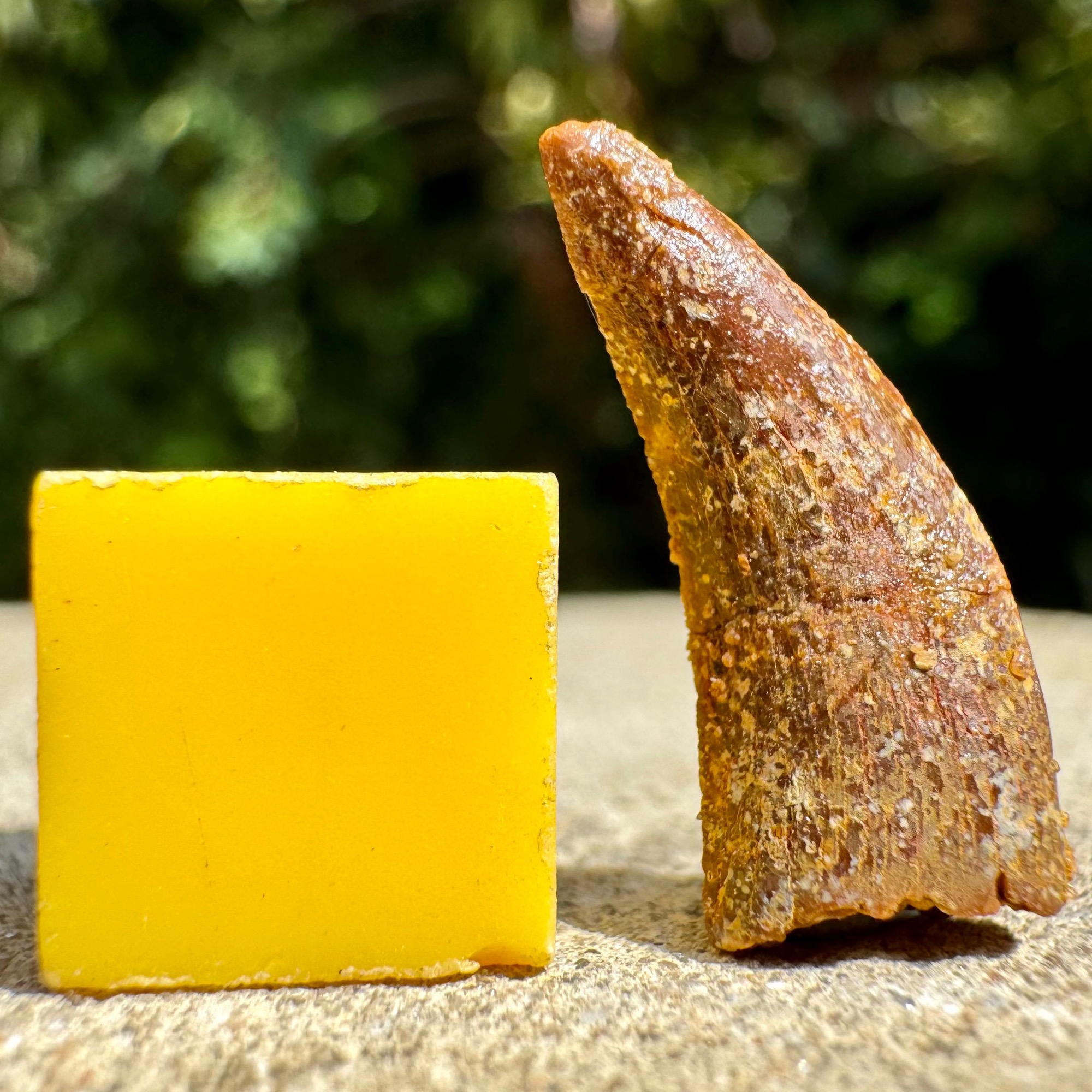
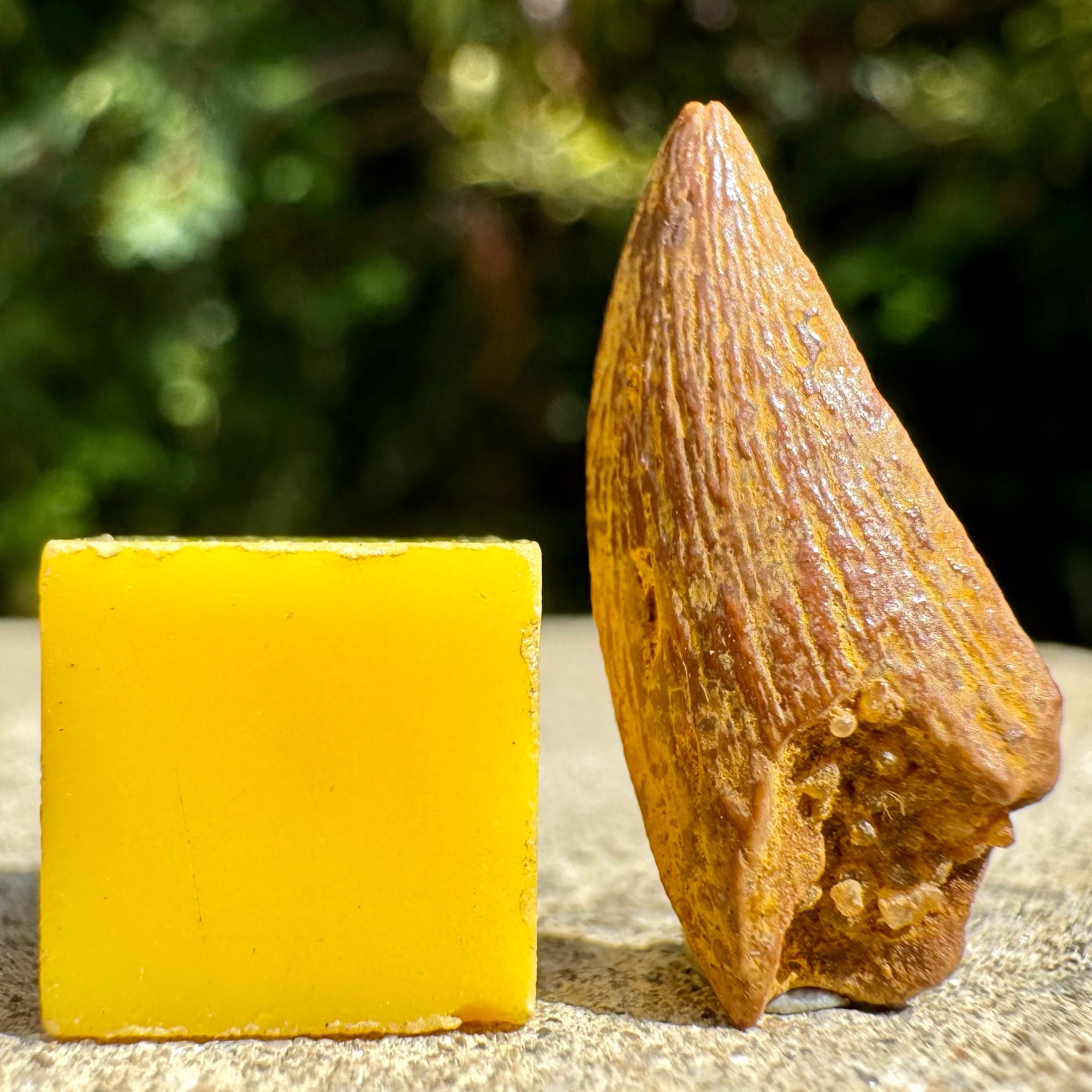
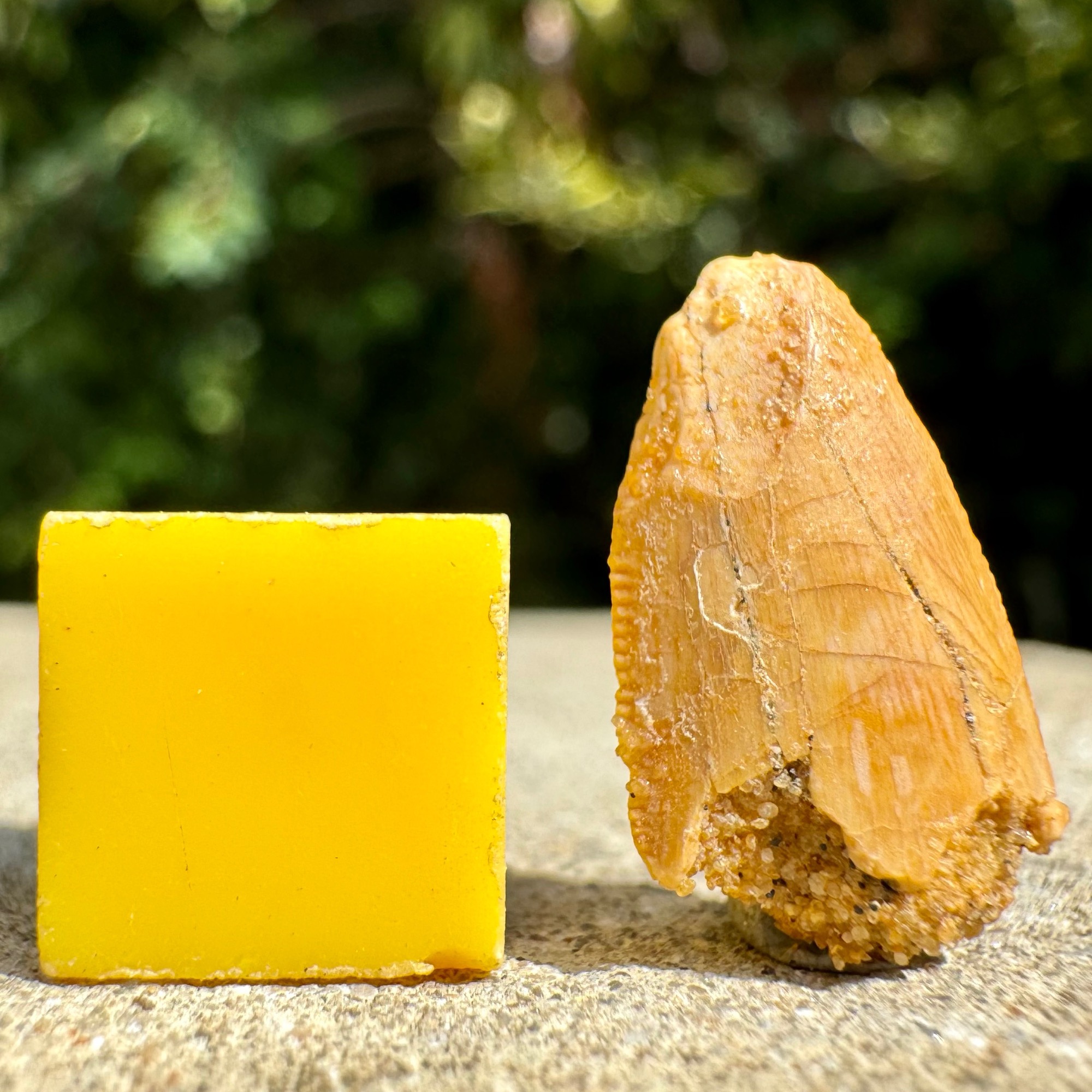
Raptor Tooth Deltadromeus agilis Fossil Cretaceous Morocco Kem Kem 15-25mm
£ 36.00
Deltadromeus agilis Raptor Tooth from the Kem Kem Beds, MoroccoThis genuine raptor tooth fossil, attributed to Deltadromeus agilis, originates
from the famous Kem Kem Beds of the Tegana Formation in the Kem Kem Basin, Morocco. Dating to the Upper Cretaceous period, specifically the Cenomanian stage approximately 100–94 million years ago, this specimen represents a fast and agile predatory dinosaur. The photograph provided shows an example of the actual specimen you will receive, with each tooth carefully selected for quality and preservation, measuring approximately 15–25mm.Geological Context – Kem Kem Beds, Tegana FormationThe Kem Kem Beds are among the most important fossil deposits in the world, representing an ancient river and delta system that existed during the Late Cretaceous. These sediments, primarily sandstones and siltstones, were deposited by dynamic fluvial environments connected to the Tethys Ocean. This region supported a diverse ecosystem of large theropods, herbivorous dinosaurs, crocodilians, fish, and flying reptiles.The Tegana Formation is particularly well known for preserving vertebrate fossils within river channel deposits. Teeth, being highly durable, were often transported and buried within these sediments, leading to excellent preservation and making them one of the most commonly recovered fossil types from the region.Fossil Type and Taxonomic IdentificationDeltadromeus agilis is a theropod dinosaur belonging to the order Saurischia and clade Theropoda. First described by Sereno et al. in 1996, this dinosaur is recognised for its long limbs and adaptations for speed, suggesting it was a highly agile predator. Although complete skeletal material is rare, isolated teeth such as this provide valuable insight into its feeding behaviour and ecological role within the Kem Kem ecosystem.Teeth attributed to Deltadromeus are highly sought after by collectors due to their association with active predation and their distinctive morphology.Morphological Features and Predatory AdaptationsThis tooth displays the classic characteristics of a theropod predator, including a laterally compressed, recurved shape and a sharp, pointed tip. These features made it highly effective for gripping and slicing through prey. Fine serrations, known as denticles, may be present along the cutting edges, enhancing its ability to tear flesh.The enamel is robust and may show subtle wear patterns, reflecting repeated use. The size range of 15–25mm offers a well-balanced specimen that clearly demonstrates theropod anatomy while remaining ideal for display and handling. The curvature and symmetry of the tooth highlight its role as an efficient predatory tool.Depositional Environment and PreservationThe fossilisation process occurred within sediment-rich river systems where remains were rapidly buried by sand and silt. This quick burial protected the tooth from scavenging and environmental damage. Over millions of years, mineralisation replaced the original material, preserving the tooth in stone while maintaining its original form.The Kem Kem Beds are especially noted for producing well-preserved theropod teeth, often retaining fine structural details and strong durability.Authenticity and Certificate of GuaranteeThis fossil is a genuine specimen and includes a Certificate of Authenticity lifetime guarantee card. Each tooth is carefully selected and handled to ensure it meets high standards of quality and authenticity, providing confidence for collectors and enthusiasts.Ideal for Collectors, Display, and Educational UseA Deltadromeus agilis tooth fossil is a highly desirable addition to any fossil or dinosaur collection. Its connection to a fast-moving predator from the Cretaceous period makes it both visually striking and scientifically significant. Whether displayed in a collection, used for educational purposes, or given as a unique gift, it offers a tangible link to prehistoric life.Size and Specimen InformationEach specimen measures approximately 15–25mm. Please refer to the photograph for general size and quality reference. You will receive a carefully chosen example consistent with the image shown, ensuring a high-quality and authentic addition to your collection.
from the famous Kem Kem Beds of the Tegana Formation in the Kem Kem Basin, Morocco. Dating to the Upper Cretaceous period, specifically the Cenomanian stage approximately 100–94 million years ago, this specimen represents a fast and agile predatory dinosaur. The photograph provided shows an example of the actual specimen you will receive, with each tooth carefully selected for quality and preservation, measuring approximately 15–25mm.Geological Context – Kem Kem Beds, Tegana FormationThe Kem Kem Beds are among the most important fossil deposits in the world, representing an ancient river and delta system that existed during the Late Cretaceous. These sediments, primarily sandstones and siltstones, were deposited by dynamic fluvial environments connected to the Tethys Ocean. This region supported a diverse ecosystem of large theropods, herbivorous dinosaurs, crocodilians, fish, and flying reptiles.The Tegana Formation is particularly well known for preserving vertebrate fossils within river channel deposits. Teeth, being highly durable, were often transported and buried within these sediments, leading to excellent preservation and making them one of the most commonly recovered fossil types from the region.Fossil Type and Taxonomic IdentificationDeltadromeus agilis is a theropod dinosaur belonging to the order Saurischia and clade Theropoda. First described by Sereno et al. in 1996, this dinosaur is recognised for its long limbs and adaptations for speed, suggesting it was a highly agile predator. Although complete skeletal material is rare, isolated teeth such as this provide valuable insight into its feeding behaviour and ecological role within the Kem Kem ecosystem.Teeth attributed to Deltadromeus are highly sought after by collectors due to their association with active predation and their distinctive morphology.Morphological Features and Predatory AdaptationsThis tooth displays the classic characteristics of a theropod predator, including a laterally compressed, recurved shape and a sharp, pointed tip. These features made it highly effective for gripping and slicing through prey. Fine serrations, known as denticles, may be present along the cutting edges, enhancing its ability to tear flesh.The enamel is robust and may show subtle wear patterns, reflecting repeated use. The size range of 15–25mm offers a well-balanced specimen that clearly demonstrates theropod anatomy while remaining ideal for display and handling. The curvature and symmetry of the tooth highlight its role as an efficient predatory tool.Depositional Environment and PreservationThe fossilisation process occurred within sediment-rich river systems where remains were rapidly buried by sand and silt. This quick burial protected the tooth from scavenging and environmental damage. Over millions of years, mineralisation replaced the original material, preserving the tooth in stone while maintaining its original form.The Kem Kem Beds are especially noted for producing well-preserved theropod teeth, often retaining fine structural details and strong durability.Authenticity and Certificate of GuaranteeThis fossil is a genuine specimen and includes a Certificate of Authenticity lifetime guarantee card. Each tooth is carefully selected and handled to ensure it meets high standards of quality and authenticity, providing confidence for collectors and enthusiasts.Ideal for Collectors, Display, and Educational UseA Deltadromeus agilis tooth fossil is a highly desirable addition to any fossil or dinosaur collection. Its connection to a fast-moving predator from the Cretaceous period makes it both visually striking and scientifically significant. Whether displayed in a collection, used for educational purposes, or given as a unique gift, it offers a tangible link to prehistoric life.Size and Specimen InformationEach specimen measures approximately 15–25mm. Please refer to the photograph for general size and quality reference. You will receive a carefully chosen example consistent with the image shown, ensuring a high-quality and authentic addition to your collection.