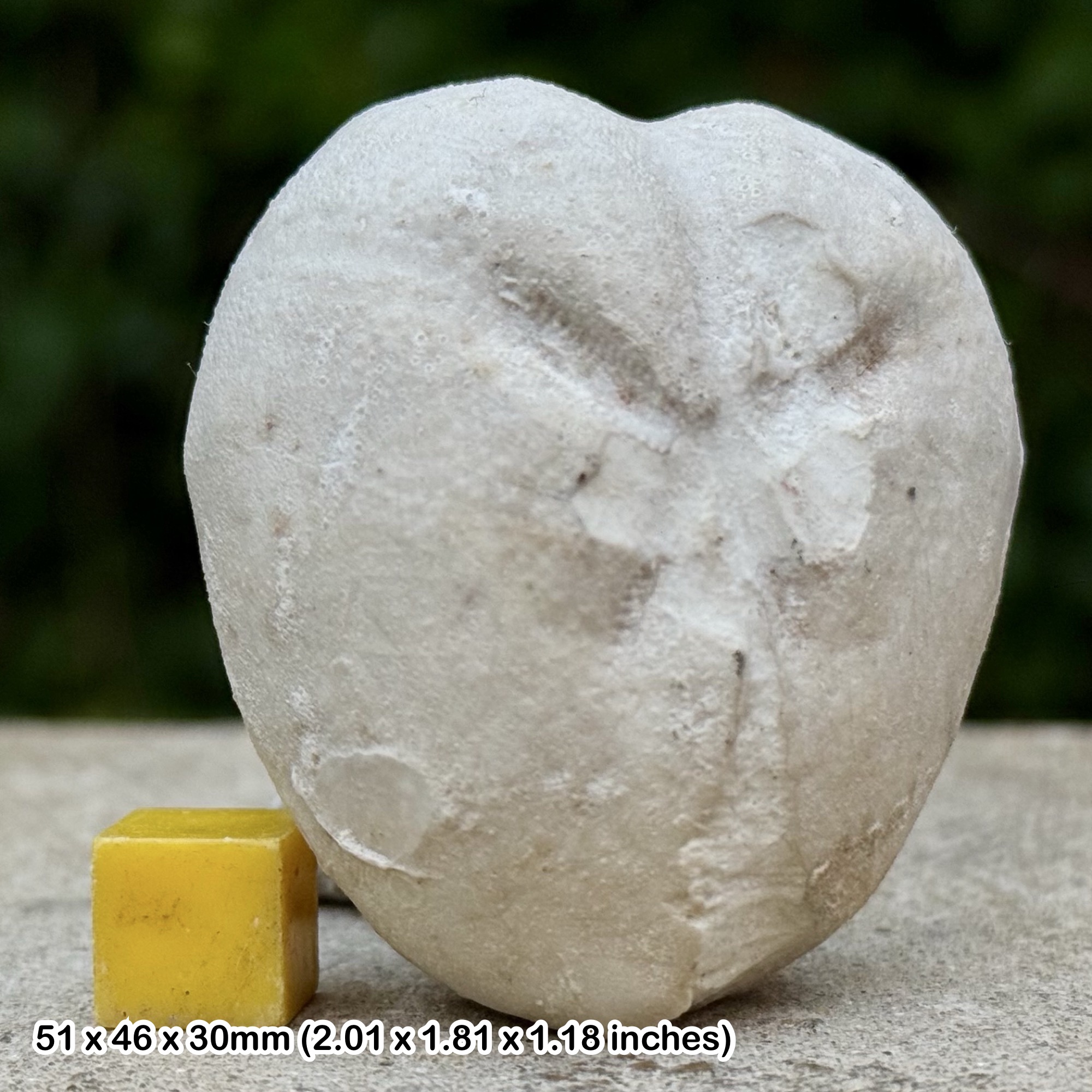
Micraster Precursor Fossil Echinoid Chalk Cretaceous Lewes Kent UK Genuine Sea Urchin
£ 14.40
GENUINE MICRASTER PRECURSOR FOSSIL ECHINOID FROM LEWES, KENTThis listing offers an authentic Micraster precursor fossil echinoid from the
famous Chalk deposits of Lewes, Kent, United Kingdom. These specimens date to the Cretaceous Period, a time when much of Britain was submerged beneath warm, shallow seas teeming with marine life. Each fossil has been carefully selected for quality and authenticity, and the specimen shown in the photographs is the exact one you will receive. A 1 cm scale cube is included for accurate size reference. Every fossil comes with a Certificate of Authenticity, ensuring it is a genuine natural specimen. GEOLOGICAL CONTEXTThe chalk cliffs and quarries of Lewes in Kent are part of the broader Southern England chalk formations that were deposited between approximately 100 and 66 million years ago. The chalk formed from the accumulation of microscopic marine algae known as coccolithophores, which over millions of years compacted into the soft white limestone we see today. These deposits preserve a wide variety of marine fossils, including ammonites, belemnites, and echinoids such as Micraster. SCIENTIFIC CLASSIFICATION
• Kingdom: Animalia
• Phylum: Echinodermata
• Class: Echinoidea
• Order: Spatangoida
• Family: Micrasteridae
• Genus: Micraster (precursor form) MORPHOLOGICAL FEATURESThe Micraster precursor echinoids are characterised by their distinctive heart-shaped outline, a key feature of the spatangoid echinoids. Unlike more evolved Micraster forms, precursor specimens display earlier morphological traits, showing transitional features in their symmetry and petal structure. The test (outer shell) is bilaterally symmetrical, with petaloid ambulacra forming faint star-like patterns on the upper surface. The underside is flattened, an adaptation for burrowing in fine sediment. A notable anterior groove runs from the mouth to the front margin, designed to channel sediment during feeding. PALEOECOLOGY AND ADAPTATIONSMicraster and its precursors were deposit feeders, burrowing just beneath the seafloor surface to extract organic matter from the sediment. Their streamlined, heart-shaped form allowed efficient burrowing, while their tube feet and respiratory structures were adapted to life within chalk muds. This ecological niche was widespread during the Late Cretaceous, and their abundance makes them important markers for understanding benthic ecosystems of the time. STRATIGRAPHIC AND SCIENTIFIC IMPORTANCEMicraster echinoids, including their precursor forms, are crucial as index fossils. They evolved rapidly and show clear changes through geological time, which allows scientists to date chalk strata with precision. Fossils from Lewes are particularly valued due to the quality of preservation and the long history of geological study in this region, dating back to early pioneers of British paleontology. COLLECTABILITY AND DISPLAY VALUEThis Micraster precursor fossil echinoid is a desirable piece for collectors of echinoids, chalk fossils, and British geological specimens. Its transitional morphology makes it scientifically intriguing, while its elegant natural form makes it an attractive display item. Whether you are a seasoned fossil collector or new to paleontology, this specimen represents both beauty and science in equal measure. GUARANTEED AUTHENTICITYAll of our fossils are 100% genuine specimens and are supplied with a Certificate of Authenticity. The fossil in the photographs is the actual piece you will receive. This Micraster precursor fossil echinoid from the Cretaceous chalk of Lewes, Kent, is a fine addition to any collection, combining geological history with natural artistry.
famous Chalk deposits of Lewes, Kent, United Kingdom. These specimens date to the Cretaceous Period, a time when much of Britain was submerged beneath warm, shallow seas teeming with marine life. Each fossil has been carefully selected for quality and authenticity, and the specimen shown in the photographs is the exact one you will receive. A 1 cm scale cube is included for accurate size reference. Every fossil comes with a Certificate of Authenticity, ensuring it is a genuine natural specimen. GEOLOGICAL CONTEXTThe chalk cliffs and quarries of Lewes in Kent are part of the broader Southern England chalk formations that were deposited between approximately 100 and 66 million years ago. The chalk formed from the accumulation of microscopic marine algae known as coccolithophores, which over millions of years compacted into the soft white limestone we see today. These deposits preserve a wide variety of marine fossils, including ammonites, belemnites, and echinoids such as Micraster. SCIENTIFIC CLASSIFICATION
• Kingdom: Animalia
• Phylum: Echinodermata
• Class: Echinoidea
• Order: Spatangoida
• Family: Micrasteridae
• Genus: Micraster (precursor form) MORPHOLOGICAL FEATURESThe Micraster precursor echinoids are characterised by their distinctive heart-shaped outline, a key feature of the spatangoid echinoids. Unlike more evolved Micraster forms, precursor specimens display earlier morphological traits, showing transitional features in their symmetry and petal structure. The test (outer shell) is bilaterally symmetrical, with petaloid ambulacra forming faint star-like patterns on the upper surface. The underside is flattened, an adaptation for burrowing in fine sediment. A notable anterior groove runs from the mouth to the front margin, designed to channel sediment during feeding. PALEOECOLOGY AND ADAPTATIONSMicraster and its precursors were deposit feeders, burrowing just beneath the seafloor surface to extract organic matter from the sediment. Their streamlined, heart-shaped form allowed efficient burrowing, while their tube feet and respiratory structures were adapted to life within chalk muds. This ecological niche was widespread during the Late Cretaceous, and their abundance makes them important markers for understanding benthic ecosystems of the time. STRATIGRAPHIC AND SCIENTIFIC IMPORTANCEMicraster echinoids, including their precursor forms, are crucial as index fossils. They evolved rapidly and show clear changes through geological time, which allows scientists to date chalk strata with precision. Fossils from Lewes are particularly valued due to the quality of preservation and the long history of geological study in this region, dating back to early pioneers of British paleontology. COLLECTABILITY AND DISPLAY VALUEThis Micraster precursor fossil echinoid is a desirable piece for collectors of echinoids, chalk fossils, and British geological specimens. Its transitional morphology makes it scientifically intriguing, while its elegant natural form makes it an attractive display item. Whether you are a seasoned fossil collector or new to paleontology, this specimen represents both beauty and science in equal measure. GUARANTEED AUTHENTICITYAll of our fossils are 100% genuine specimens and are supplied with a Certificate of Authenticity. The fossil in the photographs is the actual piece you will receive. This Micraster precursor fossil echinoid from the Cretaceous chalk of Lewes, Kent, is a fine addition to any collection, combining geological history with natural artistry.