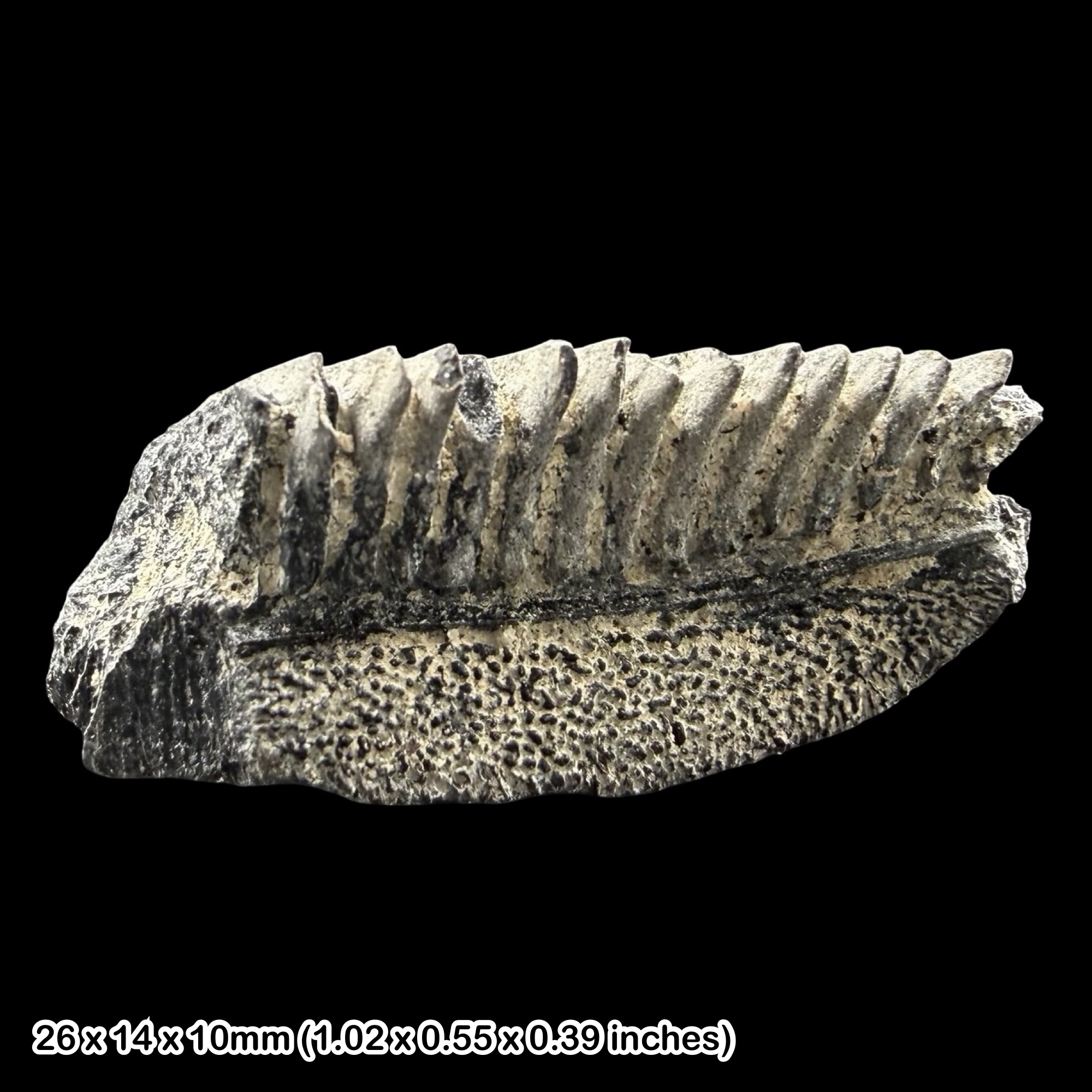
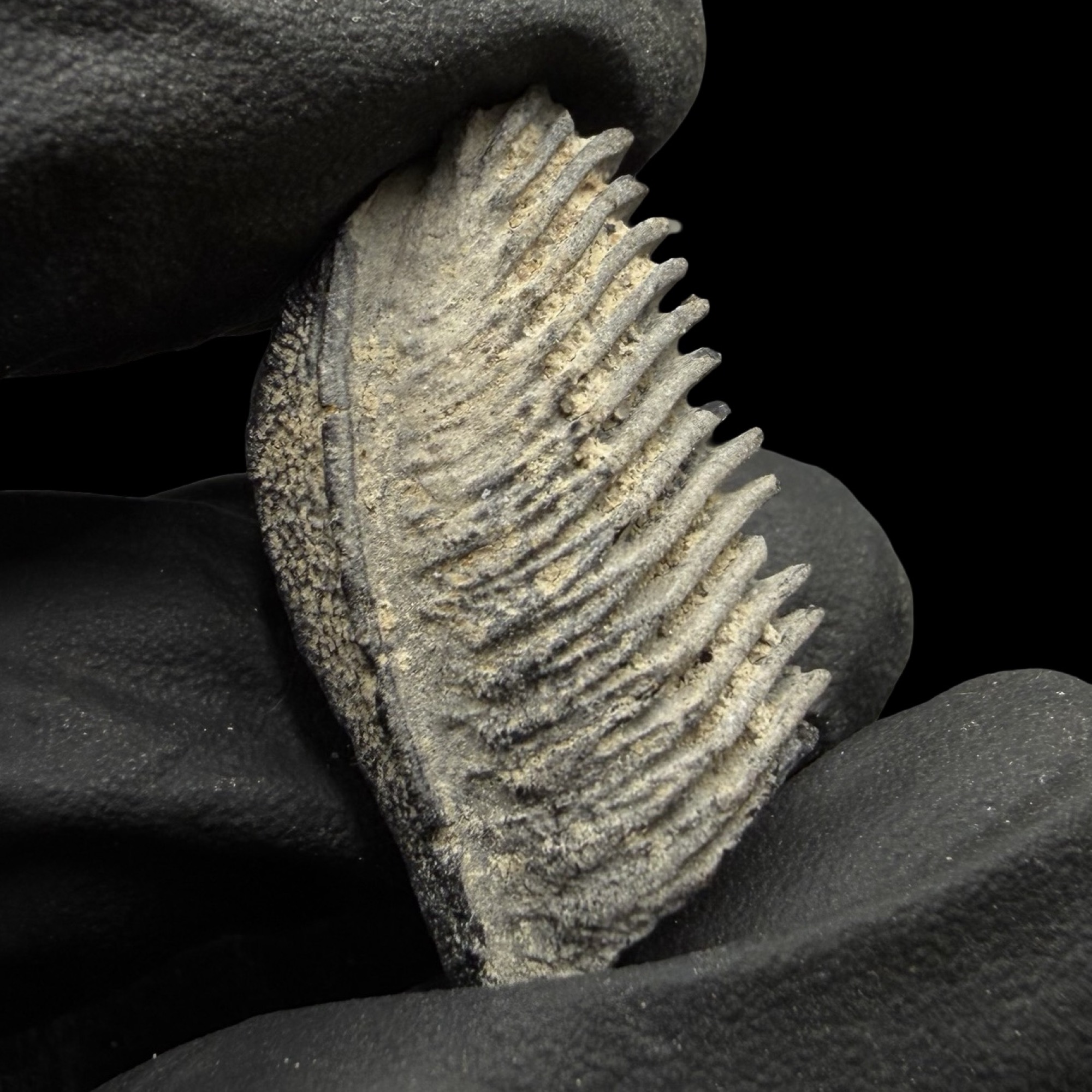
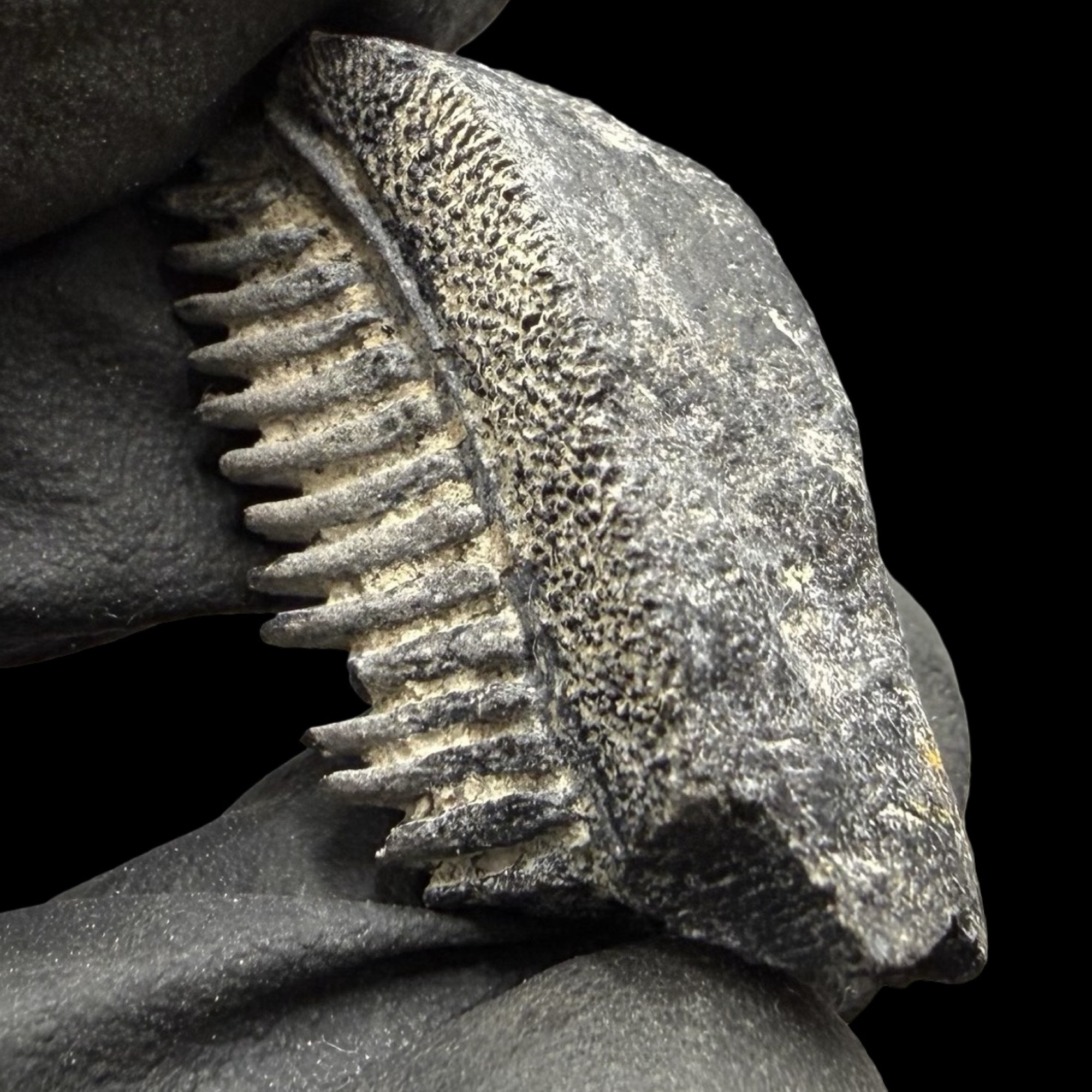
A Grade Myliobatis Eagle Ray Dentition Plate Fossil Eocene UK with Certificate
£ 60.00
GENUINE A-GRADE MYLIOBATIS EAGLE RAY DENTITION PLATE FOSSIL FROM HAMPSHIREThis genuine A-grade Myliobatis sp. Eagle Ray dentition plate fossil is an
exceptional marine vertebrate specimen originating from the Bracklesham Group deposits of Lee-on-the-Solent, Hampshire, United Kingdom. Dating to the Lutetian stage of the Eocene Epoch, approximately 47 to 41 million years ago, this fossil represents part of the feeding apparatus of an ancient eagle ray that inhabited the warm shallow seas covering southern Britain during the early age of mammals.The specimen shown in the photographs is the exact fossil you will receive. Carefully selected for its quality, preservation and natural detail, this authentic dentition plate preserves the distinctive crushing dental structures that made eagle rays highly specialised marine feeders.This fossil includes a Certificate of Authenticity lifetime guarantee generic card confirming the specimen is 100% genuine.Full sizing please see photo. ABOUT MYLIOBATIS EAGLE RAYSMyliobatis is a genus of eagle ray belonging to the class Chondrichthyes and family Myliobatidae. Eagle rays are cartilaginous fish closely related to modern stingrays and sharks and are recognised for their broad flattened bodies and specialised feeding adaptations.Unlike predatory sharks equipped with sharp cutting teeth, Myliobatis species possessed broad flattened dental plates designed for crushing hard-shelled prey such as molluscs, crustaceans and sea urchins. These dentition plates consisted of tightly packed rows of durable teeth fused together into powerful grinding surfaces.Fossilised eagle ray dentition plates are highly sought after due to their distinctive appearance and excellent preservation potential. The dense mineralised structure of the dental plates fossilises exceptionally well, often preserving intricate surface textures and feeding wear patterns.This specimen displays the characteristic morphology associated with Myliobatis, including the broad crushing surfaces and tightly compacted dental arrangement typical of eagle rays adapted for durophagous feeding. BRACKLESHAM GROUP AND EOCENE MARINE ENVIRONMENTThe Bracklesham Group is one of southern England’s most important Eocene fossil-bearing formations and is internationally recognised for its rich marine fauna. These sediments were deposited within warm shallow subtropical seas during the Lutetian stage of the Middle Eocene.During this time, southern Britain experienced a much warmer climate than today and supported highly diverse marine ecosystems populated by sharks, rays, bony fish, molluscs, crustaceans and marine reptiles. Fine marine sands and silts accumulated across coastal lagoons, shallow seas and estuarine environments where abundant marine life flourished.Lee-on-the-Solent and nearby coastal exposures are particularly famous for yielding fossil shark and ray remains from the Bracklesham Group. Fossils from this locality provide important evidence for understanding Eocene marine biodiversity and the evolution of cartilaginous fish.The marine sediments of the Bracklesham Group allowed durable vertebrate material such as teeth and dentition plates to survive fossilisation in excellent condition. NATURAL FOSSIL PRESERVATIONThis fossil retains authentic natural preservation and has not been artificially replicated or reconstructed. The visible dental structures, mineralisation and surface textures formed naturally during fossilisation over millions of years.The specimen displays genuine anatomical detail typical of eagle ray dentition plates, including natural crushing surfaces and preserved feeding structures. Variations in colour and texture are entirely natural and reflect the mineral-rich marine sediments in which the fossil formed.A-grade specimens are especially desirable due to their superior preservation quality, strong detail and display appeal. SCIENTIFIC AND COLLECTABLE IMPORTANCEFossil eagle ray dentition plates provide valuable evidence for understanding the feeding ecology and evolution of ancient cartilaginous fish. Their specialised crushing dentition demonstrates advanced adaptation to feeding on hard-shelled marine organisms within prehistoric coastal ecosystems.The Bracklesham Group fossils of Hampshire are highly important within British palaeontology and remain extremely popular among collectors of marine vertebrate fossils. Myliobatis fossils are especially sought after because of their unusual appearance and direct connection to ancient Eocene seas.This specimen is ideal for collectors of fossil rays, shark and ray fossils, Eocene fossils, British fossils, marine vertebrates and authentic prehistoric natural history specimens. CERTIFICATE OF AUTHENTICITYIncluded with the fossil is a Certificate of Authenticity lifetime guarantee generic card confirming that the specimen is genuine. The photographs provided show the exact fossil you will receive, allowing collectors and buyers to purchase with complete confidence.
exceptional marine vertebrate specimen originating from the Bracklesham Group deposits of Lee-on-the-Solent, Hampshire, United Kingdom. Dating to the Lutetian stage of the Eocene Epoch, approximately 47 to 41 million years ago, this fossil represents part of the feeding apparatus of an ancient eagle ray that inhabited the warm shallow seas covering southern Britain during the early age of mammals.The specimen shown in the photographs is the exact fossil you will receive. Carefully selected for its quality, preservation and natural detail, this authentic dentition plate preserves the distinctive crushing dental structures that made eagle rays highly specialised marine feeders.This fossil includes a Certificate of Authenticity lifetime guarantee generic card confirming the specimen is 100% genuine.Full sizing please see photo. ABOUT MYLIOBATIS EAGLE RAYSMyliobatis is a genus of eagle ray belonging to the class Chondrichthyes and family Myliobatidae. Eagle rays are cartilaginous fish closely related to modern stingrays and sharks and are recognised for their broad flattened bodies and specialised feeding adaptations.Unlike predatory sharks equipped with sharp cutting teeth, Myliobatis species possessed broad flattened dental plates designed for crushing hard-shelled prey such as molluscs, crustaceans and sea urchins. These dentition plates consisted of tightly packed rows of durable teeth fused together into powerful grinding surfaces.Fossilised eagle ray dentition plates are highly sought after due to their distinctive appearance and excellent preservation potential. The dense mineralised structure of the dental plates fossilises exceptionally well, often preserving intricate surface textures and feeding wear patterns.This specimen displays the characteristic morphology associated with Myliobatis, including the broad crushing surfaces and tightly compacted dental arrangement typical of eagle rays adapted for durophagous feeding. BRACKLESHAM GROUP AND EOCENE MARINE ENVIRONMENTThe Bracklesham Group is one of southern England’s most important Eocene fossil-bearing formations and is internationally recognised for its rich marine fauna. These sediments were deposited within warm shallow subtropical seas during the Lutetian stage of the Middle Eocene.During this time, southern Britain experienced a much warmer climate than today and supported highly diverse marine ecosystems populated by sharks, rays, bony fish, molluscs, crustaceans and marine reptiles. Fine marine sands and silts accumulated across coastal lagoons, shallow seas and estuarine environments where abundant marine life flourished.Lee-on-the-Solent and nearby coastal exposures are particularly famous for yielding fossil shark and ray remains from the Bracklesham Group. Fossils from this locality provide important evidence for understanding Eocene marine biodiversity and the evolution of cartilaginous fish.The marine sediments of the Bracklesham Group allowed durable vertebrate material such as teeth and dentition plates to survive fossilisation in excellent condition. NATURAL FOSSIL PRESERVATIONThis fossil retains authentic natural preservation and has not been artificially replicated or reconstructed. The visible dental structures, mineralisation and surface textures formed naturally during fossilisation over millions of years.The specimen displays genuine anatomical detail typical of eagle ray dentition plates, including natural crushing surfaces and preserved feeding structures. Variations in colour and texture are entirely natural and reflect the mineral-rich marine sediments in which the fossil formed.A-grade specimens are especially desirable due to their superior preservation quality, strong detail and display appeal. SCIENTIFIC AND COLLECTABLE IMPORTANCEFossil eagle ray dentition plates provide valuable evidence for understanding the feeding ecology and evolution of ancient cartilaginous fish. Their specialised crushing dentition demonstrates advanced adaptation to feeding on hard-shelled marine organisms within prehistoric coastal ecosystems.The Bracklesham Group fossils of Hampshire are highly important within British palaeontology and remain extremely popular among collectors of marine vertebrate fossils. Myliobatis fossils are especially sought after because of their unusual appearance and direct connection to ancient Eocene seas.This specimen is ideal for collectors of fossil rays, shark and ray fossils, Eocene fossils, British fossils, marine vertebrates and authentic prehistoric natural history specimens. CERTIFICATE OF AUTHENTICITYIncluded with the fossil is a Certificate of Authenticity lifetime guarantee generic card confirming that the specimen is genuine. The photographs provided show the exact fossil you will receive, allowing collectors and buyers to purchase with complete confidence.
Other Products