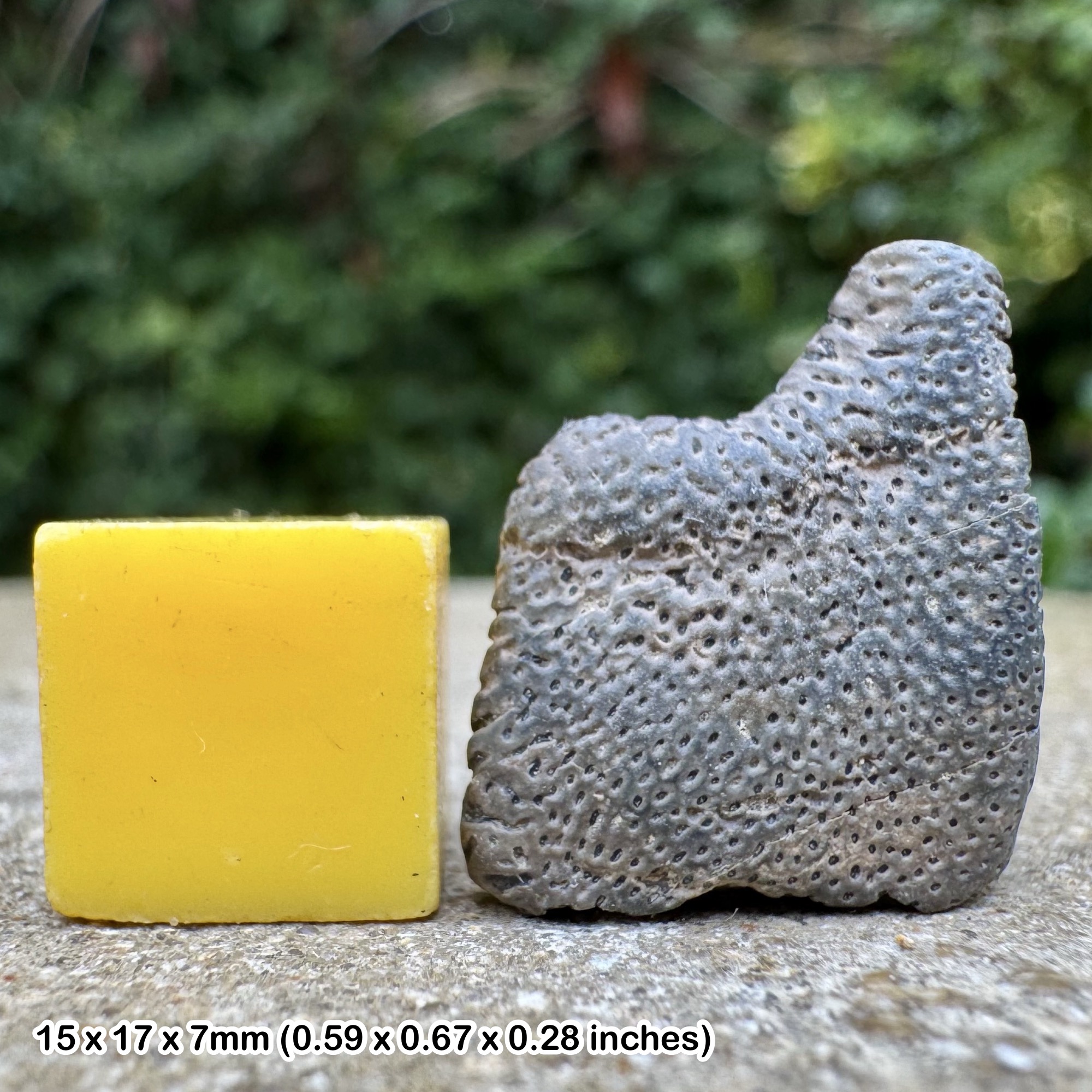
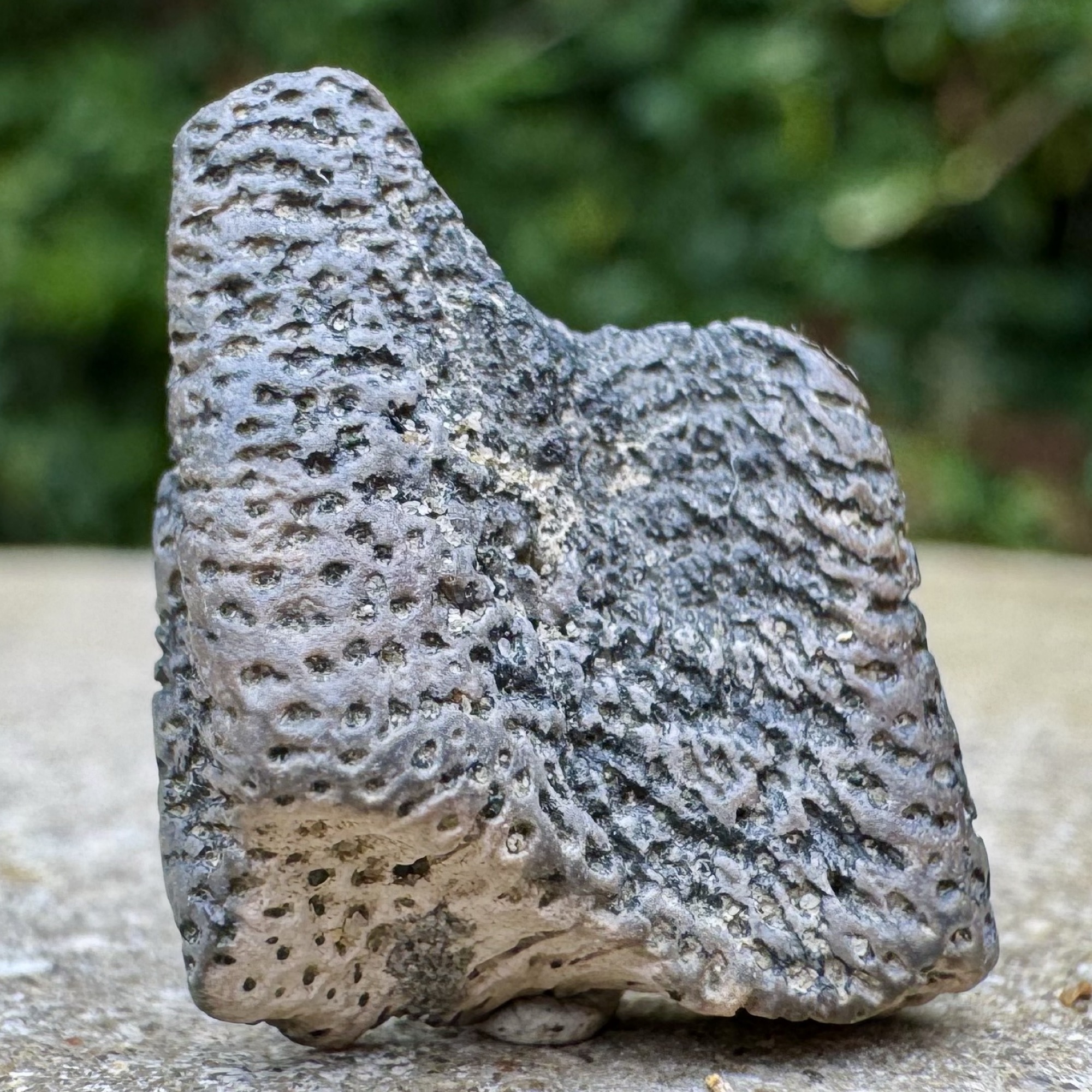
Callorhinchus regulbiensis Palatine Plate Fossil – Palaeocene Thanet Formation – Reculver Silts – Beltinge Kent UK
£ 64.80
Callorhinchus regulbiensis Right Palatine Plate – Fossil Fish Jaw Element –
Palaeocene (Upper Thanetian) – Unit J, Thanet Formation – Reculver Silts Member – Beltinge, Herne Bay, Kent, EnglandThis listing offers a rare fossil jaw plate from Callorhinchus regulbiensis, a chimaeroid (holocephalan) fish related to modern ghost sharks or ratfish. This right palatine plate was discovered in the Reculver Silts Member (Unit J) of the Thanet Formation at Beltinge, Herne Bay, Kent—a classic British Paleogene marine locality.Fossil Type: Right Palatine Plate (jaw element)Species: Callorhinchus regulbiensisOrder: ChimaeriformesFamily: CallorhinchidaeSuperfamily: HolocephaliClass: Chondrichthyes (cartilaginous fishes)Geological Stage: Palaeocene – Upper Thanetian (~56 million years ago)Formation: Thanet FormationMember: Reculver Silts Member – Unit JLocation: Beltinge, Herne Bay, Kent, United KingdomDepositional Environment: Shallow marine shelf, subtropical warm seas with fine sandy-silty sedimentation and good organic preservationBiozone/Zone: Upper Thanetian – no formal macrofossil zonation; chronostratigraphically equivalent to NP9–NP10 nannoplankton zonesMorphology Features: The palatine plate is one of several crushing jaw plates characteristic of chimaeroids, used to process hard-shelled prey such as molluscs and crustaceans. It is typically thick, curved, and ridged with a smooth enamelled surface. This right-side plate is well-preserved, with visible curvature and natural wear consistent with fossilisation. The structure is diagnostic for the genus Callorhinchus, with robust build and dentine wear facets.Geological Context: The Thanet Formation represents a post-Cretaceous, shallow marine environment that was home to a diverse array of fish, sharks, rays, and invertebrates. The Reculver Silts Member at Beltinge is a well-known collecting horizon for marine vertebrates, providing key insight into early Paleogene marine recovery and faunal development.Condition: Fossil jaw element in very good condition with clear morphology and detail. Exact specimen shown. Please refer to the photo for size – Scale Rule Squares / Cube = 1cm.Important Note:All of our Fossils are 100% Genuine Specimens & come with a Certificate of Authenticity.An uncommon and scientifically significant jaw fossil from a unique cartilaginous fish—ideal for collectors of marine vertebrates, Paleogene material, or fossil jaw elements.
Palaeocene (Upper Thanetian) – Unit J, Thanet Formation – Reculver Silts Member – Beltinge, Herne Bay, Kent, EnglandThis listing offers a rare fossil jaw plate from Callorhinchus regulbiensis, a chimaeroid (holocephalan) fish related to modern ghost sharks or ratfish. This right palatine plate was discovered in the Reculver Silts Member (Unit J) of the Thanet Formation at Beltinge, Herne Bay, Kent—a classic British Paleogene marine locality.Fossil Type: Right Palatine Plate (jaw element)Species: Callorhinchus regulbiensisOrder: ChimaeriformesFamily: CallorhinchidaeSuperfamily: HolocephaliClass: Chondrichthyes (cartilaginous fishes)Geological Stage: Palaeocene – Upper Thanetian (~56 million years ago)Formation: Thanet FormationMember: Reculver Silts Member – Unit JLocation: Beltinge, Herne Bay, Kent, United KingdomDepositional Environment: Shallow marine shelf, subtropical warm seas with fine sandy-silty sedimentation and good organic preservationBiozone/Zone: Upper Thanetian – no formal macrofossil zonation; chronostratigraphically equivalent to NP9–NP10 nannoplankton zonesMorphology Features: The palatine plate is one of several crushing jaw plates characteristic of chimaeroids, used to process hard-shelled prey such as molluscs and crustaceans. It is typically thick, curved, and ridged with a smooth enamelled surface. This right-side plate is well-preserved, with visible curvature and natural wear consistent with fossilisation. The structure is diagnostic for the genus Callorhinchus, with robust build and dentine wear facets.Geological Context: The Thanet Formation represents a post-Cretaceous, shallow marine environment that was home to a diverse array of fish, sharks, rays, and invertebrates. The Reculver Silts Member at Beltinge is a well-known collecting horizon for marine vertebrates, providing key insight into early Paleogene marine recovery and faunal development.Condition: Fossil jaw element in very good condition with clear morphology and detail. Exact specimen shown. Please refer to the photo for size – Scale Rule Squares / Cube = 1cm.Important Note:All of our Fossils are 100% Genuine Specimens & come with a Certificate of Authenticity.An uncommon and scientifically significant jaw fossil from a unique cartilaginous fish—ideal for collectors of marine vertebrates, Paleogene material, or fossil jaw elements.
Other Products