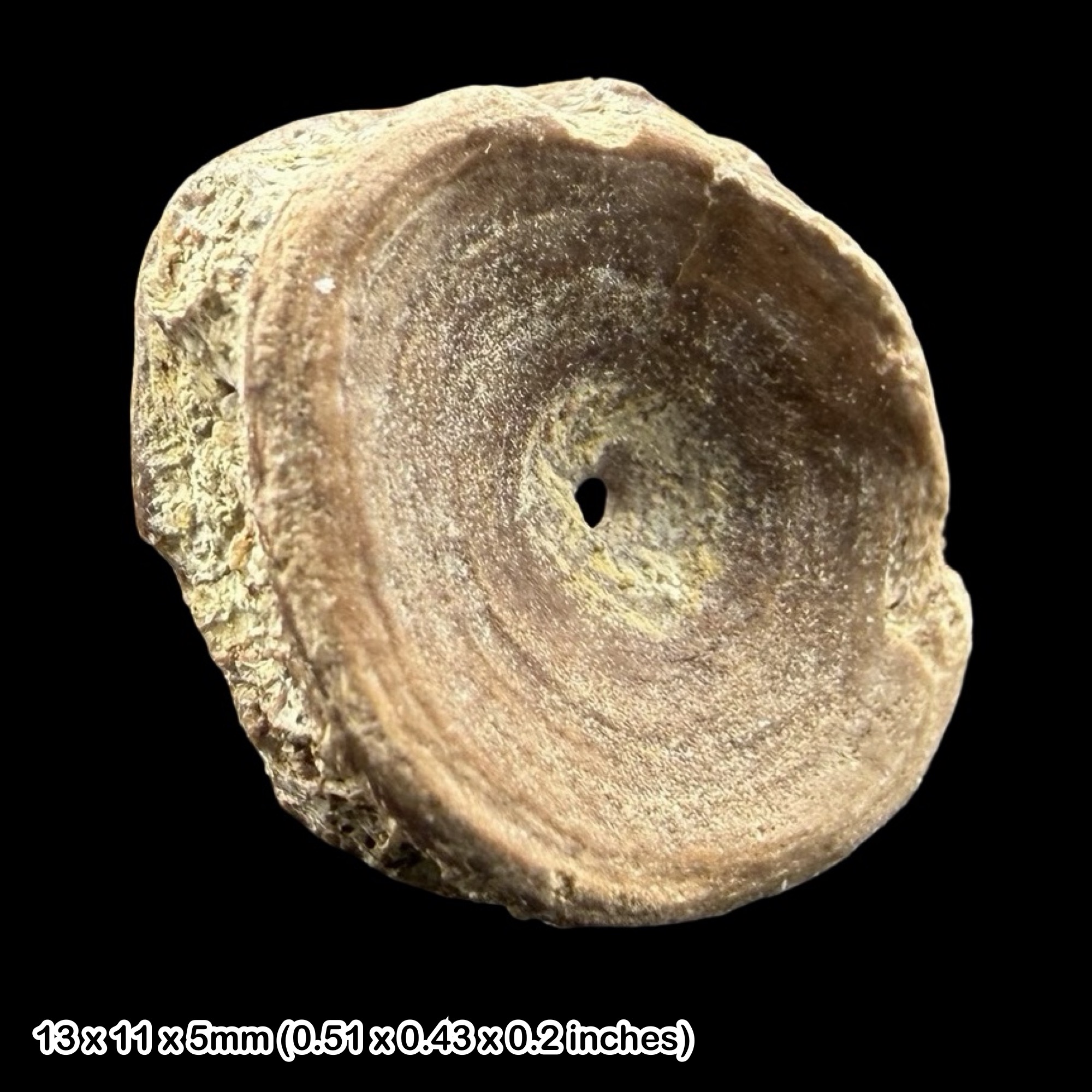
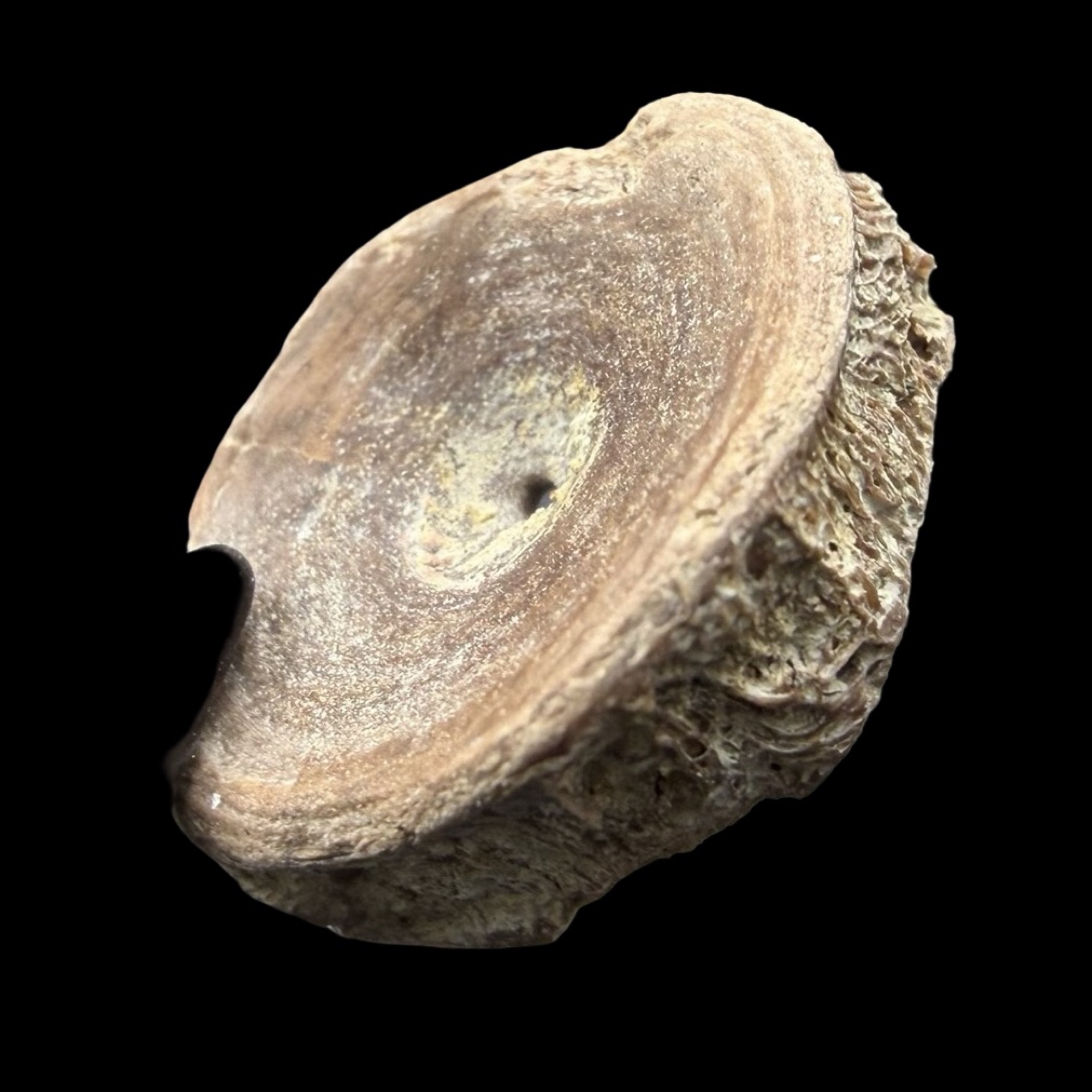
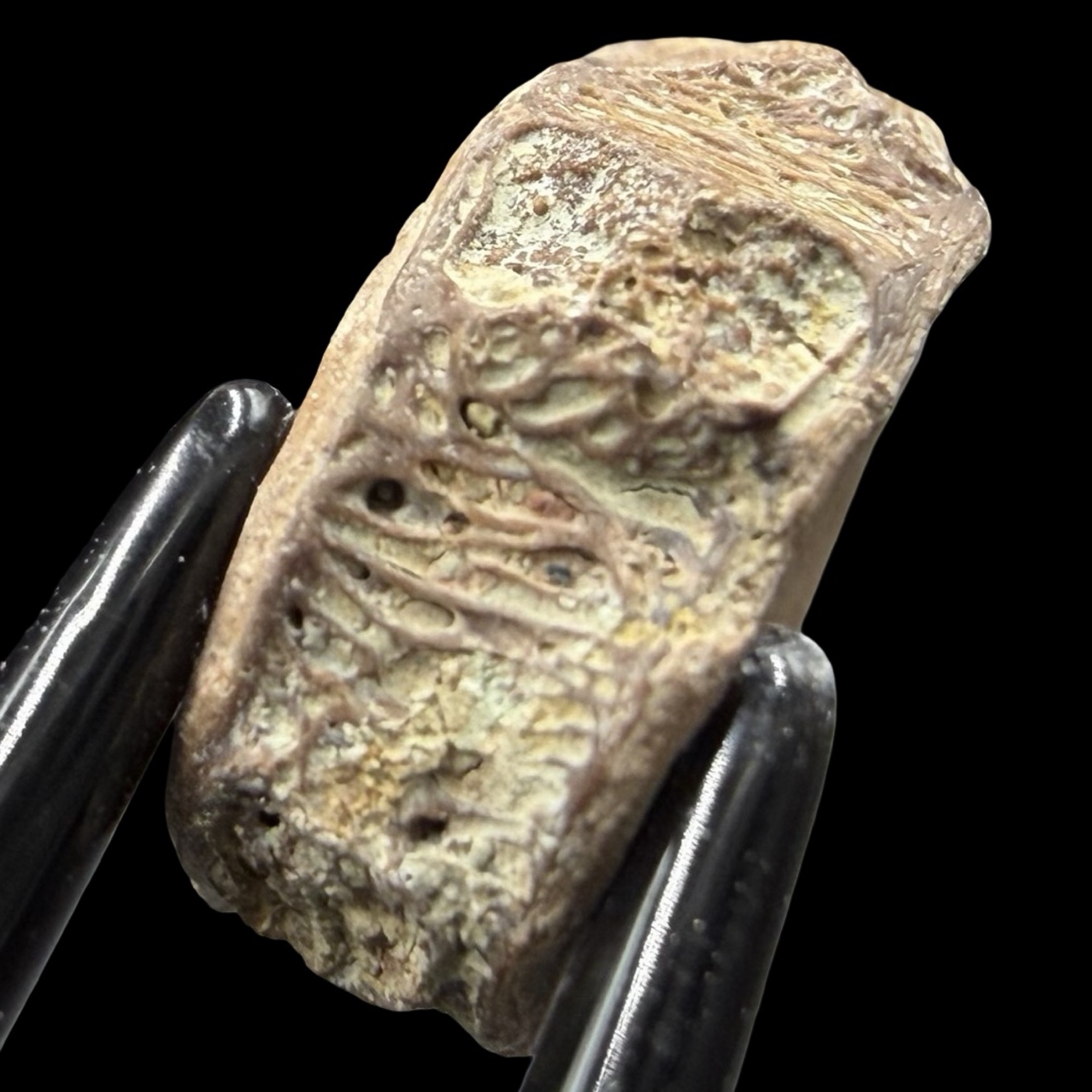
Fish Vertebra Fossil Eocene Isle of Wight Bembridge Authentic Specimen Certified Rare Bone Display
£ 5.10
Fish Vertebra Fossil – Genuine Eocene Specimen from BembridgeThis authentic fish vertebra fossil originates from the Bembridge Oyster Bed
within the Bembridge Marls Member of the Bouldnor Formation at Bembridge on the Isle of Wight. This highly regarded Eocene locality is known for its exceptionally preserved freshwater and lagoonal fossils. The specimen shown in the photographs is the exact fossil you will receive, carefully selected for its quality, structure, and display appeal. This is a genuine fossil and includes a Certificate of Authenticity with a lifetime guarantee.Discovery and Professional PreparationYour specimen was discovered by our experienced team members, Alister and Alison, ensuring full provenance from field discovery through to final presentation. After careful recovery, the fossil was expertly cleaned, stabilised, and prepared by Alison. This meticulous preparation preserves the integrity of the vertebra while enhancing the visibility of its natural features, making it suitable for both scientific appreciation and display.Geological Context – Bembridge Marls Member, Eocene EpochThe Bembridge Marls Member forms part of the Bouldnor Formation and dates to the late Eocene epoch, approximately 34 to 38 million years ago. The Bembridge Oyster Bed represents a calm, low-energy depositional environment consisting of freshwater to brackish lagoonal sediments. These conditions were ideal for preserving delicate vertebrate remains, including fish skeletal elements. At this time, the Isle of Wight was a warm, subtropical region dominated by wetlands, lagoons, and slow-moving waterways.Fish Vertebra Anatomy and FunctionFish vertebrae are central components of the spinal column, providing structural support while allowing flexibility for swimming. In many fish species, vertebrae are amphicoelous, meaning both ends of the centrum are concave, enabling efficient movement through water. This fossil displays the characteristic spool-like form typical of fish vertebrae, offering insight into the locomotion and skeletal structure of ancient aquatic vertebrates.Morphology and Preservation FeaturesThis specimen exhibits well-preserved structural detail, including the central body of the vertebra and subtle surface textures resulting from fossilisation. The natural contours and symmetry of the bone are clearly visible, reflecting its original biological function. Mineralisation has enhanced the fossil’s durability and visual character, with variations in colour and texture adding to its uniqueness. Each vertebra fossil is distinct, shaped by both biological and geological processes over millions of years.Palaeoenvironment and Ecological InsightDuring the Eocene, the Isle of Wight supported diverse freshwater and lagoonal ecosystems populated by fish, turtles, crocodilians, and early mammals. Fish were a fundamental part of these environments, forming the backbone of aquatic food webs. This fossil vertebra provides a direct connection to those ancient ecosystems, offering valuable insight into the biodiversity and environmental conditions of prehistoric Britain.Collector Appeal and Display ValueFish vertebra fossils from the Bembridge Marls are sought after for their scientific significance and clean, recognisable form. This specimen combines educational value with strong visual appeal, making it an excellent addition to any fossil collection. Its compact size and distinct shape make it ideal for display in a cabinet, study, or educational setting.Authenticity, Provenance and PresentationThis fossil has been carefully chosen for its authenticity, condition, and presentation. It is a genuine piece of natural history, professionally prepared and ready for display. Full sizing can be confirmed via the provided photographs, ensuring transparency before purchase. Each specimen is unique, preserving a fragment of an ancient fish that once inhabited the Eocene waterways of the Isle of Wight.
within the Bembridge Marls Member of the Bouldnor Formation at Bembridge on the Isle of Wight. This highly regarded Eocene locality is known for its exceptionally preserved freshwater and lagoonal fossils. The specimen shown in the photographs is the exact fossil you will receive, carefully selected for its quality, structure, and display appeal. This is a genuine fossil and includes a Certificate of Authenticity with a lifetime guarantee.Discovery and Professional PreparationYour specimen was discovered by our experienced team members, Alister and Alison, ensuring full provenance from field discovery through to final presentation. After careful recovery, the fossil was expertly cleaned, stabilised, and prepared by Alison. This meticulous preparation preserves the integrity of the vertebra while enhancing the visibility of its natural features, making it suitable for both scientific appreciation and display.Geological Context – Bembridge Marls Member, Eocene EpochThe Bembridge Marls Member forms part of the Bouldnor Formation and dates to the late Eocene epoch, approximately 34 to 38 million years ago. The Bembridge Oyster Bed represents a calm, low-energy depositional environment consisting of freshwater to brackish lagoonal sediments. These conditions were ideal for preserving delicate vertebrate remains, including fish skeletal elements. At this time, the Isle of Wight was a warm, subtropical region dominated by wetlands, lagoons, and slow-moving waterways.Fish Vertebra Anatomy and FunctionFish vertebrae are central components of the spinal column, providing structural support while allowing flexibility for swimming. In many fish species, vertebrae are amphicoelous, meaning both ends of the centrum are concave, enabling efficient movement through water. This fossil displays the characteristic spool-like form typical of fish vertebrae, offering insight into the locomotion and skeletal structure of ancient aquatic vertebrates.Morphology and Preservation FeaturesThis specimen exhibits well-preserved structural detail, including the central body of the vertebra and subtle surface textures resulting from fossilisation. The natural contours and symmetry of the bone are clearly visible, reflecting its original biological function. Mineralisation has enhanced the fossil’s durability and visual character, with variations in colour and texture adding to its uniqueness. Each vertebra fossil is distinct, shaped by both biological and geological processes over millions of years.Palaeoenvironment and Ecological InsightDuring the Eocene, the Isle of Wight supported diverse freshwater and lagoonal ecosystems populated by fish, turtles, crocodilians, and early mammals. Fish were a fundamental part of these environments, forming the backbone of aquatic food webs. This fossil vertebra provides a direct connection to those ancient ecosystems, offering valuable insight into the biodiversity and environmental conditions of prehistoric Britain.Collector Appeal and Display ValueFish vertebra fossils from the Bembridge Marls are sought after for their scientific significance and clean, recognisable form. This specimen combines educational value with strong visual appeal, making it an excellent addition to any fossil collection. Its compact size and distinct shape make it ideal for display in a cabinet, study, or educational setting.Authenticity, Provenance and PresentationThis fossil has been carefully chosen for its authenticity, condition, and presentation. It is a genuine piece of natural history, professionally prepared and ready for display. Full sizing can be confirmed via the provided photographs, ensuring transparency before purchase. Each specimen is unique, preserving a fragment of an ancient fish that once inhabited the Eocene waterways of the Isle of Wight.
Other Products