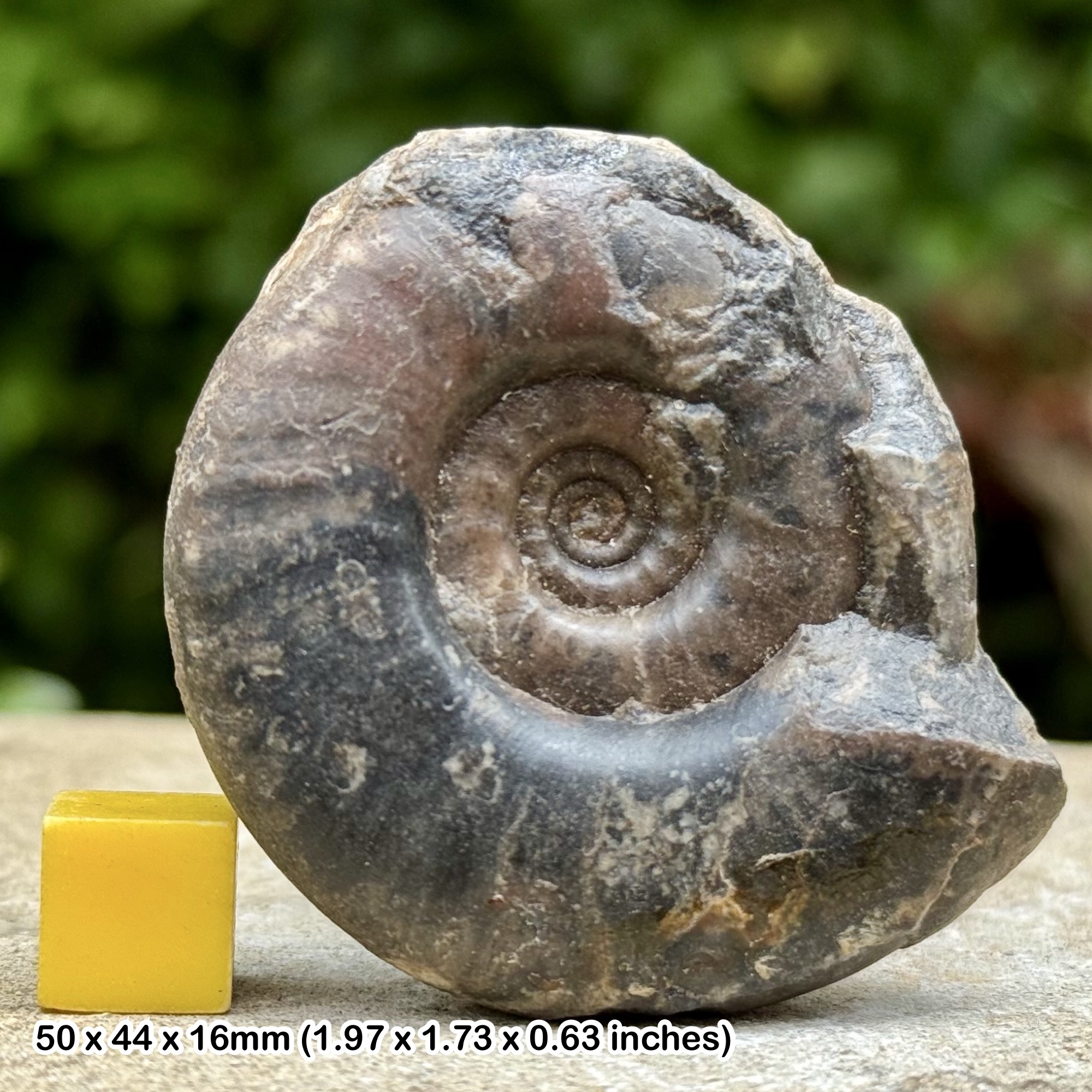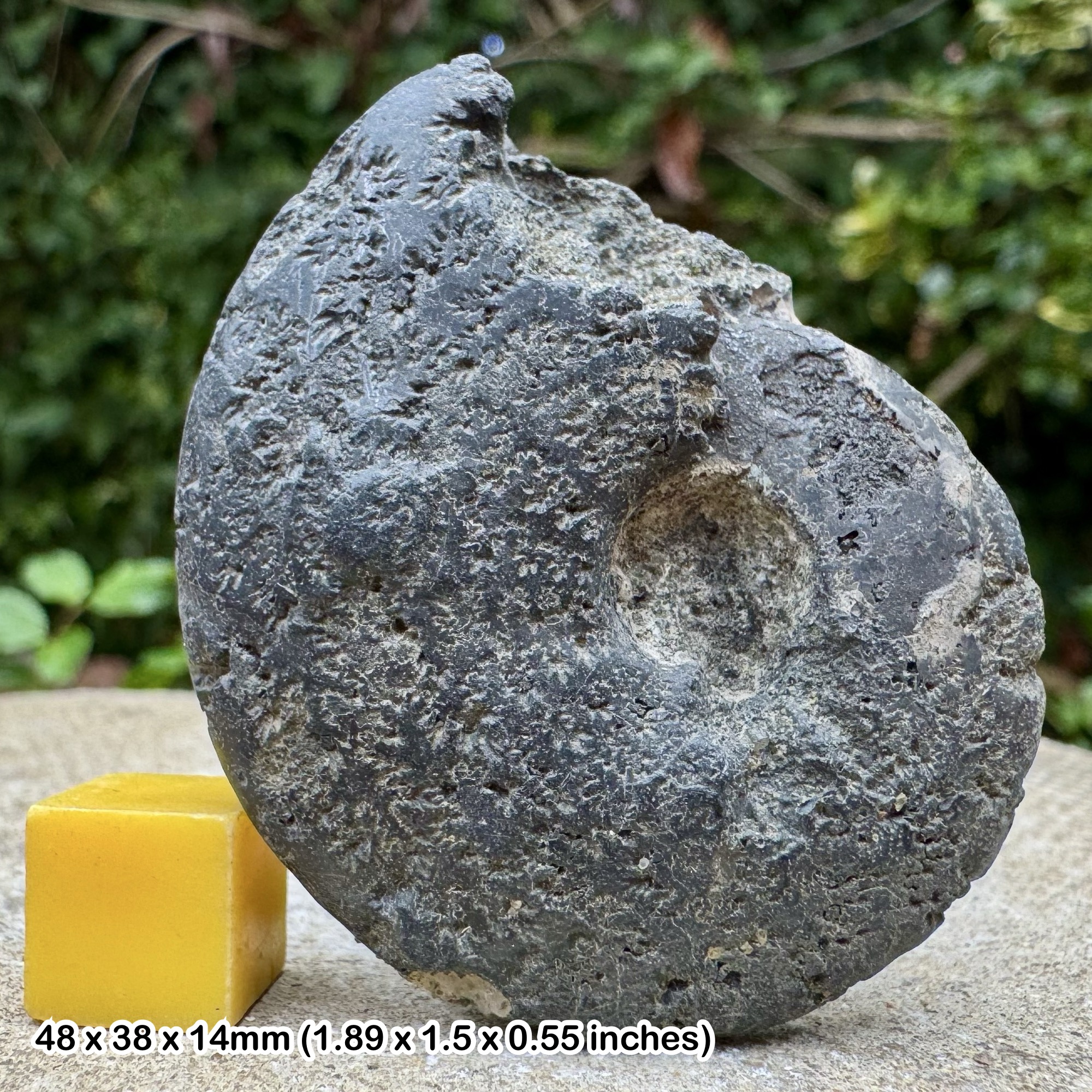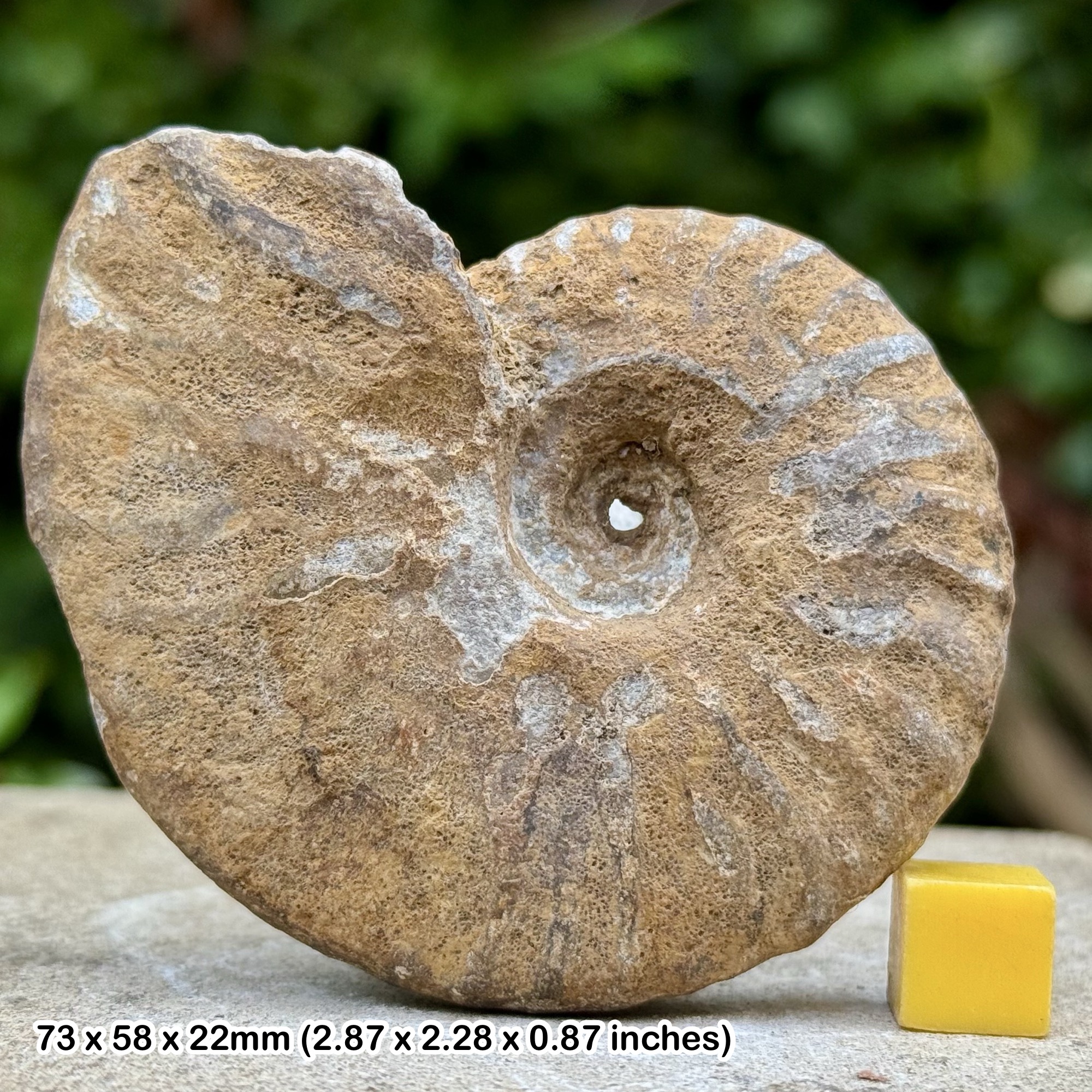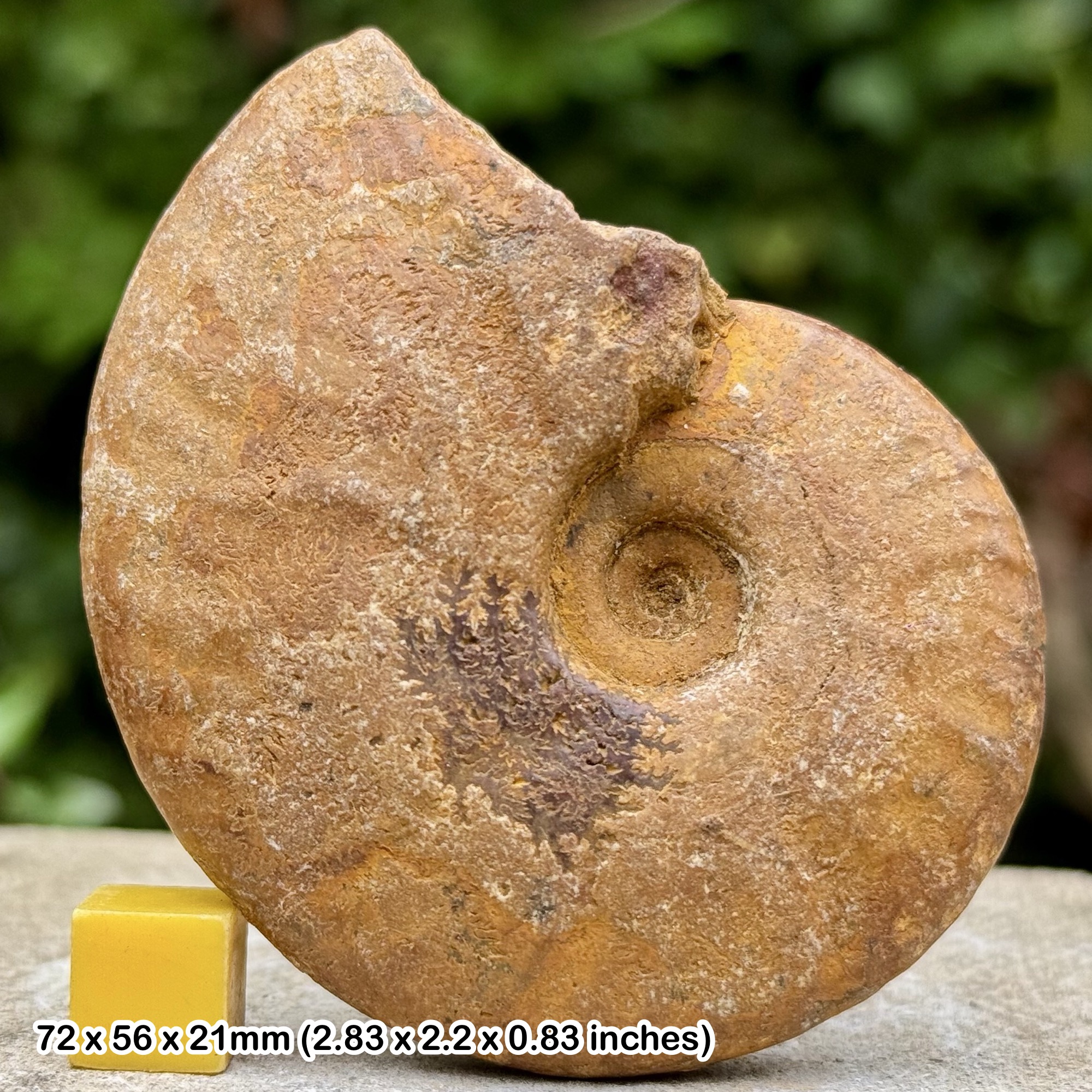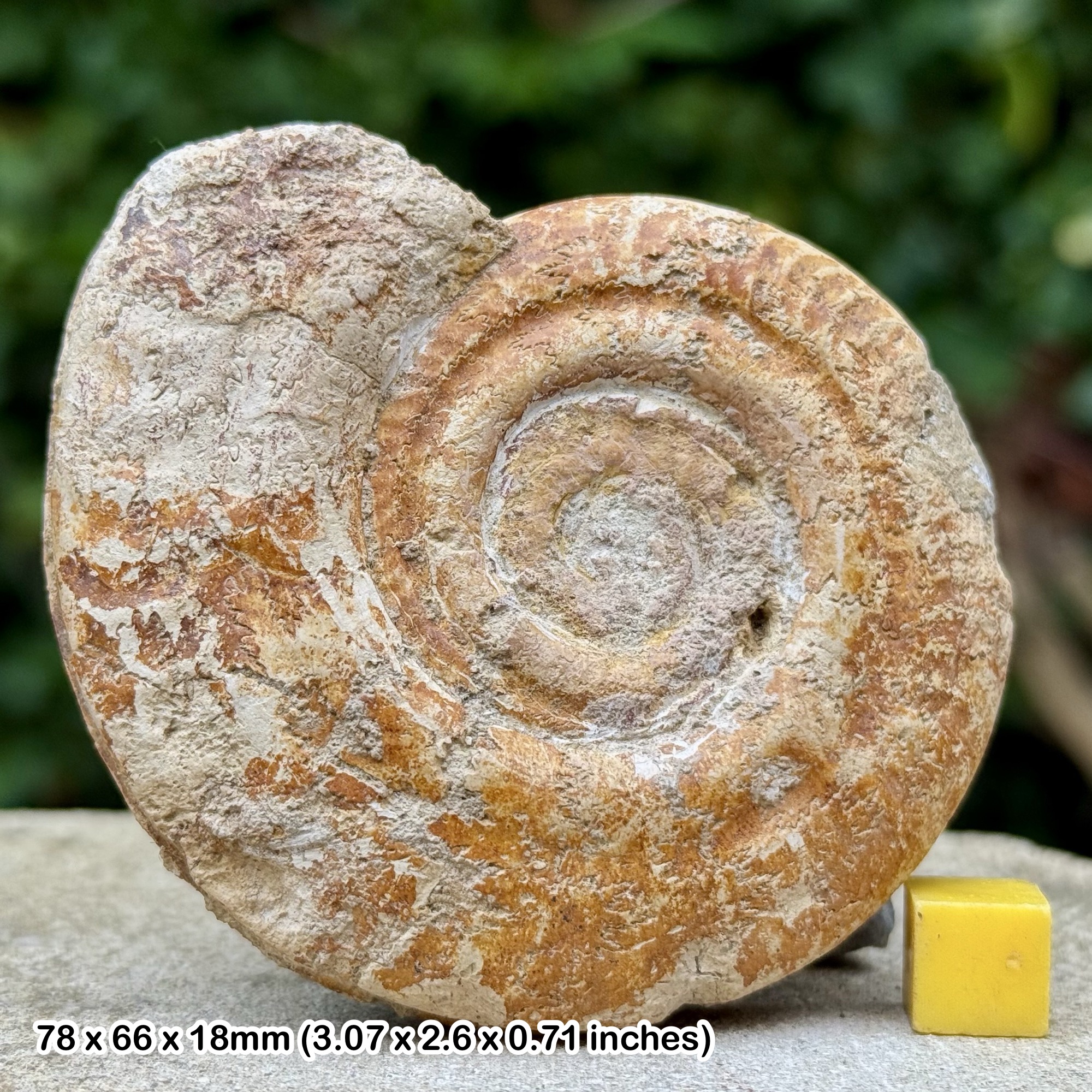
Hildoceras bifrons Ammonite Fossil from Middle Toarcian Jurassic Aveyron France Authentic Specimen
£ 24.00
GEOLOGICAL CONTEXTThis exceptional Hildoceras bifrons ammonite fossil originates from the Middle
Toarcian Stage of the Early Jurassic, dating back approximately 182 to 174 million years ago. The Toarcian was a time of significant climatic and oceanic change, marked by the well-documented Toarcian Oceanic Anoxic Event, during which large areas of seabed became oxygen-depleted. Such conditions greatly aided the preservation of ammonites, creating superb fossil specimens in regions such as Aveyron, France, where this piece was discovered. TAXONOMIC CLASSIFICATION
• Kingdom: Animalia
• Phylum: Mollusca
• Class: Cephalopoda
• Order: Ammonitida
• Superfamily: Hildoceratoidea
• Family: Hildoceratidae
• Genus: Hildoceras
• Species: Hildoceras bifronsThe genus Hildoceras is named after St. Hilda of Whitby, whose abbey stands on cliffs in northern England where ammonites are famously found. The bifrons species is one of the most iconic members of the group, instantly recognisable for its strong ribbing and compressed, elegant shell structure. MORPHOLOGICAL FEATURESThe Hildoceras bifrons ammonite is a classic fossil, valued by collectors for its striking form:
• Compressed planispiral shell with flattened sides and a relatively narrow whorl section.
• Prominent, bifurcating ribs, which typically split into two as they extend across the flanks towards the outer edge.
• A smooth, sometimes faintly keeled venter (the outer rim of the shell).
• Intricate suture lines within the shell structure, which are highly complex and typical of Jurassic ammonites.The bifurcating rib pattern is one of the most diagnostic and attractive features of this species, giving it both scientific significance and strong visual appeal. DEPOSITIONAL ENVIRONMENTThe ammonite comes from marine sediments of the Toarcian seas that once covered much of Western Europe. The Aveyron region of France was part of a shallow epicontinental sea, where clay and marl deposits built up over time. The fine-grained sediments allowed for excellent fossilisation, preserving ammonites such as this one with impressive detail. The anoxic conditions during parts of the Toarcian enhanced preservation by reducing scavenging and decay. SCIENTIFIC AND COLLECTOR IMPORTANCE
• Biostratigraphic Marker – Hildoceras bifrons is an important index fossil for the Middle Toarcian, allowing geologists to precisely date strata.
• Evolutionary Significance – It represents a key form within the Hildoceratidae, showing evolutionary adaptations in shell compression and ribbing.
• Collector’s Appeal – Its symmetrical ribbing and striking whorl structure make it one of the most aesthetically pleasing Jurassic ammonites.
• Educational Value – A superb example for illustrating Jurassic marine life, fossilisation, and evolutionary history. AUTHENTICITY AND PRESENTATION
• This fossil is a 100% genuine specimen, supplied with a Certificate of Authenticity.
• The exact specimen shown in the photographs is the one you will receive, carefully chosen for its quality and preservation.
• A 1 cm scale cube is included in the photo for accurate sizing reference.This Hildoceras bifrons ammonite fossil from the Middle Toarcian Stage of the Jurassic, Aveyron, France is both scientifically valuable and visually captivating. Its historical, educational, and collector significance make it an outstanding piece for display or study.
Toarcian Stage of the Early Jurassic, dating back approximately 182 to 174 million years ago. The Toarcian was a time of significant climatic and oceanic change, marked by the well-documented Toarcian Oceanic Anoxic Event, during which large areas of seabed became oxygen-depleted. Such conditions greatly aided the preservation of ammonites, creating superb fossil specimens in regions such as Aveyron, France, where this piece was discovered. TAXONOMIC CLASSIFICATION
• Kingdom: Animalia
• Phylum: Mollusca
• Class: Cephalopoda
• Order: Ammonitida
• Superfamily: Hildoceratoidea
• Family: Hildoceratidae
• Genus: Hildoceras
• Species: Hildoceras bifronsThe genus Hildoceras is named after St. Hilda of Whitby, whose abbey stands on cliffs in northern England where ammonites are famously found. The bifrons species is one of the most iconic members of the group, instantly recognisable for its strong ribbing and compressed, elegant shell structure. MORPHOLOGICAL FEATURESThe Hildoceras bifrons ammonite is a classic fossil, valued by collectors for its striking form:
• Compressed planispiral shell with flattened sides and a relatively narrow whorl section.
• Prominent, bifurcating ribs, which typically split into two as they extend across the flanks towards the outer edge.
• A smooth, sometimes faintly keeled venter (the outer rim of the shell).
• Intricate suture lines within the shell structure, which are highly complex and typical of Jurassic ammonites.The bifurcating rib pattern is one of the most diagnostic and attractive features of this species, giving it both scientific significance and strong visual appeal. DEPOSITIONAL ENVIRONMENTThe ammonite comes from marine sediments of the Toarcian seas that once covered much of Western Europe. The Aveyron region of France was part of a shallow epicontinental sea, where clay and marl deposits built up over time. The fine-grained sediments allowed for excellent fossilisation, preserving ammonites such as this one with impressive detail. The anoxic conditions during parts of the Toarcian enhanced preservation by reducing scavenging and decay. SCIENTIFIC AND COLLECTOR IMPORTANCE
• Biostratigraphic Marker – Hildoceras bifrons is an important index fossil for the Middle Toarcian, allowing geologists to precisely date strata.
• Evolutionary Significance – It represents a key form within the Hildoceratidae, showing evolutionary adaptations in shell compression and ribbing.
• Collector’s Appeal – Its symmetrical ribbing and striking whorl structure make it one of the most aesthetically pleasing Jurassic ammonites.
• Educational Value – A superb example for illustrating Jurassic marine life, fossilisation, and evolutionary history. AUTHENTICITY AND PRESENTATION
• This fossil is a 100% genuine specimen, supplied with a Certificate of Authenticity.
• The exact specimen shown in the photographs is the one you will receive, carefully chosen for its quality and preservation.
• A 1 cm scale cube is included in the photo for accurate sizing reference.This Hildoceras bifrons ammonite fossil from the Middle Toarcian Stage of the Jurassic, Aveyron, France is both scientifically valuable and visually captivating. Its historical, educational, and collector significance make it an outstanding piece for display or study.
Other Products