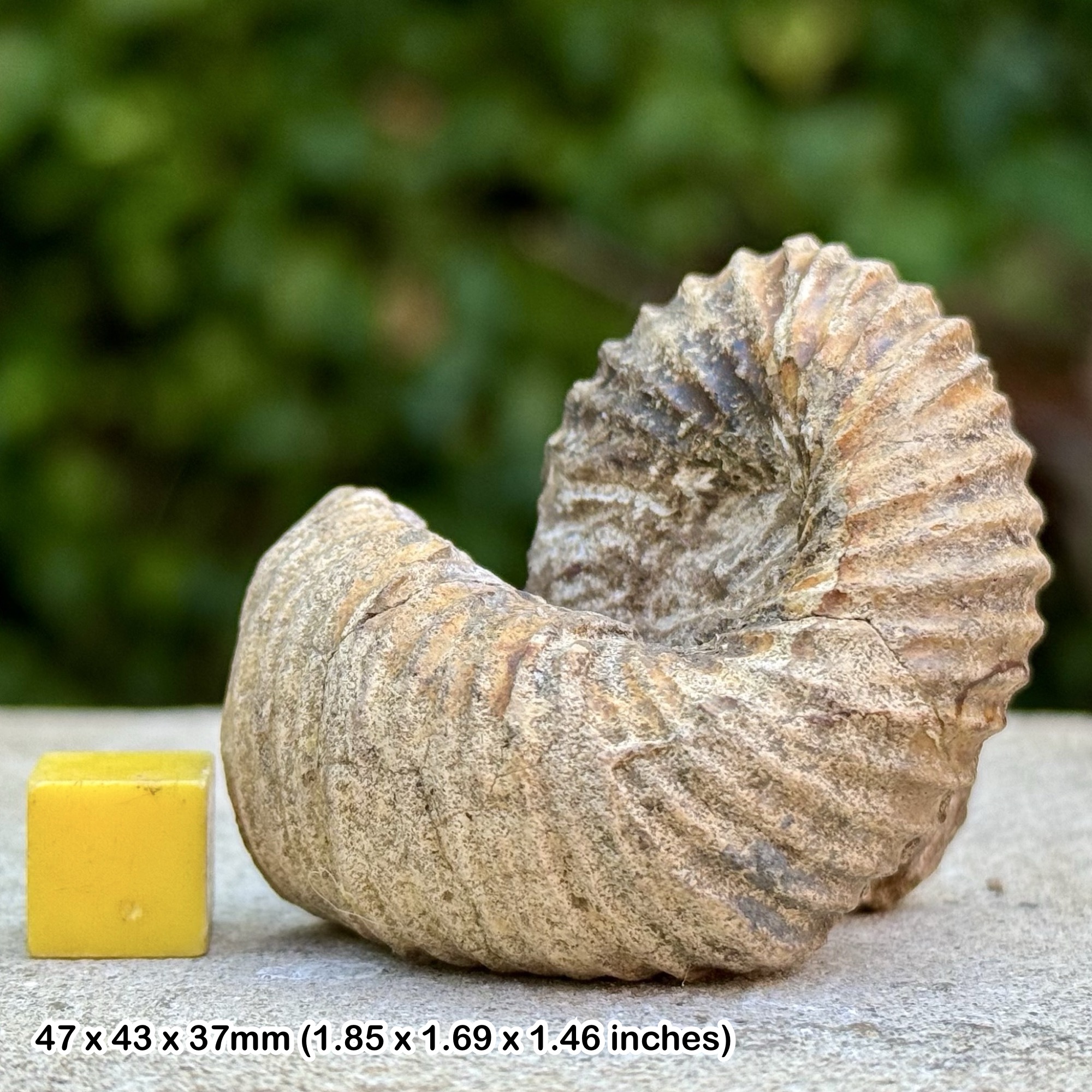
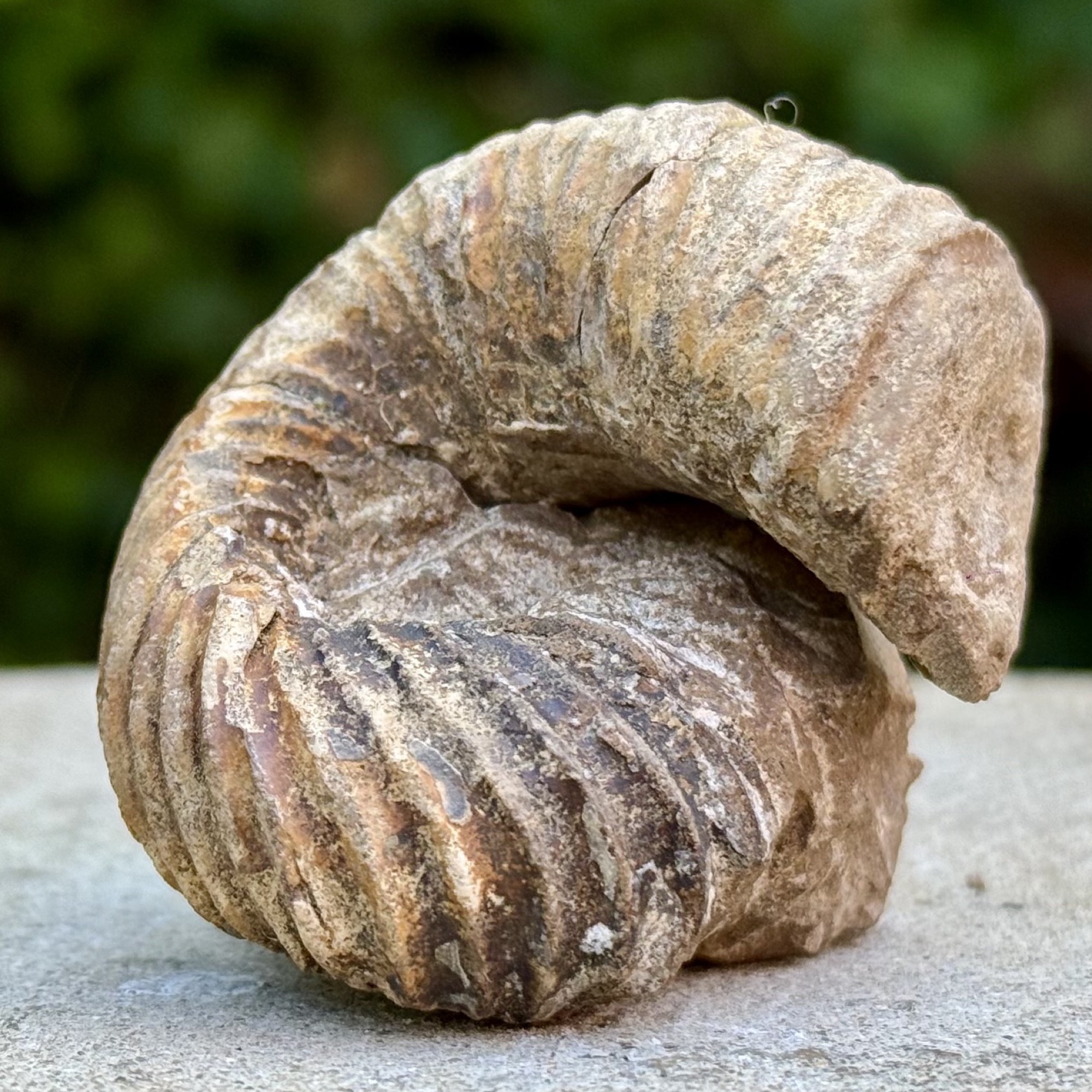
Rare Bostrychoceras boulei Ammonite Fossil Lower Campanian Cretaceous Tsiribina Madagascar with Certificate of Authenticity
£ 48.00
This listing is for a rare Bostrychoceras boulei ammonite fossil, an exceptional
example of a heteromorph ammonite from the Lower Campanian stage of the Late Cretaceous Period, approximately 83–80 million years ago. Discovered in the Tsiribina region of Madagascar, this specimen showcases the unique and unusual coiling of heteromorph ammonites, making it a fascinating addition for collectors, educators, and palaeontologists.All of our fossils are 100% genuine specimens and supplied with a Certificate of Authenticity. The exact fossil in the photographs is the one you will receive, with a 1 cm scale cube and rule squares included for accurate measurement reference. GEOLOGICAL CONTEXT AND AGEThis ammonite originates from the Lower Campanian stage, an interval of the Late Cretaceous when sea levels were high and Madagascar lay within the tropical Tethyan realm. The Tsiribina region was submerged beneath shallow marine environments that supported an abundance of ammonites, belemnites, bivalves, and marine reptiles.The Campanian stage is a key period for ammonite research, as it documents the proliferation of heteromorph forms—ammonites that evolved irregular, uncoiled, or helically twisted shells. Fossils such as Bostrychoceras boulei are important for defining biozones, allowing geologists to date and correlate rock layers across different regions of the globe. MORPHOLOGY AND DISTINCTIVE FEATURESBostrychoceras boulei belongs to the family Nostoceratidae, within the superfamily Turrilitoidea of the order Ammonitida. This family is defined by its bizarre heteromorphic shells, which deviate from the tightly coiled spiral form of most ammonites.The species is characterised by a helically twisted shell, forming an elongated tower-like structure. The surface is marked by ribbing and ornamentation that accentuate the coiling and add structural strength. These features are diagnostic of Bostrychoceras, setting it apart from other heteromorph genera. The unusual coiling pattern suggests a slow-moving lifestyle, with the ammonite possibly drifting in the mid-water column, feeding on plankton and small nekton.This specimen displays the classic features of Bostrychoceras boulei in fine detail, making it a scientifically important fossil as well as a visually remarkable one. SCIENTIFIC IMPORTANCEHeteromorph ammonites such as Bostrychoceras boulei are of great interest to palaeontologists because they represent evolutionary experimentation in shell design during the Late Cretaceous. Their irregular coiling patterns provide evidence of ecological diversity within the ammonite lineage.As a stratigraphically restricted species, Bostrychoceras boulei serves as an excellent index fossil, helping researchers identify and date Lower Campanian deposits. Specimens from Madagascar are especially significant due to their high preservation quality, allowing fine morphological features to be studied in detail. COLLECTOR AND DISPLAY VALUEThis rare Bostrychoceras boulei ammonite fossil is highly sought after by collectors for its rarity, provenance, and striking form. Unlike the more common planispiral ammonites, heteromorphs like Bostrychoceras stand out for their unusual architecture, making them perfect display pieces for fossil cabinets, museum exhibits, or private collections.Its coiled tower-like structure, excellent preservation, and Madagascan origin make this specimen a centrepiece fossil, appreciated for both its aesthetic appeal and scientific value. YOUR GUARANTEE OF AUTHENTICITY
• 100% genuine Bostrychoceras boulei ammonite fossil from Tsiribina, Madagascar
• Geological age: Lower Campanian, Late Cretaceous (approx. 83–80 million years old)
• Supplied with a Certificate of Authenticity
• Exact specimen shown in photographs (not a stock image)
• Scale cube and rule squares = 1 cm (see images for accurate sizing)This Bostrychoceras boulei ammonite fossil is a rare and scientifically significant specimen from Madagascar’s Lower Campanian deposits. With its unique heteromorph coiling, rarity, and guaranteed authenticity, it is an exceptional addition to any serious fossil collection.
example of a heteromorph ammonite from the Lower Campanian stage of the Late Cretaceous Period, approximately 83–80 million years ago. Discovered in the Tsiribina region of Madagascar, this specimen showcases the unique and unusual coiling of heteromorph ammonites, making it a fascinating addition for collectors, educators, and palaeontologists.All of our fossils are 100% genuine specimens and supplied with a Certificate of Authenticity. The exact fossil in the photographs is the one you will receive, with a 1 cm scale cube and rule squares included for accurate measurement reference. GEOLOGICAL CONTEXT AND AGEThis ammonite originates from the Lower Campanian stage, an interval of the Late Cretaceous when sea levels were high and Madagascar lay within the tropical Tethyan realm. The Tsiribina region was submerged beneath shallow marine environments that supported an abundance of ammonites, belemnites, bivalves, and marine reptiles.The Campanian stage is a key period for ammonite research, as it documents the proliferation of heteromorph forms—ammonites that evolved irregular, uncoiled, or helically twisted shells. Fossils such as Bostrychoceras boulei are important for defining biozones, allowing geologists to date and correlate rock layers across different regions of the globe. MORPHOLOGY AND DISTINCTIVE FEATURESBostrychoceras boulei belongs to the family Nostoceratidae, within the superfamily Turrilitoidea of the order Ammonitida. This family is defined by its bizarre heteromorphic shells, which deviate from the tightly coiled spiral form of most ammonites.The species is characterised by a helically twisted shell, forming an elongated tower-like structure. The surface is marked by ribbing and ornamentation that accentuate the coiling and add structural strength. These features are diagnostic of Bostrychoceras, setting it apart from other heteromorph genera. The unusual coiling pattern suggests a slow-moving lifestyle, with the ammonite possibly drifting in the mid-water column, feeding on plankton and small nekton.This specimen displays the classic features of Bostrychoceras boulei in fine detail, making it a scientifically important fossil as well as a visually remarkable one. SCIENTIFIC IMPORTANCEHeteromorph ammonites such as Bostrychoceras boulei are of great interest to palaeontologists because they represent evolutionary experimentation in shell design during the Late Cretaceous. Their irregular coiling patterns provide evidence of ecological diversity within the ammonite lineage.As a stratigraphically restricted species, Bostrychoceras boulei serves as an excellent index fossil, helping researchers identify and date Lower Campanian deposits. Specimens from Madagascar are especially significant due to their high preservation quality, allowing fine morphological features to be studied in detail. COLLECTOR AND DISPLAY VALUEThis rare Bostrychoceras boulei ammonite fossil is highly sought after by collectors for its rarity, provenance, and striking form. Unlike the more common planispiral ammonites, heteromorphs like Bostrychoceras stand out for their unusual architecture, making them perfect display pieces for fossil cabinets, museum exhibits, or private collections.Its coiled tower-like structure, excellent preservation, and Madagascan origin make this specimen a centrepiece fossil, appreciated for both its aesthetic appeal and scientific value. YOUR GUARANTEE OF AUTHENTICITY
• 100% genuine Bostrychoceras boulei ammonite fossil from Tsiribina, Madagascar
• Geological age: Lower Campanian, Late Cretaceous (approx. 83–80 million years old)
• Supplied with a Certificate of Authenticity
• Exact specimen shown in photographs (not a stock image)
• Scale cube and rule squares = 1 cm (see images for accurate sizing)This Bostrychoceras boulei ammonite fossil is a rare and scientifically significant specimen from Madagascar’s Lower Campanian deposits. With its unique heteromorph coiling, rarity, and guaranteed authenticity, it is an exceptional addition to any serious fossil collection.
Other Products